


Abstract
Canine vector-borne pathogens (CVBPs) pose a major challenge in shelter medicine, yet data from shelter populations in Vietnam remain unknown. This study determined the prevalence, and risk factors of CVBPs in shelter dogs in northern Vietnam. Blood samples from 300 apparently healthy dogs from three shelters in Hanoi were screened by PCR for Babesia vogeli, Hepatozoon canis, Rickettsia spp., and Mycoplasma spp. Representative positive amplicons underwent Sanger sequencing and BLAST analysis. Sequence analysis showed 96.07–100% identity with reference strains, with phylogenetic trees confirming clustering within B. vogeli, H. canis, M. haemocanis and R. felis clades. Overall, 43.7% (131/300) of dogs were infected with at least one pathogen, with shelter-level prevalence ranging from 38.0 to 52.0%. Single infections accounted for 35.0%, dominated by R. felis (25.7%) and M. haemocanis (24.0%), B. vogeli and H. canis were low (1.3% each). Co-infections were found in 8.7% of dogs, primarily R. felis and M. haemocanis (8.3%). No evaluated host factors (age, sex, breed, body size, housing style) significantly associated with infection (p > 0.05). This study provides the first molecular evidence of canine vector-borne pathogen circulation in Vietnamese shelter dogs, emphasizing the need of ectoparasite control and One Health-oriented surveillance.
1. Introduction
Canine vector-borne diseases (CVBDs) have emerged as a significant challenge in shelter medicine as they compromise animal welfare, increase mortality, and complicate rehoming plans for shelter dogs. The term CVBDs refers to a wide range of infections, ranging from bacteria, protozoa, viruses and helminths, which are transmitted via blood meals or the ingestion of infected arthropod vectors [1]. Infections caused by canine vector-borne pathogens (CVBPs) result in numerous non-specific clinical signs, including fever, anorexia, lethargy, weight loss, and pale mucous membranes. Co-infection of multiple vector-borne pathogens has been proved to exhibit more complicated and overlapping clinical signs, further challenging the accurate diagnosis [1].
Shelter-housed dogs are considered a particularly vulnerable population for CVBDs because they often originate from free-roaming backgrounds, which leads to more frequent exposure to ticks, fleas, and other vectors [2]. The shelter environment possesses distinct characteristics, including high animal density and limited antiparasitic measures, which can lead to arthropod vector proliferation and pathogen transmissions [2,3]. In such settings, undetected infections may spread rapidly, resulting in increased morbidity, higher mortality, and additional diagnostic and treatment costs for shelter management. Previous studies in shelter dogs from different regions have indicated high exposure rates to vector-borne pathogens including bacteria and protozoa, highlighting shelters as important foci of infection and reservoirs of zoonotic diseases [4,5,6].
Vietnam, which is a country situated in Southeast Asia (SEA), is geographically divided into three regions: Northern, Central, and Southern. The subtropical climate in northern Vietnam has four distinct seasons, including spring, summer, autumn, and winter. This region is characterized by high average humidity and temperature, providing an ideal ecological condition for the year-round activity of arthropod vectors. The brown dog tick (Rhipicephalus sanguineus sensu lato) and fleas (Ctenocephalides spp.) have been identified as the most prevalent vectors in Vietnam and the surrounding region [7,8]. These ectoparasites are responsible for the transmission of numerous CVBPs, including Anaplasma spp., Ehrlichia spp., Babesia spp., Hepatozoon canis, Mycoplasma spp., Rickettsia spp. [9]. While recent studies have demonstrated high prevalence of CVBPs in Vietnamese companion dogs and their associated ectoparasites [10,11,12], there are currently no molecular data describing CVBP infection patterns in shelter dogs, and the epidemiological role of shelters in Vietnam remains largely undefined. To address this gap, the present study investigated the molecular prevalence, co-infection patterns, and host-related risk factors of CVBDs in shelter dogs in northern Vietnam. By characterizing CVBPs in this high-density dog population, this study provides shelter-specific baseline data that are critical for designing targeted preventive protocols and for mitigating the spread of zoonotic agents to both human and animal populations.
2. Materials and Methods
2.1. Research Location and Animals
The sample size was calculated using an infinite population to estimate the prevalence of CVBPs. Based on the previous literature [10], the expected prevalence (p) was estimated at 80% (0.8) and the complementary probability (q) was 20% (0.2). With a confidence level of 95% (z = 1.96) and a desired margin of error (d) of 5% (0.05), the required sample size was calculated as follows:
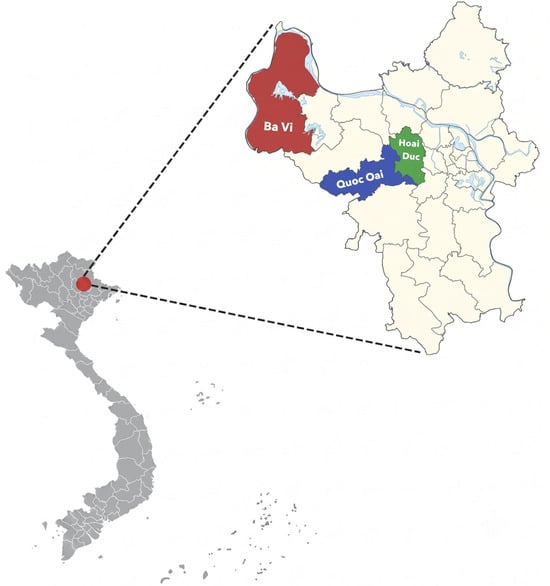
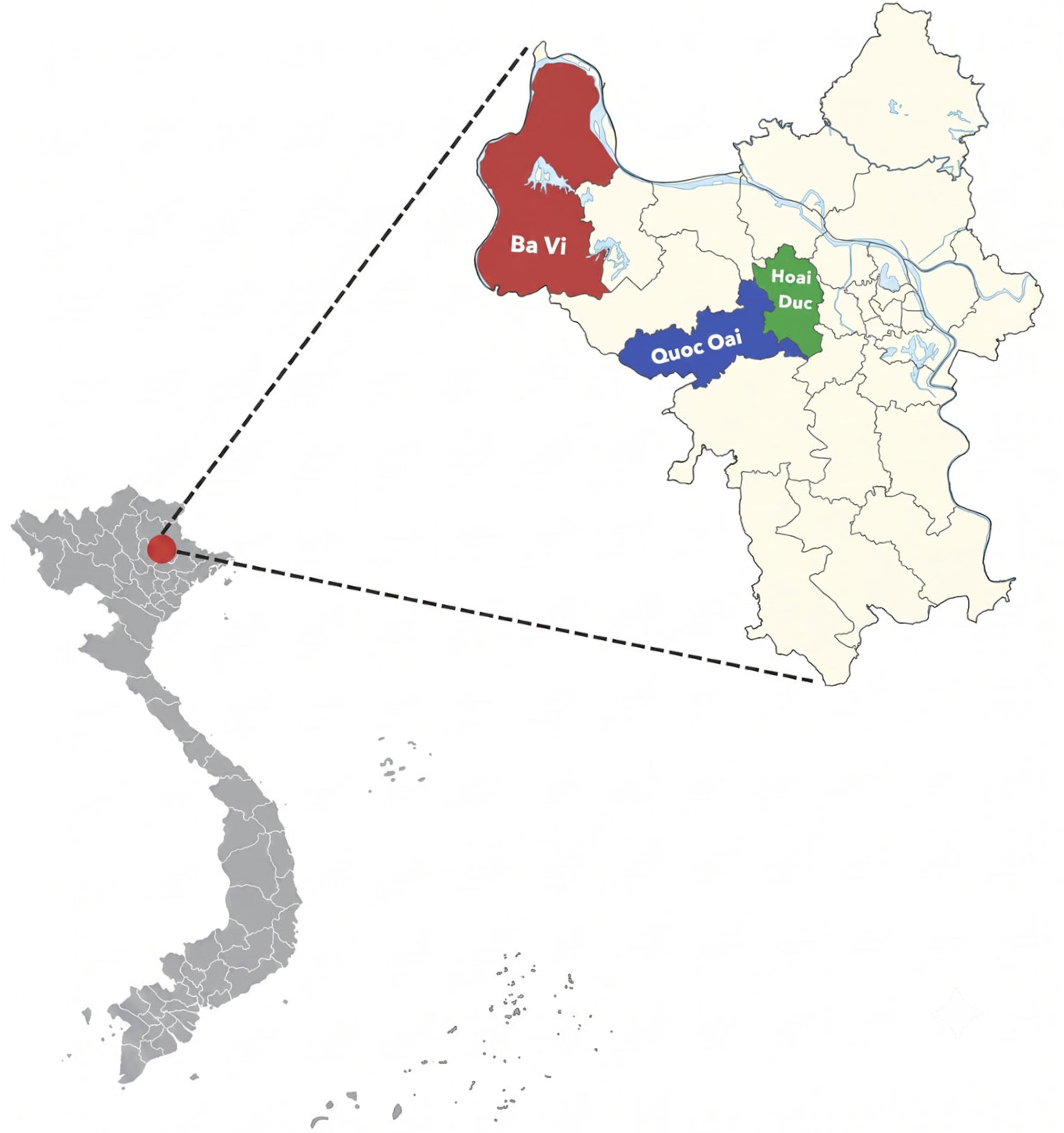
A total of 300 blood samples of apparently healthy shelter dogs were randomly collected by cluster sampling method from three shelters in Ba Vi (n = 150), Quoc Oai (n = 75), and Hoai Duc (n = 75) districts, located within Hanoi city, Vietnam (Figure 1). Sample collection was conducted in January 2025. Dogs involved in this study were humanly restrained by experienced veterinarians. For each dog, 2 mL of blood was collected from the cephalic or jugular vein, and transferred to an EDTA tube and kept at 4 °C until used for DNA extraction. Data from participating dogs were collected and categorized, including age (<1 year, 1–5 years, >5 years, defined as puppies, juveniles, adults), breed (domestic, exotic, mixed), sex (male or female), body size (small, medium, large, considered as <10 kg, 10–20 kg, >20 kg), housing style (single-caged or multiple-caged).
Figure 1.
Map of study locations. Main map: Canva Pro. Inset map of Hanoi: Adapted from Wikimedia Commons (by Mai Ngoc Xuan, CC BY-SA 4.0).
2.2. DNA Extraction and Molecular Diagnosis
A 200 µL amount of blood from each dog was used for DNA extraction using a commercial DNeasy Blood and Tissue Kit (Qiagen, Hilden, Germany), according to the manufacturer’s instructions. The elution volume was reduced to 100 µL and DNA was stored at −20 °C until used. The genomic DNA samples were tested for the presence of Babesia vogeli, Hepatozoon canis, Rickettsia spp., and Mycoplasma spp. by conventional PCR. All primers, targeted genes, and expected amplicon sizes for pathogen detection were listed in Table 1. PCR reactions were performed in 20 µL volumes containing 4 µL of HOT FIREPol® Blend Master Mix (Solis Biodyne, Tartu, Estonia), 1 µL of each 10 pmol primer (forward and reverse), 2 µL of template DNA and nuclease-free water to volume. Amplifications were carried out in a Mastercycler Nexus Gradient thermal cycler (Eppendorf, Hamburg, Germany) using the cycling profiles and annealing temperatures specified for each primer set in Table 1, followed by visualization of products on 1.5% agarose gels under UV illumination. To prevent cross-contamination, strict laboratory workflows were maintained. All procedures, including DNA extraction and PCR master mix preparation, were performed in separate rooms. Each area utilized a dedicated set of pipettes. All pipette tips and microcentrifuge tubes were strictly autoclaved and dried prior to use, and work surfaces and equipment were sanitized before and after each session. For each PCR assay, a positive control and a negative control (nuclease-free water) were included.
Table 1.
Sets of primers used in this study.
2.3. Sequence and Phylogenetic Analysis
Representative positive samples for each pathogen were selected for sequencing. Positive amplicons were extracted and purified using the MEGAquick-spinTM plus Fragment DNA purification kit (Intron Biotechnology, Seongnam, Republic of Korea). The purified DNA was then sequenced by a service provider (U2Bio Co., Ltd., Bangkok, Thailand) using Sanger sequencing. Chromatograms were visually inspected and edited in FinchTV (version 1.3.0). The resulting sequences were compared with previously reported sequences using the Basic Local Alignment Search Tool (BLAST + 2.17.0) of the U.S. National Center for Biotechnology Information (NCBI) website (https://blast.ncbi.nlm.nih.gov/Blast.cgi, accessed 16 March, 2026) to determine the species of the pathogen/parasite. All newly generated nucleotide sequences obtained in this study were deposited in the GenBank database. For phylogenetic analysis, multiple alignments including our sequences and selected reference sequences from different geographic regions were constructed, and Neighbor-Joining trees were inferred in MEGA 12 with the Kimura-2-parameter model and 1000 bootstrap replicates. GenBank accession numbers and countries of origin of reference sequences are indicated in the phylogenetic trees.
2.4. Statistical Analysis
The infection rates and 95% confidence interval (95% CI) were calculated using Microsoft Excel. Univariate analysis (Chi-square test) was performed to assess the relationship between dogs’ demographic data and the prevalence of infection. The significance level and the confidence interval in the study were set at p < 0.05 and 95%, respectively. Statistical analysis was performed using IBM SPSS Statistics (Version 27.0).
3. Results
3.1. Demographic Data of Shelter Dogs Involved in the Study
The characteristics of the study population are summarized in Table 2. A total of 300 dogs were involved in the study, consisting of 183 (61.0%) males and 117 (39.0%) females. Regarding age distribution, the majority of dogs were juveniles (56.0%), followed by adults (25.3%) and puppies (18.7%). Large dogs comprised the majority of the samples at 51.0%, significantly outnumbering small dogs (24.7%) and medium dogs (24.3%). In terms of breed, exotic breeds were the most prevalent category (64.0%), while domestic and mixed breeds accounted for 30.3% and 5.7, respectively. There were 57.0% of dogs that were kept in a single kennel, and 43.0% were housed in shared cages.
Table 2.
Demographic data of the study population.
3.2. The Prevalence of CVBPs in Shelter Dogs
The overall prevalence of CVBPs was 43.7% (131/300), as shown in Table 3. Regarding the occurrence of individual pathogen, Rickettsia felis showed the highest prevalence at 25.7% (77/300; 95% CI: 21.1–30.9%), followed closely by Mycoplasma haemocanis at 24.0% (72/300; 95% CI: 19.5–29.1%). Babesia vogeli and Hepatozoon canis were detected at low rates, at 1.3% each (4/300; 95% CI: 0.5–3.4%). Single infections accounted for 35.0% of cases, whereas co-infections were detected in 8.7% of all dogs. The most common concurrent infection was R. felis and M. haemocanis, which was identified in 25 dogs (8.3%). Among the three shelters involved in this study, Hoai Duc shelter had the highest infection rate, with 52.0% of dogs testing positive, whereas Quoc Oai and Bavi shelters observed lower prevalence rates of 46.7% and 38.0%, respectively. The difference between prevalence of each shelter is not significant (p > 0.05).
Table 3.
Prevalence of CVBP infections in shelter dogs.
3.3. Risk Factors Associated with CVBP Infections in Shelter Dogs
The associations between host attributes and CVBP infections are presented in Table 4. Older dogs had a higher prevalence compared to younger dogs. Juveniles and adults showed higher odds of infection than puppies (juveniles: OR = 1.69, 95% CI: 0.9–3.17; adults: OR = 1.58, 95% CI: 0.77–3.22). Regarding body size, CVBPs occurred most frequently among medium-sized dogs (52.1%; OR = 1.73, 95% CI: 0.98–3.04) and small dogs (45.9%; OR = 1.35, 95% CI: 0.77–2.37), compared with large dogs (38.6%). Female dogs (50.4%) exhibited higher odds of infection than males (39.3%; OR = 1.57, 95% CI: 0.98–2.50). Mixed-breed dogs had the highest positivity rate (58.8%; OR = 2.13, 95% CI: 0.78–5.85), followed by domestic (48.4%; OR = 1.40, 95% CI: 0.85–2.31) and exotic breeds (40.1%). Dogs housed in shared cages (48.1%; OR = 1.37, 95% CI: 0.86–2.17) also showed a higher infection rate than those kept in single cages (40.4%). However, none of these variables showed a statistically significant association with CVBP infection (all p > 0.05).
Table 4.
Univariate analysis of dogs’ demographic data and CVBP infections.
3.4. Phylogenetic Analysis of CVBPs Found in Shelter Dogs
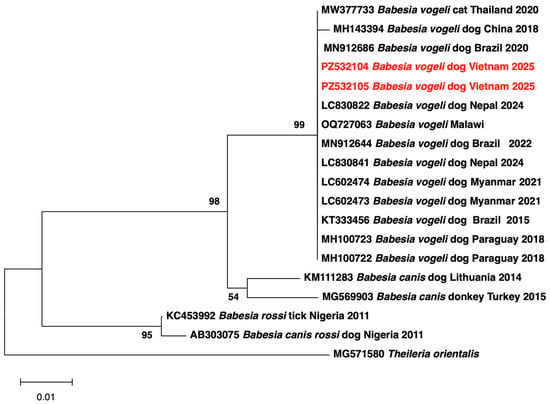
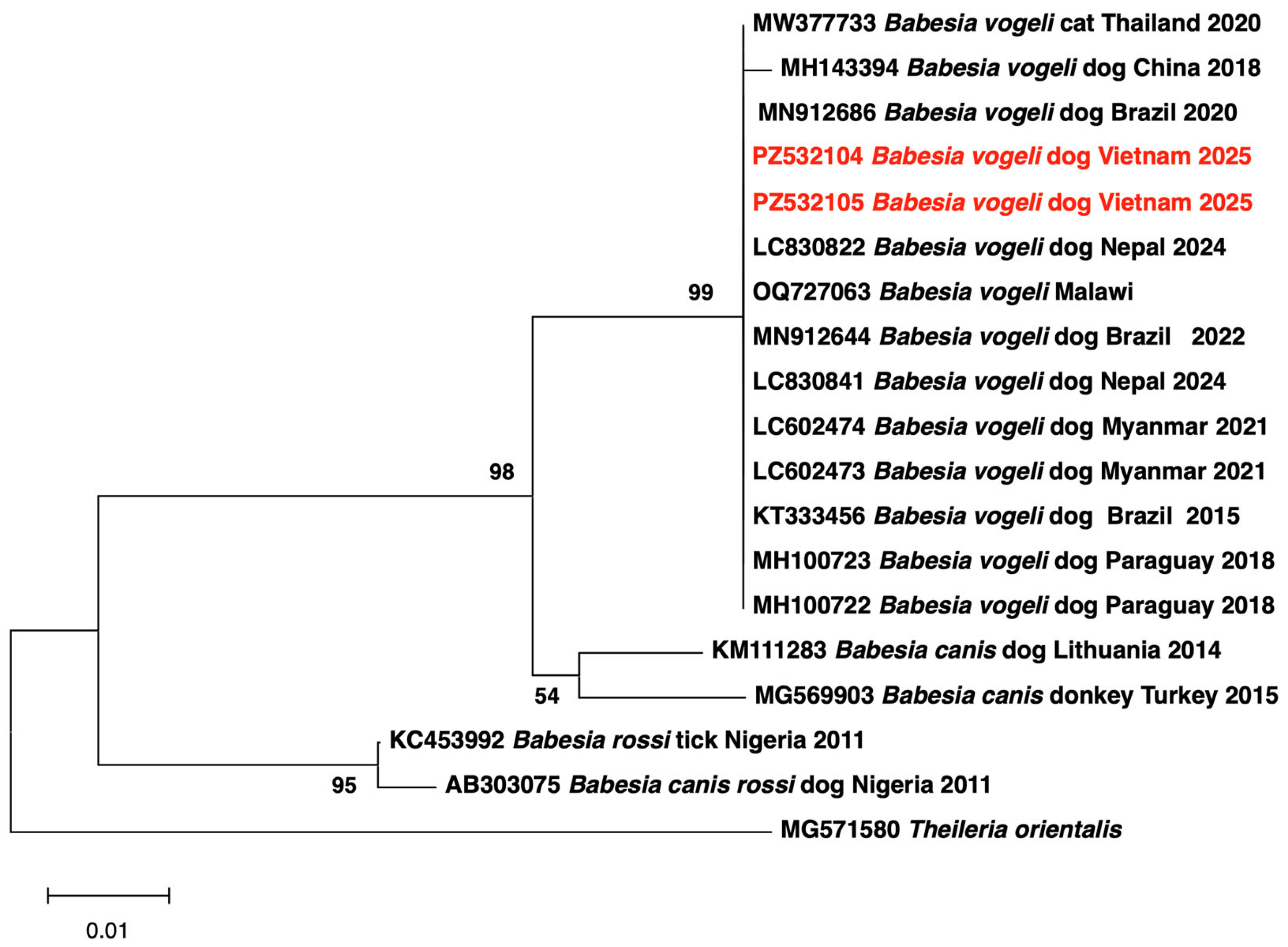
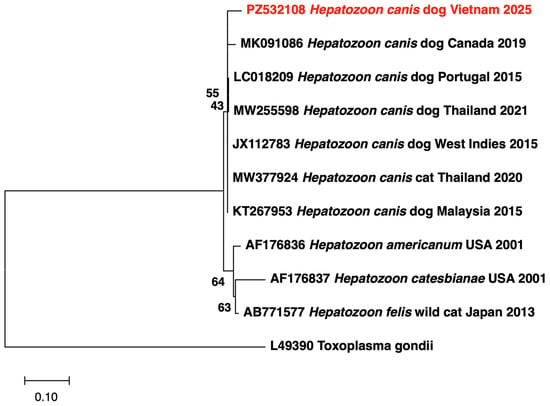
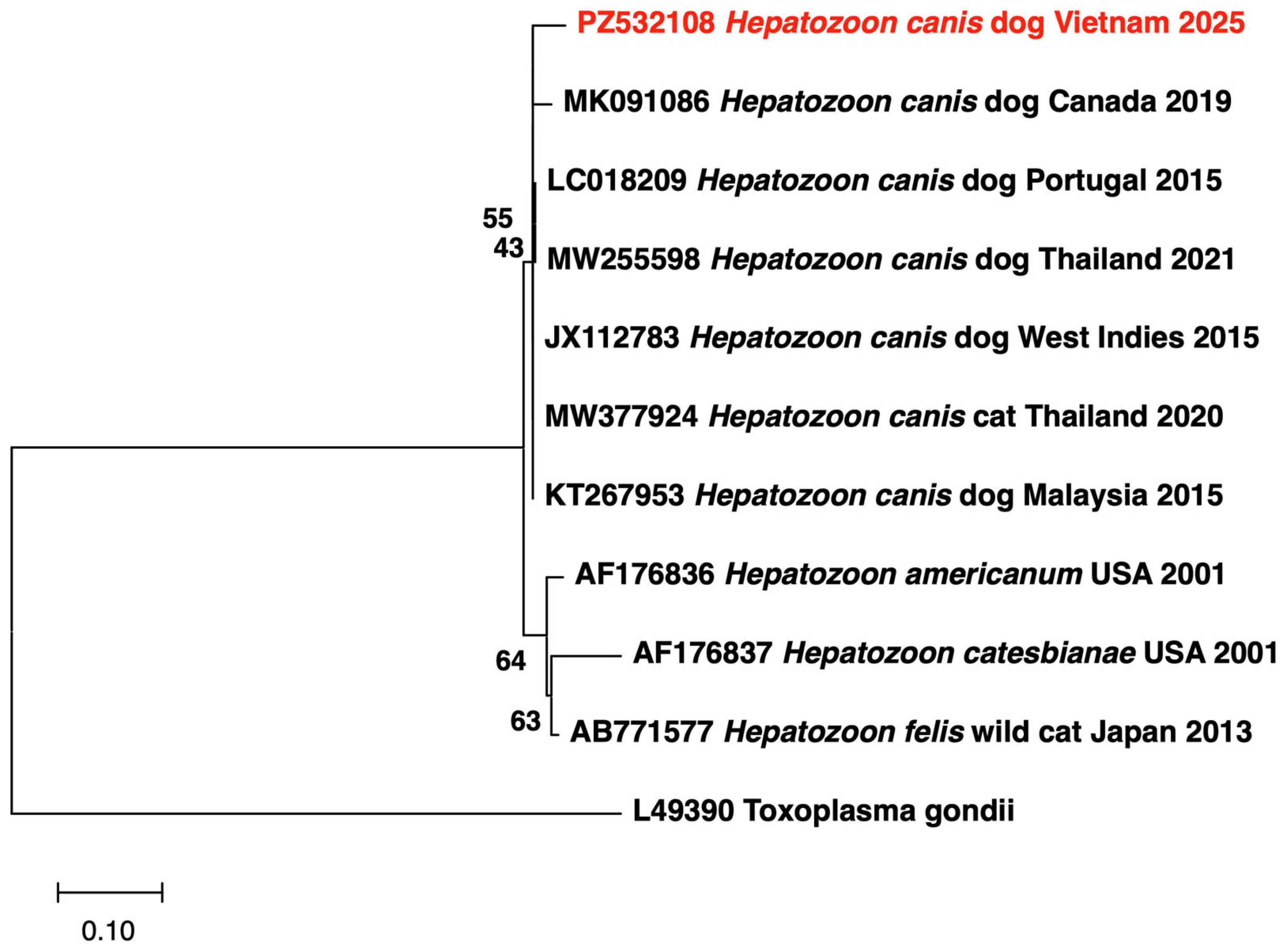
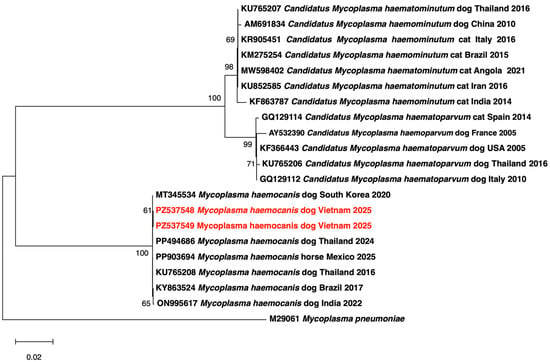
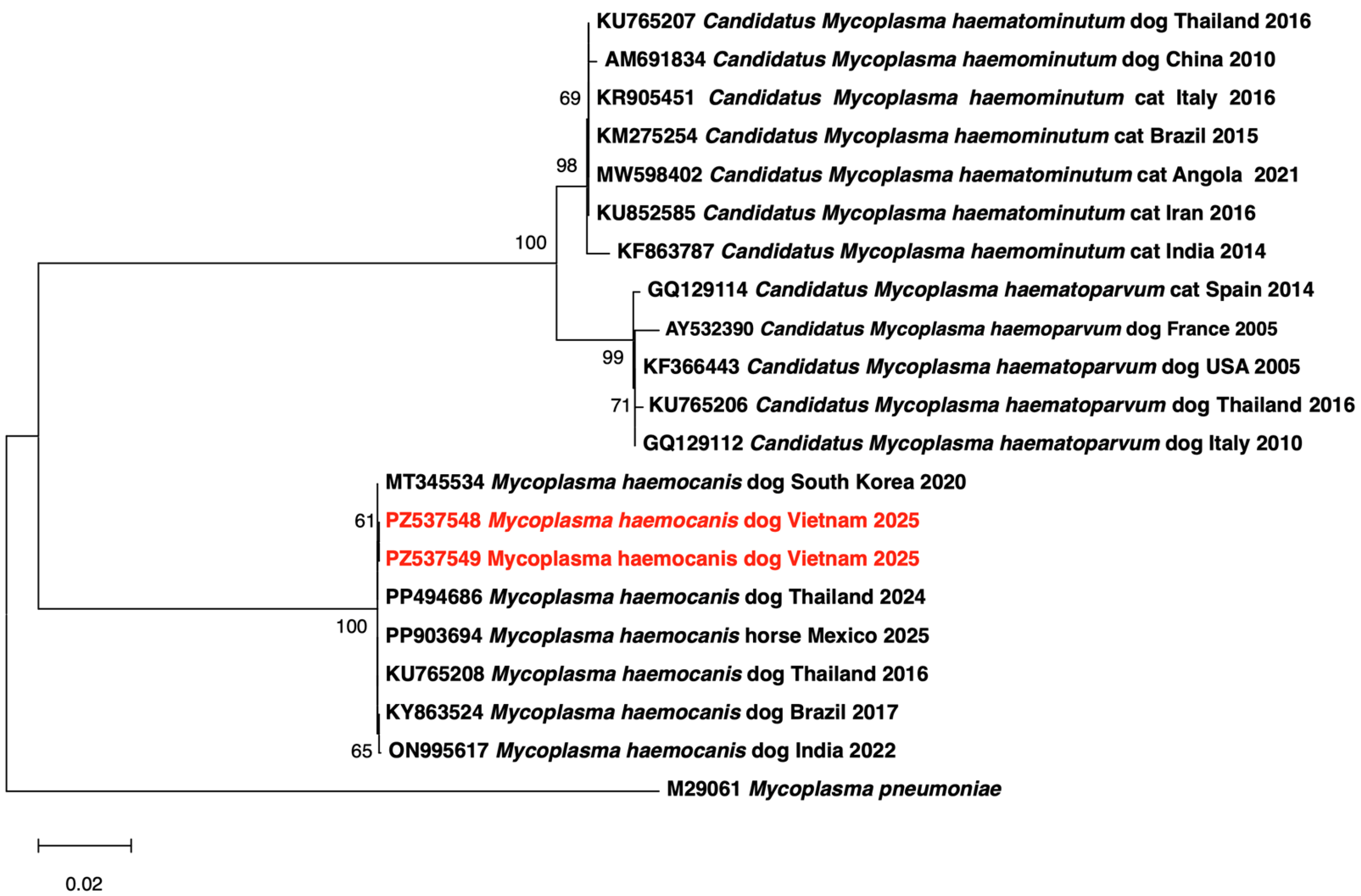
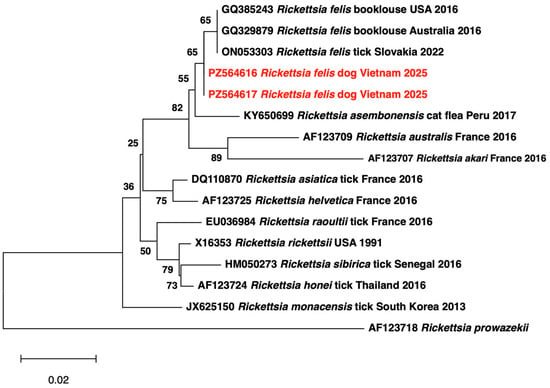
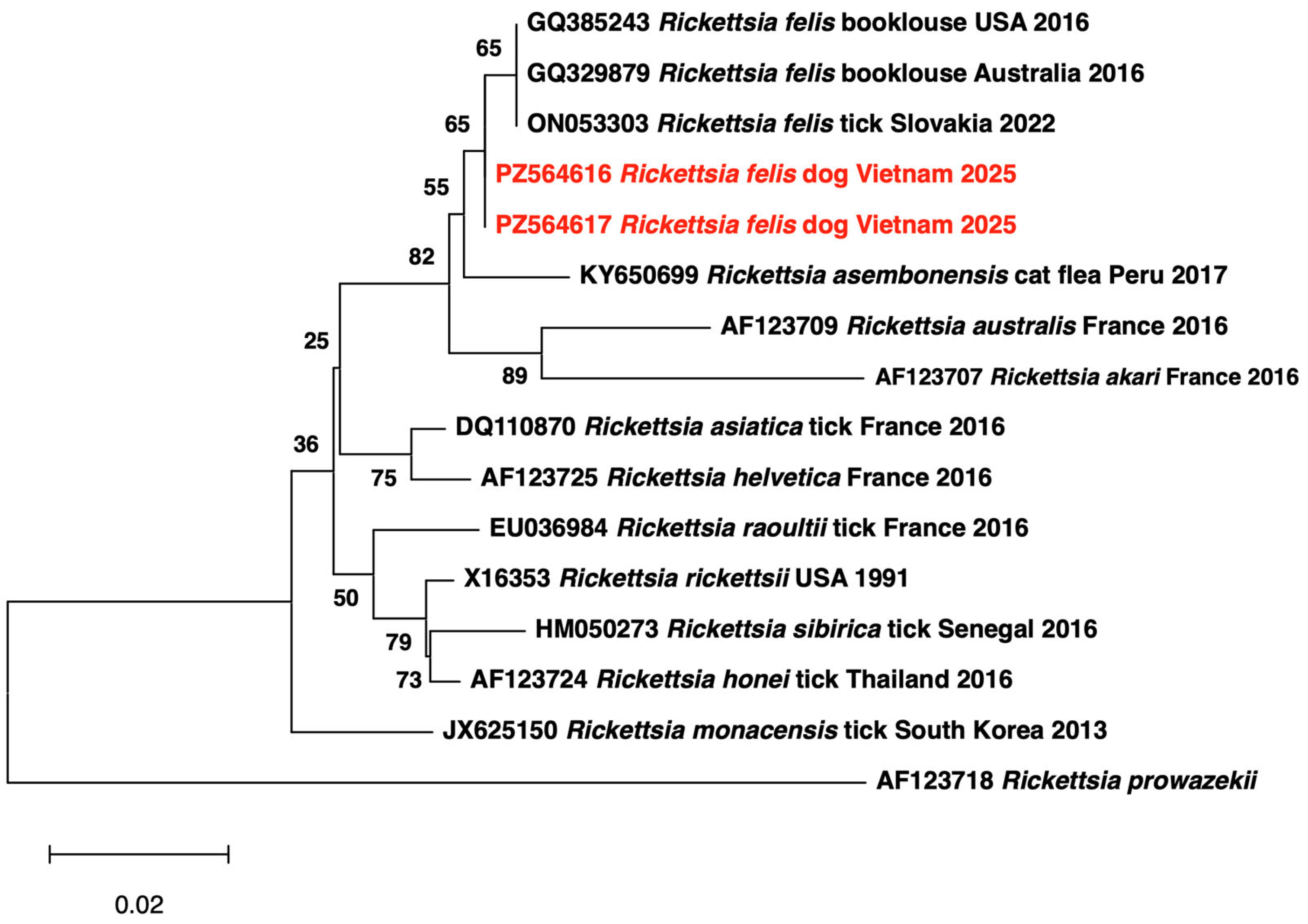
Sequence analysis of representative amplicons revealed high sequence identity between the pathogens detected in this study and previously reported sequences in the GenBank database, ranging from 96.07% to 100%. The 18S rRNA sequences of positive amplicons for B. vogeli showed 100% homology with MH100717, while H. canis demonstrated 96.07% similarity with MW810626. Moreover, the 16S rRNA sequences of Mycoplasma spp. were 99.63% identical to the M. haemocanis sequence MT345534. The obtained ompB sequences for Rickettsia spp. showed 99.66% similarity with R. felis (ON053303). Phylogenetic trees based on these loci (18S rRNA for B. vogeli and H. canis, 16S rRNA for M. haemocanis and ompB for R. felis) grouped all shelter-dog isolates within the corresponding B. vogeli, H. canis, M. haemocanis and R. felis clades, with high bootstrap support, and showed close relationships to strains previously reported from other countries (Figure 2, Figure 3, Figure 4 and Figure 5). The representative sequences obtained from this study have been deposited in Genbank database with the following accession numbers: PZ532104-PZ532105 for B. vogeli, PZ532108 for H. canis, PZ564616-PZ564617 for R. felis, and PZ537548-PZ537549 for M. haemocanis.
Figure 2.
Phylogenetic analysis of Babesia vogeli based on the nucleotide sequences of 18S rRNA gene using the Kimura 2 parameter model. Isolates obtained from this study are presented in bold and red color.
Figure 3.
Phylogenetic analysis of Hepatozoon canis based on the nucleotide sequences of 18S rRNA gene using the Kimura 2 parameter model. Isolates obtained from this study are presented in bold and red color.
Figure 4.
Phylogenetic analysis of Mycoplasma haemocanis based on the nucleotide sequences of 16S rRNA gene using the Kimura 2 parameter model. Isolates obtained from this study are presented in bold and red color.
Figure 5.
Phylogenetic analysis of Rickettsia felis based on the nucleotide sequences of ompB gene using the Kimura 2 parameter model. Isolates obtained from this study are presented in bold and red color.
4. Discussion
The overall prevalence of CVBPs found in this study was 43.7% across three shelters in northern Vietnam. This prevalence is comparable to previous studies on stray dogs in Thailand and shelter dogs in Malaysia, where 43.1% and 35.0% of the populations were found to be infected with one or more pathogens, respectively [17,18]. However, other studies of stray and semi-domesticated dogs in the SEA region demonstrated higher prevalence, ranging from 71.3% to 86.5% [19,20,21]. Such discrepancies could be attributed to differences in targeted pathogens, dog populations, and geographic or environmental conditions. It was initially hypothesized that shelter dogs would have a higher rate of infection than companion dogs in Vietnam, largely due to their free-roaming lifestyle before entering the shelter, high vector exposure, and unknown historical antiparasitic prevention [2]. Interestingly, the CVBPs prevalence among shelter dogs in the current study was considerably lower than that found in client-owned dogs (73.9%, 252/341) in the same region in Vietnam [10]. Several reasons could explain for the difference between the prevalence of this study and reported prevalence of Vietnamese dogs. Firstly, sampling was conducted in the cool, dry winter season with an ambient temperature of 12–18 °C, which could reduce activity and reproduction of Rhipicephalus linnaei (formerly known as Rhipicephalus sanguineus sensu lato) and Ctenocephalides felis. In this study, clinical inspection revealed low ectoparasite infestation rate of shelter dogs during sample collection. In contrast, surveys on owned dogs in Vietnam were carried out throughout the year and peak prevalence of CVBPs was observed in warmer months [10,11,12]. Secondly, the three participating shelters administered at least intermittent ectoparasiticide treatment three months prior to this study with ivermectin and dogs were housed in closed kennels, which could reduce tick and flea infestation and CVBP infection. Thirdly, the pathogen panel differed across studies. This study targeted four pathogens, whereas Do et al. [10] additionally screened for Ehrlichia, Anaplasma, which can inflate their cumulative prevalence.
Phylogenetic results demonstrate that the B. vogeli, M. haemocanis, and R. felis isolates from shelter dogs in northern Vietnam are genetically similar to strains circulating reported in other countries, contributing to the molecular evidence of detected pathogens in shelter populations in Vietnam.
Among the targeted pathogens in this study, the two flea-associated pathogens predominated, including R. felis that accounted for 25.7% (95% CI: 21.1–30.9%) and M. haemocanis for 24.0% (95% CI: 19.5–29.1%). R. felis is maintained primarily in Ctenocephalides felis fleas, with dogs acting as incidental or secondary mammalian hosts, whereas M. haemocanis is a haemotropic bacterium of dogs that can be transmitted by ectoparasites, including brown dog ticks and possibly fleas, as well as by direct blood exposure such as dog fights or transfusion. In this study, R. felis prevalence is consistent with emerging evidence of R. felis endemicity in Vietnam. Previously, R. felis DNA has been detected in 29.2% of buffy coat samples from household dogs in the Central Highlands of Vietnam, confirming the role of dogs as natural mammalian reservoirs for flea-borne spotted fever in the country [22]. Likewise, 24.0% prevalence of M. haemocanis markedly higher than 9.4% reported in companion dogs from northern Vietnam [10] and is comparable to the 27.04% documented in free-roaming dogs in southern Thailand [20]. A study in Malaysia further reported that shelter dogs had a significantly higher M. haemocanis prevalence (45.1%) than pet dogs (11.8%) from the same country [23], suggesting that the living conditions and environmental factors within shelters can facilitate transmission via vectors or direct contact. Several biological and ecological features can explain why these two flea-associated pathogens predominated in surveyed dogs. Notably, visual inspection at sampling revealed very few dogs with active ectoparasite infestation. Only a small number of shelter dogs carried ticks and no heavy flea burdens were observed. This apparent mismatch between low ectoparasite infestation at sampling point and high prevalence of Rickettsia and Mycoplasma could be explained by C. felis ecology. The cat flea has a short adult phase relative to a long environmental phase with 95% lifetime and exists as eggs, larvae, and pupae developing in the environment [24]. Therefore, a kennel can sustain continuous transmission pressure without active infestation on the host. In addition, both R. felis and haemotropic Mycoplasma spp. are often sub-clinical infections in dogs [9]. Molecular positivity observed in this study therefore indicates sub-clinical infections rather than active infection at sampling time. Moreover, the intermittent ectoparasite preventive programs of the shelters are effective at suppressing adult fleas on the host but only partially reduce environmental immature stages, thus dogs may remain positive after visible infestation has been controlled. The high prevalence of emerging bacterial pathogens poses a zoonotic threat to the community. Human non-specific febrile illness caused by R. felis has been confirmed by serological and molecular assays in some SEA countries, including Laos, the Thailand–Myanmar border region, and Vietnam [25,26,27]. While the zoonotic relevance of M. haemocanis has historically been considered low, a recent molecular investigation has confirmed M. haemocanis DNA in humans living in close contact with dogs [28]. This evidence indicates the need for integrated One Health surveillance, including routine diagnosis and ectoparasite control, public education on flea and tick prevention.
In contrast, the prevalence of B. vogeli and H. canis was detected at a comparatively low rate of 1.3% each (4/300; 95% CI: 0.5–3.4%) in the present study. These findings are substantially lower than those reported for companion dogs in northern Vietnam, where B. vogeli was the most frequently detected pathogen at 30.5%, and also lower than the 32.7% B. vogeli prevalence recorded in semi-domesticated dogs in Cambodia [10,19]. Similarly, previous studies from neighboring countries have reported H. canis prevalence rates from 10.9 to 18.8%, far exceeding the rate found in the current study [16,18]. The low detection rate of the tick-borne protozoa B. vogeli and H. canis in this study is consistent with a low burden of brown dog ticks in the surveyed shelters, given that Rhipicephalus linnaei (formerly R. sanguineus sensu lato) is the primary vector for these pathogens [29,30].
Co-infections were detected in 8.7% (26/300) of the tested dogs, with the co-occurrence of R. felis and M. haemocanis being the most common combination (8.3%, 25/300). In warm regions, the diversity of ectoparasites and vector-borne pathogens has been demonstrated to be associated with a higher co-infection rate in dogs [31,32]. The transmission of multiple pathogens can be facilitated either by a single vector co-infected with several pathogens or by distinct vector species transmitting individual pathogens [31]. In this current study in Vietnam, the diagnosis of CVBPs mainly relies on complete blood count parameters, microscopy, and clinical examinations. However, these conventional methods offer low diagnostic accuracy as the clinical presentations are often more complicated or overlap in co-infection cases. Therefore, this underscores the need for routine molecular diagnosis to screen multiple pathogens to improve diagnostic efficiency and treatment outcomes.
Univariate logistic regression revealed no statistically significant associations between any of the host-related variables (including age, sex, breed, body size, and lifestyle) and CVBP infection (p > 0.05). While numerous studies have reported significant relationships between dogs’ demographic data and CVBP infections [10,33,34], a study on companion dogs and cats in Thailand revealed only age associated with the infections [35]. All shelter dogs involved in this study had minimal ectoparasite control and the same vector exposure risk across the three shelters, suggesting that environmental and management-level factors, such as ectoparasite burden, and antiparasitic treatment, are more likely to be the primary determinants of infection risk than host demographic characteristics.
Regarding shelter management perspective, the findings of this study offer several critical, practical implications for improving animal welfare and controlling tick and flea-borne diseases. Year-round systemic tick and flea control utilizing long-acting isoxazolines or multi-action imidacloprid/fipronil formulations must be prioritized over traditional, seasonal acaricides to provide continue protection and reduce ectoparasite burdens. Routine environmental treatment of kennels and communal areas is required to eliminate life stages residing within the shelters. In addition, a strict intake protocol should be enforced: all newly admitted dogs should undergo an initial isolation and monitoring period before being introduced into the shelter population. Finally, as the clinical signs of CVBP infections are non-specific, shelters should also adopt PCR-based screening of new arrivals and of any dog presenting with fever, anaemia, or non-responsive lethargy for better diagnostic and treatment efficiency.
Several limitations should be addressed regarding the current study. Firstly, the cross-sectional study design and winter-season sampling period may have underestimated the true prevalence of CVBPs among shelter dogs. Secondly, dog samples were collected from only three major shelters in northern Vietnam, which limits the geographic and demographic representativeness of the findings. Finally, the restriction of the study population to apparently healthy dogs may result in underrepresentation of the prevalence and co-infection patterns presenting in higher-risk or clinically symptomatic animals.
5. Conclusions
This study provides the first molecular evidence of canine vector-borne pathogen circulation in shelter dogs in northern Vietnam and identifies shelters as a distinct epidemiological niche for flea-borne infections. Based on the high prevalence, shelter vector-control programs should prioritize long-acting systemic ectoparasite prophylaxis for all dogs, regular environmental treatment of kennels and communal areas, and implementing standardized intake protocols to reduce introduction and spread of CVBPs within shelters. Integration of shelter data into local One Health surveillance, together with staff training and public education on ectoparasite control, is essential to mitigate potential zoonotic transmission risks.
Author Contributions
Conceptualization, T.I.; methodology, B.X.P., L.K.B. and T.I.; software, B.X.P.; validation, B.X.P.; formal analysis, B.X.P.; investigation, B.X.P., L.K.B. and T.I.; resources, T.I.; data curation, B.X.P.; writing—original draft preparation, B.X.P.; writing—review and editing, L.K.B. and T.I.; visualization, B.X.P.; supervision, L.K.B. and T.I.; project administration, T.I.; funding acquisition, T.I. All authors have read and agreed to the published version of the manuscript.
Funding
This study was supported by the Advanced Research Assistant Scholarship (RA plus 67/12), Faculty of Veterinary Medicine, Kasetsart University. In addition, this research was also financially supported by the Faculty of Veterinary Medicine, Kasetsart University (VET.KU2025-TWP.05).
Institutional Review Board Statement
The study was conducted in accordance with the Ethical Review Board of the Office of the National Research Council of Thailand (NRCT) and approved by the Kasetsart University’s Institution Animal Care and Use Committee (approval number ACKU68-VET-048; approval date: 19 May 2025).
Informed Consent Statement
Informed consent was obtained from all subjects involved in the study.
Data Availability Statement
The original contributions presented in this study are included in the article. Further inquiries can be directed to the corresponding author. The datasets generated and analyzed during the current study are available from the corresponding author on reasonable request. All nucleotide sequences generated in this study have been deposited in the GenBank database under the following accession numbers: Rickettsia felis ompB gene, PZ564616 and PZ564617; Mycoplasma haemocanis 16S rRNA gene, PZ537548 and PZ537549; Hepatozoon canis 18S rRNA gene, PZ532108; Babesia vogeli 18S rRNA gene, PZ532104 and PZ532105.
Acknowledgments
The authors sincerely appreciate the tremendous support from the staff of the three shelters and veterinarians from Gaia Animal Hospital in Vietnam for their assistance during sample collection, as well as the staff members of the Department of Parasitology, Faculty of Veterinary Medicine, Kasetsart University, for their laboratory support.
Conflicts of Interest
The authors declare no conflicts of interest.
Abbreviations
The following abbreviations are used in this manuscript:
| CVBPs | Canine vector-borne pathogens |
| CVBDs | Canine vector-borne diseases |
| PCR | Polymerase chain reaction |
| SEA | Southeast Asia |
References
- Otranto, D.; Dantas-Torres, F.; Breitschwerdt, E.B. Managing canine vector-borne diseases of zoonotic concern: Part one. Trends Parasitol. 2009, 25, 157–163. [Google Scholar] [CrossRef] [PubMed]
- Gettings, J.R.; McMahan, C.S.; Cleveland, C.A.; Varela-Stokes, A.; Hubbard, K.; Hamer, S.A.; Walden, H.S.; Yabsley, M.J. Association between vector-borne pathogen seroprevalence in shelter-housed and owned dog populations in the contiguous United States of America. Parasites Vectors 2023, 16, 405. [Google Scholar] [CrossRef] [PubMed]
- Hazelrig, C.M.; Gettings, J.R.; Cleveland, C.A.; Varela-Stokes, A.; Majewska, A.A.; Hubbard, K.; Burton, K.W.; Yabsley, M.J. Spatial and risk factor analyses of vector-borne pathogens among shelter dogs in the Eastern United States. Parasites Vectors 2023, 16, 197. [Google Scholar] [CrossRef] [PubMed]
- Bedoya, F.; Beugnet, F.; Tobias, E.; Garcia-Mendizabal, E.; Hay-Parker, S.; Montes, N.; Uribe, J.; Mondaca, E. Geographical analysis of seroprevalence of Ehrlichia spp., Anaplasma spp., Borrelia burgdorferi and Dirofilaria immitis, in clinics and dog shelters in different Mexican states. Curr. Res. Parasitol. Vector-Borne Dis. 2022, 3, 100112. [Google Scholar] [CrossRef] [PubMed]
- Checa, R.; Peteiro, L.; Pérez-Hernando, B.; de la Morena, M.; Cano, L.; López-Suárez, P.; Barrera, J.P.; Estévez-Sánchez, E.; Sarquis, J.; Fernández-Cebrián, B.; et al. High serological and molecular prevalence of Ehrlichia canis and other vector-borne pathogens in dogs from Boa Vista Island, Cape Verde. Parasites Vectors 2024, 17, 374. [Google Scholar] [CrossRef] [PubMed]
- Vinnie-Siow, W.Y.; Low, V.L.; Tan, T.K.; Teoh, Y.B.; Prakash, B.K.; Lim, Y.A.L. Serological survey of canine vector-borne diseases in two animal shelters in central Peninsular Malaysia. Trop. Biomed. 2021, 38, 145–149. [Google Scholar] [CrossRef] [PubMed]
- Nguyen, V.L.; Colella, V.; Greco, G.; Fang, F.; Nurcahyo, W.; Hadi, U.K.; Venturina, V.; Tong, K.B.Y.; Tsai, Y.L.; Taweethavonsawat, P.; et al. Molecular detection of pathogens in ticks and fleas collected from companion dogs and cats in East and Southeast Asia. Parasites Vectors 2020, 13, 420. [Google Scholar] [CrossRef] [PubMed]
- Nguyen-Ho-Bao, T.; La, M.A.T.; Nguyen, B.P.; Nguyen, C.T.; Nguyen, T.M.; Lu, T.A.; Tran, H.H.T.; Huu, H.N. Epidemiological characteristics of the ectoparasite infestation in domestic dogs in the Mekong Delta of Vietnam. Vet. Integr. Sci. 2023, 22, 1149–1159. [Google Scholar] [CrossRef]
- Nguyen, V.-L.; Dantas-Torres, F.; Otranto, D. Canine and feline vector-borne diseases of zoonotic concern in Southeast Asia. Curr. Res. Parasitol. Vector-Borne Dis. 2021, 1, 100001. [Google Scholar] [CrossRef]
- Do, T.; Bui, K.L.; Inpankaew, T.; Galon, M.E.; Ta, P.A.; Tran, K.T.; Hasan, T.; Shengwei, J.; Ma, Z.; Hang, L.; et al. Molecular detection, risk factors, and phylogenetic analysis of tick-borne pathogens in dogs from northern Vietnam. Trop. Biomed. 2024, 41, 52–63. [Google Scholar] [CrossRef] [PubMed]
- Do, T.; Bui, L.K.; Umemiya-Shirafuji, R.; Inpankaew, T.; Hasan, T.; Zafar, I.; Ma, Z.; Hang, L.; Mohanta, U.K.; Amer, M.; et al. The detection of zoonotic microorganisms in Rhipicephalus sanguineus (brown dog ticks) from Vietnam and the frequency of tick infestations in owned dogs. Front. Vet. Sci. 2024, 11, 1435441. [Google Scholar] [CrossRef] [PubMed]
- Nguyen, V.L.; Colella, V.; Iatta, R.; Bui, K.L.; Dantas-Torres, F.; Otranto, D. Ticks and associated pathogens from dogs in northern Vietnam. Parasitol. Res. 2019, 118, 139–142. [Google Scholar] [CrossRef] [PubMed]
- Paris, D.H.; Blacksell, S.D.; Stenos, J.; Graves, S.R.; Unsworth, N.B.; Phetsouvanh, R.; Newton, P.N.; Day, N.P. Real-time multiplex PCR assay for detection and differentiation of rickettsiae and orientiae. Trans. R. Soc. Trop. Med. Hyg. 2008, 102, 186–193. [Google Scholar] [CrossRef] [PubMed]
- Criado-Fornelio, A.; Martinez-Marcos, A.; Buling-Saraña, A.; Barba-Carretero, J.C. Presence of Mycoplasma haemofelis, Mycoplasma haemominutum and piroplasmids in cats from southern Europe: A molecular study. Vet. Microbiol. 2003, 93, 307–317. [Google Scholar] [CrossRef] [PubMed]
- Inokuma, H.; Yoshizaki, Y.; Matsumoto, K.; Okuda, M.; Onishi, T.; Nakagome, K.; Kosugi, R.; Hirakawa, M. Molecular survey of Babesia infection in dogs in Okinawa, Japan. Vet. Parasitol. 2004, 121, 341–346. [Google Scholar] [CrossRef] [PubMed]
- Inokuma, H.; Okuda, M.; Ohno, K.; Shimoda, K.; Onishi, T. Analysis of the 18S rRNA gene sequence of a Hepatozoon detected in two Japanese dogs. Vet. Parasitol. 2002, 106, 265–271. [Google Scholar] [CrossRef] [PubMed]
- Liu, M.; Ruttayaporn, N.; Saechan, V.; Jirapattharasate, C.; Vudriko, P.; Moumouni, P.F.A.; Cao, S.; Inpankaew, T.; Ybañez, A.P.; Suzuki, H.; et al. Molecular survey of canine vector-borne diseases in stray dogs in Thailand. Parasitol. Int. 2016, 65, 357–361. [Google Scholar] [CrossRef] [PubMed]
- Sipin, Q.; Mustaffa Kamal, F.; Watanabe, M.; Megat Abdul Rani, P.A.; Low, V.L.; Abdul Aziz, N.A. Molecular detection of tick-borne haemopathogens in shelter dogs and Rhipicephalus sanguineus (sensu lato) ticks from Peninsular Malaysia. Comp. Immunol. Microbiol. Infect. Dis. 2020, 73, 101563. [Google Scholar] [CrossRef] [PubMed]
- Inpankaew, T.; Hii, S.F.; Chimnoi, W.; Traub, R.J. Canine vector-borne pathogens in semi-domesticated dogs residing in northern Cambodia. Parasites Vectors 2016, 9, 253. [Google Scholar] [CrossRef] [PubMed]
- Kongtawee, R.; Junsiri, W.; Narapakdeesakul, D.; Thiptara, A.; Beugnet, F.; Taweethavonsawat, P. High burden and spatial clustering of canine hemoparasitic infections in southern Thailand: A molecular survey of free-roaming dogs. One Health 2026, 22, 101365. [Google Scholar] [CrossRef] [PubMed]
- Mohammed, K.; Tukur, S.M.; Watanabe, M.; Rani, P.A.M.A.; Sharma, R.S.; Fong, L.S.; Watanabe, M. Molecular and serological detection of tick-borne hemopathogens among stray dogs in East Malaysia. J. Vet. Med. Res. 2017, 4, 1074. [Google Scholar]
- Van Nguyen, T.; Nguyen, H.Q.; Stenos, J.; Van Nguyen, T.; Ng-Nguyen, D. Molecular detection of Rickettsia sp. genotype RF2125 from household dogs in the central highlands of Vietnam. Res. Vet. Sci. 2023, 163, 104989. [Google Scholar] [CrossRef] [PubMed]
- Mohd-Zahir, N.A.; Mohd-Kamal, F.N.; Sipin, Q.; Ammar-Qusyairi, M.H.; Moktar, M.A.; Low, S.Y.; Watanabe, M.; Othman, A.H.; Nor-Azlina, A.A. Detection of Mycoplasma haemocanis and Candidatus Mycoplasma haematoparvum in shelter and pet dogs in Malaysia. Trop. Biomed. 2024, 41, 399–403. [Google Scholar] [CrossRef] [PubMed]
- Rust, M.K.; Wang, C.; Lee, C.-Y. The Biology and Ecology of Cat Fleas and Advancements in Their Pest Management: A Review. Insects 2017, 8, 118. [Google Scholar] [CrossRef] [PubMed]
- Aung, A.K.; Spelman, D.W.; Murray, R.J.; Graves, S. Rickettsial infections in Southeast Asia: Implications for local populace and febrile returned travelers. Am. J. Trop. Med. Hyg. 2014, 91, 451–460. [Google Scholar] [CrossRef] [PubMed]
- Dittrich, S.; Phommasone, K.; Anantatat, T.; Panyanivong, P.; Slesak, G.; Blacksell, S.D.; Dubot-Pérès, A.; Castonguay-Vanier, J.; Stenos, J.; Newton, P.N.; et al. Rickettsia felis Infections and Comorbid Conditions, Laos, 2003-2011. Emerg. Infect. Dis. 2014, 20, 1402. [Google Scholar] [CrossRef] [PubMed]
- Le-Viet, N.; Le, V.N.; Chung, H.; Phan, D.T.; Phan, Q.D.; Van Cao, T.; Abat, C.; Raoult, D.; Parola, P. Prospective case-control analysis of the aetiologies of acute undifferentiated fever in Vietnam. Emerg. Microbes Infect. 2019, 8, 339–352. [Google Scholar] [CrossRef] [PubMed]
- Kmetiuk, L.B.; Shaw, P.; Wallington, A.; Kattoor, J.J.; Johnson, M.; Wilkes, R.P.; Biondo, L.M.; Giuffrida, R.; Santarém, V.A.; Freitas, A.R.; et al. Molecular detection of hemotropic mycoplasmas (hemoplasmas) in humans and dogs living on islands and the seashore mainland of Brazil: A One Health approach. Parasites Vectors 2026, 19, 52. [Google Scholar] [CrossRef] [PubMed]
- Baker, E.; Jensen, A.; Miller, D.; Garrett, K.B.; Cleveland, C.A.; Brown, J.; Van Why, K.; Gerhold, R. Hepatozoon spp. infection in wild canids in the eastern United States. Parasites Vectors 2023, 16, 372. [Google Scholar] [CrossRef] [PubMed]
- Ogbu, K.I.; Olaolu, O.S.; Ochai, S.O.; Tion, M.T. A review of some tick-borne pathogens of dogs. J. Anim. Sci. Vet. Med. 2018, 3, 140–153. [Google Scholar] [CrossRef]
- Galay, R.L.; Manalo, A.A.L.; Dolores, S.L.D.; Aguilar, I.P.M.; Sandalo, K.A.C.; Cruz, K.B.; Divina, B.P.; Andoh, M.; Masatani, T.; Tanaka, T. Molecular detection of tick-borne pathogens in canine population and Rhipicephalus sanguineus (sensu lato) ticks from southern Metro Manila and Laguna, Philippines. Parasites Vectors 2018, 11, 643. [Google Scholar] [CrossRef] [PubMed]
- Low, V.L.; Prakash, B.K.; Lim, Y.A.L.; Tan, T.K.; Vinnie-Siow, W.Y.; Sofian-Azirun, M.; AbuBakar, S. Detection of Anaplasmataceae agents and co-infection with other tick-borne protozoa in dogs and Rhipicephalus sanguineus sensu lato ticks. Exp. Appl. Acarol. 2018, 75, 429–435. [Google Scholar] [CrossRef] [PubMed]
- Cortese, L.; Beall, M.; Buono, F.; Buch, J.; Pacifico, L.; Neola, B.; Palatucci, A.T.; Tyrrell, P.; Fioretti, A.; Breitschwerdt, E.B.; et al. Distribution and risk factors of canine haemotropic mycoplasmas in hunting dogs from southern Italy. Vet. Microbiol. 2020, 251, 108910. [Google Scholar] [CrossRef] [PubMed]
- Hii, S.F.; Traub, R.J.; Thompson, M.F.; Henning, J.; O’Leary, C.A.; Burleigh, A.; Mcmahon, S.; Rees, R.L.; Kopp, S.R. Canine tick-borne pathogens and associated risk factors in dogs presenting with and without clinical signs consistent with tick-borne diseases in northern Australia. Aust. Vet. J. 2015, 93, 58–66. [Google Scholar] [CrossRef] [PubMed]
- Luong, N.H.; Kamyingkird, K.; Thammasonthijarern, N.; Phasuk, J.; Nimsuphan, B.; Pattanatanang, K.; Chimnoi, W.; Kengradomkij, C.; Klinkaew, N.; Inpankaew, T. Companion Vector-Borne Pathogens and Associated Risk Factors in Apparently Healthy Pet Animals (Dogs and Cats) in Khukhot City Municipality, Pathum Thani Province, Thailand. Pathogens 2023, 12, 391. [Google Scholar] [CrossRef] [PubMed]

Disclaimer/Publisher’s Note: The statements, opinions and data contained in all publications are solely those of the individual author(s) and contributor(s) and not of MDPI and/or the editor(s). MDPI and/or the editor(s) disclaim responsibility for any injury to people or property resulting from any ideas, methods, instructions or products referred to in the content. |
© 2026 by the authors. Licensee MDPI, Basel, Switzerland. This article is an open access article distributed under the terms and conditions of the Creative Commons Attribution (CC BY) license.