
Skip to Content

Clinics and Practice

Clinics and Practice is an international, peer-reviewed, open access journal on clinical medicine, published monthly online by MDPI (from Volume 11, Issue 1 - 2021).

Indexed in PubMed | Quartile Ranking JCR - Q1 (Medicine, General and Internal)

Get Alerted

Add your email address to receive forthcoming issues of this journal.

All Articles (1,458)

Background/Objectives: This study analyzes the temporal and spatial evolution of type 2 diabetes prevalence in Romanian counties over a 10-year period (2012–2021), based on the time series autocorrelation and cross-correlation coefficients. Methods: The autocorrelation coefficients were calculated within each county’s data series, in order to identify the internal temporal dependencies, and the cross-correlation coefficients were calculated on administrative regions, in order to identify epidemiological patterns. Results: The type 2 diabetes prevalence rates in most counties follow autoregressive series, with significant positive correlations at lag 1, indicating cyclical fluctuations. Cross-correlation analysis revealed 3 regional patterns: North-East and West regions showed highly synchronized dynamics with cross-correlations exceeding 0.9, South-East and South regions showed mixed synchronization, with temporal lags of 1–2 years between counties, while the other regions (Center, South-West and North-West) revealed a synchronized core and an isolated county, with atypical dynamics (e.g., Cluj, Alba, Mehedinți, Ialomița). Conclusions: These findings highlight the utility of time series analysis in understanding the specificity of such data and their practical applicability in customizing the required public health interventions.

4 July 2026
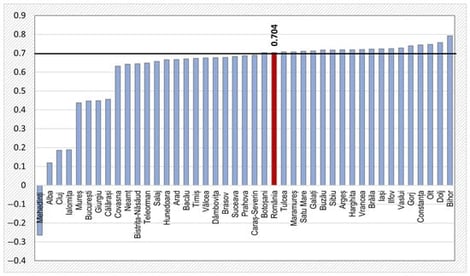
Comparative values of autocorrelation coefficients at lag 1 across all investigated time series (counties, Bucharest, and national level).

Unusual Manifestations of Sinonasal Osteomas: A Narrative Review

  • Spyridon Lygeros,
  • Alkmini Gatsounia and
  • Gerasimos Danielides
  • + 3 authors

Background/Objectives: Sinonasal osteomas are benign, slow-growing tumors that are typically asymptomatic and incidentally detected. However, in rare cases, they may present with atypical and potentially serious complications involving other sinonasal, orbital, or intracranial structures. This review aims to synthesize these unusual manifestations and to highlight the underlying mechanisms, diagnostic challenges, and management implications. Methods: A narrative review of the literature was conducted, focusing on reported cases of sinonasal osteomas with rare or complicated presentations. Studies were analyzed with emphasis on clinical features, imaging findings, pathophysiological mechanisms, and treatment strategies. Results: Unusual presentations of sinonasal osteomas are primarily driven by sinus obstruction, progressive expansion, and skull-base erosion. These processes may result in complications such as pneumocephalus, intracranial mucoceles, cerebrospinal fluid leaks, orbital compression, and secondary infections. Clinical manifestations are often nonspecific, including headache, seizures, visual disturbances, or focal neurological deficits, which may delay diagnosis. High-resolution computed tomography is essential for identifying the osseous lesion and associated bone changes, while magnetic resonance imaging is critical for assessing soft-tissue involvement and intracranial extension. Management is individualized, with surgical resection indicated in most symptomatic or complicated cases, using endoscopic, open, or combined approaches. Conclusions: Although rare, atypical manifestations of sinonasal osteomas can result in significant morbidity. A mechanism-based understanding, supported by appropriate imaging, is essential for accurate diagnosis and timely management. Increased clinical awareness is crucial to improving outcomes in these uncommon but clinically significant cases.

4 July 2026

  • Case Report
  • Open Access

Background: Congenital fibular deficiency is a rare longitudinal deficiency of the lower extremity associated with limb-length discrepancy, ankle and foot deformity, soft-tissue imbalance, and functional impairment. Reconstruction may be challenging because bone healing, regenerate maturation, and mechanical stability can be less predictable in selected patients. Case Presentation: A man with congenital fibular deficiency developed chronic distal tibial nonunion after corrective osteotomy at another institution. The nonunion persisted for four years, and the patient presented to our hospital with inability to bear weight and wheelchair dependence. A comprehensive salvage strategy was performed, including Achilles tendon lengthening using the Vulpius technique, removal of retained fixation material, debridement and refreshment of the nonunion site, negative bacteriological cultures, autologous cancellous iliac bone grafting, acute shortening and compression of the docking site, circular external fixation, proximal tibial osteotomy, and gradual lengthening. Low-intensity pulsed ultrasound was applied postoperatively as an adjunctive biological stimulus. Results: Bone union was achieved, and the external fixator was removed approximately one year after surgery. A total lengthening of 78 mm was achieved. At 12-year follow-up, the AOFAS ankle-hindfoot score was 90, ankle range of motion was 5° dorsiflexion and 40° plantarflexion, and the JOA knee score was 95. The patient walked independently without assistive devices and continued to work. Mild residual varus deformity of the proximal tibia was present, but the patient reported no knee pain, ankle pain, or ankle instability, and radiographs showed no progressive osteoarthritic changes. Conclusions: In selected patients with congenital fibular deficiency and chronic nonunion after previous treatment, durable limb salvage may be achieved using an individualized strategy that addresses both biological and mechanical factors.

3 July 2026

  • Systematic Review
  • Open Access

Background: Over 30% of patients with inflammatory bowel disease (IBD) experience primary non-response to tumor necrosis factor-α antagonists (anti-TNFs). Oncostatin M (OSM), a TNF-α-independent pro-inflammatory signaling cytokine, is emerging as a potential predictive biomarker of treatment response. Through a systematic review and meta-analysis, we assessed the utility of baseline serum or plasma OSM for predicting anti-TNF response in IBD patients. Methods: We searched PubMed, Embase, Cochrane Library, and Web of Science through March 2026 for studies reporting associations between baseline serum/plasma OSM and endoscopic or clinical response to anti-TNF therapy in adult IBD patients. We used a bivariate random-effects model to estimate pooled sensitivity, specificity, diagnostic odds ratio (DOR), and area under the receiver operating characteristic (ROC) curve (AUC). Quality was assessed using QUADAS-2. Results: Data from four studies (n = 441 patients) were pooled. We estimated a pooled sensitivity of 82.8% (95% CI 71.4–90.3%) and a specificity of 88.4% (95% CI 82.7–92.4%) for predicting anti-TNF non-response. The pooled AUC was 0.899 (95% CI 0.858–0.940), with low heterogeneity (I2 = 16.0%). The pooled DOR was 36.7 (95% CI 15.7–85.8), with a positive likelihood ratio of 7.1 and a negative likelihood ratio of 0.19. Risk of bias was low across the studies. Conclusions: Higher serum OSM was associated with treatment failure in IBD patients receiving anti-TNF therapy, with a pooled AUC of 0.899 in assay-stratified analysis and 0.820 when all studies were included. However, the small number of available studies, substantial variability in OSM cutoffs (14–233.6 pg/mL) and assay heterogeneity limit the robustness and generalizability and call for additional prospective data to more-robustly characterize the clinical utility of OSM.

2 July 2026

News & Conferences

Volumes

Latest Issues

Open for Submission

Editor's Choice

XFacebookLinkedIn
Clin. Pract. - ISSN 2039-7283