


Abstract
Wildland firefighters play a critical role in protecting communities and natural resources, yet comparatively little research has examined the occupational health risks associated with repeated smoke exposure. This narrative review analyzed documented health effects, contributing exposure determinants, and mitigation strategies across 38 studies meeting pre-specified inclusion criteria. Included studies were predominantly quantitative field investigations evaluating pulmonary, cardiovascular, metabolic, and chemical exposure outcomes. Consistent findings documented decreased lung function, elevated oxidative stress, increased carbon monoxide (CO) exposure, and cumulative cardiovascular risk. Wildland firefighters were associated with polycyclic aromatic hydrocarbon (PAH) levels 2.2–26.7 times higher than controls. Prescribed burns produced CO concentrations 233% higher than off-fire-line days. Cardiovascular disease accounts for approximately 45% of annual line-of-duty fatalities among U.S. firefighters. Contributing factors included career duration, fire type, and operational role. Altogether, these findings underscore the severe, multi-system health risks faced by wildland firefighters and highlight a pressing need for modern mitigation strategies and firefighter-specific protective technologies to safeguard long-term health.
1. Introduction
Wildfires, often referred to as forest or brush fires, are fires that primarily consume natural fuels, such as trees, grass, and shrubs. They can be characterized as either wildfires or prescribed fires. Wildfires are unplanned fires caused by natural or human causes. Prescribed fires are pre-planned, intentional events used as a strategic tool to reduce hazardous fuel loads [1]. Wildland firefighters are highly trained to manage both: they execute the suppression of unplanned blazes and the precise implementation of controlled burns to help prevent fuel accumulation and future wildfire occurrence.
Every year, wildfires affect millions of people worldwide and pose a serious threat to their lives [2]. Most of the research on smoke exposure and mortality has historically focused on urban structural firefighters rather than wildland firefighters [3]. This represents a critical gap in occupational health research as urban structural firefighters are required to use respirators, and wildland firefighters routinely engage in fire suppression without respirators or effective protective equipment [4]. These professionals operate in environments where the smoke far exceeds the levels deemed hazardous to the general public [1,5]. Thus, while wildland firefighters are highly trained and educated in fire suppression, they are not provided with proper education, protective equipment, or suppression tactics regarding smoke exposure mitigation [6].
These individuals serve a crucial role in the lives of millions and in the protection of natural resources. In just 2024 and 2025, 5.1 and 8.9 million acres have been burned in the United States, respectively [7]. Nearly every fire has had a wildland firefighter respond to it, with estimates of 19,000 firefighters responding during the peak of fire season [3,8]. Wildland firefighting involves prolonged periods of strenuous physical exertion performed under intense environmental conditions. This includes high ambient temperatures, steep terrain, sleep deprivation, and extended shifts that frequently exceed 16 h [8,9]. During active fire suppression, firefighters often perform repetitive high-intensity tasks such as line construction, carrying heavy equipment, hiking across uneven terrain, and operating chainsaws while simultaneously inhaling concentrated combustion products [9]. These physical demands increase minute ventilation and cardiac output, thereby increasing the volume of inhaled particulate matter, carbon monoxide, and other toxic combustion byproducts to the pulmonary and cardiovascular systems [1,10]. Unlike structural firefighters, wildland firefighters typically do not use self-contained breathing apparatuses during operations because of equipment weight, heat burden, and the need for mobility in remote environments.
Several literature reviews have examined the health effects of wildfire smoke exposure among firefighters; however, these reviews have largely emphasized pulmonary and respiratory outcomes [1,3,6,11]. These reviews have been pivotal in characterizing acute and chronic declines in lung function, airway inflammation, and respiratory disease risk associated with occupational smoke exposure [12,13]. A growing body of evidence indicates that wildfire smoke exposure may also lead to various extra-pulmonary health effects [14] that remain under-synthesized in the existing literature [6,11]. The present review seeks to address this gap by integrating findings related to both pulmonary and extra-pulmonary health effects of smoke exposure in wildland firefighters. This narrative review, which employed a structured, reproducible search methodology to identify and screen the available literature, aims to analyze the acute and chronic health effects of smoke exposure in wildland firefighters across multiple health domains. By providing a comprehensive assessment of occupational health risks, this review aims to inform future research, surveillance efforts, and exposure mitigation strategies tailored specifically to this population.
2. Materials and Methods
2.1. Study Selection Process
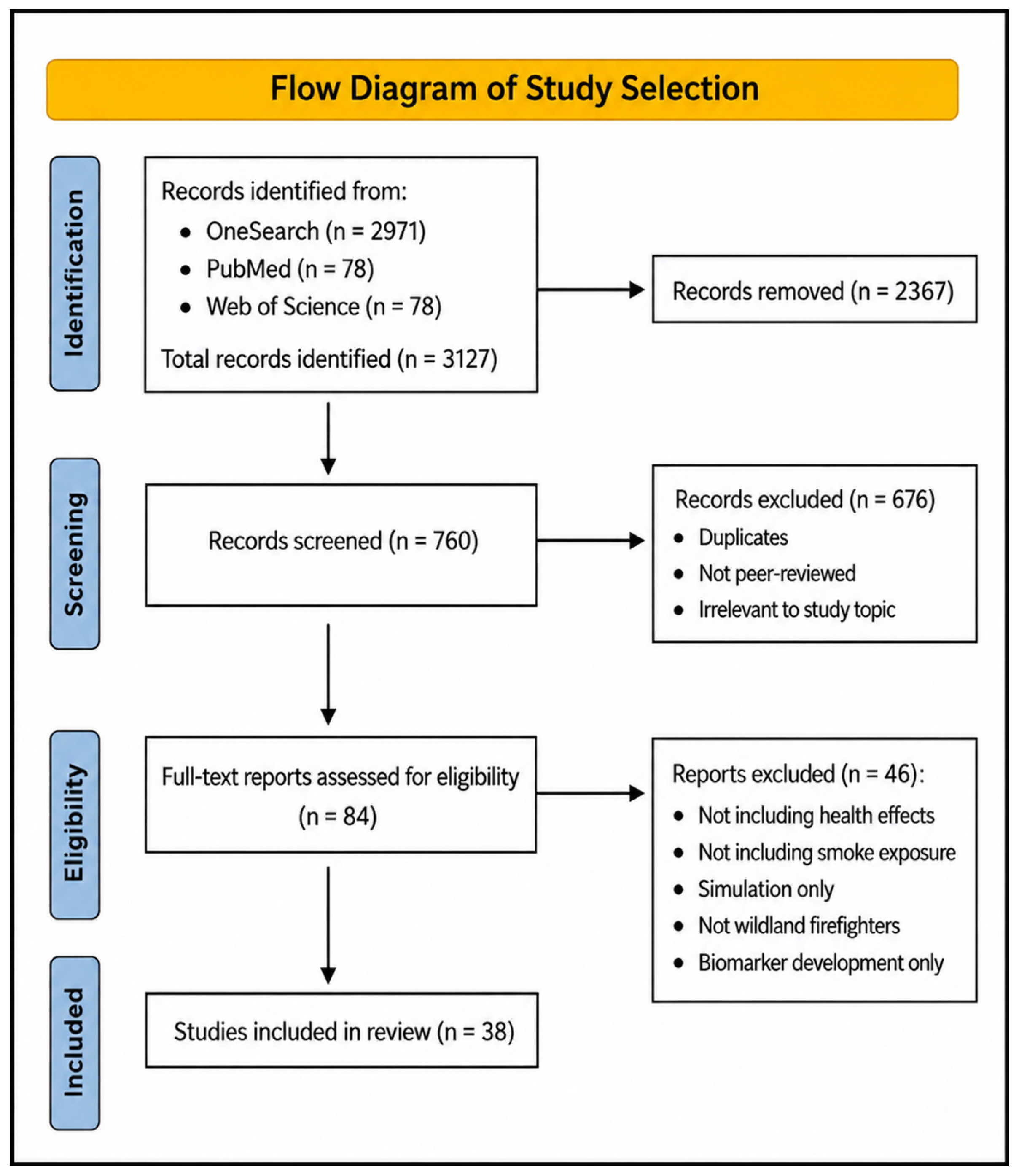
This study was conducted as a comprehensive narrative literature review utilizing a structured, reproducible search strategy. Although a formal systematic review protocol was not pre-registered, a structured search and screening process was utilized to guarantee transparency and reproducibility in the identification and selection of studies. While the ultimate synthesis is narrative and conceptual rather than statistical, the initial literature identification and screening process was guided by PRISMA principles to minimize selection bias and ensure reproducibility. The OneSearch database through the University of Nevada-Reno library and PubMed through the Texas Christian University library were used to search for articles. The search terms “Wildland Firefighters” and “Smoke Exposure” were primarily used along with “Health Effects” to further refine the search. After receiving initial results from these search terms, the search filter “Journal Article” was then applied to narrow down the search along with a time period of 1975 to present. Additional studies were found from Web of Science using the same search terms and filters. Figure 1 shows a detailed overview of the study selection process.
Figure 1.
Flow diagram of study selection. Records were identified through OneSearch (University of Nevada-Reno Library), PubMed (Texas Christian University Library), and Web of Science using the search terms ‘Wildland Firefighters,’ ‘Smoke Exposure,’ and ‘Health Effects’.
2.2. Inclusion and Exclusion Criteria
Following the initial screening process, full-text articles were evaluated according to predefined inclusion and exclusion criteria. Eligible studies included field studies, clinical studies, questionnaire-based investigations, and systematic reviews. as mandatory requirements. Articles were required to focus exclusively on wildland firefighters and were excluded if data from urban structural firefighters were incorporated. Included studies were required to examine health outcomes associated with occupational smoke exposure rather than other occupational hazards encountered during firefighter activities. Studies reporting participant smoking histories were eligible; however, tobacco smoke exposure could not represent the primary exposure of interest. International studies were considered for inclusion to capture the breadth of available evidence, although preference was given to studies conducted in the United States. This preference was applied during full text review when international firefighting tactics or characterization differed significantly. Additional inclusion criteria required studies to be published in English within the past 50 years.
2.3. Data Extraction and Synthesis Process
To guide the narrative review, the authors reviewed the full text of each study and extracted the relevant findings into a structured data extraction template consistent with established review methodology [15]. Relevant findings extracted from each study were selected to capture both exposure characteristics and health outcomes. Extracted exposure-related findings included duration of fire assignments, cumulative time spent on the fire line, career length, type of fire, operational role or task, use of personal protective equipment, and measured or estimated smoke exposure levels. Other findings that were considered in the studies analyzed included but are not limited to: biomarkers of polycyclic aromatic hydrocarbons, blood pressure, oxidative status, levoglucosan (LG), and arterial stiffness.
Occupational exposure metrics included particulate matter concentrations, carbon monoxide exposure, crystalline silica, and other combustion-related pollutants. To evaluate the health impacts of smoke exposure, the search and screening criteria targeted both primary respiratory parameters and systematic extra-pulmonary health outcomes. Broad categories of interest included clinical measures of lung function, occupational airway inflammation, cardiovascular strain, systemic immune responses, and cellular oxidative stress markers.
Where available, information on study design, sample size, geographic location, collection methods, and timing of measurements (e.g., pre–post exposure, cross-sectional, or longitudinal assessments) was also recorded. These characteristics were utilized to evaluate the methodological maturity and quality of the included literature, and to identify systemic structural gaps and limitations across the broader research landscape.
The studies were also assessed for their quality and reliability. This was done through a critical appraisal process that assessed (1) topic relevance, verifying that exposure metrics and target cohorts directly reflected active wildland firefighting environments; (2) clear and objective results, defined as quantifiable, reproducible outcome measures (e.g., standardized metrics like FEV1/FVC, PM2.5, etc.); (3) internal validity, screening for discrepancies (alignment between reported results and conclusions), measurement errors, or biological implausibility; and (4) confounding variables, examining the extent to which investigators accounted for controlled or uncontrolled variables in their final analysis (baseline health status, personal smoking history, etc.) [15,16]. Studies were cross-examined by the authors, and those demonstrating high quality and reliability were included.
3. Results
The 38 included studies were predominantly quantitative in design, encompassing cohort studies, field studies, and cross-sectional analyses. Twelve were observational studies using quantitative, qualitative, or mixed methods approaches, and four used surveys to assess self-reported health outcomes. All 38 studies evaluated occupational exposure (CO, particulate matter, or smoke) and its associated health effects, and all identified negative health consequences of smoke exposure. Included studies evaluated both acute exposure outcomes (e.g., cross-shift physiologic and inflammatory changes) and chronic outcomes associated with cumulative occupational exposure. Findings are organized below into four thematic domains: (1) pulmonary and cardiovascular effects; (2) exposure determinants; (3) chemical exposures; and (4) mitigation strategies. A summary of key findings is presented in Table 1. A simplified thematic table cataloging the characteristics and findings of all 38 studies examining smoke exposure and health outcomes among wildland firefighters, organized by health outcome domain and publication year, can be found in Table A1 (Appendix A).
Table 1.
Synthesizes the clinical health outcomes, metrics and biomarkers, exposure determinants, and structural mitigation barriers identified across the 38 reviewed studies examining wildland firefighter smoke exposure.
3.1. Pulmonary, Metabolic and Cardiovascular Effects
Twenty studies examined the direct health effects of smoke exposure. Multiple studies demonstrated that perceived smoke exposure correlated with measured CO exposure, supporting its utility as a practical field indicator [17,18]. Temporal exposure patterns appeared to provide a more informative assessment of occupational exposure than isolated end-of-shift measurements [19]. Beyond pulmonary effects, smoke exposure has also been associated with metabolic abnormalities, including impaired lipid metabolism and reduced insulin sensitivity [20].
Evidence from cohort and cross-sectional studies suggests that cumulative occupational smoke exposure may increase the risk of cardiovascular disease, lung cancer, and progressive cardiovascular dysfunction in wildland firefighters [3,21]. Greater firefighting experience has been associated with poorer cardiovascular measures, including increased risk of heart arrhythmia and hypertension [22].
An additional study found a significant association between years of firefighting, lower VO2 max, and decline in cardiorespiratory fitness over a fire season; the same study identified lower ankle-brachial index values, suggesting an effect of smoke exposure on arterial health [23].
Consistent decrements in lung function were documented by seven studies using spirometric measures such as FEV1, FVC, and peak expiratory flow, recorded before and after exposure. Several of these highlighted an early and substantial decline in lung function at the beginning of the fire season that persisted throughout active-duty periods and into the post-season interval [24,25,26]. Respirable levoglucosan exposure was associated with progressive reductions in pulmonary function [19]. A dose–response relationship was also observed between hours worked in the preceding week and declines in FEV1 and FVC [27]. Progressive reductions in lung function across the fire season were further supported by longitudinal findings, although no significant changes in DNA damage markers were identified [28]. Interestingly, signs of small airway dysfunction have also been reported even in the absence of significant short-term spirometric decline, suggesting the possibility of subclinical respiratory effects among otherwise healthy firefighters. A seventh pilot study, however, found effects on small airway function without significant changes in short-term spirometry values among healthy young firefighters, though it was limited by a small sample (n = 16 firefighters, 12 controls) [29].
These consistent reductions in lung function contribute to end-tissue ischemia and sequential cardiovascular strain. Elevated exhaled CO and carboxyhemoglobin (COHb) levels following smoke exposure suggest significant reductions in oxygen delivery at the tissue level [24]. Another study described tachycardic and hypotensive cardiovascular responses during prescribed burns, likely attributable to CO-mediated reductions in tissue oxygen delivery combined with smoke inhalation and physical exertion [30]. With regard to metabolic abnormalities, another study found that smoke exposure impaired lipid metabolism and reduced insulin sensitivity [20].
Arterial stiffness emerged as an additional cardiovascular concern associated with occupational smoke exposure. Research shows that wildfire smoke may promote oxidative stress-mediated vascular dysfunction, potentially contributing to progressive arterial stiffness in wildland firefighters [31]. Although one biomarker study did not demonstrate significant overall increases in urinary oxidative markers, adjusted analyses revealed elevated 8-oxodG levels among firefighters compared with the general population, with possible modification by age and cumulative career exposure [32]. These findings are particularly concerning given that cardiovascular disease remains the leading cause of line-of-duty death among U.S. firefighters, accounting for approximately 45% of annual fatalities [33]. While this statistic is derived from the broader U.S. fire service that includes municipal structural firefighters, its implications for wildland personnel warrant careful translation. Wildland firefighters encounter similar operational hazards, including multi-day deployments, prolonged aerobic exertion, and continuous exposure to biomass smoke without respiratory protection, underscoring a critical, shared cardiovascular risk across both sectors of the fire service. More recent analyses have further linked wildfire smoke exposure with increased cardiovascular symptoms, emergency department visits, and short-term mortality following major wildfire events, with cardiovascular deaths increasing in proportion to burned acreage [10].
The potential mechanisms involved with cardiovascular strain were outlined in one study [10]. In this review, three events were discussed that could initiate downstream cardiovascular strain. These included (1) dysregulation of autonomic nervous system control on cardiovascular function, (2) spillover of signaling factors into the bloodstream that originated from sites of irritation or injury in the respiratory system, and (3) translocation of PM from smoke across respiratory epithelium and into the circulation, promoting oxidative stress, lipid peroxidation and tissue damage [10].
Taken together, these studies establish a consistent correlation between occupational smoke exposure and adverse cardiovascular, metabolic, and pulmonary outcomes. The most consistent finding across studies was a decline in lung function, and the least consistent was urinary oxidative markers. Most studies had small sample sizes due to the challenges inherent in occupational field research in this setting. This constraint primarily affects the interpretation of findings by limiting statistical power, increasing the possibility of not recording a real effect, and limiting the ability of the investigators to control key confounding variables. While smaller sample sizes are adequate for capturing acute physiological shifts across a single work shift, they restrict the generalizability of chronic, late-stage health outcome data.
Additionally, the degree to which the cited literature controlled key physiological confounders was highly variable. Some lacked a control group or used the general population, including smokers as comparators. Using the general public as a comparator could falsely mask the health deficits in a healthy, fit population when compared to the less fit general public. Allowing smokers to be used as controls introduces confounding variables due to the known toxicologic mechanisms inherent to cigarette smoke. Additionally, exposure variability between firefighters, driven by the nature of the work, complicates accurate measurement.
3.2. Exposure Dynamics: Field Determinants and Chemical Composition
Twelve studies investigated the relationship between fire type, activity type, exposure duration, and health outcomes. A task-based analysis found that direct fire suppression activities were associated with 56% higher CO concentrations and prescribed burns with a 233% increase in CO concentration compared to off-fire-line days [17]. Exposure intensity was found to be higher during prescribed burns than during active wildland fires, with environmental and operational variables such as wind conditions, job task, and time of day further influencing CO exposure levels [34].
Operational role emerged as an important determinant of both physiologic response and smoke exposure burden. Firefighters performing lighting operations demonstrated the greatest systemic inflammatory responses, including elevations in serum amyloid A, C-reactive protein, and interleukin-18 [35,36]. In contrast, the highest CO exposures were observed among firefighters assigned to holding and mop-up activities, suggesting that tasks associated with prolonged proximity to smoldering fuels may carry a greater inhalational burden than active ignition [37]. This pattern was further supported by longitudinal evidence demonstrating that prescribed burns generate greater cumulative smoke exposure than wildland fires and that, within prescribed fire operations, holders experience higher exposures than lighters [38].
Beyond operational role, smoke exposure appears to be influenced by a combination of environmental and logistical factors. Job task, crew type, shift duration, and wind direction relative to the firefighter were all identified as significant predictors of CO exposure, although wind position did not appear to substantially influence respirable particulate or silica exposure [39]. These findings highlight the complexity of characterizing occupational smoke exposure in wildland firefighting environments and raise important questions regarding the applicability of current occupational exposure limits (OELs), which were developed for standard 8 h workdays despite wildland firefighters routinely working shifts exceeding 16 h [39]. Potential mechanisms for recalibration could include updated NIOSH recommended exposure limits (RELs), revision of OSHA permissible exposure limits (PELs), incorporation of wildfire-specific occupational standards within policies regarding fire management, and expanded monitoring programs for firefighters who are routinely exposed to these toxic byproducts.
Task-related exposure differences were further substantiated by studies showing that sawyer or swamper activities were associated with nearly a ninefold increase in the probability of exceeding short-term CO thresholds [40]. Additional variables, including humidity, wind orientation, crew type, and fuel type, also modified exposure levels [40]. Notably, fire size was not found to be a reliable predictor of individual exposure [24].
Beyond their influence on smoke exposure, prescribed burns appear to impose substantial physiologic stress on firefighters. Reported effects included persistent increases in urinary mutagenicity following work duties [41], elevations in body core temperature approaching the heatstroke threshold [9], and systemic inflammatory and immune responses associated with acute diesel smoke exposure [35]. Together, these findings highlight the multifactorial nature of occupational stressors encountered during prescribed fire operations.
Several PAHs detected at elevated concentrations in wildland firefighters carry formal carcinogenic designations that warrant explicit discussion. The U.S. EPA classifies seven PAHs as Group B2 probable human carcinogens, defined as compounds with sufficient animal carcinogenicity evidence: benzo[a]pyrene, benz[a]anthracene, chrysene, benzo[b]fluoranthene, benzo[k]fluoranthene, dibenz[a,h]anthracene, and indeno[1,2,3-cd]pyrene [42]. Wildfire smoke generated during biomass combustion is a recognized source of these compounds [1,3,18]. The primary mechanism of carcinogenicity involves metabolic bioactivation, whereby cytochrome P450 enzymes convert benzo[a]pyrene to its reactive metabolite benzo[a]pyrene-7,8-diol-9,10-epoxide (BPDE), which forms covalent DNA adducts at guanine residues, inducing point mutations in tumor suppressor genes including TP53 [43]. This genotoxic pathway is directly reflected in the urinary mutagenicity findings documented among wildland firefighters in this review, where elevated mutagenic activity persisted after cessation of work duties, suggesting ongoing DNA-damaging exposure beyond the active fire line [5]. The occupational relevance is further underscored by the PAH biomarker data summarized herein: wildland firefighters demonstrated urinary PAH metabolite levels 2.2 to 26.7 times higher than unexposed controls, with firefighters exposed to wildfire or cigarette smoke showing 2.9 to 4.5 times the urinary PAH content of unexposed nonsmoking firefighters [44,45]. These levels substantially exceed general population reference values and, given the chronic and repeated nature of occupational exposure across fire seasons, represent a plausible mechanism contributing to the increased risk of lung cancer mortality identified in epidemiologic studies of this workforce [3]. Taken together, the Group B2 carcinogen burden documented in wildland firefighters argues for inclusion of PAH biomonitoring within occupational health surveillance frameworks for this population [46].
Eight studies examined specific chemical exposures in wildland firefighters. Three studies assessed PAH exposure, all finding significantly elevated levels compared to controls [44,45,47]. Across studies, PAH exposure was consistently elevated in firefighters compared to control populations. One study found wildland firefighters had 2.2 to 26.7 times higher PAH levels than control groups [44], while another found firefighters exposed to wildfire or cigarette smoke had 2.9 to 4.5 times the urinary PAH content of unexposed nonsmoking firefighters [45]. Additional evidence suggested that exposure PAHs and naphthalene were found, which enhanced skin hygiene routines, including showering and wearing clean clothing, reduced urinary concentrations of 1-hydroxypyrene (1-HP), a PAH exposure biomarker indicative of urinary mutagenicity, suggesting a viable mitigation approach [47].
Occupational role also appeared to substantially influence exposure burden. Two studies found that PAH exposure varied by job task, with firefighters performing both firing and holding during the same shift exposed to higher levels than those performing a single task [48,49]. Similarly, elevated urinary PAH metabolite concentrations were associated with alterations in blood pressure and hematologic markers, suggesting that smoke exposure may contribute to broader systemic effects beyond inhalational injury alone [46]. Investigators also explored biomarkers for exposure monitoring, with one study demonstrating that urinary methoxyphenols correlated closely with measured smoke and carbon monoxide exposure [50]. Thus, this supports their potential utility as biologic markers of occupational smoke exposure [50].
Exposure intensity also varied according to the level of suppression. Firefighters conducting direct fire suppression had significantly higher exposures to toxic compounds including acrolein, benzene, and formaldehyde compared to those in other roles [51]. A study measuring creatinine adjusted urinary LG across a three-day fire suppression event found the largest pre-to-post-shift difference on day three, when firefighters were predominantly performing mop-up activities [52]. Interestingly, a separate study measuring aerosolized LG concentrations found higher levels during active fire line construction than during mop-up [19]. The discrepancy between elevated urinary LG during mop-up in one study and higher aerosolized LG during active suppression in another is unexplained and warrants further investigation. A plausible explanation for this is due to the fact that urine biomarker measurement lags behind aerosolized measurement and mop-up activities occur after initial fire suppression. Another plausible mechanism is the inherent limitation of urinary biomarkers which can be affected by things like hydration status and timing of collection. Collectively, these findings underscore that while fire type and job task are important predictors of exposure magnitude, more standardized and effective measurement strategies are needed.
3.3. Mitigation Strategies
Several studies identified or evaluated strategies to reduce smoke exposure in wildland firefighters. Multiple articles noted that while firefighters commonly wear bandanas to cover the nose and mouth, this practice provides little to no respiratory protection because bandana pore sizes are approximately 500 to 2000 times larger than smoke particles [10,24]. Full-face respirators, while effective, are currently impractical in wildland firefighting due to physical demands, heat burden, limited peripheral vision, and fogging [34]. Interestingly, one study cautioned against air purifying respirators that reduce eye irritation, on the grounds that eliminating irritant symptoms may prolong time spent in smoke exposure [34]. Consequently, firefighters rely heavily on personal perception to self-monitor smoke intensity. While two studies found that subjective, perceived smoke exposure correlated with measured CO exposure—supporting its utility as a basic field indicator [17,18], relying solely on perception introduces severe risks given the lethality of CO and its characteristics of being completely odorless and tasteless. To address this, implementation of wearable CO monitoring devices was identified as a high priority need [34]. Finally, regarding biological monitoring, one study concluded that end-of-shift exhaled CO breath monitoring was not a reliable indicator of CO exposure and that temporal exposure patterns were a more informative measure [53].
Dermatologic exposure, while less studied than respiratory exposure, was addressed in one study that found enhanced skin hygiene, including frequent showering, wearing clean clothing, and avoiding used firefighting gear, significantly reduced urinary 1-HP levels [47]. Meaningful reductions in urinary 1-HP were also observed in firefighters wearing protective face masks (either disposable N95 or half-piece respirators with P100 organic vapor cartridges) [47]. Though the authors acknowledged the impracticality of current designs for wildland firefighting and called for development of a novel, purpose-built respirator.
Finally, a previous study highlighted the need for routine cardiovascular evaluations in wildland firefighters [10]. Annual physical fitness evaluations are currently required for recertification; the authors of that study advocated for expanding this to include annual cardiovascular health assessments to track firefighter health longitudinally, increase available data on long-term effects, and inform preventative measures [10].
4. Discussion
This narrative review demonstrates a consistent relationship between occupational smoke exposure and adverse health outcomes in wildland firefighters. The included studies identified negative health effects across multiple physiological dimensions, spanning pulmonary function decline, cardiovascular disease risk, metabolic dysfunction, and chemical toxicant exposure. Additionally, the breadth and consistency of these findings across varied study designs and geographic settings strengthen the overall evidence base, even in the context of the methodological heterogeneity described below.
The pattern of findings in this review aligns with, and largely mirrors, the more established literature on structural firefighters. Research on urban firefighters has documented cardiovascular disease as a leading occupational hazard for decades, with well-characterized exposure protocols and occupational health standards developed in response [33]. Although structural firefighters have historically received greater attention within occupational exposure research, the prolonged duration of smoke exposure, extended shifts, remote conditions, and limited use/availability of respiratory protective equipment amongst wildland firefighters suggests that this population can experience comparable or distinct occupational health risks. Thus, this warrants further investigation in the future. The consistently elevated PAH biomarker levels [44,45,47], arterial stiffness findings [31], and CO-related tissue oxygenation impairment [24] documented in this review suggest that wildland firefighters may be accumulating chronic toxic burden at levels not reflected in current surveillance or regulatory frameworks.
From a public health and policy standpoint, several findings carry immediate implications. First, OELs currently applied to wildland firefighters were established for a standard 8 h workday and are poorly suited to the physiologic and operational realities of wildland firefighting [39]. Due to the physically demanding nature of wildland firefighting, enhanced minute ventilation and cardiac output during exertion likely amplify inhalation exposure compared to sedentary conditions [10]. Additionally, many OELs against which measured exposures are compared were established for standard 8 h workdays, making direct application to wildland firefighting, where shifts routinely exceed 16 h, problematic [39]. Recalibration of OELs to reflect actual exposure conditions, in coordination with agencies such as NIOSH and OSHA, is warranted. Second, the failure of commonly used protective practices, particularly bandana use, to provide meaningful respiratory protection represents an urgent educational gap [10,24]. Third, the identification of cardiovascular disease as the leading cause of line-of-duty death among U.S. firefighters [33], accounting for approximately 45% of annual fatalities, demands a more proactive and systematic approach to cardiovascular health monitoring in this population. Current recertification requirements mandate annual physical fitness evaluations [10]; however, fitness testing alone does not capture the subclinical cardiovascular changes documented in this review, including progressive arterial stiffness [31], declining ankle-brachial index values [23], increased risk of arrhythmia and hypertension with greater career length [22], and CO-mediated tissue oxygenation impairment [24]. These findings collectively suggest that cumulative cardiovascular damage may accrue across fire seasons in ways that pass undetected under existing surveillance protocols. A policy of mandatory annual cardiovascular health assessments, incorporating measures such as blood pressure monitoring, electrocardiography, and arterial health screening, would enable longitudinal tracking of firefighter cardiovascular status, facilitate early identification of at-risk individuals, and generate the population-level data currently absent from the literature [10]. Given the well-characterized link between career smoke exposure duration and cardiovascular dysfunction [3,21,33], implementation of such a surveillance framework represents both a clinical imperative and a workforce protection priority.
Finally, the cumulative carcinogenic burden suggested by PAH biomarker data across the included studies carries direct implications for long-term cancer risk monitoring in this population. Wildland firefighters demonstrated urinary PAH metabolite levels 2.2 to 26.7 times higher than unexposed controls [44], with firefighters exposed to wildfire or cigarette smoke showing 2.9 to 4.5 times the urinary PAH content of unexposed nonsmoking firefighters [45]. Several PAHs detected at these elevated concentrations, including benzo[a]pyrene, benz[a]anthracene, chrysene, benzo[b]fluoranthene, and benzo[k]fluoranthene, are classified by the U.S. EPA as Group B2 probable human carcinogens, defined as compounds with sufficient animal carcinogenicity evidence [42,43]. The primary mechanism of carcinogenicity involves metabolic bioactivation to reactive intermediates that form covalent DNA adducts, inducing mutations in tumor suppressor genes including TP53 [43]. This genotoxic mechanism is directly supported by the urinary mutagenicity findings documented in this review, where elevated mutagenic activity persisted in wildland firefighters after cessation of work duties, indicating ongoing DNA-damaging exposure beyond the active fire line [5]. Epidemiologic data further corroborate this risk, with cumulative occupational smoke exposure associated with increased lung cancer mortality in this workforce [3]. Despite this, current occupational health surveillance frameworks for wildland firefighters do not include systematic PAH biomonitoring. Incorporation of periodic urinary PAH metabolite screening, alongside the cardiovascular evaluations described above, would provide an evidence-based foundation for long-term cancer surveillance in this occupationally exposed population [46].
4.1. Strengths and Limitations
This study had several limitations that are important to recognize. The heterogeneity of study designs and outcome measures in this review limits direct comparability across studies and prevented the use of a validated quantitative appraisal tool. Differences in how smoke exposure was measured (self-reported, urinary biomarkers, personal monitors, area monitors), the populations studied (varying career lengths, geographic regions, and crew types), and the health outcomes assessed make synthesis challenging. There has been comparatively little research conducted on wildland firefighting and smoke exposure so finding articles that pertained to both were difficult, though this does seem to be improving. Another limitation came from the fact that many studies were prospective field studies and contained small sample sizes with no control. Additionally, this review employed a narrative rather than a formal systematic methodology, which introduces the possibility of selection bias in study synthesis and limits the reproducibility of findings compared with a preregistered systematic review. To mitigate this risk, the authors implemented a multi-step screening process that included a dual-screening approach during the title, abstract and full-text review phases. During this step, potential studies were evaluated independently, and discrepancies were resolved through an informal consensus between authors. Although predefined search terms and explicit inclusion criteria were utilized to improve consistency within study selection, relevant studies could still have been missed.
The principal strengths of this review include its multi-system scope and the categorization of diverse field data. By evaluating pulmonary, cardiovascular, and metabolic health domains concurrently, this review provides a unified, holistic overview of systemic occupational health risks. Additionally, the inclusion of prospective longitudinal designs alongside a characterization of both chemical exposure dynamics and operational field determinants ensures a synthesis of an understudied population and contributes to the growing literature.
4.2. Limitations of the Existing Literature
Conducting occupational research on wildland firefighters presents unique logistical hurdles. The remote nature of the work, often far from hospitals and medical centers, combined with irregular shifts, varying career spans, and inconsistent geographical locations complicates the measurement of cumulative smoke exposure and have historically resulted in limited sample sizes and a notable lack of long-term cohorts. Furthermore, the diversity of tasks performed on the fire line introduces inconsistent exposure and monitoring metrics across the existing literature. Despite these challenges, recent longitudinal studies have become more robust, utilizing mobile monitoring and adaptive protocols to account for these environmental and methodological complexities.
4.3. Practical Applications
This study shows a significant relationship between smoke exposure and negative health effects. Wildland firefighters deserve targeted health education and the implementation of exposure reduction strategies that allow them to perform their duties effectively while safeguarding their long-term respiratory health. It is recommended that firefighters work shorter seasons if possible and implement mitigation strategies to decrease their exposure, like rotating out with other crew members when performing tasks like lighting and holding, alternating between down-wind and up-wind assignments, and prioritizing mechanical line construction when possible. Dermal exposure mitigation remains an under-addressed route for reducing systemic exposure. Incorporating regular skin hygiene protocols like mobile shower units, decontamination wipes, and mobile laundry facilities for protective clothing are possible initial steps. Authority figures in wildland firefighting should educate their crews about the effects of smoke exposure and are encouraged to promote open dialog about ideas to reduce exposure. Annual cardiovascular health evaluations are reasonable and important steps to track long term physiological change in wildland firefighters and would provide an important preventative health measure for the early detection and management of cardiovascular disease.
4.4. Future Research Directions
While these immediate, actionable interventions and health evaluations can mitigate current risks, long-term exposure reduction strategies require addressing critical gaps in the existing literature. Future research is critical to optimizing exposure reduction strategies and protecting the long-term health of wildland firefighters. Future research should prioritize longitudinal biomarker studies to track chronic health outcomes over extended career spans. Additionally, the integration of validated wearable exposure sensors, such as personal CO and particulate matter monitors in field research, will allow for more precise, real-time exposure tracking during active duties. Finally, targeted respirator development through respirator efficacy trials is needed to engineer novel respiratory protective equipment capable of handling the extreme physical and thermal demands unique to wildland firefighting. Expanding these research avenues will provide the empirical baseline necessary to establish wildland-firefighting-specific OELs and implement targeted health education.
5. Conclusions
This narrative review synthesized the health effects of occupational smoke exposure in wildland firefighters across three primary domains: exposure determinants, chemical exposures, and acute/chronic clinical outcomes. By uniquely bridging the gap between specific field-level exposure determinants and physiological mechanisms, this review highlights how tactical operational environments directly influence systemic health risks. The gathered evidence demonstrates a consistent relationship between smoke inhalation and elevated risks for cardiovascular disease, arterial stiffness, hypertension, heart arrhythmias, and lung cancer. Mechanistically, these outcomes are supported by documented increases in oxidative stress and urinary mutagenicity, alongside a well-characterized decline in cross-shift lung function. To mitigate these occupational hazards, future efforts must prioritize the development and implementation of specialized protective technologies—such as low-profile respirators and exposure detection devices engineered to assist rather than impair firefighter tactics.
The findings of this review carry several evidence-based implications that extend beyond the individual studies examined. First, the documented discrepancy between standard industrial OELs and the extended shift durations, elevated ventilation rates, and multi-day cumulative exposures characteristic of wildland firefighting supports urgent revision of wildland-firefighter-specific exposure limits, developed in coordination with NIOSH and OSHA and grounded in field-derived exposure data. Second, the consistent association between career smoke exposure and progressive cardiovascular dysfunction, combined with cardiovascular disease accounting for approximately 45% of line-of-duty fatalities, supports mandatory annual cardiovascular health surveillance as a standard component of firefighter recertification, expanding beyond the fitness testing currently required. Third, the demonstrated inadequacy of existing respiratory protective equipment in wildland operational environments, including the failure of bandanas to filter fine particulate matter and the impracticality of full-face respirators under field conditions, underscores the need for accelerated development and field validation of purpose-built respiratory protective equipment engineered specifically for the physiologic and tactical demands of wildland firefighting. Fourth, the elevated PAH biomarker levels and persistent urinary mutagenicity documented across multiple fire seasons establish a compelling rationale for expansion of longitudinal biomarker cohort studies capable of characterizing chronic exposure–disease relationships across firefighter careers. Taken together, these priorities are not speculative; they are directly supported by the body of evidence synthesized in this review and represent actionable targets for regulatory agencies, occupational health practitioners, fire management authorities, and researchers committed to protecting the long-term health of wildland firefighters.
Author Contributions
Conceptualization, A.F.A.; methodology, A.F.A.; validation, A.F.A. and I.D.Z.; formal analysis, A.F.A., I.D.Z., I.A.M., P.D. and A.S.; investigation, A.F.A., I.D.Z., I.A.M., P.D. and A.S.; data curation, A.F.A., I.D.Z., I.A.M., P.D. and A.S.; writing—original draft preparation, A.F.A., I.D.Z., I.A.M., P.D., A.S. and W.S.; writing—review and editing, A.F.A., I.D.Z. and W.S.; visualization, A.F.A. and I.D.Z.; supervision, W.S.; project administration, A.F.A. All authors have read and agreed to the published version of the manuscript.
Funding
This research received no external funding.
Institutional Review Board Statement
Not applicable.
Informed Consent Statement
Not applicable.
Data Availability Statement
No new data were created or analyzed in this study.
Acknowledgments
OpenAI ChatGPT (GPT5.2, Open I, San Francisco, CA, USA), Google Gemini (Gemini 3.5 Flash), and Anthropic Claude (Claude Sonnet 4.6) were used solely for grammar refinement, language editing, clarity, and organizational drafting assistance. No AI tool was used to generate, analyze, or interpret study data. All AI-assisted outputs were reviewed, revised, and verified by the authors, who accept full responsibility for the content of this publication.
Conflicts of Interest
The authors declare no conflicts of interest.
Abbreviations
The following abbreviations are used in this manuscript:
| LG | Levoglucosan |
| FVC | Forced Vital Capacity |
| FEV1 | Forced Expiratory Volume in 1 Second |
| CO | Carbon Monoxide |
| COHb | Carboxyhemoglobin |
| OELs | Occupational Exposure Limits |
| PELs | Permissible Exposure Limits |
| RELs | Recommended Exposure Limits |
| PAHs | Polycyclic Aromatic Hydrocarbons |
| 1-HP | 1-Hydroxypyrene |
| NIOSH | National Institute for Occupational Safety and Health |
| OSHA | Occupational Safety and Health Administration |
Appendix A
Table A1.
Characteristics and findings of 38 studies examining smoke exposure and health outcomes among wildland firefighters, organized by health outcome domain and publication year.
References
- Adetona, O.; Reinhardt, T.E.; Domitrovich, J.; Broyles, G.; Adetona, A.M.; Kleinman, M.T.; Ottmar, R.D.; Naeher, L.P. Review of the Health Effects of Wildland Fire Smoke on Wildland Firefighters and the Public. Inhal. Toxicol. 2016, 28, 95–139. [Google Scholar] [CrossRef]
- Cascio, W.E. Wildland Fire Smoke and Human Health. Sci. Total Environ. 2018, 624, 586–595. [Google Scholar] [CrossRef] [PubMed]
- Navarro, K.M.; Kleinman, M.T.; Mackay, C.E.; Reinhardt, T.E.; Balmes, J.R.; Broyles, G.A.; Ottmar, R.D.; Naher, L.P.; Domitrovich, J.W. Wildland Firefighter Smoke Exposure and Risk of Lung Cancer and Cardiovascular Disease Mortality. Environ. Res. 2019, 173, 462–468. [Google Scholar] [CrossRef] [PubMed]
- Islam, M.M.; Mandal, S.; Al-Mashala, H.H.; Schnitzler, E.G.; Petrova, A.; Agnew, R.J.; Boorady, L.M. Wildfire Smoke and Firefighter Safety: A Review of Toxic Particle Exposure, Clothing Performance and Health Implications. Fire Mater. 2026, 50, 64–78. [Google Scholar] [CrossRef]
- Navarro, K. Working in Smoke: Wildfire Impacts on the Health of Firefighters and Outdoor Workers and Mitigation Strategies. Clin. Chest Med. 2020, 41, 763–769. [Google Scholar] [CrossRef]
- Koopmans, E.; Cornish, K.; Fyfe, T.M.; Bailey, K.; Pelletier, C.A. Health Risks and Mitigation Strategies from Occupational Exposure to Wildland Fire: A Scoping Review. J. Occup. Med. Toxicol. 2022, 17, 2. [Google Scholar] [CrossRef]
- National Interagency Fire Center. National Interagency Coordination Center Wildland Fire Summary and Statistics Annual Report 2025; National Interagency Fire Center: Boise, ID, USA, 2025. Available online: https://www.nifc.gov/sites/default/files/NICC/2-Predictive%20Services/Intelligence/Annual%20Reports/2025/annual_report_2025_0.pdf (accessed on 14 April 2026).
- Wildland Fire: Barriers to Recruitment and Retention of Federal Wildland Firefighters. Available online: https://www.gao.gov/products/gao-23-105517 (accessed on 21 May 2026).
- García-Heras, F.; Gutiérrez-Arroyo, J.; Rodríguez-Medina, J.; Carballo-Leyenda, B.; Sánchez-Collado, P.; Villa-Vicente, G.; Rodríguez-Marroyo, J.A. Determinants of Health and Performance in Wildland Firefighters: A Narrative Review. J. Funct. Morphol. Kinesiol. 2025, 10, 80. [Google Scholar] [CrossRef]
- Williams, V.A.; Perreault, L.R.; Yazbeck, C.T.; Micovic, N.A.; Oakes, J.M.; Bellini, C. Impact of Wildfires on Cardiovascular Health. Circ. Res. 2024, 134, 1061–1082. [Google Scholar] [CrossRef] [PubMed]
- Groot, E.; Caturay, A.; Khan, Y.; Copes, R. A Systematic Review of the Health Impacts of Occupational Exposure to Wildland Fires. Int. J. Occup. Med. Environ. Health 2019, 32, 121–140. [Google Scholar] [CrossRef]
- Wah, W.; Gelaw, A.; Glass, D.C.; Sim, M.R.; Hoy, R.F.; Berecki-Gisolf, J.; Walker-Bone, K. Systematic Review of Impacts of Occupational Exposure to Wildfire Smoke on Respiratory Function, Symptoms, Measures and Diseases. Int. J. Hyg. Environ. Health 2025, 263, 114463. [Google Scholar] [CrossRef]
- Barbosa, J.V.; Farraia, M.; Branco, P.T.B.S.; Alvim-Ferraz, M.C.M.; Martins, F.G.; Annesi-Maesano, I.; Sousa, S.I.V. The Effect of Fire Smoke Exposure on Firefighters’ Lung Function: A Meta-Analysis. Int. J. Environ. Res. Public Health 2022, 19, 16799. [Google Scholar] [CrossRef]
- Chen, H.; Samet, J.M.; Bromberg, P.A.; Tong, H. Cardiovascular Health Impacts of Wildfire Smoke Exposure. Part. Fibre Toxicol. 2021, 18, 2. [Google Scholar] [CrossRef] [PubMed]
- Green, B.N.; Johnson, C.D.; Adams, A. Writing Narrative Literature Reviews for Peer-Reviewed Journals: Secrets of the Trade. J. Chiropr. Med. 2006, 5, 101–117. [Google Scholar] [CrossRef] [PubMed]
- Ferrari, R. Writing Narrative Style Literature Reviews. Med. Writ. 2015, 24, 230–235. [Google Scholar] [CrossRef]
- Semmens, E.O.; Leary, C.S.; West, M.R.; Noonan, C.W.; Navarro, K.M.; Domitrovich, J.W. Carbon Monoxide Exposures in Wildland Firefighters in the United States and Targets for Exposure Reduction. J. Expo. Sci. Environ. Epidemiol. 2021, 31, 923–929. [Google Scholar] [CrossRef] [PubMed]
- Adetona, O.; Dunn, K.; Hall, D.B.; Achtemeier, G.; Stock, A.; Naeher, L.P. Personal PM(2.5) Exposure among Wildland Firefighters Working at Prescribed Forest Burns in Southeastern United States. J. Occup. Environ. Hyg. 2011, 8, 503–511. [Google Scholar] [CrossRef]
- Gaughan, D.M.; Piacitelli, C.A.; Chen, B.T.; Law, B.F.; Virji, M.A.; Edwards, N.T.; Enright, P.L.; Schwegler-Berry, D.E.; Leonard, S.S.; Wagner, G.R.; et al. Exposures and Cross-Shift Lung Function Declines in Wildland Firefighters. J. Occup. Environ. Hyg. 2014, 11, 591–603. [Google Scholar] [CrossRef]
- Coker, R.H.; Murphy, C.J.; Johannsen, M.; Galvin, G.; Ruby, B.C. Wildland Firefighting: Adverse Influence on Indices of Metabolic and Cardiovascular Health. J. Occup. Environ. Med. 2019, 61, 91–94. [Google Scholar] [CrossRef]
- Hwang, J.; Chong, N.S.; Zhang, M.; Agnew, R.J.; Xu, C.; Li, Z.; Xu, X. Face-to-Face with Scorching Wildfire: Potential Toxicant Exposure and the Health Risks of Smoke for Wildland Firefighters at the Wildland-Urban Interface. Lancet Reg. Health Am. 2023, 21, 100482. [Google Scholar] [CrossRef]
- Semmens, E.O.; Domitrovich, J.; Conway, K.; Noonan, C.W. A Cross-Sectional Survey of Occupational History as a Wildland Firefighter and Health. Am. J. Ind. Med. 2016, 59, 330–335. [Google Scholar] [CrossRef]
- Zeigler, Z.; Sol, J.; Greer, P.; Verduzco, L. Impact of Wildland Firefighting on Arterial Stiffness and Cardiorespiratory Fitness. Arch. Environ. Occup. Health 2022, 77, 415–422. [Google Scholar] [CrossRef]
- Miranda, A.I.; Martins, V.; Cascão, P.; Amorim, J.H.; Valente, J.; Borrego, C.; Ferreira, A.J.; Cordeiro, C.R.; Viegas, D.X.; Ottmar, R. Wildland Smoke Exposure Values and Exhaled Breath Indicators in Firefighters. J. Toxicol. Environ. Health Part A 2012, 75, 831–843. [Google Scholar] [CrossRef]
- Jacquin, L.; Michelet, P.; Brocq, F.X.; Houel, J.G.; Truchet, X.; Auffray, J.P.; Carpentier, J.P.; Jammes, Y. Short-Term Spirometric Changes in Wildland Firefighters. Am. J. Ind. Med. 2011, 54, 819–825. [Google Scholar] [CrossRef] [PubMed]
- Wu, C.M.; Adetona, A.; Song, C.C.; Naeher, L.; Adetona, O. Measuring Acute Pulmonary Responses to Occupational Wildland Fire Smoke Exposure Using Exhaled Breath Condensate. Arch. Environ. Occup. Health 2020, 75, 65–69. [Google Scholar] [CrossRef]
- Rothman, N.; Ford, D.P.; Baser, M.E.; Hansen, J.A.; O’Toole, T.; Tockman, M.S.; Strickland, P.T. Pulmonary Function and Respiratory Symptoms in Wildland Firefighters. J. Occup. Med. Off. Publ. Ind. Med. Assoc. 1991, 33, 1163–1167. [Google Scholar] [CrossRef] [PubMed]
- Panumasvivat, J.; Sapbamrer, R.; Sittitoon, N.; Khacha-Ananda, S.; Kiratipaisarl, W.; Sirikul, W.; Insian, W.; Assavanopakun, P. Exploring the Adverse Effect of Fine Particulate Matter (PM2.5) on Wildland Firefighters’ Pulmonary Function and DNA Damage. Sci. Rep. 2024, 14, 7932. [Google Scholar] [CrossRef]
- Niyatiwatchanchai, N.; Pothirat, C.; Chaiwong, W.; Liwsrisakun, C.; Phetsuk, N.; Duangjit, P.; Choomuang, W. Short-Term Effects of Air Pollutant Exposure on Small Airway Dysfunction, Spirometry, Health-Related Quality of Life, and Inflammatory Biomarkers in Wildland Firefighters: A Pilot Study. Int. J. Environ. Health Res. 2023, 33, 850–863. [Google Scholar] [CrossRef]
- Wu, C.M.; Adetona, O.; Song, C. Acute Cardiovascular Responses of Wildland Firefighters to Working at Prescribed Burn. Int. J. Hyg. Environ. Health 2021, 237, 113827. [Google Scholar] [CrossRef] [PubMed]
- Gaughan, D.M.; Siegel, P.D.; Hughes, M.D.; Chang, C.Y.; Law, B.F.; Campbell, C.R.; Richards, J.C.; Kales, S.F.; Chertok, M.; Kobzik, L.; et al. Arterial Stiffness, Oxidative Stress, and Smoke Exposure in Wildland Firefighters. Am. J. Ind. Med. 2014, 57, 748–756. [Google Scholar] [CrossRef]
- Adetona, O.; Zhang, J.J.; Hall, D.B.; Wang, J.S.; Vena, J.E.; Naeher, L.P. Occupational Exposure to Woodsmoke and Oxidative Stress in Wildland Firefighters. Sci. Total Environ. 2013, 449, 269–275. [Google Scholar] [CrossRef]
- Tian, X.; Cheng, Y.; Chen, S.; Liu, S.; Wang, Y.; Niu, X.; Sun, J. The Emission Characteristics and Health Risks of Firefighter-Accessed Fire: A Review. Toxics 2024, 12, 739. [Google Scholar] [CrossRef]
- Reinhardt, T.E.; Ottmar, R.D. Baseline Measurements of Smoke Exposure among Wildland Firefighters. J. Occup. Environ. Hyg. 2004, 1, 593–606. [Google Scholar] [CrossRef] [PubMed]
- Adetona, A.M.; Adetona, O.; Gogal, R.M., Jr.; Diaz-Sanchez, D.; Rathbun, S.L.; Naeher, L.P. Impact of Work Task-Related Acute Occupational Smoke Exposures on Select Proinflammatory Immune Parameters in Wildland Firefighters. J. Occup. Environ. Med. 2017, 59, 679–690. [Google Scholar] [CrossRef]
- Hejl, A.M.; Adetona, O.; Diaz-Sanchez, D.; Carter, J.D.; Commodore, A.A.; Rathbun, S.L.; Naeher, L.P. Inflammatory Effects of Woodsmoke Exposure among Wildland Firefighters Working at Prescribed Burns at the Savannah River Site, SC. J. Occup. Environ. Hyg. 2013, 10, 173–180. [Google Scholar] [CrossRef]
- Dunn, K.H.; Shulman, S.; Stock, A.L.; Naeher, L.P. Personal Carbon Monoxide Exposures among Firefighters at Prescribed Forest Burns in the Southeastern United States. Arch. Environ. Occup. Health 2013, 68, 55–59. [Google Scholar] [CrossRef]
- Wu, C.M.; Song, C.C.; Chartier, R.; Kremer, J.; Naeher, L.; Adetona, O. Characterization of Occupational Smoke Exposure among Wildland Firefighters in the Midwestern United States. Environ. Res. 2021, 193, 110541. [Google Scholar] [CrossRef] [PubMed]
- Reinhardt, T.E.; Broyles, G. Factors Affecting Smoke and Crystalline Silica Exposure among Wildland Firefighters. J. Occup. Environ. Hyg. 2019, 16, 151–164. [Google Scholar] [CrossRef]
- Henn, S.A.; Butler, C.; Li, J.; Sussell, A.; Hale, C.; Broyles, G.; Reinhardt, T. Carbon Monoxide Exposures among U.S. Wildland Firefighters by Work, Fire, and Environmental Characteristics and Conditions. J. Occup. Environ. Hyg. 2019, 16, 793–803. [Google Scholar] [CrossRef]
- Wu, C.M.; Warren, S.H.; DeMarini, D.M.; Song, C.C.; Adetona, O. Urinary Mutagenicity and Oxidative Status of Wildland Firefighters Working at Prescribed Burns in a Midwestern US Forest. Occup. Environ. Med. 2020, 78, 315–322. [Google Scholar] [CrossRef]
- U.S. Environmental Protection Agency. Polycyclic Organic Matter (POM); Fact Sheet; U.S. Environmental Protection Agency: Washington, DC, USA, 2000. Available online: https://www.epa.gov/sites/default/files/2016-09/documents/polycyclic-organic-matter.pdf (accessed on 1 June 2026).
- Bukowska, B.; Mokra, K.; Michałowicz, J. Benzo[a]Pyrene—Environmental Occurrence, Human Exposure, and Mechanisms of Toxicity. Int. J. Mol. Sci. 2022, 23, 6348. [Google Scholar] [CrossRef] [PubMed]
- Teixeira, J.; Bessa, M.J.; Delerue-Matos, C.; Sarmento, B.; Santos-Silva, A.; Rodrigues, F.; Oliveira, M. Firefighters’ Personal Exposure to Gaseous PAHs during Controlled Forest Fires: A Case Study with Estimation of Respiratory Health Risks and in Vitro Toxicity. Sci. Total Environ. 2024, 908, 168364. [Google Scholar] [CrossRef]
- Paiva, A.M.; Barros, B.; Oliveira, M.; Alves, S.; Esteves, F.; Fernandes, A.; Vaz, J.; Slezáková, K.; Teixeira, J.P.; Costa, S.; et al. Biomonitoring of Polycyclic Aromatic Hydrocarbons Exposure and Short-Time Health Effects in Wildland Firefighters during Real-Life Fire Events. Sci. Total Environ. 2024, 926, 171801. [Google Scholar] [CrossRef]
- Barros, B.; Paiva, A.M.; Oliveira, M.; Alves, S.; Esteves, F.; Fernandes, A.; Vaz, J.; Slezakova, K.; Costa, S.; Teixeira, J.P.; et al. Baseline Data and Associations between Urinary Biomarkers of Polycyclic Aromatic Hydrocarbons, Blood Pressure, Hemogram, and Lifestyle among Wildland Firefighters. Front. Public Health 2024, 12, 1338435. [Google Scholar] [CrossRef] [PubMed]
- Cherry, N.; Galarneau, J.M.; Kinniburgh, D.; Quemerais, B.; Tiu, S.; Zhang, X. Exposure and Absorption of PAHs in Wildland Firefighters: A Field Study with Pilot Interventions. Ann. Work Expo. Health 2021, 65, 148–161. [Google Scholar] [CrossRef]
- Navarro, K.M.; Cisneros, R.; Noth, E.M.; Balmes, J.R.; Hammond, S.K. Occupational Exposure to Polycyclic Aromatic Hydrocarbon of Wildland Firefighters at Prescribed and Wildland Fires. Environ. Sci. Technol. 2017, 51, 6461–6469. [Google Scholar] [CrossRef] [PubMed]
- Adetona, A.M.; Adetona, O.; Chartier, R.T.; Paulsen, M.H.; Simpson, C.D.; Rathbun, S.L.; Naeher, L.P. Differences in Fine Particle Exposure and Estimated Pulmonary Ventilation Rate with Respect to Work Tasks of Wildland Firefighters at Prescribed Burns: A Repeated Measures Study. Ann. Work Expo. Health 2022, 66, 985–997. [Google Scholar] [CrossRef] [PubMed]
- Neitzel, R.; Naeher, L.P.; Paulsen, M.; Dunn, K.; Stock, A.; Simpson, C.D. Biological Monitoring of Smoke Exposure among Wildland Firefighters: A Pilot Study Comparing Urinary Methoxyphenols with Personal Exposures to Carbon Monoxide, Particular Matter, and Levoglucosan. J. Expo. Sci. Environ. Epidemiol. 2009, 19, 349–358. [Google Scholar] [CrossRef]
- Navarro, K.M.; West, M.R.; O’Dell, K.; Sen, P.; Chen, I.C.; Fischer, E.V.; Hornbrook, R.S.; Apel, E.C.; Hills, A.J.; Jarnot, A.; et al. Exposure to Particulate Matter and Estimation of Volatile Organic Compounds across Wildland Firefighter Job Tasks. Environ. Sci. Technol. 2021, 55, 11795–11804. [Google Scholar] [CrossRef]
- Navarro, K.M.; Fent, K.; Mayer, A.C.; Brueck, S.E.; Toennis, C.; Law, B.; Meadows, J.; Sammons, D.; Brown, S. Characterization of Inhalation Exposures at a Wildfire Incident during the Wildland Firefighter Exposure and Health Effects (WFFEHE) Study. Ann. Work Expo. Health 2023, 67, 1011–1017. [Google Scholar] [CrossRef]
- Dunn, K.H.; Devaux, I.; Stock, A.; Naeher, L.P. Application of End-Exhaled Breath Monitoring to Assess Carbon Monoxide Exposures of Wildland Firefighters at Prescribed Burns. Inhal. Toxicol. 2009, 21, 55–61. [Google Scholar] [CrossRef]

Disclaimer/Publisher’s Note: The statements, opinions and data contained in all publications are solely those of the individual author(s) and contributor(s) and not of MDPI and/or the editor(s). MDPI and/or the editor(s) disclaim responsibility for any injury to people or property resulting from any ideas, methods, instructions or products referred to in the content. |
© 2026 by the authors. Licensee MDPI, Basel, Switzerland. This article is an open access article distributed under the terms and conditions of the Creative Commons Attribution (CC BY) license.