Skip to Content

Social Sciences

Social Sciences is an international, open access journal with rapid peer-review, which publishes works from a wide range of fields, including anthropology, criminology, economics, education, geography, history, law, linguistics, political science, psychology, social policy, social work, sociology and more, and is published monthly online by MDPI.

Quartile Ranking JCR - Q1 (Social Sciences, Interdisciplinary)

Get Alerted

Add your email address to receive forthcoming issues of this journal.

All Articles (4,898)

Sexual violence is one of the most traumatic forms of interpersonal violence [...]

14 July 2026
This article examines how single parents in Norway approach dating apps as they re-enter romantic life, by asking: How do single parents in midlife approach and anticipate intimacy on dating apps in Norway? The analysis draws on interviews with 10 mothers and 12 fathers, aged 32–51, and applies a reflexive thematic analysis. The findings show that entering dating apps was experienced as an affective hurdle, tied to recovery from family breakup and ambivalence about visibility. Dating apps offered a feasible route to intimacy, as offline encounters were otherwise constrained by time scarcity, limited social networks, and social entanglements through overlapping parental and friendship ties. The concept of parental filtering is introduced to describe how participants screened through dating apps for compatibility in custody schedules and parental empathy, using bios and chats as communicative shortcuts. The findings highlight a central paradox of post-separation intimacy: while romantic relationships may be reversible, parenthood is not. Intimate life as a single parent, therefore, requires a particular form of elasticity, as romantic opportunities must continuously adjust to the solid bonds to their children—a commitment that no swipe can dissolve.

13 July 2026

There is a growing body of research examining the experiences of lesbian, gay, bisexual, trans, and queer (LGBTQ+) teachers in schools. However, limited empirical attention has been given to those in the early stages of their careers, particularly within the UK context, where historical and legislative dynamics continue to shape school cultures. This article addresses this gap by exploring how queer early-career teachers (QECTs) construct and navigate their personal and professional identities within heteronormative and cisnormative school environments. Drawing on a qualitative narrative inquiry with three UK-based QECTs, the study analyses written biographical narratives and semi-structured interviews using reflexive thematic analysis. The findings identify three interconnected processes shaping identity navigation: preventative barriers (including anticipated judgement, self-surveillance, and performative regulation), community as a site of affirmation and restoration, and a negotiated sense of freedom understood as context-dependent agency rather than full disclosure. The study argues that identity formation for QECTs is not a linear progression towards authenticity, but an ongoing negotiation shaped by power, precarity, and relational safety. In doing so, it extends existing research by foregrounding early-career status as a critical factor in queer teacher identity work and contributes a conceptual framing of “negotiated authenticity” within professional contexts. The article concludes by considering implications for professional sustainability, belonging, and inclusive school cultures.

11 July 2026

Multilevel Governance, Digitalisation and Institutional Resilience: Towards a Framework for the Sustainability of Community Social Services

  • Javier Pacheco-Mangas,
  • Irene Soledad Estrada-Moreno and
  • María de las Olas Palma-García
  • + 1 author

This article analyses the documentary institutional architecture of community social services in Spain through a comparative study of 15 autonomous communities, with particular attention to the formal conditions of institutional sustainability. Its aim is to examine how multilevel governance, digitalisation and institutional resilience are articulated in the regional configuration of the system. To this end, a documentary corpus was constructed from three official primary sources: regional social services laws, catalogues or portfolios of benefits and services, and current strategic plans or equivalent instruments. The findings suggest that, at the documentary level, territorial variation is not explained solely by the age of the framework law, but rather by the degree of institutional closure achieved among regulation, the specification of benefits and services, and strategic planning. Autonomous communities with a more complete law–catalogue–plan sequence display more consistent institutional architectures, whereas deficits in any of these links increase documentary and strategic fragmentation. Likewise, digitalisation appears uneven across territories, and its institutional usefulness depends on whether digital tools are integrated into shared information systems and accessible to both professionals and citizens. Institutional resilience is examined through documentary markers such as planning, evaluation, coordination, organisational learning and adaptation mechanisms. The article concludes that, from a documentary institutional perspective, community social services appear more robust when regulation, planning, digital tools and multilevel coordination are articulated in a coherent and stable way.

11 July 2026

News & Conferences

Volumes

Latest Issues

Open for Submission

Editor's Choice

Reprints of Collections

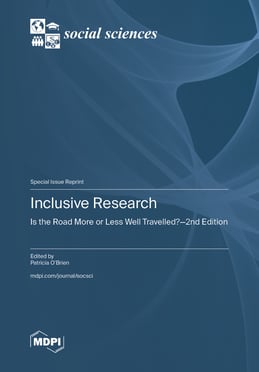
Inclusive Research
Reprint

Inclusive Research

Is the Road More or Less Well Travelled?—2nd Edition
Editors: Patricia O’Brien
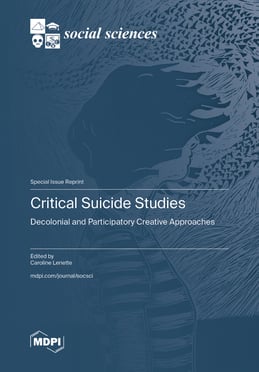
Critical Suicide Studies
Reprint

Critical Suicide Studies

Decolonial and Participatory Creative Approaches
Editors: Caroline Lenette
XFacebookLinkedIn
Soc. Sci. - ISSN 2076-0760