


Abstract
Microplastics (MPs) have emerged as persistent environmental contaminants due to their persistence, widespread distribution, and potential risks to the environment and human health. This review focuses on the sources of MPs, their potential environmental risks, and human impacts, as documented in the recent literature from 2020 to 2026. Recent studies focusing on pathways, environmental weathering, and toxicity were evaluated and synthesized into the analysis. Previous studies have demonstrated that microplastics are transported across and between environmental compartments. Environmental degradation, driven by ultraviolet radiation, mechanical fragmentation, and oxidation, can alter microplastics’ surface characteristics, which may affect microplastic mobility, reactivity, and the solid-state adsorption of contaminants. Human exposure occurs primarily through ingestion and inhalation, with dermal and occupational exposure also contributing under certain conditions. Emerging evidence from in vitro, animal, and human tissue studies suggests that smaller particles, particularly nanoplastics, may contribute to oxidative stress, inflammation, and cellular injury; however, important uncertainties remain regarding environmentally realistic exposure levels, long-term health outcomes, and the extrapolation of experimental findings to real-world human health risk. Overall, the current literature highlights the need for standardized methodologies, improved integration of environmental monitoring and exposure assessment, and stronger evidence to support risk assessment and policy development.
1. Introduction
Microplastics (MPs) are plastic particles less than 5 mm in size and have become globally distributed, enduring pollutants in water, soil, and air [1,2,3]. Their widespread presence in these environments has been driven by the rapid growth in plastic production worldwide and the breakdown of larger plastic materials through physicochemical and biological processes [4,5,6]. Microplastics, due to their size and resistance to degradation, plastic particles less than 5 mm have a high surface-area-to-volume ratio, and these particles can interact with other pollutants, including biological systems, and, therefore, facilitate the transport of microplastics and other pollutants through the various environmental compartments and food webs [7,8].
In recent years, there has been an increase in studies on the effects of human exposure to microplastics. Recent studies have shown the presence of microplastics in biological samples such as blood, lung tissue, and placenta. These findings have caused significant concern about the potential health effects of microplastics [9,10,11]. Exposure to microplastic particles can occur in several ways. These include ingestion, inhalation, and direct skin exposure [12,13,14]. The chronic exposure to microplastics and their effects have been poorly studied and are significantly unaddressed [12,15,16]. The lack of evidence is concerning and underscores the health impacts, especially the long-term effects, of microplastics [7].
The current literature is highly insufficient regarding the emerging evidence of human exposure to microplastics, given their ubiquitous presence in the environment [6,17]. There is, however, a lack of integrative studies that examine the sources of microplastics, their processes and mechanisms of environmental transport, persistence, and human exposure in a single study [18,19,20]. This is crucial to providing a basis for adequate risk assessment and improving the current state of available risk mitigation measures.
In contrast to more recent reviews that focus on isolated issues such as the geographical distribution of microplastics, microplastics in the environment, and their consequences for the individual, this review adopts a more comprehensive perspective. It captures the major developments involving the principal sources of microplastics, their transport in water, soil, and air, the processes (physical, chemical, and biological) that govern their environmental behavior, and the mechanisms of exposure to humans. Most of the evidence included in this review was published between 2020 and 2026, indicating the rapid recent growth of research on microplastics.
This review aims to provide a comprehensive summary of the principal sources of microplastics, their environmental transport and persistence, human exposure routes, and associated health effects, while considering current control and policy issues. Unlike reviews that focus on occurrence alone, this review incorporates environmental entry routes, persistence mechanisms, human exposure pathways, toxicological effects, and control policies into a single source–pathway–exposure framework, addressing these aspects through integrated exposure pathways.
2. Materials and Methods
2.1. Study Design
The study was conducted as a structured narrative review, following the Preferred Reporting Items for Systematic Reviews and Meta-Analyses (PRISMA) framework to ensure transparency and methodological rigor (checklist in Supplementary Table S1).
The study was conducted as a structured narrative review and reported in accordance with the Preferred Reporting Items for Systematic Reviews and Meta-Analyses (PRISMA 2020) guidelines to enhance transparency and methodological rigor. No review protocol was prospectively registered. This was done to improve the clarity and replicability of the process. Since this review was conducted as an organized narrative review (rather than a proper systematic review or meta-analysis), there was no requirement to pre-publish the review protocol.
2.2. Literature Search Strategy
Literature searches were conducted in Scopus, Web of Science, PubMed, and ScienceDirect between January 2026 and March 2026. The final search was performed on 15 March 2026. These databases encompass microplastics studies and offer a variety of components in environmental science, toxicology, public health, and pollution studies. The search focused on peer-reviewed articles published between 2020 and 2026. This time frame was selected to capture the most recent advances in microplastics research and the current pace of progress in the field.
2.3. Search Terms
The search framework revolves around three primary components: microplastics/nanoplastics, their environmental transport and persistence, and human exposure and health effects. Specific keywords and Boolean operators were used to improve search precision. The primary search terms included:
Microplastics
- Nanoplastics
- Environmental pathways of microplastics
- Microplastics transport
- Microplastics persistence
- Human exposure to microplastics
- Microplastics toxicity
- Microplastics in food
- Microplastics in air
- Microplastics in water
The terms were further combined with the following expressions:
(microplastics OR nanoplastics) AND (environmental pathways OR transport OR persistence) AND (human exposure OR toxicity OR human health).
2.4. Eligibility Criteria
The following criteria were applied to studies included in this review:
- Published between 2020 and 2026;
- Published in peer-reviewed journals;
- Written in English;
- Addressed one or more of the following themes: environmental pathways, persistence mechanisms, bioaccumulation, human exposure, toxicokinetics, or health effects of microplastics;
- Included relevant experimental, monitoring, epidemiological, or toxicological data.
The following conditions led to the exclusion of studies:
- Duplicate records retrieved from multiple databases were excluded.
- Studies not directly related to the environmental behavior or human health relevance of microplastics were excluded.
They were not peer-reviewed documents, conference abstracts, editorials, or articles lacking sufficient scientific detail to permit synthesis.
2.5. Study Selection and Data Synthesis
Initially, duplicate records were removed, and titles and abstracts were evaluated for relevance. Potentially eligible studies were assessed in full text against the predefined inclusion and exclusion criteria. This process yielded 100 studies deemed viable for final analysis. Articles were excluded if they did not address microplastic environmental pathways, persistence, human exposure, toxicological effects, or policy implications; were not published in English; were not peer-reviewed; or lacked sufficient methodological relevance to the objectives of the review.
The study selection process consisted of title screening, abstract screening, and full-text eligibility assessment. Articles were excluded if they did not address microplastic environmental pathways, persistence, human exposure, toxicological effects, or policy implications; were not peer-reviewed; were not published in English; or lacked sufficient methodological detail for synthesis.
Thematic analysis of the chosen studies was conducted to respond to the manuscript’s primary goals, including: (i) pathways for environmental entry and movement, (ii) behavior of persistence and degradation, (iii) pathways for human exposure, (iv) toxicokinetics and toxicity mechanisms, and (v) health risks and toxicity and what can be done to minimize risks.
Full-text articles were excluded because they were outside the review scope, lacked relevant environmental or human-health outcomes, were not peer-reviewed, or did not provide sufficient methodological information for synthesis.
2.6. Scope and Limitations
While this review used a PRISMA-based literature search and study selection procedure, it should be regarded as a narrative review rather than a formal systematic review or meta-analysis. As a result, some interpretive bias is possible, and differences in study designs limit cross-study comparisons, as well as approaches to particle and matrix characterization, exposure assessment strategies, and specific environmental settings.
Data extraction was conducted manually from the included studies. Information collected included publication year, study type, environmental compartment, exposure pathway, reported impacts, and key findings relevant to microplastic occurrence, persistence, transport, and human health implications. The extracted information was organized and synthesized narratively according to the objectives of the review.
The primary data items collected from each study included information on microplastic sources, environmental pathways, persistence mechanisms, exposure routes, toxicological effects, and mitigation or policy implications.
Additional variables extracted included publication year, study location, environmental matrix investigated, polymer types reported, and methodological approaches used for detection and analysis.
A completed PRISMA 2020 flow diagram summarizing the identification, screening, eligibility assessment, and inclusion of studies is presented in Figure 1.
Figure 1.
PRISMA flow diagram illustrating the literature identification, screening, eligibility assessment, and final selection of studies included in this review on microplastic environmental pathways, persistence, human exposure, bioaccumulation, toxicokinetics, and associated health implications.
3. Pathways of Microplastic Entry and Environmental Transfer
This section highlights the routes by which microplastics enter the environment and their mobility across various environmental compartments. It is mainly concerned with the pathways present in water (surface and groundwater), soil (terrestrial), air (atmospheric), and food webs (trophic), as they relate to distribution and transport. These pathways describe the movement of microplastics across water, air, soil, and biota [21,22].
3.1. Aquatic Pathways via Wastewater Treatment Plants (WWTPs)
Wastewater treatment plants (WWTPs) are among the most widely studied microplastic (MP) input and redistribution routes in aquatic environments, serving as both sites of removal and persistent sources of release (Figure 2). Existing research indicates that removal efficiencies at the primary, secondary, and tertiary levels are typically over 80–90%, but complete elimination of particles is rarely achieved, with effluents carrying residual fine particles and fibers into rivers, lakes, and seawater [23,24,25,26]. The treatment stages differ in removal efficiency, most notably with respect to the size and morphology of the plastic particles. In primary treatment, larger, denser, and easier-to-settle plastics are removed by mechanical screening and settling [27,28,29]. There is even greater removal in secondary biological treatment due to flocculation and microbial aggregation, in which microplastics are incorporated into the sludge [30,31]. Membrane, rapid sand, and dissolved air flotation, as well as some oxidation processes in tertiary treatments, also tend to have the highest microplastic retention. However, very small particles and fibers, especially at the nanoscale, can escape capture due to their high mobility in water. Wastewater treatment plants can reduce microplastic loads, but, as described above, their ability to capture small particles remains limited. As shown in Table 1, different stages of wastewater treatment yield varying levels of efficiency in removing MPs. Most of the mass removal occurs in the preliminary and primary treatments. At the same time, the tertiary and advanced stages tend to have the greatest overall retention, although a very small number of tiny particles and fibers may still get through.
Table 1.
Microplastic removal mechanisms across wastewater treatment stages [32,33].
Figure 2.
Schematic representation of the role of wastewater treatment plants (WWTPs) as pathways for microplastic entry and redistribution in the environment. Although microplastics are partially removed during primary, secondary, and tertiary treatment stages, residual particles are discharged into receiving waters. In contrast, retained particles accumulate in sludge and may be transferred to soils through land application. This illustrates the “removal–redistribution paradox” of microplastics in wastewater systems. Source: figure generated with AI assistance and edited by the authors [36,37].
3.2. Surface Runoff and Riverine Transport
Microplastics (MPs) travel through surface runoff, one of many diffuse pathways that transport them from land to water [30]. Surface runoff from precipitation collects microplastics (MPs) at urban, agricultural, and waste disposal sites and transports them to stormwater and river systems [38,39]. Urban runoff is especially important because it contains high concentrations of microplastics (MPs) from tire wear, synthetic textile debris, road dust, and fragmented plastic debris [40]. In agricultural systems, the use of biosolid-treated sewage, plastic film mulch, and treated wastewater for irrigation increases the quantity of microplastics (MPs) in the soil. These microplastics (MPs) become even more mobile during runoff events [38,41].
Riverine systems are integral to the transport of microplastics from inland sources to their oceanic and coastal destinations [18,42]. Annual estimates suggest that rivers are among the largest transporters of plastic debris and microplastics to the oceans [43]. The efficiency of microplastic transport via runoff depends on a combination of factors, including plastic particle size, shape, density, flow conditions, and surface properties, as well as hydrological factors such as rainfall, land use, and soil type [19,38,39,43]. Smaller, lighter plastic particles are much more likely to be captured in surface runoff and transported to rivers that serve as their final destinations. In contrast, larger plastic particles are more likely to be retained within the transport pathway through seeding or sedimentation, and thus transported over shorter distances [38,39]. Overall, riverine transport and surface runoff are the most direct pathways for microplastics, linking terrestrial sinks to aquatic ecosystems.
3.3. Subsurface and Groundwater
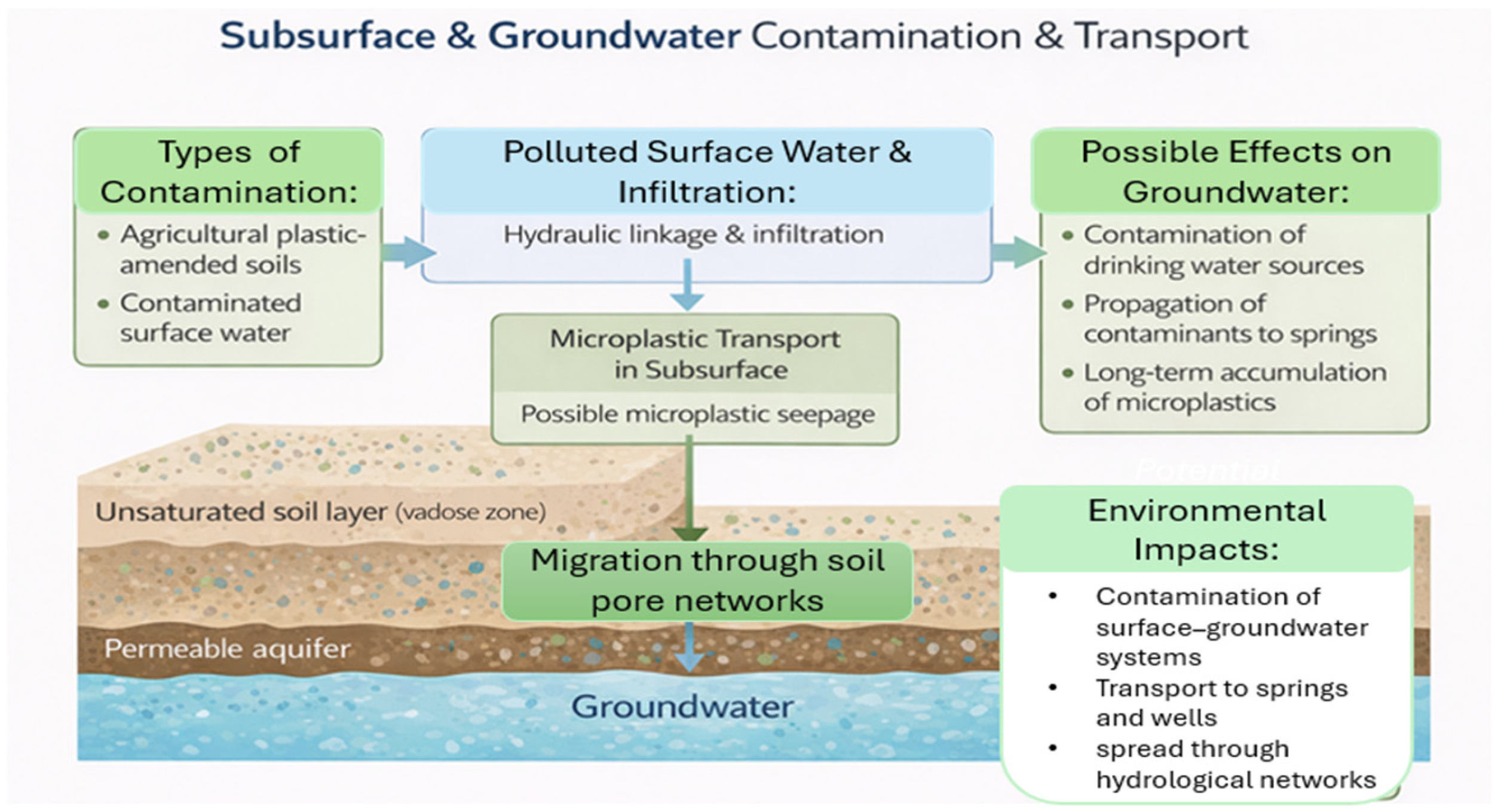
While microplastics have been detected in subsurface environments and groundwater systems, studies on them are few and far between compared with those on surface water environments [4,44]. Microplastic contamination in groundwater systems may occur in various ways, such as surface water contamination, percolation through microplastic-contaminated soils, and leachate flow from landfills and industrial sites [44,45,46] (Figure 3). Once microplastics make their way into subsurface environments, their transport and retention depend on multiple hydrogeological and physicochemical properties and conditions [21,44,47].
The attributes of an aquifer are of utmost importance in the determination of the behavior of microplastics. The size of the pores in the matrix of a porous aquifer, as compared to the size of the microplastic, determines the retention or the transport of that microplastic [9,48,49]. Fine-grained soils are more likely to retain microplastics, whereas coarse-grained soils permit the free transport of microplastics [50,51]. Microplastics may alter their surface charge depending on the polymer type and the microplastic’s age. The surface charge, in turn, influences the electrostatic interactions between microplastics and mineral particles of soils [49,52,53].
Different geochemical conditions can influence microplastic transport behavior [21,44]. Aggregation of microplastics can be influenced by the ionic strength, pH levels, and concentrations of dissolved organic matter (DOM), and these factors can also alter surface interactions [51,54,55]. Higher ionic strength can enhance the sedimentation of microplastics by reducing the electrostatic repulsion between the microplastic and sediment surfaces [47,51,52,56]. Additionally, microplastics can be stabilized by coatings of dissolved organic matter, thereby increasing their transport during colloid dissolution. Furthermore, microplastics can form stable colloids with organic matter, which enhances their transport in geochemical subsystems [53].
The aforementioned factors suggest a possible dual role of subsurface groundwater microplastic pathways: they could be either microplastic sinks or long-distance conduits for their transport. Standardized methods for sampling, extraction, and detection of microplastics for subsurface environments are lacking and remain a significant source of uncertainty [47,54,57]. Sampling methods, different analytical methods, and the various limits used for detection have resulted in a lack of comparability to the concentrations reported in the studies, which has been an ongoing source of uncertainty regarding the true levels of contamination present in the groundwater [58,59].
Figure 3.
Schematic Representation of Microplastic Entry and Persistence in Groundwater Systems. Source: Author’s own design, based on [60].
3.4. Atmospheric and Soil Pathways
Beyond aquatic ecosystems, microplastics (MPs) have been increasingly detected in the atmosphere and terrestrial soil, underscoring the complexity of their environmental cycle [50,51,61]. Airborne MPs, primarily from clothing, tire wear, industrial wear, and indoor sources, are emitted as fibers, fragments, and dust particles that can travel long distances, even to polar regions and high-altitude mountain systems. Atmospheric deposition via wet and dry fallout is an important mechanism for the redistribution of MPs between ecosystems, with monitoring studies estimating that humans consume tens of thousands of particles annually, predominantly in urban and industrial settings [4,46,59]. Parallel to the above, soils have emerged as long-term reservoirs that store MPs through the application of biosolids, sewage sludge, reclaimed water irrigation, plastic mulching films, and direct littering [4,62,63]. Upon being introduced into soils, MPs interact with soil structure, water-holding capacity, and microbial processes, reorganizing agroecosystem functions while also providing pathways for trophic transfer to soil fauna such as earthworms, nematodes, and arthropods [59]. The persistence of MPs in soil is particularly concerning because agricultural ecosystems are reservoirs that can release particles into aquatic environments through erosion, leaching, and runoff. In general, atmospheric deposition and terrestrial accumulation highlight the ubiquitous nature of MPs, linking urban emissions and terrestrial activities with ecological impacts and potential for human uptake by inhalation and food chain pollution [59,64,65].
3.5. Trophic Transfer
One of the most important features of microplastic pollution is its ability to enter food webs and biomagnify across trophic levels [52]. MPs have been identified in marine animals, from plankton to commercially important fish and shellfish, as well as in freshwater invertebrates, amphibians, and terrestrial animals, directly or indirectly exposed [66,67]. Their ingestion might be passive, through filter feeding and sediments, or active, through mistakes with natural prey. MPs, after ingestion, may become lodged in the gastrointestinal tract, migrate into tissues, or serve as vectors for adsorbed pollutants, thereby contributing to physiological stress [66,68]. There is increasing evidence of trophic transfer, with predators ingesting MPs that had been ingested by prey, raising concerns about biomagnification and bioaccumulation at subsequent levels of the food chain [21,69,70,71]. Verification that MPs are present in seafood consumed by humans, table salt, honey, and drinking water demonstrates that trophic transfer is not confined to ecological compartments but is of direct concern to public health, with pathways of exposure now better defined [7,9,72]. While definitive evidence of biomagnification in humans remains limited, the ubiquity of MPs in food and drink further underscores the imperative to assess long-term risks of chronic exposure, particularly regarding nanoplastic bioavailability across biological barriers. In this respect, trophic transfer is not merely an ecological concern but a direct link between environmental contamination and human health effects [3,58,73].
Microplastics are shown to be interchangeable with other environmental systems and are swapped with multiple transport pathways with different systems (water, soil, air, and living organisms) [62,74,75]. These processes account for their omnipresence (in various ecosystems). However, omnipresence and other systems with transport mechanisms cannot explain the long-term presence and accumulation of microplastics in ecosystems. To appreciate the long-term presence of microplastics and their systems, it is necessary to understand how microplastics influence organisms and ecosystems, and how these interactions vary across different matrices. Of these systems, piecing together microplastics and ecosystems helps explain, in part, the long residence of microplastics.
To facilitate cross-compartment comparisons, Table 2 summarizes the reported concentration ranges of microplastics across different environmental media and trophic compartments. While the table helps illustrate the range of MP burden variability, direct comparisons should be made with caution, as the sampling design, particle-size cutoffs, analytical procedures, and reporting units may differ, leading to different MPM burdens across the aquatic, atmospheric, terrestrial, and biotic compartments.
Table 2.
Representative reported concentration ranges of microplastics across major environmental media and trophic compartments.
4. Persistence: Physicochemical and Ecological Characteristics
Environmental pathways involve the movement of microplastics among the various environmental compartments, including water, air, soil, and biota. On the other hand, persistence focuses on the processes that allow microplastic particles to remain in the environment for long periods, even after transport, dilution, or partial removal. In this sense, the transport of microplastics concerns their movement, whereas their persistence concerns their continued accumulation, recirculation, and resistance to degradation across different environmental systems. Microplastic persistence results from several factors that distribute microplastics across environmental compartments, including intrinsic polymer recalcitrance, resistance to biodegradation, and progressive fragmentation into smaller microplastics that may become even more mobile.
The last section detailed the environmental transport mechanisms that distribute microplastics across aquatic, terrestrial, atmospheric, and biological systems. The section describes the persistence of microplastics in the environment due to specific physicochemical and ecological properties. In other words, the last section detailed the transport mechanisms of microplastics across environmental compartments, while this section focuses on their stability and long-term accumulation in environmental systems.
Microplastics persist in the environment due to their physical and chemical properties and the environmental processes they undergo after release [49,83]. Their small size, high surface area, and resistance to biodegradation contribute to their persistence, and additional surface modifications through UV-induced weathering, oxidation, and microbial colonization render them more stable and often more mobile in environmental media [74,83]. The widespread presence of MPs, even in isolated settings such as deep-sea sediments and Arctic ice, can be explained by these combined characteristics [14,83]. Table 3 summarizes the principal factors influencing MP persistence and links key particle properties to their environmental significance. For example, biofilm formation may enhance particle stability and trophic transfer potential, whereas smaller MPs often show greater sorption capacity for persistent organic pollutants.
Table 3.
Important physicochemical and ecological factors influencing microplastic persistence across different environmental systems.
To provide a visual overview of how interconnected processes contribute to long-term stability, Figure 4 presents a flowchart illustrating the fate of MPs in the environment. It shows how processes such as particle size reduction, chemical weathering, and organismal interactions drive greater particle persistence. Meanwhile, pollutant adsorption and biofilm formation increase ecological hazards by spreading MPs through different ecosystems. Fragmentation makes MPs more reactive, surface modifications enable contaminant transport, and ecological embedding allows their continuous movement among air, water, and soil. The table and flowchart together clarify that persistence results from multiple reinforcing processes rather than a single factor, making MPs among the most persistent emerging contaminants today.
Figure 4.
Conceptual overview of the main factors governing microplastic persistence in environmental systems, including particle properties, weathering, biofilm formation, and matrix interactions that promote long-term stability and accumulation [87,88].
5. Human Exposure and Public Health Impacts
Multiple biological interactions with microplastics and their effects on human systems have yet to be explored [55,62,72]. Microplastics have been found in most ecological systems (air, water, soil, food, etc.), creating a myriad of potential exposure pathways. Contaminated food and drinking water, airborne microplastics, and dermally contaminated microplastics (clothes, soil, and water, etc.) are the most common routes of exposure [65,89,90].
Existing studies on the effects of microplastics are diverse and span various research types [17,88]. Several in vitro studies have documented the potential of microplastics to induce cellular inflammatory responses, cause membrane damage, and induce oxidative stress. Furthermore, animal studies have shown the accumulation of microplastics in specific anatomical structures, as well as the inflammatory effects and metabolic disruption associated with this accumulation [5,87]. Microscopic particles have been found in biological samples (blood, lung, placenta, and brain tissues) of human beings. These studies, while showing internal exposure, have provided very little epidemiological evidence on the correlation or association between microplastics and human diseases. Therefore, broad-based research is essential to understand the scope of exposure, toxicokinetics, and potential health consequences [91].
5.1. Ingestion
Ingestion is considered one of the most significant routes of human exposure to microplastics. Microplastics have been found in a myriad of food products and beverages, including processed foods, honey, table salt, drinking water, and seafood. Reported microplastic concentrations differ significantly by study, and this is a consequence of the sampling approach, study design, and analytical techniques, as well as limitations in the detection of smaller particles [14,58].
Bottled water and packaged food have been of significant concern, as microplastic contamination from their packaging is thought to further contribute to the microplastic load at points of production, storage, and consumption. Another significant exposure route is through marine life, as microplastics are omnipresent in marine food webs and are incorporated into the tissues of fish and other seafood, thereby entering the human diet [53,61].
Ingestion may be the dominant route of microplastic exposure; however, the quantitative impact on humans remains largely unknown, constrained by a lack of rigor, variability, and standardization in sampling and analysis. As shown in Figure 5, waterborne and foodborne microplastics may be ingested, transit the gastrointestinal tract, translocate to the circulatory system, and potentially cause systemic physiological responses such as inflammation and oxidative stress.
Figure 5.
Possible biological consequences and pathways for human dietary exposure to microplastics. Microplastics present in food and drinking water might be ingested, cross the gastrointestinal barrier, and possibly enter the bloodstream. This exposure could provoke inflammatory reactions, oxidative stress, and alterations to the microbiome, metabolism, and immune system [22,88].
5.2. Inhalation
Despite growing concerns about airborne microplastics (MPs), the extent to which they affect human health remains unclear. Wind and consumer items like clothing and tires made of synthetic fibers release MPs [7,62,92]. Other sources include the breakdown of large plastics, urban dust, and the degradation of plastics indoors [59]. Both indoor and outdoor air sampling documented multiple sizes and types of MPs. Indoor air has more fibers and fragments, but outdoor air has more large MPs and fragments. In 2025, MP concentrations of 1–10 µm were measured in the indoor residential and Car Air. In residential settings, the MP concentration was 528 MPs/m3, while in cars the concentration was 2238 MPs/m3 [93]. The degree of exposure is supremely high, given that the same study estimates adults inhale 68,000 MPs daily, which is significantly more than previous estimates [93].
Increased exposure is expected in industrial and urban settings, particularly in textile mills and plastic manufacturing facilities, which lack airborne MP concentration control measures and exhibit high particle shedding and elevated airborne MP concentrations [24].
Although several inhaled particles are cleared from the upper airways via mucociliary clearance, smaller microplastic particles (MPs), especially nanoplastics (≲200 nm), are likely to penetrate deeper into the lungs and reach the alveolar regions. Nanoplastics are likely to defy clearance mechanisms in the lungs and trigger inflammatory processes, oxidative stress, and possibly more chronic respiratory conditions [94].
Case studies have shown evidence of airborne microplastics and the potential for inhalation exposure. Studies reported the presence of microplastic particles in the central and peripheral regions of the human lung. The detected particles were mostly fragments and fibers, and some were small enough to indicate deposition in the alveolar regions [9].
Exposure to microplastics in indoor settings has also been assessed in some experimental studies using thermal-breathing mannequins that model human exposure. For ranges of particles of size ≥11 μm, a concentration of 1.7 to 16 particles/m3 of synthetic fibers and fragments has been reported. Due to large variations in reported values, estimates are likely to be affected by the particle-size detection threshold, sampling technique, analysis method ([method] of particle-size), and measurement location (indoor, outdoor, transportation microenvironments) [95]. Not considering microplastics and nanoplastics by setting higher cut-offs is likely to result in an underestimation of total particle concentrations [96,97]. Additionally, variations in exposure time, conditions and analysis are likely to further alter reported values [77]. Direct comparisons of values across studies, therefore, should be done with caution, and greater methodological standardization is needed to improve the reliability and consistency of exposure assessments. Regardless, these studies support reports of airborne microplastics in indoor environments and suggest associated risks of inhalation exposure, particularly among children and people with chronic respiratory diseases, as well as high-risk occupational exposure.
5.3. Occupational and Dermal Exposure
Dermal exposure (skin contact) is less studied than inhalation or ingestion, but it remains a potential route of exposure to MPs (and nanoplastics). Dermal exposure may be caused by personal care products (e.g., microbead-exfoliating face washes) (Figure 6), contaminated bathing water, and environmental contact. Healthy skin will repel large particles but allow damaged skin (wounds, repeated abrasions, or prolonged contact) to release smaller particles, or nanoplastics, for deeper penetration [56].
Figure 6.
Conceptual overview of Dermal and Occupational Exposure to Microplastics, Skin Contact and Workplace Exposure Situations, Chemical Coprosentations, Health Effects, and Protective Measures.
Workplace exposure significantly amplifies these risks. Workers in textile production, plastic injection molding, 3D printing, or construction trades typically face significant airborne exposure to MPs and to chemical additives associated with plastics (e.g., plasticizers, flame retardants, and dyes). For example, indoor microfiber emissions from treated textile articles have been documented, and workers who regularly handle such textiles report respiratory or skin complaints [2,29,54].
Although large-scale epidemiological studies remain limited, occupational findings suggest that workers in high-exposure settings may face increased respiratory and inflammatory risks associated with chronic inhalation of microplastic particles and related plastic additives [49,98].
5.4. Bioaccumulation and Health Effects
The most concerning part of human exposure to MPs is systemic toxicity and bioaccumulation. Experimental and clinical evidence demonstrates that smaller MPs (especially nanoplastics ≲200 nm) can cross epithelial barriers in the gastrointestinal tract, lungs, and possibly the skin, thereby entering the systemic circulation. Once in circulation, particles can bioaccumulate in the lungs, liver, kidneys, and placenta, and possibly even the blood–brain barrier. Larger particles will more readily be trapped in the tissues of the digestive or respiratory tracts [99].
Direct confirmation of MPs in human tissues has been provided by recent studies: lung tissue samples confirmed MPs in both central and peripheral regions of the lung [9].
A 2024 case series also detected MPs in the human olfactory bulb, suggesting that inhalation or nasal exposure may permit translocation through the olfactory pathway [100].
Biological effects observed in experimental and some human tissue research include oxidative stress, activation of inflammatory pathways, disruption of normal cell signaling, and genotoxicity. Moreover, MPs can serve as vectors for heavy metals and persistent organic pollutants, enhancing toxicological hazard through co-exposure [13,16,99,101].
Even though compelling long-term epidemiological data in humans remain scant, the converging lines of evidence from laboratory, animal, and tissue studies highlight the urgency of ongoing research. Specifically, studies that tackle realistic exposure levels, particle size and shape distributions, chemical composition, and the role of co-toxins are particularly required. These are necessary for setting regulatory limits, occupational safety standards, and guiding public health action [4,5,42,87].
It is important to note that a large portion of current research on microplastic toxicity comes from in vitro and animal studies, which use exposure concentrations that may exceed environmentally realistic levels for humans. As a result, care must be taken when extrapolating these results to actual risks to human health. Particle size, polymer type, dose metrics, exposure duration, and co-exposure conditions all affect the biological response and preclude direct comparisons between studies, adding to uncertainty.
In conclusion, the available data indicate that microplastics can enter the human body through various exposure pathways, bioaccumulate in critical tissues, and elicit systemic toxicological effects. Ingestion, inhalation, and skin contact are examples of interrelated exposure pathways that converge on comparable biological endpoints, as shown in Figure 7. Once internalized, MPs, especially nanoplastics, can cross epithelial barriers, interact with other contaminants, and accumulate in organs, thereby exacerbating oxidative stress, inflammation, and possibly genotoxic processes. Collectively, this integrative framework underscores the urgent need to address microplastics as a significant threat to human health.
Figure 7.
Conceptual framework of microplastic exposure pathways and bioaccumulation in humans. Source: Author’s own design.
In this section, it is evident that microplastics can be ingested, inhaled, or come into contact with the skin. These exposures can cause a range of health impacts, but current evidence is limited. As a result, there are gaps in exposure levels, toxicity thresholds, and long-term effects. These gaps illustrate the need to identify critical research gaps and to develop effective regulatory and policy systems. Therefore, the following section addresses the key research gaps and their potential impacts on policies and management of microplastic pollution.
5.5. Toxicokinetics of Microplastics
The term “toxicokinetic” refers to the processes of absorption, distribution, metabolism, and elimination of toxins within biological systems. While research on microplastics and nanoplastics is still emerging, recent studies have begun examining human physiological responses to these kinetic processes [91,99].
Microplastics and nanoplastics can be ingested and inhaled. Particles less than 10 microns can cross the epithelium of the gastrointestinal and respiratory tracts. While nanoplastic particles are more likely to be taken up by cells and transported to other systems [57,75].
Microplastics and nanoplastics are likely to enter the circulatory system, leading to distribution to other organs. The effectiveness of absorption correlates strongly with the size, shape, and surface characteristics of the particles. Evidence from experiments indicates that particles smaller than 10 µm can traverse epithelial barriers, and particles in the nanoscale range (less than 1 µm) are more likely to be taken up by cells via endocytosis and to cross cellular membranes. Animal and in vitro studies indicate that nanoplastics in the 100–200 nanometer size range can cross intestinal epithelial cells and enter the systemic circulation. However, the rate at which humans absorb these materials is not known [99].
New research has confirmed the presence of microplastics in human blood, lung tissue, placentas, and other biological matter; therefore, exposure to microplastics can result in tissue distribution [91,92]. Most plastic polymers are also resistant to biological degradation, and thus, the metabolism of the particles is limited [85]. The particle surfaces may be modified by biological and oxidative interactions, which can alter particle behavior in tissues [57,75].
Although elimination mechanisms are not well understood, they could involve fecal excretion after ingestion, mucociliary clearance in the respiratory tract, or immune-mediated removals [13,75]. However, smaller particles, particularly nanoplastics, may bypass biological clearance and cause tissue retention, resulting in worries about long-term accumulation and chronic exposure [88].
Overall, the toxicokinetics of microplastics are highly dependent on particle size, with smaller particles more likely to be absorbed, distributed, and retained within biological systems. Although there is growing evidence on the toxicokinetics of microplastics, substantial uncertainties remain regarding their long-term accumulation and impact on the human body. The principal toxicokinetic processes, key determinants, and current evidence are summarized in Table 4.
Table 4.
Toxicokinetics of Microplastics in Humans.
5.6. Mechanisms of Microplastic Toxicity
Microplastics may elicit biological responses through several interacting pathways. One of the most common pathways includes the generation of oxidative stress. Exposure to microplastic particles can elicit the production of reactive oxygen species (ROS), which can attack cellular membranes, proteins, and nucleic acids. In conjunction with inflammation, the cytotoxic effects of oxidants can decrease the viability and functionality of cells [88].
Oxidative stress caused by microplastic exposure is perhaps the most commonly reported pathway [3]. The production of reactive oxygen species (ROS) associated with microplastic exposure can damage lipids, proteins, and nucleic acids. This imbalance affects mitochondria, reduces cell viability, and may trigger inflammation via the cell death pathway. In most experimental studies, oxidative stress and inflammation are linked rather than occurring in isolation [85,86,103,104].
Microplastics can elicit immune and inflammatory responses by being recognized as foreign bodies [15,42]. Their presence can activate inflammatory cells and initiate pathways of chronic inflammation. Direct evidence from human studies indicates that persistent inflammatory responses can lead to tissue damage and organ dysfunction. This is known to occur in the organs where the inflammation occurs, as seen in microplastics [99,104].
In addition to their own effects, microplastics can serve as carriers of other harmful substances [30]. Microplastics can concentrate persistent organic pollutants (POPs), heavy metals, and other xenobiotics due to their large surface area, low density, and hydrophobicity. Once aquatic animals ingest microplastics and their associated pollutants, these pollutants can desorb from the microplastics, increasing the organism’s toxicity [106,107]. In addition to chemical contaminants, microplastics contain additives such as bisphenol A, phthalates, and flame retardants that can contribute to endocrine disruption, altered metabolism, and developmental toxicity. Therefore, the effects of microplastics may be due to the microplastics themselves or to the associated chemicals [61].
The carrier effect of microplastics is influenced by several physicochemical mechanisms, including hydrophobic partitioning, electrostatic forces, surface complexation, and biofilm-mediated adsorption. Through weathering, microplastics can increase surface roughness and introduce oxygen-containing functional groups, thereby enhancing the sorption of metals and organic contaminants and exacerbating microplastic issues in the environment [40,52]. Furthermore, the microplastic ecosphere can harbor microbes that could become pathogens, thereby increasing the biological significance of microplastics beyond their own properties. Therefore, microplastic-associated exposure could have a number of plastic sorbates, plastic additives, and surface-associated microbial communities, leading to additive or synergistic effects.
Perhaps of equal or greater importance is the development of the microbially inhabited microplastic surfaces, or, as it is termed, the plastisphere [85]. Some of the microbes that colonize such surfaces may be pathogenic [85]. Thus, together with the adsorbed harmful substances, the microbial communities that are part of the plastisphere are also likely to greatly exacerbate the toxicity of ingested or inhaled microplastics. Thus, the potential health effects of microplastics may be due to a combination of the toxicity of the microplastics themselves, the chemical contaminants, and the microbes that reside on the microplastic surfaces [88,99,108].
All available evidence suggests that microplastic toxicity is multifactorial, depending on exposure levels, specific particle properties, and co-exposure conditions. While the mechanistic evidence from in vitro and animal studies is growing, there is still limited evidence of direct causation in humans [109,110].
5.7. Vulnerable Populations
Microplastics are harmful to the population, but because of the ways they can encounter microplastics or because of the way their bodies are built, some people will be harmed to a greater degree than others [48]. Infants and small children are the most at risk because their growing bodies, developing immune systems, and smaller bodies mean they eat and drink more compared to adults do [17]. Microplastics have been found in human breast milk and placentas, meaning infants are exposed to them as early as fetal development. The impacts on development and the immune system during this stage of life are extremely problematic [48,88].
On-the-job exposure to microplastics is also a concern. Industries that manufacture textiles or plastics, operate recycling operations, or break down materials have workers who are exposed to microplastics in the form of tiny, airborne plastic particles (microplastic fibers). Potentially dangerous levels of airborne microplastics have been recorded in the environments of factories and other workplaces [57,75].
Long-term on-the-job exposure to microplastics can also increase exposure to airborne plastic particulates, especially in the workplace, for people who already have a respiratory condition. Small plastic particles (nanoplastics) can cause (or worsen) an existing condition or problem because they can get trapped in the deeper tissues of the lungs and cause inflammation and worsen the problem [73,111]. When assessing the exposure levels and health risks of microplastics, it is important to look at those most at risk [98].
While an increasing number of toxicological studies point to possible health risks from exposure to microplastics, many experimental studies justify their methodology by using exposure levels higher than those typically found in the environment. Thus, the use of laboratory studies to assess health risks is highly speculative. Future studies are encouraged to investigate environmental exposure levels and to conduct long-term epidemiological studies to advance risk assessment and support evidence-based regulatory decisions.
6. Research Gaps and Policy Implications
There have been advances in the research on microplastic (MPs) pollution. However, little is known about the environmental fate, transport, and long-term impacts of MPs [110]. Increasing evidence suggests that MPs should not be assessed in confined individual environmental compartments (i.e., water, soil, or air), but rather evaluated as part of a system of cross-ecological compartments with continuous transfer, retention, and re-release in the water–soil–atmosphere continuum [110,112,113]. This underscores the urgency of shifting from compartment-based approaches to system-level analyses of microplastic transport and redistribution.
6.1. Research Priorities: From Descriptive to Mechanistic Understanding
Current MPs’ research is characterized by several methodological weaknesses, as is the nature of most emerging fields. Sampling approaches, particle-size cut-offs, and FTIR and Raman spectroscopy pose problems for quantifying particles smaller than 300 μm and nanoplastics. This subsequently results in a high degree of variability and leads to significant uncertainty in global estimates and low comparability with individual studies [114,115].
An important new concept is the retention–re-release dynamic of microplastics, which describes the cyclic movement of microplastics between different environmental compartments [30,114]. Although more than 90% of incoming microplastics may be removed from the water, they are not removed from the system as sewage sludge is created. When agricultural soils are treated with sewage sludge, microplastics from the water and from the soil can be incorporated into the soil and subsequently be released via erosion, surface runoff, and suspended sediment, and microplastics can be incorporated into water again [110,116,117]. This illustrates that while microplastics may be removed from one compartment of the environment (e.g., water), they may be added to other compartments (e.g., soil), and that, as a result, microplastics may be redistributed and the environmental problem of microplastics may not be addressed [50,73,117].
Assessing human exposure remains critical for understanding the effects of microplastics. Estimates of inhalation and ingestion differ due to varying methodologies, sampling, and detection limits [12,99]. Most toxicological studies are conducted under laboratory conditions that do not reflect real-world exposure scenarios. Additionally, microplastics act as carriers for heavy metals, persistent organic pollutants, and drugs. How microplastics act as carriers for contaminants, and the synergistic effects, are equally complex and poorly understood [116,118].
Nanoplastics represent an emerging frontier in microplastic research [75,119,120]. Their increased mobility, bioavailability, and ability to cross biological barriers make them unique [120,121]. Their detection remains an issue, and their potential environmental impact and bioavailability are underestimated.
6.2. Policy and Mitigation Implications
Regulatory frameworks addressing microplastics are a work in progress, still primarily focused on the first points of plastic pollution. The current focus on intentionally added microplastics in consumer products, as regulated by EU REACH legislation, still addresses primary microplastics and neglects secondary microplastics resulting from the breakdown of various materials in the environment [122,123]. This is a significant oversight, as secondary microplastics, ubiquitous due to sources such as tire wear, clothing, and plastic breakdown, are the primary contributors to microplastic pollution in the environment [40,122].
Microplastics, as discussed in previous sections, span multiple layers of the source–pathway–exposure framework. Microplastics are removed from and added to various environmental compartments through wastewater treatment, land application of sludge, surface runoff, the atmosphere, and food webs. As a result of all these processes, exposure to microplastics may occur through consumption, inhalation, and even skin contact, although to a much lesser extent [12,123]. Yet policymakers continue to focus on isolated sources of microplastics. This approach neglects the entire system, continuum, and cycle of microplastics. Integrated, life-cycle-based strategies that address the whole system are needed for effective mitigation. Existing mitigation strategies (Table 5) include regulatory, technological, and product-based approaches, but their effectiveness remains quite uneven. In terms of waste treatment technologies, there are relatively high removal efficiencies for large particles, but limitations for smaller particles and nanoplastics, as well as an additional issue of microplastic redistribution via sludge pathways [34,99]. Likewise, product-based innovations and extended producer responsibility frameworks are intended to reduce emissions at the source. Still, they face challenges related to regional implementation limitations and inconsistent and unscaled frameworks [113,124,125].
Alongside the constraints of regulatory reach, implementation remains limited due to varying levels of monitoring and enforcement, regional implementation differences, and the absence of unified regulatory frameworks for secondary microplastics.
In addition, the dispersed nature of microplastic pollution resulting from riverine transport, atmospheric deposition, and ocean circulation requires international collaboration [113,125,126]. The ongoing processes for a legally binding pact on plastics at the global level have opened pathways for regional collaboration and aligned regulatory frameworks, but will need to address issues of standardization for monitoring, data integration, and regulatory frameworks, strengthening the interface between science and decision-making to be effective [126]. There is a need to ensure that mitigation approaches align with the environmental microplastics system.
Table 5.
Overview of regulatory and mitigation measures addressing micro- and nanoplastics.
7. Conclusions
Microplastics are now understood as a major problem for both ecosystems and human health. Despite being designed for short-term use, many plastic products, after their useful lives, break down into microplastics that contaminate our water, soil, and air and pose a threat to human health. Microplastics can be transported in the environment via treated wastewater, applied biosolids, the atmosphere, and food webs.
The presence of microplastics in human blood, placentas, breast milk, and lung tissue has only heightened concerns about their health impacts. While the full scope of microplastics’ toxicity is not fully understood, there is growing evidence from in vitro, animal, and human tissue studies suggesting that microplastics may contribute to oxidative stress, inflammation, and tissue injury under certain exposure conditions. Size, shape, chemical composition, and the presence of additives or contaminants can significantly influence these effects. This review highlights the likely underestimation of microplastic risks because most of the available literature has focused on their environmental presence, to the detriment of studies on their toxicokinetic mechanisms, mechanisms of toxicity, and population-specific vulnerability.
Advancements in both policy and science are necessary to begin tackling microplastic pollution. Downstream treatment technologies, such as bioreactors and novel oxidation mechanisms, may help minimize microplastic pollution. Still, they are unlikely to be meaningful until upstream interventions are implemented to address plastic production, product design, and plastic disposal. Future research should focus on the biological consequences of microplastic pollution for humans. These include the development of standardized methods on human biomonitoring and analyses of the effects of prolonged exposure to microplastics, the toxicity of microplastic particles, the effects of microplastics on co-contaminants, and the protection of at-risk populations. A collaborative approach that integrates environmental science, toxicology, biomonitoring, and policy is crucial to advancing risk assessment and developing useful intervention options.
Supplementary Materials
The following supporting information can be downloaded at: https://www.mdpi.com/article/10.3390/microplastics5020128/s1, Table S1: PRISMA 2020 checklist.
Author Contributions
Conceptualization, J.R., A.H., and M.B.; methodology, J.R., A.A.M., and C.H.; formal analysis, J.R. and C.H.; investigation, J.R., A.A.M., C.H., and I.H.; resources, J.R., M.B. and D.E.B.; data curation, J.R. and I.H.; writing—original draft preparation, J.R.; writing—review and editing, J.R., A.H., M.B., and D.E.B.; visualization, J.R. and C.H.; supervision, J.R., A.H., and M.B.; project administration, J.R. and A.H.; funding acquisition, J.R. and D.E.B. All authors have read and agreed to the published version of the manuscript.
Funding
This research received no external funding.
Institutional Review Board Statement
Not applicable.
Data Availability Statement
No new data were created or analyzed in this study. Data sharing does not apply to this article.
Acknowledgments
During the preparation of this manuscript, the authors used PowerPoint to create and render illustrative figures. The authors reviewed and edited all generated content and took full responsibility for the content of this publication.
Conflicts of Interest
The authors declare no conflicts of interest.
Abbreviations
The following abbreviations are used in this manuscript:
| MPs | microplastics |
| NPs | nanoplastics |
| WWTPs | wastewater treatment plants |
| EU | European Union |
| POPs | persistent organic pollutants |
| ROS | reactive oxygen species |
| FTIR | Fourier-transform infrared spectroscopy |
| PE | polyethylene |
| PP | polypropylene |
| PET | polyethylene terephthalate |
| DOM | dissolved organic matter |
| µm | micrometer |
References
- Geyer, R.; Jambeck, J.R.; Law, K.L. Production, Use, and Fate of All Plastics Ever Made. Sci. Adv. 2017, 3, e1700782. [Google Scholar] [CrossRef] [PubMed]
- Colmenarejo Calero, E.; Kovač Viršek, M.; Mali, N. Microplastics in Groundwater: Pathways, Occurrence, and Monitoring Challenges. Water 2024, 16, 1228. [Google Scholar] [CrossRef]
- Xu, Y.; Ou, Q.; van der Hoek, J.P.; Liu, G.; Lompe, K.M. Photo-Oxidation of Micro- and Nanoplastics: Physical, Chemical, and Biological Effects in Environments. Environ. Sci. Technol. 2024, 58, 991–1009. [Google Scholar] [CrossRef] [PubMed]
- Liu, X.; Lin, H.; Xu, S.; Yan, Y.; Yu, R.; Hu, G. Occurrence, Distribution, and Characteristics of Microplastics in Agricultural Soil around a Solid Waste Treatment Center in Southeast China. J. Soils Sediments 2023, 23, 936–946. [Google Scholar] [CrossRef] [PubMed]
- van Raamsdonk, L.W.; van der Zande, M.; Koelmans, A.A.; Hoogenboom, R.L.; Peters, R.J.; Groot, M.J.; Peijnenburg, A.A.; Weesepoel, Y.J. Current Insights into Monitoring, Bioaccumulation, and Potential Health Effects of Microplastics Present in the Food Chain. Foods 2020, 9, 72. [Google Scholar] [CrossRef] [PubMed]
- Li, Y.; Tao, L.; Wang, Q.; Wang, F.; Li, G.; Song, M. Potential Health Impact of Microplastics: A Review of Environmental Distribution, Human Exposure, and Toxic Effects. Environ. Health 2023, 1, 249–257. [Google Scholar] [CrossRef] [PubMed]
- Prata, J.C. Airborne Microplastics: Consequences to Human Health? Environ. Pollut. 2018, 234, 115–126. [Google Scholar] [CrossRef] [PubMed]
- Guo, X.; Wang, J. The Chemical Behaviors of Microplastics in Marine Environment: A Review. Mar. Pollut. Bull. 2019, 142, 1–14. [Google Scholar] [CrossRef] [PubMed]
- Amato-Lourenço, L.F.; dos Santos Galvão, L.; Wiebeck, H.; Carvalho-Oliveira, R.; Mauad, T. Atmospheric Microplastic Fallout in Outdoor and Indoor Environments in São Paulo Megacity. Sci. Total Environ. 2022, 821, 153450. [Google Scholar] [CrossRef] [PubMed]
- Leslie, H.A.; van Velzen, M.J.M.; Brandsma, S.H.; Vethaak, A.D.; Garcia-Vallejo, J.J.; Lamoree, M.H. Discovery and Quantification of Plastic Particle Pollution in Human Blood. Environ. Int. 2022, 163, 107199. [Google Scholar] [CrossRef] [PubMed]
- Verschoor, M.R.; Hautier, Y.; Kowalchuk, G.A.; Temmink, R.J.M.; van Kuijk, M.; Ladouceur, E.R.; Wright, A.J.; Barry, K.E. Applying Complementarity in Ecological Restoration. Trends Ecol. Evol. 2025, 40, 1077–1089. [Google Scholar] [CrossRef] [PubMed]
- Cox, K.D.; Covernton, G.A.; Davies, H.L.; Dower, J.F.; Juanes, F.; Dudas, S.E. Human Consumption of Microplastics. Environ. Sci. Technol. 2019, 53, 7068–7074. [Google Scholar] [CrossRef] [PubMed]
- Abafe, O.A.; Harrad, S.; Abdallah, M.A.-E. Assessment of Human Dermal Absorption of Flame Retardant Additives in Polyethylene and Polypropylene Microplastics Using 3D Human Skin Equivalent Models. Environ. Int. 2024, 186, 108635. [Google Scholar] [CrossRef] [PubMed]
- Umeh, O.R.; Ophori, D.U.; Ibo, E.M.; Eke, C.I.; Oyen, T.P. Groundwater Systems under Siege: The Silent Invasion of Microplastics and Cock-Tails Worldwide. Environ. Pollut. 2024, 356, 124305. [Google Scholar] [CrossRef] [PubMed]
- Lalrinfela, P.; Vanlalsangi, R.; Lalrinzuali, K.; Babu, P.J. Microplastics: Their Effects on the Environment, Human Health, and Plant Ecosystems. Environ. Pollut. Manag. 2024, 1, 248–259. [Google Scholar] [CrossRef]
- Sun, W.; Yan, S.; Meng, Z.; Tian, S.; Jia, M.; Huang, S.; Wang, Y.; Zhou, Z.; Diao, J.; Zhu, W. Combined Ingestion of Polystyrene Microplastics and Epoxiconazole Increases Health Risk to Mice: Based on Their Synergistic Bioaccumulation in Vivo. Environ. Int. 2022, 166, 107391. [Google Scholar] [CrossRef] [PubMed]
- Nadarasan, S.; Phuna, Z.X.; Zaman, R.; Tan, C.K.; Bustami, N.A.; Bin Ho, Y.; Kosasih, S.J.; Tan, E.S.S. Microplastics and Child Health: A Scoping Review of Prenatal and Early-Life Exposure Routes and Potential Health Risks. Toxicol. Rep. 2025, 15, 102143. [Google Scholar] [CrossRef] [PubMed]
- Li, C.; Busquets, R.; Campos, L.C. Assessment of Microplastics in Freshwater Systems: A Review. Sci. Total Environ. 2020, 707, 135578. [Google Scholar] [CrossRef] [PubMed]
- Kumar, M.; Chaudhary, V.; Kumar, R.; Chaudhary, V.; Srivastav, A.L. Microplastics, Their Effects on Ecosystems, and General Strategies for Mitigation of Microplastics: A Review of Recent Developments, Challenges, and Future Prospects. Environ. Pollut. Manag. 2025, 2, 87–105. [Google Scholar] [CrossRef]
- Hirt, N.; Body-Malapel, M. Immunotoxicity and intestinal effects of nano- and microplastics: A review of the literature. Part. Fibre Toxicol. 2020, 17, 57. [Google Scholar] [CrossRef]
- Zhang, Y.; Wu, H.; Xu, L.; Liu, H.; An, L. Promising Indicators for Monitoring Microplastic Pollution. Mar. Pollut. Bull. 2022, 182, 113952. [Google Scholar] [CrossRef] [PubMed]
- Hoang, H.G.; Nguyen, N.S.H.; Zhang, T.; Tran, H.-T.; Mukherjee, S.; Naidu, R. A Review of Microplastic Pollution and Human Health Risk Assessment: Current Knowledge and Future Outlook. Front. Environ. Sci. 2025, 13, 1606332. [Google Scholar] [CrossRef]
- Verma, R.; Vinoda, K.S.; Papireddy, M.; Gowda, A.N.S. Toxic Pollutants from Plastic Waste—A Review. Procedia Environ. Sci. 2016, 35, 701–708. [Google Scholar] [CrossRef]
- Worku, A.K.; Ayele, D.W.; Teshager, M.A.; Omar, M.; Yerkrang, P.P.; Elgaddafi, R.; Alemu, M.A. Recent Advances in Wastewater Treatment Technologies: Innovations and New Insights. Energy Rev. 2025, 4, 100164. [Google Scholar] [CrossRef]
- Al-Tohamy, R.; Ali, S.S.; Li, F.; Okasha, K.M.; Mahmoud, Y.A.-G.; Elsamahy, T.; Jiao, H.; Fu, Y.; Sun, J. A Critical Review on the Treatment of Dye-Containing Wastewater: Ecotoxicological and Health Concerns of Textile Dyes and Possible Remediation Approaches for Environmental Safety. Ecotoxicol. Environ. Saf. 2022, 231, 113160. [Google Scholar] [CrossRef] [PubMed]
- Fouda-Mbanga, B.G.; Nyoni, B.; Mnyango, J.I.; Phiri, C.; Hlangothi, S.P.; Miracle, A.; Boluwatife, A.; Celestina, O.; Voukeng, S.N.K.; Tsague, C.F.; et al. The Nexuses of Micro(Nano)Plastics at Environmental Interfaces: Challenges in Wastewater Treatment and Sustainable Water Management. J. Environ. Chem. Eng. 2025, 13, 119952. [Google Scholar] [CrossRef]
- Carnevale Miino, M.; Galafassi, S.; Zullo, R.; Torretta, V.; Rada, E.C. Microplastics Removal in Wastewater Treatment Plants: A Review of the Different Approaches to Limit Their Release in the Environment. Sci. Total Environ. 2024, 930, 172675. [Google Scholar] [CrossRef] [PubMed]
- Tyagi, U.; Anand, N. Sustainable and Low-Cost Biomass Derived Adsorbents for the Removal of Toxic Contaminants from Wastewater: Approaches and Future Perspective. Waste Manag. Bull. 2024, 2, 308–325. [Google Scholar] [CrossRef]
- Zoccali, A.; Cantoni, B.; Azzellino, A.; Malpei, F. Removal of Microplastics in Wastewater Treatment Plants: Insights from a Literature Meta-Analysis. J. Environ. Chem. Eng. 2025, 13, 116812. [Google Scholar] [CrossRef]
- Matavos-Aramyan, S. Addressing the Microplastic Crisis: A Multifaceted Approach to Removal and Regulation. Environ. Adv. 2024, 17, 100579. [Google Scholar] [CrossRef]
- Almeida-Naranjo, C.E.; Tejedor, J.; Villamar-Ayala, C.A.; Vizuete, G. Transforming Waste into Solutions: Raw and Modified Bioadsorbents for Emerging Contaminant Removal. J. Environ. Chem. Eng. 2025, 13, 116720. [Google Scholar] [CrossRef]
- Dayal, L.; Yadav, K.; Dey, U.; Das, K.; Kumari, P.; Raj, D.; Mandal, R.R. Recent Advancement in Microplastic Removal Process from Wastewater—A Critical Review. J. Hazard. Mater. Adv. 2024, 16, 100460. [Google Scholar] [CrossRef]
- Rout, P.R.; Mohanty, A.; Aastha; Sharma, A.; Miglani, M.; Liu, D.; Varjani, S. Micro- and Nanoplastics Removal Mechanisms in Wastewater Treatment Plants: A Review. J. Hazard. Mater. Adv. 2022, 6, 100070. [Google Scholar] [CrossRef]
- Iyare, P.U.; Ouki, S.K.; Bond, T. Microplastics Removal in Wastewater Treatment Plants: A Critical Review. Environ. Sci. Water Res. Technol. 2020, 6, 2664–2675. [Google Scholar] [CrossRef]
- Bayo, J.; López-Castellanos, J.; Olmos, S. Membrane Bioreactor and Rapid Sand Filtration for the Removal of Microplastics in an Urban Wastewater Treatment Plant. Mar. Pollut. Bull. 2020, 156, 111211. [Google Scholar] [CrossRef] [PubMed]
- Banerjee, C.; Sharma, A.; Kumar, D.N. Decline in Terrestrial Water Recharge with Increasing Global Temperatures. Sci. Total Environ. 2021, 764, 142913. [Google Scholar] [CrossRef] [PubMed]
- Delacuvellerie, A.; Cyriaque, V.; Gobert, S.; Benali, S.; Wattiez, R. The Plastisphere in Marine Ecosystem Hosts Potential Specific Microbial Degraders Including Alcanivorax Borkumensis as a Key Player for the Low-Density Polyethylene Degradation. J. Hazard. Mater. 2019, 380, 120899. [Google Scholar] [CrossRef] [PubMed]
- Sewwandi, M.; Kumar, A.; Pallewatta, S.; Vithanage, M. Microplastics in Urban Stormwater Sediments and Runoff: An Essential Component in the Microplastic Cycle. TrAC Trends Anal. Chem. 2024, 178, 117824. [Google Scholar] [CrossRef]
- Cho, Y.; Shim, W.J.; Ha, S.Y.; Han, G.M.; Jang, M.; Hong, S.H. Microplastic Emission Characteristics of Stormwater Runoff in an Urban Area: Intra-Event Variability and Influencing Factors. Sci. Total Environ. 2023, 866, 161318. [Google Scholar] [CrossRef] [PubMed]
- Hossain, M.; Engelhardt, I. Global Plastic Footprint: Unveiling Property Trends, Environmental Fate, and Emerging Threats of Microplastic and Nanoplastics Pollution across Ecosystems. Energy Ecol. Environ. 2025, 10, 637–674. [Google Scholar] [CrossRef]
- Martínez-Pérez, S.; Fernández Artime, I.; García Arcos, A.; Meffe, R.; Rico, A.; Martínez-Hernández, V. Assessing Microplastic Mobility from Soils Amended with Sewage Sludge under Different Land Use and Rainfall Scenarios. Environ. Pollut. 2026, 391, 127608. [Google Scholar] [CrossRef] [PubMed]
- Jolaosho, T.L.; Rasaq, M.F.; Omotoye, E.V.; Araomo, O.V.; Adekoya, O.S.; Abolaji, O.Y.; Hungbo, J.J. Microplastics in Freshwater and Marine Ecosystems: Occurrence, Characterization, Sources, Distribution Dynamics, Fate, Transport Processes, Potential Mitigation Strategies, and Policy Interventions. Ecotoxicol. Environ. Saf. 2025, 294, 118036. [Google Scholar] [CrossRef] [PubMed]
- van Wijnen, J.; Ragas, A.M.J.; Kroeze, C. Modelling Global River Export of Microplastics to the Marine Environment: Sources and Future Trends. Sci. Total Environ. 2019, 673, 392–401. [Google Scholar] [CrossRef] [PubMed]
- Viaroli, S.; Lancia, M.; Re, V. Microplastics Contamination of Groundwater: Current Evidence and Future Perspectives. A Review. Sci. Total Environ. 2022, 824, 153851. [Google Scholar] [CrossRef] [PubMed]
- Koyuncuoğlu, P.; Erden, G. Microplastics in Municipal Wastewater Treatment Plants: A Case Study of Denizli/Turkey. Front. Environ. Sci. Eng. 2023, 17, 99. [Google Scholar] [CrossRef]
- Allen, S.; Allen, D.; Baladima, F.; Phoenix, V.R.; Thomas, J.L.; Le Roux, G.; Sonke, J.E. Evidence of Free Tropospheric and Long-Range Transport of Microplastic at Pic Du Midi Observatory. Nat. Commun. 2021, 12, 7242. [Google Scholar] [CrossRef] [PubMed]
- Caldwell, J.; Taladriz-Blanco, P.; Lehner, R.; Lubskyy, A.; Ortuso, R.D.; Rothen-Rutishauser, B.; Petri-Fink, A. The Micro-, Submicron-, and Nanoplastic Hunt: A Review of Detection Methods for Plastic Particles. Chemosphere 2022, 293, 133514. [Google Scholar] [CrossRef] [PubMed]
- Enyoh, C.E.; Wang, Q.; Ovuoraye, P.E.; Maduka, T.O. Toxicity Evaluation of Microplastics to Aquatic Organisms through Molecular Simulations and Fractional Factorial Designs. Chemosphere 2022, 308, 136342. [Google Scholar] [CrossRef] [PubMed]
- Rammal, J.; Diab, W.; Nasser, G.; Abdel Baki, Z.; El Badan, D.M.; Haidar, C.; Hijazi, A. Transport Pathways and Bioavailability of Soil-Borne Heavy Metals in Agricultural Systems. J. Appl. Organomet. Chem. 2025, 5, 368–391. [Google Scholar] [CrossRef]
- Gündoğdu, S.; Akça, M.O.; Gursoy, M.; Yılmaz, M.; Zhang, X.; Rodríguez-Seijo, A.; Bibi, A.; Di Gioia, M.L.; Velimirovic, M. Microplastics in Soil: A Comprehensive Review of Analytical Techniques. Front. Soil Sci. 2025, 5, 1614075. [Google Scholar] [CrossRef]
- Kushwaha, M.; Shankar, S.; Goel, D.; Singh, S.; Rahul, J.; Rachna, K.; Singh, J. Microplastics Pollution in the Marine Environment: A Review of Sources, Impacts and Mitigation. Mar. Pollut. Bull. 2024, 209, 117109. [Google Scholar] [CrossRef] [PubMed]
- Sun, J.; Sui, M.; Wang, T.; Teng, X.; Sun, J.; Chen, M. Detection and Quantification of Various Microplastics in Human Endometrium Based on Laser Direct Infrared Spectroscopy. Sci. Total Environ. 2024, 906, 167760. [Google Scholar] [CrossRef] [PubMed]
- Ibrahim, N.; Rahman, A.M.N.A.A.; Shafiq, M.D.; Lockman, Z.; Jaafar, M.; Kameda, Y. Microplastic Pollution: Sources, Degradation Mechanisms, Analytical Advances, and Mitigation Strategies for Environmental Sustainability. Rev. Environ. Contam. Toxicol. 2025, 263, 27. [Google Scholar] [CrossRef]
- Abafe, O.A.; Harrad, S.; Abdallah, M.A.-E. Novel Insights into the Dermal Bioaccessibility and Human Exposure to Brominated Flame Retardant Additives in Microplastics. Environ. Sci. Technol. 2023, 57, 10554–10562. [Google Scholar] [CrossRef] [PubMed]
- Rashid, S.; Majeed, L.R.; Hussain, N.; Bhat, S.U.; Shabib, A.; Maraqa, M.A.; Rather, M.Y.; Bhat, M.A. Methodological Advances in Microplastic Research: Detection, Isolation, and Analytical Characterization. Microchem. J. 2026, 222, 117210. [Google Scholar] [CrossRef]
- Singh, S.S.; Chanda, R.; Singh, N.S.; Ramtharmawi; Devi, N.R.; Devi, K.V.; Upadhyay, K.K.; Tripathi, S.K. Microplastic Pollution: Exploring Trophic Transfer Pathways and Ecological Impacts. Discov. Environ. 2024, 2, 103. [Google Scholar] [CrossRef]
- Rashid, S.; Majeed, L.R.; Mehta, N.; Radu, T.; Martín-Fabiani, I.; Bhat, M.A. Microplastics in Terrestrial Ecosystems: Sources, Transport, Fate, Mitigation, and Remediation Strategies. Euro-Mediterr. J. Environ. Integr. 2025, 10, 2633–2659. [Google Scholar] [CrossRef]
- Fastner, J.; Teikari, J.; Hoffmann, A.; Köhler, A.; Hoppe, S.; Dittmann, E.; Welker, M. Cyanotoxins Associated with Macrophytes in Berlin (Germany) Water Bodies—Occurrence and Risk Assessment. Sci. Total Environ. 2023, 858, 159433. [Google Scholar] [CrossRef] [PubMed]
- Ullah, F.; Wang, P.-Y.; Saqib, S.; Zhao, L.; Ashraf, M.; Khan, A.; Khan, W.; Khan, A.; Chen, Y.; Xiong, Y.-C. Toxicological Complexity of Microplastics in Terrestrial Ecosystems. iScience 2025, 28, 111879. [Google Scholar] [CrossRef] [PubMed]
- Noorimotlagh, Z.; Hopke, P.K.; Mirzaee, S.A. A Systematic Review of Airborne Microplastics Emissions as Emerging Contaminants in Outdoor and Indoor Air Environments. Emerg. Contam. 2024, 10, 100372. [Google Scholar] [CrossRef]
- Gahlot, P.; Tyagi, V.K. Microplastics and Antibiotic Resistance Genes Nexus in Sewage Sludge: Impact of Thermal Hydrolysis Process-Anaerobic Digestion. Bioresour. Technol. 2026, 449, 134349. [Google Scholar] [CrossRef] [PubMed]
- Radovenchyk, I.; Hordiienko, K.; Radovenchyk, V.; Overchenko, T.; Ivanenko, O.; Krysenko, T.; Sirenko, L. Water Softening Systems of Low and Medium Capacity. Ecol. Eng. Environ. Technol. (EEET) 2024, 25, 194–202. [Google Scholar] [CrossRef] [PubMed]
- Chandra, S.; Walsh, K.B. Microplastics in Water: Occurrence, Fate and Removal. J. Contam. Hydrol. 2024, 264, 104360. [Google Scholar] [CrossRef] [PubMed]
- Walkinshaw, C.; Lindeque, P.K.; Thompson, R.; Tolhurst, T.; Cole, M. Microplastics and Seafood: Lower Trophic Organisms at Highest Risk of Contamination. Ecotoxicol. Environ. Saf. 2020, 190, 110066. [Google Scholar] [CrossRef] [PubMed]
- Guo, P.; Furnary, T.; Vasiliou, V.; Yan, Q.; Nyhan, K.; Jones, D.P.; Johnson, C.H.; Liew, Z. Non-Targeted Metabolomics and Associations with per- and Polyfluoroalkyl Substances (PFAS) Exposure in Humans: A Scoping Review. Environ. Int. 2022, 162, 107159. [Google Scholar] [CrossRef] [PubMed]
- Zhang, H.; Li, G.-W.; Feng, W.; Yao, Z.-Y. Cu(II) Adsorption from Aqueous Solution onto Poly(Acrylic Acid/Chestnut Shell Pigment) Hydrogel. Water 2022, 14, 3500. [Google Scholar] [CrossRef]
- Savoca, S.; Matanović, K.; D’Angelo, G.; Vetri, V.; Anselmo, S.; Bottari, T.; Mancuso, M.; Kužir, S.; Spanò, N.; Capillo, G. Ingestion of Plastic and Non-Plastic Microfibers by Farmed Gilthead Sea Bream (Sparus Aurata) and Common Carp (Cyprinus Carpio) at Different Life Stages. Sci. Total Environ. 2021, 782, 146851. [Google Scholar] [CrossRef]
- Savoca, M.; Abreo, N.A.; Arias, A.H.; Baes, L.; Baini, M.; Bergami, E.; Brander, S.; Canals, M.; Choy, C.A.; Corsi, I. Monitoring Plastic Pollution Using Bioindicators: A Global Review and Recommendations for Marine Environments. Environ. Sci. Adv. 2024, 4, 10–32. [Google Scholar] [CrossRef]
- Yan, Y.; Zhu, F.; Zhu, C.; Chen, Z.; Liu, S.; Wang, C.; Gu, C. Dibutyl Phthalate Release from Polyvinyl Chloride Microplastics: Influence of Plastic Properties and Environmental Factors. Water Res. 2021, 204, 117597. [Google Scholar] [CrossRef] [PubMed]
- Russo, M.; Oliva, M.; Hussain, M.I.; Muscolo, A. The Hidden Impacts of Micro/Nanoplastics on Soil, Crop and Human Health. J. Agric. Food Res. 2023, 14, 100870. [Google Scholar] [CrossRef]
- Li, D.; Shi, Y.; Yang, L.; Xiao, L.; Kehoe, D.K.; Gun’ko, Y.K.; Boland, J.J.; Wang, J.J. Microplastic Release from the Degradation of Polypropylene Feeding Bottles during Infant Formula Preparation. Nat. Food 2020, 1, 746–754. [Google Scholar] [CrossRef] [PubMed]
- Sadique, S.A.; Konarova, M.; Niu, X.; Szilagyi, I.; Nirmal, N.; Li, L. Impact of Microplastics and Nanoplastics on Human Health: Emerging Evidence and Future Directions. Emerg. Contam. 2025, 11, 100545. [Google Scholar] [CrossRef]
- Mutuku, J.; Yanotti, M.; Tocock, M.; MacDonald, D.H. The Abundance of Microplastics in the World’s Oceans: A Systematic Review. Oceans 2024, 5, 398–428. [Google Scholar] [CrossRef]
- Koelmans, A.A.; Mohamed Nor, N.H.; Hermsen, E.; Kooi, M.; Mintenig, S.M.; De France, J. Microplastics in Freshwaters and Drinking Water: Critical Review and Assessment of Data Quality. Water Res. 2019, 155, 410–422. [Google Scholar] [CrossRef] [PubMed]
- Jachimowicz, P.; Babkiewicz, E.; Gavlova, A.; Lang, J.; Mądzielewska, W.I.; Maszczyk, P.; Mierzyńska, K.; Zieliński, P. Global Microplastic Contamination in Freshwater Lakes: Spatial Patterns, Environmental Drivers, and Methodological Challenges. Environ. Res. 2026, 291, 123585. [Google Scholar] [CrossRef] [PubMed]
- Jemec Kokalj, A.; Fišer, C.; Laforsch, C.; Löder, M.G.J. Above and in the Underground: Linking Microplastic Patterns in Cave and Surface Crustaceans along a Karst River Stretch. Environ. Pollut. 2025, 384, 126939. [Google Scholar] [CrossRef] [PubMed]
- O’Brien, S.; Rauert, C.; Ribeiro, F.; Okoffo, E.D.; Burrows, S.D.; O’Brien, J.W.; Wang, X.; Wright, S.L.; Thomas, K.V. There’s Something in the Air: A Review of Sources, Prevalence and Behaviour of Microplastics in the Atmosphere. Sci. Total Environ. 2023, 874, 162193. [Google Scholar] [CrossRef] [PubMed]
- Singh, G.; Sharma, S. Desert Ecology and Functional Aspects of Desert Ecosystems. In Textbook of Forest Science; Springer: Berlin/Heidelberg, Germany, 2025; pp. 227–251. [Google Scholar]
- Ugwu, K.; Herrera, A.; Gómez, M. Microplastics in Marine Biota: A Review. Mar. Pollut. Bull. 2021, 169, 112540. [Google Scholar] [CrossRef] [PubMed]
- Alijagic, A.; Suljević, D.; Fočak, M.; Sulejmanović, J.; Šehović, E.; Särndahl, E.; Engwall, M. The Triple Exposure Nexus of Microplastic Particles, Plastic-Associated Chemicals, and Environmental Pollutants from a Human Health Perspective. Environ. Int. 2024, 188, 108736. [Google Scholar] [CrossRef] [PubMed]
- Cui, W.; Hale, R.C.; Huang, Y.; Zhou, F.; Wu, Y.; Liang, X.; Liu, Y.; Tan, H.; Chen, D. Sorption of Representative Organic Contaminants on Microplastics: Effects of Chemical Physicochemical Properties, Particle Size, and Biofilm Presence. Ecotoxicol. Environ. Saf. 2023, 251, 114533. [Google Scholar] [CrossRef] [PubMed]
- Gilani, I.E.; Sayadi, S.; Zouari, N.; Al-Ghouti, M.A. Plastic Waste Impact and Biotechnology: Exploring Polymer Degradation, Microbial Role, and Sustainable Development Implications. Bioresour. Technol. Rep. 2023, 24, 101606. [Google Scholar] [CrossRef]
- Wang, J.; Sun, C.; Huang, Q.-X.; Chi, Y.; Yan, J.-H. Adsorption and Thermal Degradation of Microplastics from Aqueous Solutions by Mg/Zn Modified Magnetic Biochars. J. Hazard. Mater. 2021, 419, 126486. [Google Scholar] [CrossRef] [PubMed]
- Sui, Q.; Yang, X.; Sun, X.; Zhu, L.; Zhao, X.; Feng, Z.; Xia, B.; Qu, K. Bioaccumulation of Polycyclic Aromatic Hydrocarbons and Their Human Health Risks Depend on the Characteristics of Microplastics in Marine Organisms of Sanggou Bay, China. J. Hazard. Mater. 2024, 473, 134622. [Google Scholar] [CrossRef] [PubMed]
- Zhao, B.; Rehati, P.; Yang, Z.; Cai, Z.; Guo, C.; Li, Y. The Potential Toxicity of Microplastics on Human Health. Sci. Total Environ. 2024, 912, 168946. [Google Scholar] [CrossRef] [PubMed]
- Wang, Y.-L.; Lin, Y.-C.; Liu, W.-C.; Lee, Y.-H.; Chiu, H.-W. Air Pollution and Its Impacts on Health: Focus on Microplastics and Nanoplastics. Ecotoxicol. Environ. Saf. 2025, 299, 118402. [Google Scholar] [CrossRef] [PubMed]
- Kaushik, A.; Singh, A.; Kumar Gupta, V.; Mishra, Y.K. Nano/Micro-Plastic, an Invisible Threat Getting into the Brain. Chemosphere 2024, 361, 142380. [Google Scholar] [CrossRef] [PubMed]
- Chen, C.-Y.; Kamineni, V.N.; Lin, Z. A Physiologically Based Toxicokinetic Model for Microplastics and Nanoplastics in Mice after Oral Exposure and Its Implications for Human Dietary Exposure Assessment. J. Hazard. Mater. 2024, 480, 135922. [Google Scholar] [CrossRef] [PubMed]
- Vianello, A.; Jensen, R.L.; Liu, L.; Vollertsen, J. Simulating Human Exposure to Indoor Airborne Microplastics Using a Breathing Thermal Manikin. Sci. Rep. 2019, 9, 8670. [Google Scholar] [CrossRef] [PubMed]
- Yakovenko, N.; Pérez-Serrano, L.; Segur, T.; Hagelskjaer, O.; Margenat, H.; Le Roux, G.; Sonke, J.E. Human Exposure to PM10 Microplastics in Indoor Air. PLoS ONE 2025, 20, e0328011. [Google Scholar] [CrossRef] [PubMed]
- Lee, Y.; Cho, J.; Sohn, J.; Kim, C. Health Effects of Microplastic Exposures: Current Issues and Perspectives in South Korea. Yonsei Med. J. 2023, 64, 301. [Google Scholar] [CrossRef] [PubMed]
- Cowger, W.; Steinmetz, Z.; Gray, A.; Munno, K.; Lynch, J.; Hapich, H.; Primpke, S.; De Frond, H.; Rochman, C.; Herodotou, O. Microplastic Spectral Classification Needs an Open Source Community: Open Specy to the Rescue! Anal. Chem. 2021, 93, 7543–7548. [Google Scholar] [CrossRef] [PubMed]
- Nguyen, B.; Claveau-Mallet, D.; Hernandez, L.M.; Xu, E.G.; Farner, J.M.; Tufenkji, N. Separation and Analysis of Microplastics and Nanoplastics in Complex Environmental Samples. Acc. Chem. Res. 2019, 52, 858–866. [Google Scholar] [CrossRef] [PubMed]
- Li, Y.; Ling, W.; Yang, J.; Xing, Y. Risk Assessment of Microplastics in Humans: Distribution, Exposure, and Toxicological Effects. Polymers 2025, 17, 1699. [Google Scholar] [CrossRef] [PubMed]
- Thapliyal, C.; Negi, S.; Nagarkoti, S.; Daverey, A. Mechanistic Insight into Potential Toxic Effects of Microplastics and Nanoplastics on Human Health. Discov. Appl. Sci. 2025, 7, 645. [Google Scholar] [CrossRef]
- Amato-Lourenço, L.F.; Dantas, K.C.; Júnior, G.R.; Paes, V.R.; Ando, R.A.; de Oliveira Freitas, R.; da Costa, O.M.M.M.; Rabelo, R.S.; Bispo, K.C.S.; Carvalho-Oliveira, R. Microplastics in the Olfactory Bulb of the Human Brain. JAMA Netw. Open 2024, 7, e2440018. [Google Scholar] [CrossRef] [PubMed]
- Gupta, N.; Yadav, K.K.; Kumar, V.; Prasad, S.; Cabral-Pinto, M.M.S.; Jeon, B.-H.; Kumar, S.; Abdellattif, M.H.; Alsukaibia, A.K.D. Investigation of Heavy Metal Accumulation in Vegetables and Health Risk to Humans From Their Consumption. Front. Environ. Sci. 2022, 10, 791052. [Google Scholar] [CrossRef]
- Cui, C.; Guo, Z.; Liu, Y.; Han, N.; Song, J.; Chen, Y.; Zheng, Y.; Sheng, C.; Balmer, L.; Li, H.; et al. Tissue-Specific Distribution of Microplastics in Human Blood and Carotid Plaques: A Paired Sample Analysis. Environ. Int. 2025, 203, 109743. [Google Scholar] [CrossRef] [PubMed]
- Ragusa, A.; Svelato, A.; Santacroce, C.; Catalano, P.; Notarstefano, V.; Carnevali, O.; Papa, F.; Rongioletti, M.C.A.; Baiocco, F.; Draghi, S.; et al. Plasticenta: First Evidence of Microplastics in Human Placenta. Environ. Int. 2021, 146, 106274. [Google Scholar] [CrossRef] [PubMed]
- Prata, J.C.; da Costa, J.P.; Lopes, I.; Duarte, A.C.; Rocha-Santos, T.A.P. Environmental Exposure to Microplastics: An Overview on Possible Human Health Effects. Sci. Total Environ. 2019, 702, 134455. [Google Scholar] [PubMed]
- du Plessis, A. Persistent Degradation: Global Water Quality Challenges and Required Actions. One Earth 2022, 5, 129–131. [Google Scholar] [CrossRef]
- Hartz, L.; Grabinski, L.; Salameh, S. Microplastic Pollution in Aquatic Environments: A Meta-Analysis of Influencing Factors and Methodological Recommendations. Front. Environ. Sci. 2025, 13, 1600570. [Google Scholar] [CrossRef]
- Zhu, L.; Kang, Y.; Ma, M.; Wu, Z.; Zhang, L.; Hu, R.; Xu, Q.; Zhu, J.; Gu, X.; An, L. Tissue Accumulation of Microplastics and Potential Health Risks in Human. Sci. Total Environ. 2024, 915, 170004. [Google Scholar] [CrossRef] [PubMed]
- Aravind Kumar, J.; Krithiga, T.; Sathish, S.; Renita, A.A.; Prabu, D.; Lokesh, S.; Geetha, R.; Namasivayam, S.K.R.; Sillanpaa, M. Persistent Organic Pollutants in Water Resources: Fate, Occurrence, Characterization and Risk Analysis. Sci. Total Environ. 2022, 831, 154808. [Google Scholar] [CrossRef] [PubMed]
- Barbosa, F.; Adeyemi, J.A.; Bocato, M.Z.; Comas, A.; Campiglia, A. A Critical Viewpoint on Current Issues, Limitations, and Future Research Needs on Micro- and Nanoplastic Studies: From the Detection to the Toxicological Assessment. Environ. Res. 2020, 182, 109089. [Google Scholar] [CrossRef] [PubMed]
- Prüst, M.; Meijer, J.; Westerink, R.H.S. The Plastic Brain: Neurotoxicity of Micro- and Nanoplastics. Part. Fibre Toxicol. 2020, 17, 24. [Google Scholar] [CrossRef] [PubMed]
- Guo, M.; Noori, R.; Abolfathi, S. Microplastics in Freshwater Systems: Dynamic Behaviour and Transport Processes. Resour. Conserv. Recycl. 2024, 205, 107578. [Google Scholar] [CrossRef]
- Deville, A.; Vázquez-Rowe, I.; Kahhat, R. Knowledge Gaps and Future Research Priorities Linked to Microplastic Abundance and Occurrence in Peruvian Fisheries and Seafood Products. Mar. Policy 2025, 173, 106544. [Google Scholar] [CrossRef]
- Quik, J.T.K.; Meesters, J.A.J.; Koelmans, A.A. A Multimedia Model to Estimate the Environmental Fate of Microplastic Particles. Sci. Total Environ. 2023, 882, 163437. [Google Scholar] [CrossRef] [PubMed]
- Forgione, E.R.; Ferry, C.; Neumann, B.; Good, K.D. Initiating Environmental Microplastics Analysis: A Review and Planning Guide with Practical Insights from Laboratory Implementation. Sci. Total Environ. 2026, 1014, 181220. [Google Scholar] [CrossRef] [PubMed]
- Thompson, R.C.; Courtene-Jones, W.; Boucher, J.; Pahl, S.; Raubenheimer, K.; Koelmans, A.A. Twenty Years of Microplastic Pollution Research—What Have We Learned? Science 2024, 386, eadl2746. [Google Scholar] [CrossRef] [PubMed]
- Tumwesigye, E.; Nnadozie, C.F.; Akamagwuna, F.C.; Noundou, X.S.; Nyakairu, G.W.; Odume, O.N. Microplastics as Vectors of Chemical Contaminants and Biological Agents in Freshwater Ecosystems: Current Knowledge Status and Future Perspectives. Environ. Pollut. 2023, 330, 121829. [Google Scholar] [CrossRef] [PubMed]
- Edo, C.; Gálvez-Blanca, V.; González-Pleiter, M.; Fernández-Piñas, F.; Rosal, R. Microplastics in Sewage Sludge and Municipal Solid Waste. In Advances in Chemical Pollution, Environmental Management and Protection; González-Sálamo, J., Borges, J.H., Eds.; Elsevier: Amsterdam, The Netherlands, 2025; Volume 13, pp. 219–243. [Google Scholar]
- Bhagat, K.; Doussiemo, D.R.B.; Mushro, N.; Rajwade, K.; Kumar, A.; Apul, O.; Perreault, F. Effect of Biofouling on the Sorption of Organic Contaminants by Microplastics. Environ. Toxicol. Chem. 2024, 43, 1973–1981. [Google Scholar] [CrossRef] [PubMed]
- Sangkham, S.; Faikhaw, O.; Munkong, N.; Sakunkoo, P.; Arunlertaree, C.; Chavali, M.; Mousazadeh, M.; Tiwari, A. A Review on Microplastics and Nanoplastics in the Environment: Their Occurrence, Exposure Routes, Toxic Studies, and Potential Effects on Human Health. Mar. Pollut. Bull. 2022, 181, 113832. [Google Scholar] [CrossRef] [PubMed]
- Pradel, A.; Catrouillet, C.; Gigault, J. The Environmental Fate of Nanoplastics: What We Know and What We Need to Know about Aggregation. NanoImpact 2023, 29, 100453. [Google Scholar] [CrossRef] [PubMed]
- Catarino, A.I.; Patsiou, D.; Summers, S.; Everaert, G.; Henry, T.B.; Gutierrez, T. Challenges and Recommendations in Experimentation and Risk Assessment of Nanoplastics in Aquatic Organisms. TrAC Trends Anal. Chem. 2023, 167, 117262. [Google Scholar] [CrossRef]
- Dokl, M.; Copot, A.; Krajnc, D.; Fan, Y.V.; Vujanović, A.; Aviso, K.B.; Tan, R.R.; Kravanja, Z.; Čuček, L. Global Projections of Plastic Use, End-of-Life Fate and Potential Changes in Consumption, Reduction, Recycling and Replacement with Bioplastics to 2050. Sustain. Prod. Consum. 2024, 51, 498–518. [Google Scholar] [CrossRef]
- Anagnosti, L.; Varvaresou, A.; Pavlou, P.; Protopapa, E.; Carayanni, V. Worldwide Actions against Plastic Pollution from Microbeads and Microplastics in Cosmetics Focusing on European Policies. Has the Issue Been Handled Effectively? Mar. Pollut. Bull. 2021, 162, 111883. [Google Scholar] [CrossRef] [PubMed]
- ur Rehman, A.; Sanjari, M.J.; Elavarasan, R.M.; Jamal, T. Sustainability-Aligned Pathways for Energy Transition: A Review of Low-Carbon Energy Network Solutions. Renew. Sustain. Energy Rev. 2026, 226, 116428. [Google Scholar] [CrossRef]
- Li, J.; Yu, M.; Kao, C.; Surampalli, R.Y.; Zhang, T.C. Global Strategies/Policies and Citizen Science for Microplastic Management. In Microplastics in the Environment: Fate, Impacts, Removal, and Management; John Wiley & Sons, Inc.: Hoboken, NJ, USA, 2025; pp. 577–597. [Google Scholar]
- Dauvergne, P.; Allan, J.I.; Beaudoin, S.; Carney Almroth, B.; Clapp, J.; Cowan, E.; de Groot, B.; Farrelly, T.; Grilli, N.d.M.; Mah, A.; et al. Competing Axes of Power in the Global Plastics Treaty: Understanding the Politics of Progress and Setbacks in Negotiating a High-Ambition Agreement. Mar. Policy 2025, 181, 106820. [Google Scholar] [CrossRef]
- Singh, A.; Mishra, B.K. Microbeads in Personal Care Products: An Overlooked Environmental Concern. J. Clean. Prod. 2023, 427, 139082. [Google Scholar] [CrossRef]
- Romano, R.; Rosati, L.; Napolitano, G.; Ferrigno, F.; Chianese, T.; Motta, C.M.; Simoniello, P. Polystyrene Micro and Nanoplastics: A Comparative Study of the Cytotoxic Effects Exerted on Mytilus Galloprovincialis Gills. Ecotoxicol. Environ. Saf. 2025, 302, 118683. [Google Scholar] [CrossRef] [PubMed]
- Zhou, J.; Luo, D. The Global Governance of Marine Plastic Pollution: Rethinking the Extended Producer Responsibility System. Front. Mar. Sci. 2024, 11, 1363269. [Google Scholar] [CrossRef]
- Liu, M.; Liu, J.; Xiong, F.; Xu, K.; Pu, Y.; Huang, J.; Zhang, J.; Pu, Y.; Sun, R.; Cheng, K. Research Advances of Microplastics and Potential Health Risks of Microplastics on Terrestrial Higher Mammals: A Bibliometric Analysis and Literature Review. Environ. Geochem. Health 2023, 45, 2803–2838. [Google Scholar] [CrossRef] [PubMed]
- Stöfen-O’Brien, A. The Prospects of an International Treaty on Plastic Pollution. Int. J. Mar. Coast. Law 2022, 37, 727–740. [Google Scholar] [CrossRef]
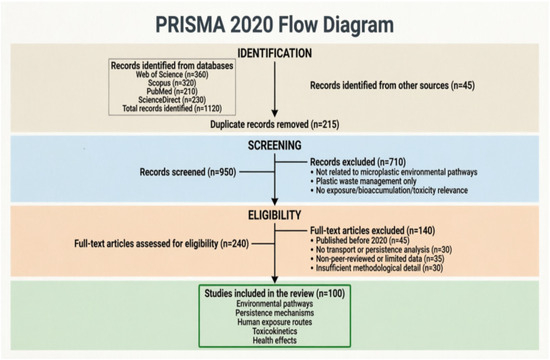
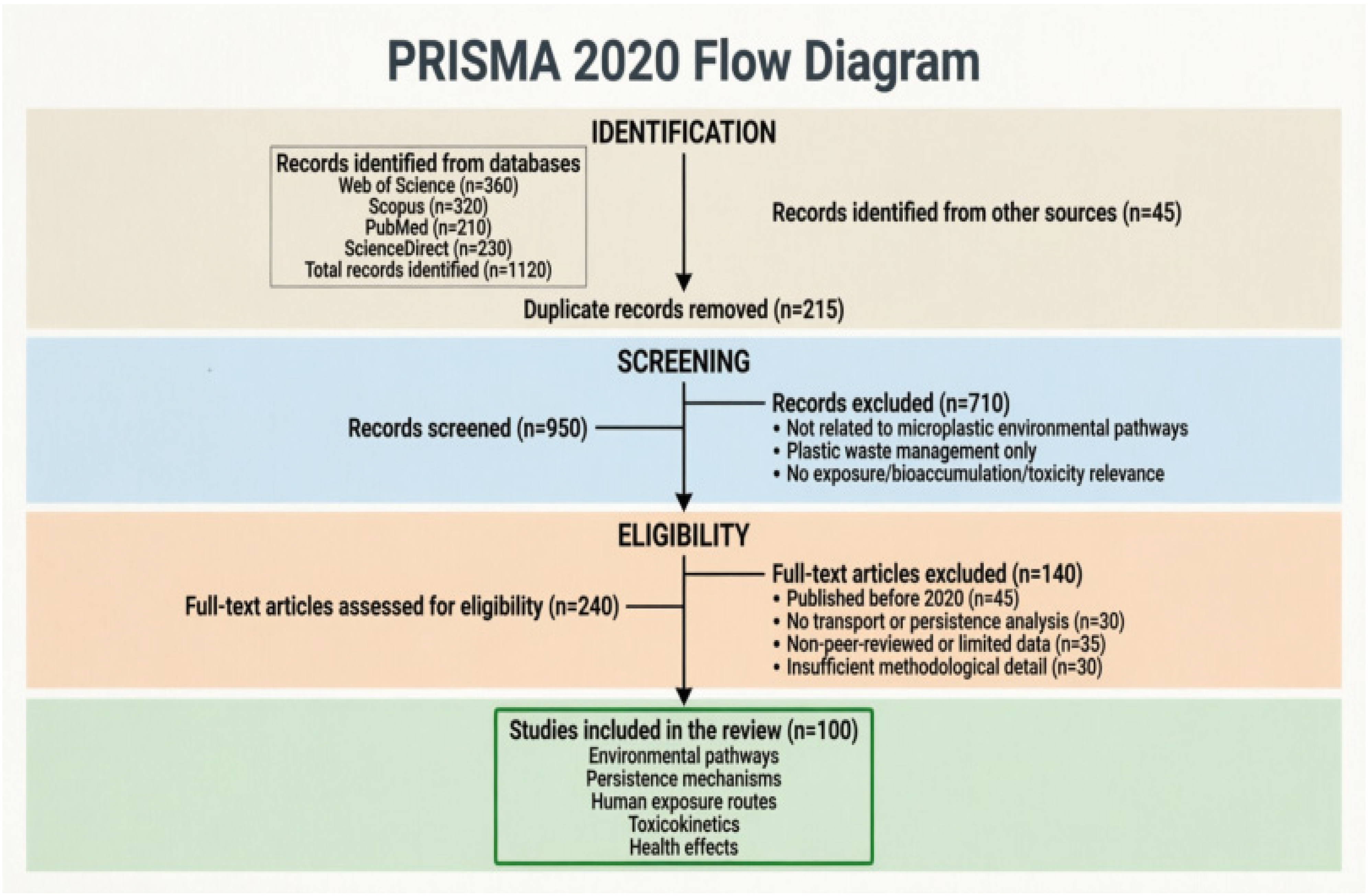
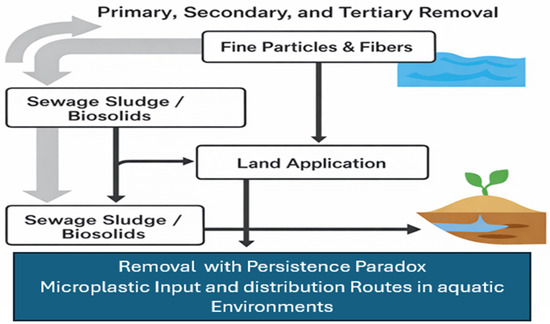
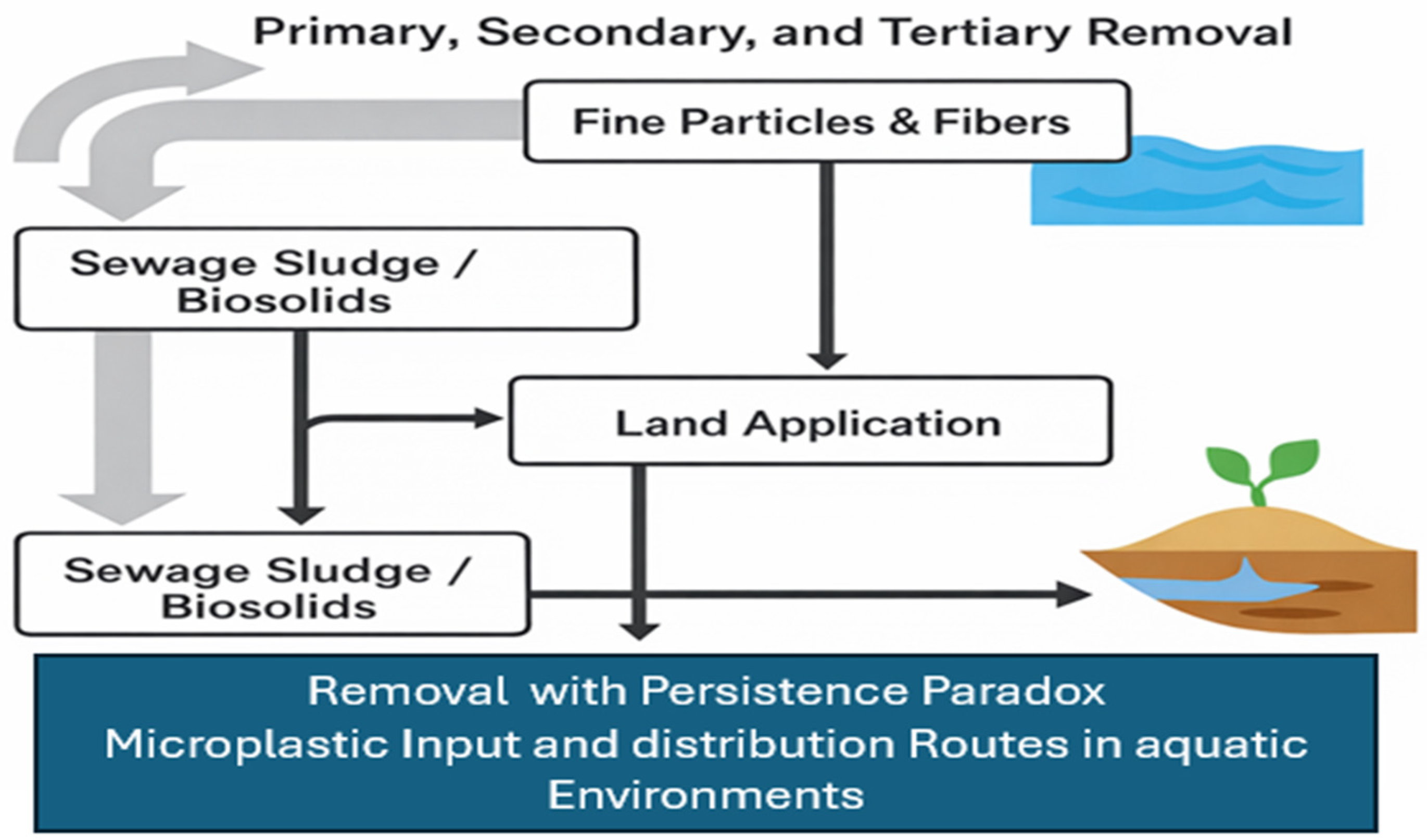
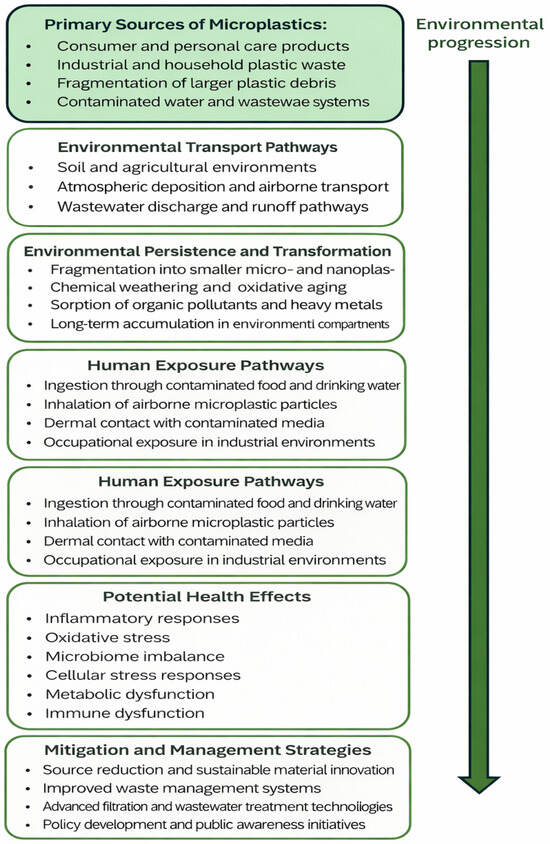
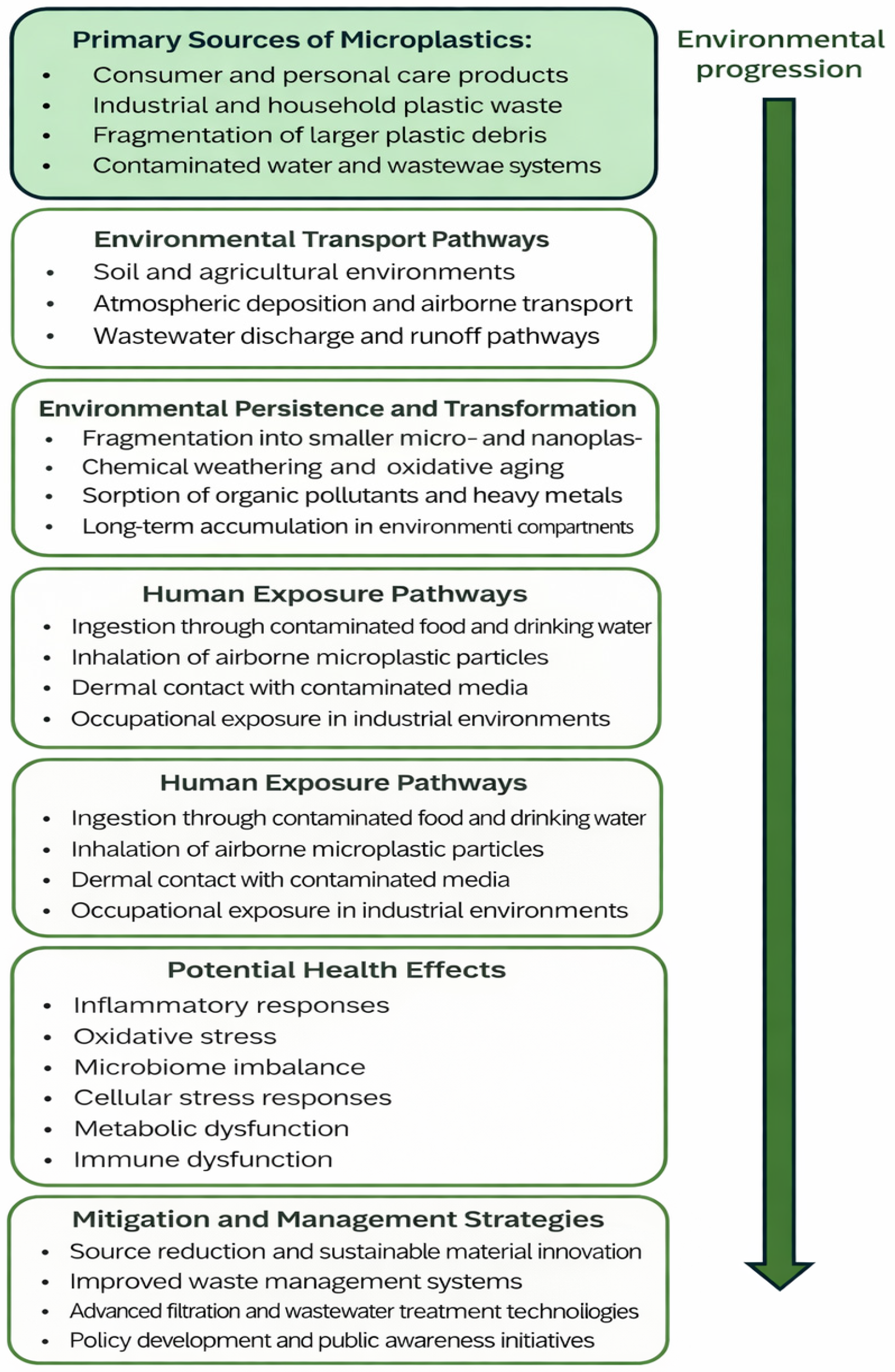
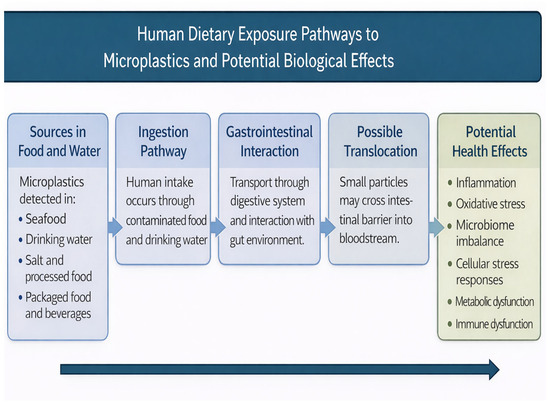
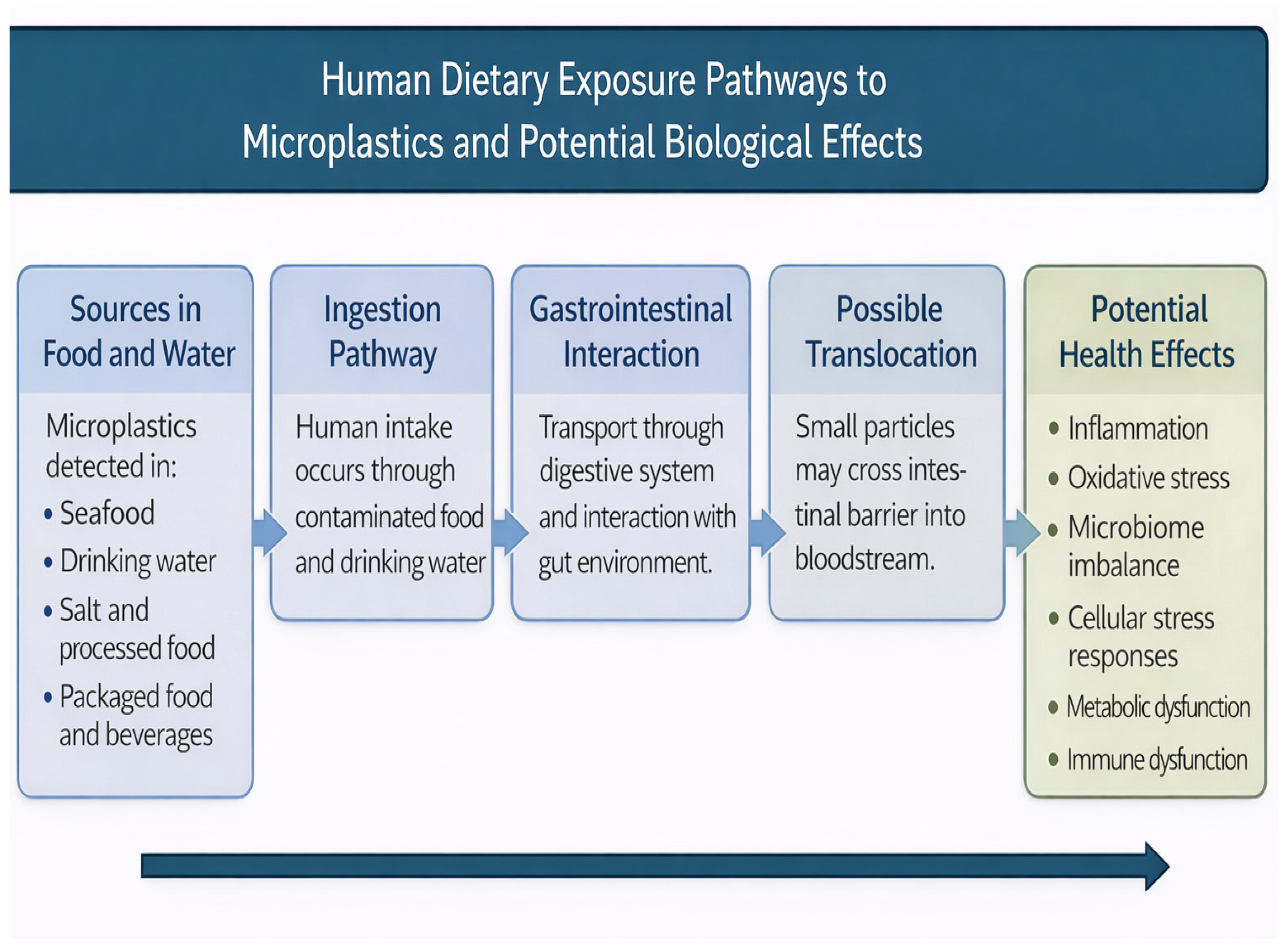
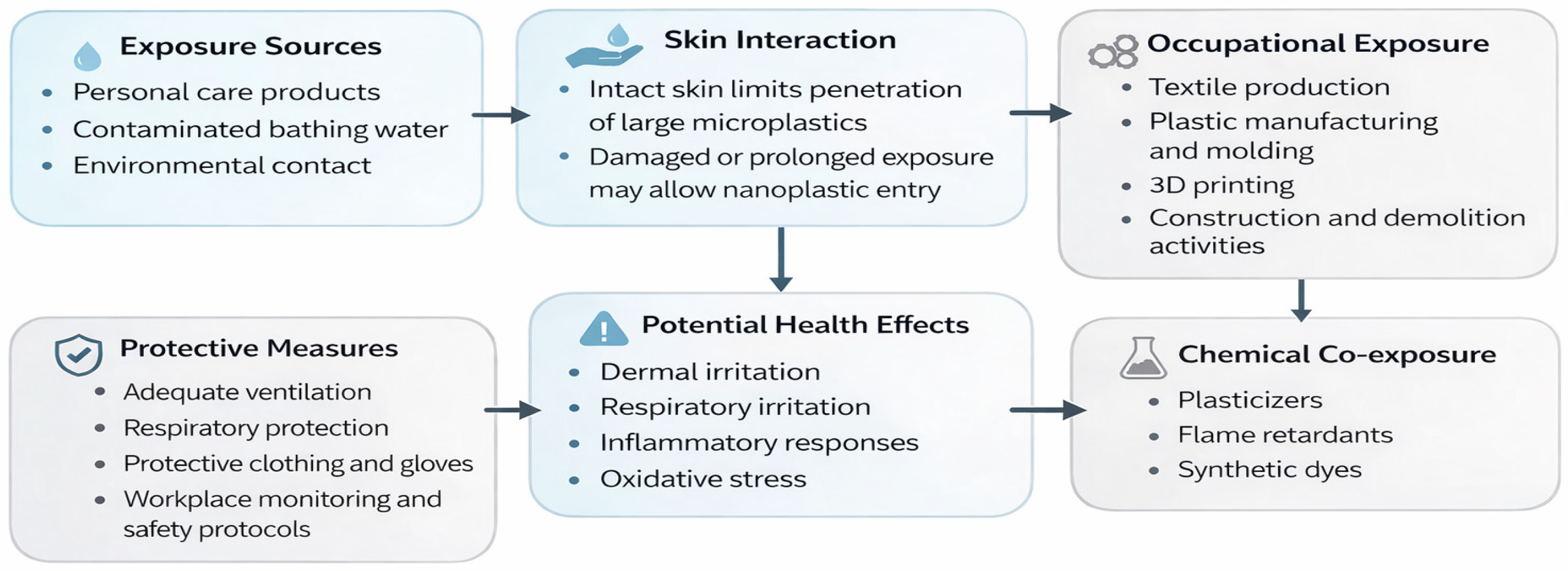
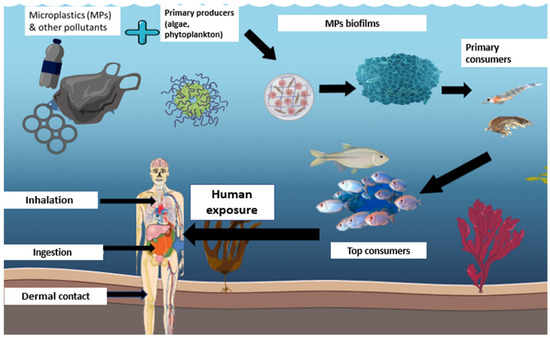
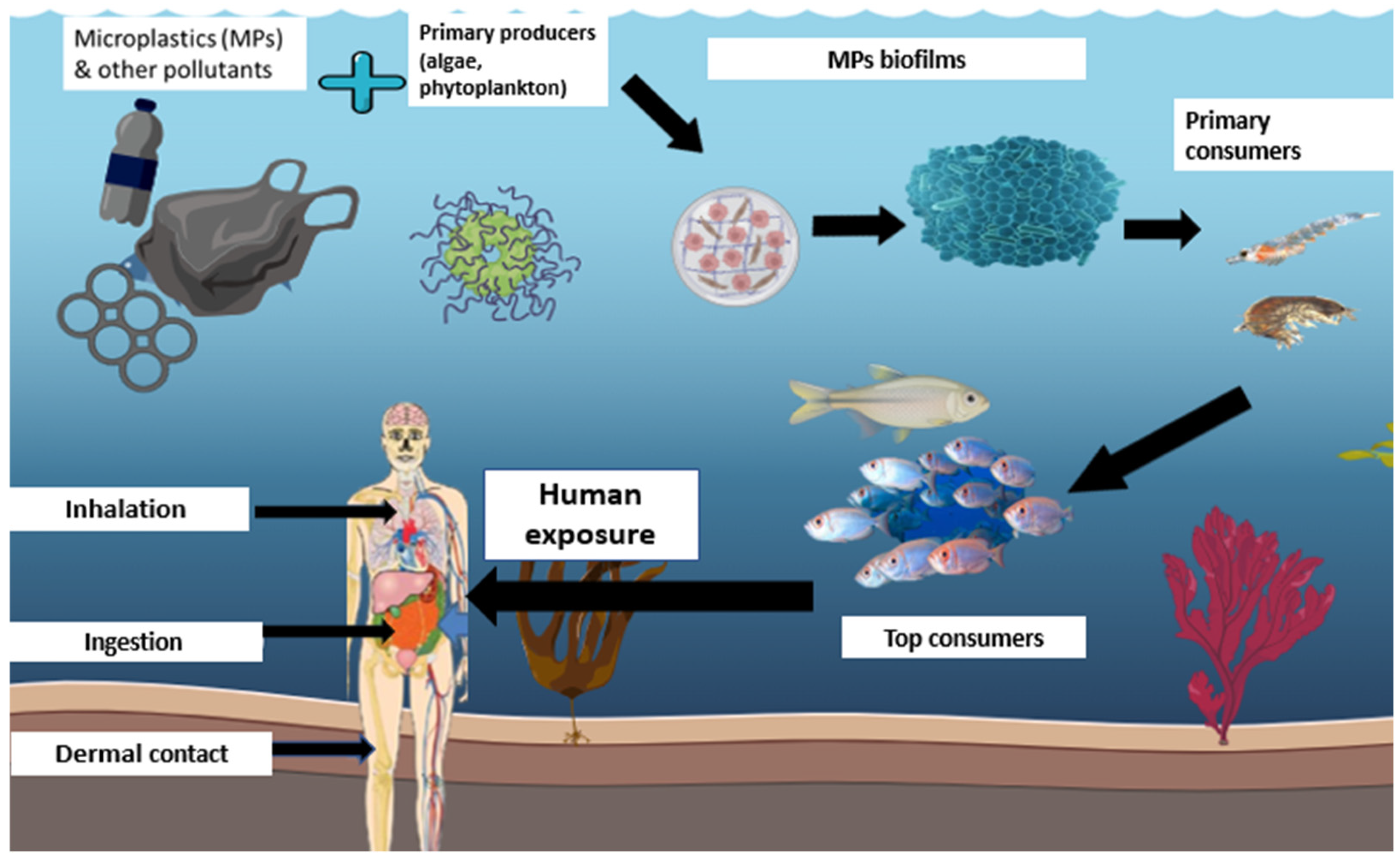

Disclaimer/Publisher’s Note: The statements, opinions and data contained in all publications are solely those of the individual author(s) and contributor(s) and not of MDPI and/or the editor(s). MDPI and/or the editor(s) disclaim responsibility for any injury to people or property resulting from any ideas, methods, instructions or products referred to in the content. |
© 2026 by the authors. Licensee MDPI, Basel, Switzerland. This article is an open access article distributed under the terms and conditions of the Creative Commons Attribution (CC BY) license.