

- Perspective

Targeting the Anthropocene: Advanced Bio-Systems for Global Microplastic Mitigation
- Mina Popović and
- Nevenka Rajić
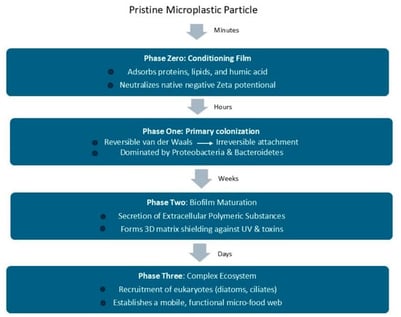
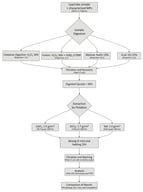
The global proliferation of microplastics demands sustainable remediation alternatives to energy-intensive conventional disposal methods, shifting research focus toward polymer-degrading microbial communities within the “plastisphere.” The primary objectives of this study are twofold: first, to systematically decode the sequential biophysical mechanisms underlying microplastic colonization and enzymatic degradation; and second, to establish an empirically validated, scalable treatment framework that employs both a novel biological isolate and a hybrid engineering architecture. Experimentally, we investigate the multi-stage colonization process and demonstrate that “Phase Zero” conditioning films modulate the surface zeta potential (ζ) to anchor pioneer r-strategists. To evaluate degradative efficacy under accelerated conditions without abiotic pretreatment, the newly isolated carp gut strain Hafnia paralvei UUNT_MP29 was exposed to pristine low-density polyethylene (LDPE) and polystyrene (PS). Over a 16-day biotic incubation period, structural and chemical alterations were distinctly polymer-specific: bacterial action on the polyolefin LDPE yielded a Carbonyl Index of 0.4594 and a 10.95 °C reduction in thermal stability (Tmax), whereas the aromatic PS matrix exhibited a Carbonyl Index of 0.3235 alongside a 10.80 °C decrease in Tmax, with both substrates showing intense surface pitting. To standardize these complex tracking metrics across the field, a universal four-pillar Biodegradability Index (BI) was formulated. Based on these findings, we recommend an immediate transition from passive waste containment to a closed-loop engineering approach. Specifically, we propose integrating an artificial intelligence (AI)-managed hybrid bioprocess configuration that couples Advanced Oxidation Processes (AOPs) with Membrane Bioreactors (MBRs). This dual-stage configuration is recommended to overcome polyolefin crystallinity, accelerate stoichiometric mineralization, and actively mitigate additive-mediated toxicity at the industrial scale, providing a vital blueprint for the circular bio-economy.
8 July 2026