


Abstract
The pyrolysis of polypropylene (PP) microplastics offers a potential route to convert plastic waste into fuel-range hydrocarbon mixtures and chemical feedstocks. However, the elementary radical pathways underlying the formation of medium-chain hydrocarbon fragments remain insufficiently resolved. In this study, a representative isotactic PP oligomer model (C45H92) was evaluated using a comparative density functional theory (DFT) framework. The main mechanistic analysis was based on M06-2X, ωB97X-D, and M11 calculations combined with the def2-TZVP basis set, whereas LANL2DZ was retained only as a lower-cost comparative level during reaction-pathway exploration. Thermochemical profiles were evaluated over a temperature range of 298–923 K. Three selected pathways involving mid-chain homolytic cleavage, intramolecular hydrogen transfer (backbiting), radical rearrangement, and β-scission were examined. Within the selected reaction set, Route 1 exhibited a comparatively more favorable thermochemical profile than Routes 2 and 3 and provided a mechanistically plausible sequence toward medium-chain hydrocarbon fragments. The −TΔS contribution strongly influenced the calculated Gibbs free-energy profiles because fragmentation increases the number of molecular species under the ideal-gas thermochemical approximation. Accordingly, the ΔG values were interpreted comparatively and were not treated as direct evidence of spontaneous fragmentation under condensed-phase pyrolysis conditions or as quantitative predictions of experimental product selectivity. Differences among the evaluated functionals further indicate that the relative description of radical intermediates and transition-state regions is method-dependent. These results provide a molecular-level framework for future studies integrating quantum-chemical calculations, microkinetic modeling, and experimental product characterization.
1. Introduction
The global escalation of plastic waste has intensified the need to transition from a linear “take-make-dispose” model toward a circular economy [1,2]. Polypropylene (PP) is a relevant target for circular-economy strategies because its production, feedstock sources, and end-of-life management influence the material’s environmental performance [3]. Although mechanical recycling remains an important route for packaging plastics, repeated processing and feedstock heterogeneity may limit the quality and subsequent applicability of recycled polymers [4]. Chemical recycling technologies, therefore, provide a complementary route for converting plastic waste into chemical feedstocks and hydrocarbon mixtures [5].
According to the European Food Safety Authority (EFSA), microplastics are plastic particles within a size range of 0.1–5000 μm [6]. Accordingly, the term PP microplastics is used throughout this manuscript to describe polypropylene particles within this size interval. However, quantum-chemical calculations do not reproduce the full physical dimensions, morphology, crystallinity, heat-transfer, or mass-transfer behavior of an individual microparticle. Instead, computational analysis employs a molecular oligomer model to examine selected elementary reaction pathways occurring within the PP chain.
Pyrolysis involves the thermal decomposition of polymer chains under oxygen-free conditions and can generate liquid hydrocarbon mixtures with potential applications as fuels and chemical feedstocks [7]. Experimental studies have shown that the molecular weight of polypropylene influences the distribution of fuel-range products obtained during thermal conversion [8]. Subsequent processing routes, including gasification of PP-derived pyrolysis oils, further illustrate the potential integration of these liquid products into broader conversion schemes [9]. Thermal cracking studies involving PP and other common polyolefins also report complex mixtures of liquid fuels and chemical precursors rather than narrowly defined product families [10]. The macroscopic evolution of these products is commonly described using apparent kinetic models, including distributed activation-energy approaches [11]. Nevertheless, reactor-scale product yields and apparent kinetic parameters do not directly identify the elementary radical pathways responsible for forming individual chain lengths.
Computational chemistry provides a molecular-level framework for evaluating bond cleavage, radical stabilization, hydrogen transfer reactions, and β-scission during polymer degradation. Theoretical analyses of representative model compounds have examined bond dissociation enthalpies and identified substituted carbon environments as relevant initiation sites in PP degradation [12]. Computational kinetic models have also been used to interpret the thermal decomposition of plastic waste [13]. At the same time, combined macrokinetic and molecular-scale analyses have highlighted the importance of integrating experimental and theoretical descriptions [14]. Experimental spin-trapping studies further support the participation of radical species during PP thermal degradation [15]. Detailed mechanistic modeling has established the relevance of random chain scission, intramolecular hydrogen transfer, radical migration, and subsequent β-scission in polypropylene pyrolysis [16].
The interpretation of flexible oligomeric systems requires particular caution. Thermochemical properties can be affected by molecular flexibility and the treatment of low-energy conformers [17]. Benchmark analyses have also shown that the performance of density functionals depends on the balance among thermochemistry, kinetics, and noncovalent interactions [18]. In hydrocarbon systems, conformational equilibria may be especially sensitive to the selected electronic-structure approximation [19]. The present comparative framework, therefore, uses the M06-2X functional for main-group thermochemistry and kinetic trends [20], the range-separated and dispersion-corrected ωB97X-D functional for long-range and conformational effects [21], and the def2-TZVP basis set as the primary triple-zeta description of the main-group elements [22].
Previous experimental work on isotactic PP has demonstrated that molecular weight and chain configuration influence cleavage behavior during the early stages of pyrolysis [23]. For flexible oligomeric systems, exploration of the low-energy conformational space is relevant when comparing stationary points [24]. The phase dependence of conformational entropy must also be considered when interpreting finite-temperature Gibbs free-energy profiles [25]. These limitations are particularly important when extrapolating isolated-molecule calculations to condensed polymer phases. At the application level, waste-plastic pyrolysis oils have been investigated as potential diesel-related feedstocks [26], although reactor design, feedstock quality, product upgrading, and scale-up remain important deployment challenges [27]. Broader reviews of plastic-to-liquid technologies similarly emphasize the need to integrate molecular insight with experimentally validated process analysis [28].
The present study evaluates three selected radical-fragmentation pathways using a comparative DFT framework. The objective is to assess whether specific mid-chain scission, intramolecular hydrogen-transfer, radical rearrangement, and β-scission sequences provide mechanistically plausible routes toward medium-chain hydrocarbon fragments. The calculations are not intended to predict the quantitative abundance of gasoline-, kerosene-, or diesel-range products or to establish the dominance of a particular reaction pathway under experimental conditions. In addition, the Gibbs free-energy profiles are interpreted comparatively because fragmentation into multiple molecular species introduces substantial entropy contributions under the ideal-gas thermochemical approximation. Consequently, pronounced decreases in calculated ΔG should not be interpreted as direct evidence of spontaneous fragmentation in the condensed polymer phase. This mechanistic framework provides a basis for subsequent studies integrating quantum-chemical calculations, microkinetic modeling, and experimental product characterization.
2. Methodology
2.1. Thermochemical Interpretation and Scope of the Ideal-Gas Approximation
For each stationary point included in the main reaction profiles, harmonic vibrational frequency calculations were performed at the same level used for geometry optimization. The absence of imaginary frequencies verified Minima, whereas transition states were confirmed by the presence of a single imaginary frequency associated with the expected bond-cleavage, hydrogen-transfer, or radical rearrangement coordinate. Thermochemical corrections were calculated using the ideal-gas, rigid-rotor, harmonic-oscillator approximation.
The interpretation of the calculated thermochemical quantities requires particular caution because the proposed pathways involve the fragmentation of a single PP oligomer model into multiple radical species. Under the ideal-gas approximation, an increase in the number of independent molecular fragments produces substantial translational entropy contributions. At elevated temperature, this effect can generate pronounced decreases in Gibbs free-energy through the −TΔS term in the expression [16].
ΔG = ΔH − TΔS
These entropy contributions are meaningful for comparing pathways treated under the same computational approximation. Still, they should not be interpreted as absolute representations of condensed-phase pyrolysis, where intermolecular interactions, restricted translational motion, polymer-melt effects, heat transfer, and mass transfer influence the reaction environment.
Accordingly, enthalpy changes (ΔH) were used to describe the enthalpic balance of each elementary transformation, Gibbs free-energy changes (ΔG) were interpreted as comparative thermochemical trends within the ideal-gas framework, and local Gibbs free-energy barriers (ΔG‡) were evaluated relative to the immediately preceding intermediate. Negative ΔG values were not treated as direct evidence of spontaneous fragmentation under experimental conditions. Likewise, the expressions “exothermic,” “exergonic,” and “kinetically accessible” were used only when supported by ΔH, ΔG, and ΔG‡, respectively. The calculated profiles, therefore, provide a comparative molecular framework rather than a quantitative prediction of reaction rates, pathway probabilities, or experimental product distributions.
2.2. DFT Computational Protocol and Level of Theory
All quantum-chemical calculations were performed using Gaussian 16, Revision C.01. The computational protocol was organized hierarchically to avoid treating all functional–basis set combinations as equivalent levels of interpretation. The main mechanistic discussion was based on the def2-TZVP results because this triple-zeta basis set provides a more balanced description of hydrocarbon radical intermediates and transition-state regions than the lower-cost LANL2DZ calculations. The LANL2DZ-based calculations were retained only as a preliminary, lower-cost comparative level and were not used as the principal basis for mechanistic ranking or for concluding pathway feasibility.
The three exchange–correlation functionals were selected to evaluate the sensitivity of the calculated energy profiles to different descriptions of main-group thermochemistry, radical stabilization, long-range exchange, and dispersion-sensitive conformational effects. The M06-2X functional was included because of its established performance for main-group thermochemistry, thermochemical kinetics, and noncovalent interactions [19]. The ωB97X-D functional was incorporated because its range-separated formulation and empirical dispersion correction are relevant for flexible hydrocarbon fragments in which long-range and conformational interactions may influence relative stability [20]. The M11 functional was included as an additional range-separated meta-hybrid functional to assess the robustness of the energetic trends with respect to the choice of functional. The def2-TZVP basis set was selected as the primary basis because of its balanced triple-zeta valence description for main-group elements [21].
The LANL2DZ calculations were retained only as a preliminary comparative level during the initial exploration of the reaction landscape. The original LANL effective-core-potential framework was developed for different regions of the periodic table [29,30], and revised associated basis sets were subsequently reported [31]. Because the present system contains only carbon and hydrogen atoms, LANL2DZ was not considered a high-accuracy basis set for hydrocarbon thermochemistry. Therefore, LANL2DZ-derived values were interpreted only as qualitative screening information and were not used to support the principal energetic conclusions.
2.3. Transition-State Search and Energy Profile Construction
Based on the comparatively labile bonds identified through the bond dissociation energy analysis, three independent initiation mechanisms were proposed for the thermal cracking of polypropylene. These pathways were derived from cleavage sites with the lowest bond dissociation energies. They were subsequently expanded to include sequences involving radical formation, intramolecular hydrogen transfer (backbiting), radical rearrangement, and β-scission reactions. The selected routes were designed to represent plausible elementary steps occurring during thermal cracking rather than quantitative product-formation channels.
To evaluate the sensitivity of the calculated profiles to the theoretical approximation, six functional–basis set combinations were examined: M06-2X/LANL2DZ, M06-2X/def2-TZVP, ωB97X-D/LANL2DZ, ωB97X-D/def2-TZVP, M11/LANL2DZ, and M11/def2-TZVP. The def2-TZVP profiles were used as the principal framework for the mechanistic discussion because this triple-zeta basis set provides a more balanced description of hydrocarbon radical intermediates and transition-state regions. In contrast, the LANL2DZ-based calculations were retained as lower-cost comparative calculations to assess the sensitivity of the energetic trends to the basis-set approximation.
Thermochemical corrections were calculated at seven temperatures: 298, 673, 723, 773, 823, 873, and 923 K, corresponding to 25, 400, 450, 500, 550, 600, and 650 °C, respectively. These calculations were used to evaluate the thermal dependence of intermediate stability and local activation barriers, expressed as ΔH‡ and ΔG‡. The Gibbs free-energy profiles presented in the main text correspond to 923 K (650 °C), whereas the remaining temperatures were used to assess the thermal evolution of the calculated trends.
The transition states associated with the proposed elementary steps were located using the Berny algorithm, following established procedures for optimizing equilibrium geometries and transition structures [32]. Each transition-state structure was verified by the presence of a single imaginary frequency, confirming its first-order saddle-point character on the potential-energy surface. This verification strategy is consistent with standard quantum-chemical workflows for identifying reactants, products, and transition states of elementary reactions [33]. Once the key intermediates and transition states had been identified, complete energy profiles were constructed using relative enthalpy changes (ΔH) and Gibbs free-energy changes (ΔG).
Because the modeled pathways involve fragmentation of a single PP oligomer into multiple radical species, the calculated Gibbs free energies may contain substantial translational entropy contributions under the ideal-gas thermochemical approximation. Therefore, the ΔG values were interpreted as comparative mechanistic descriptors rather than as absolute thermodynamic quantities directly transferable to condensed-phase pyrolysis. Likewise, the proposed routes should not be interpreted as quantitative predictions of product abundance, pathway probability, or experimental selectivity toward a specific fuel fraction.
2.4. Computational Model Optimization
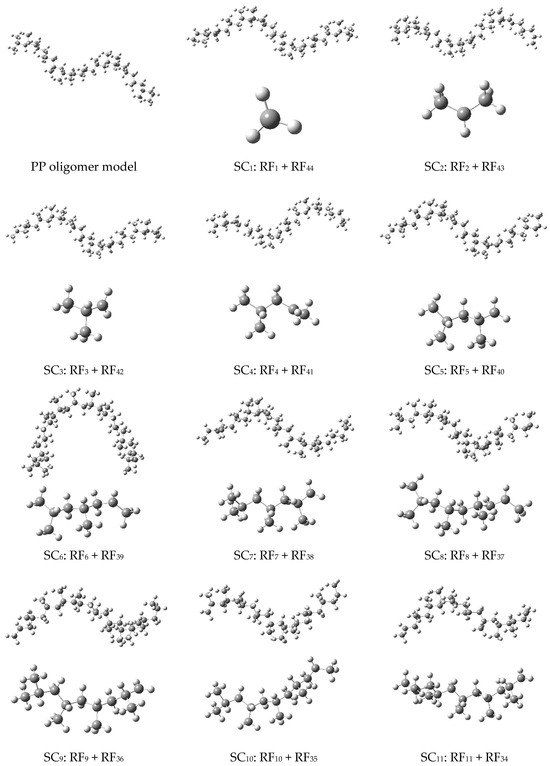
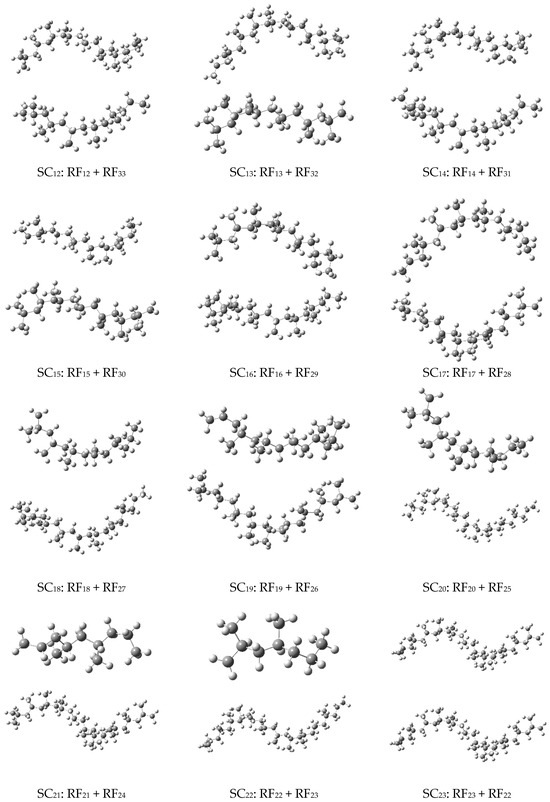
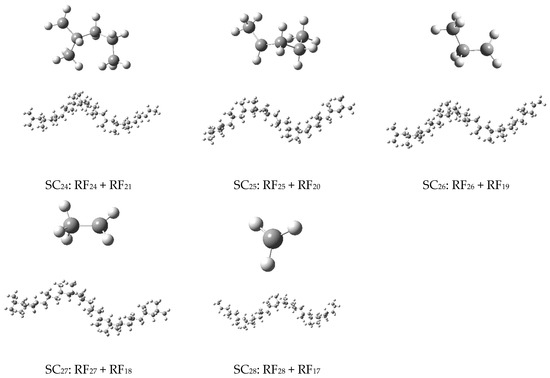
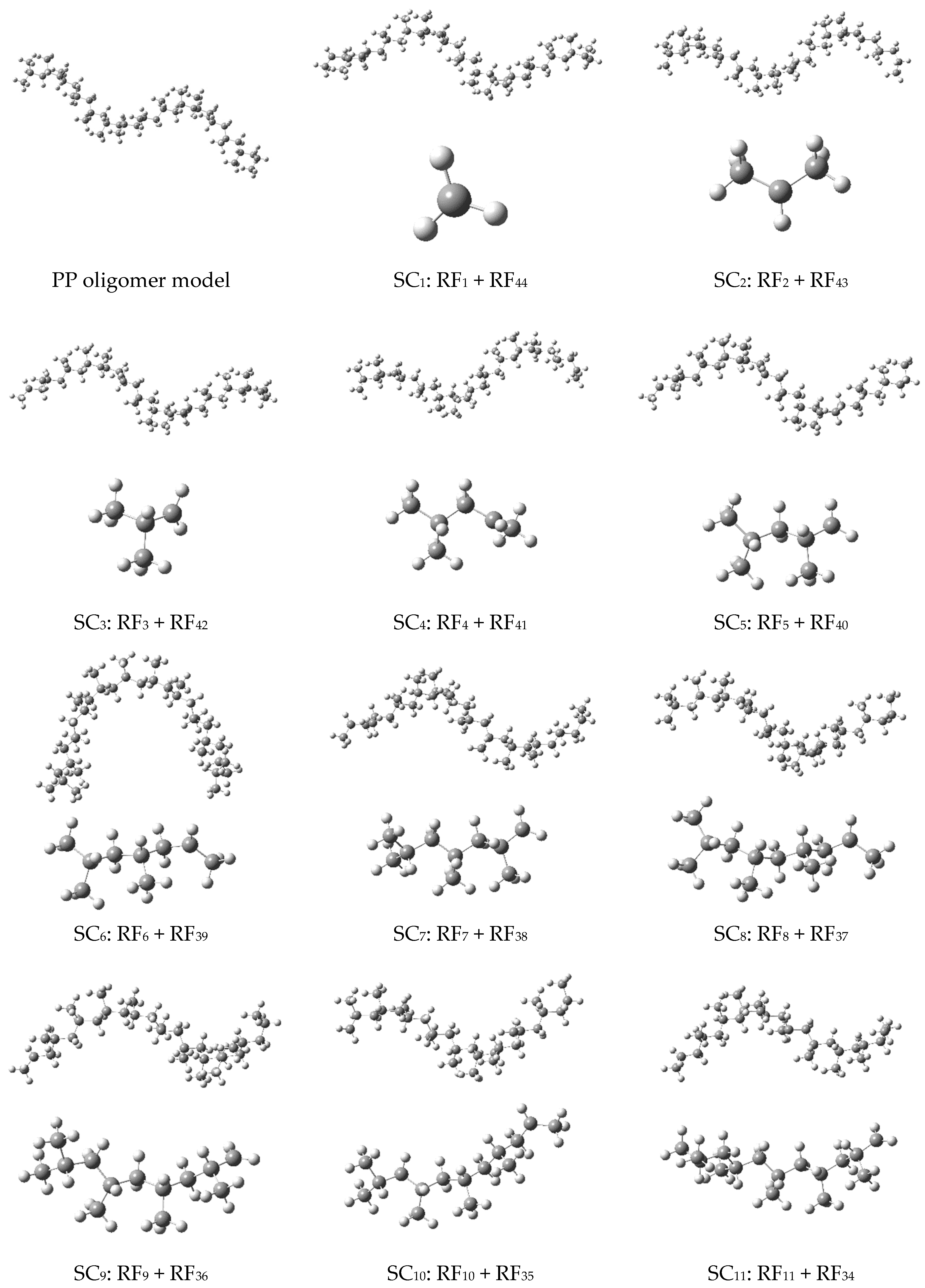
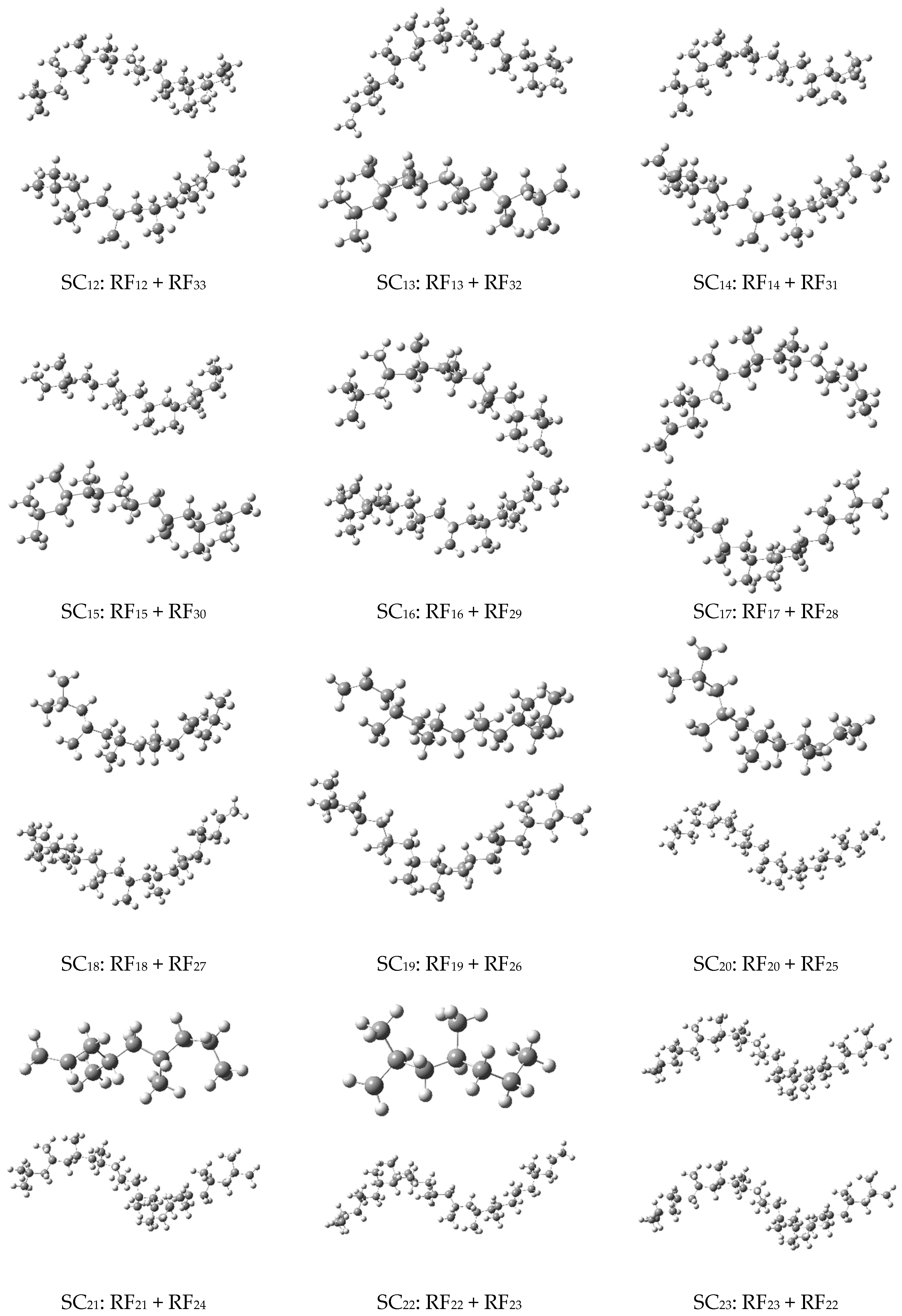
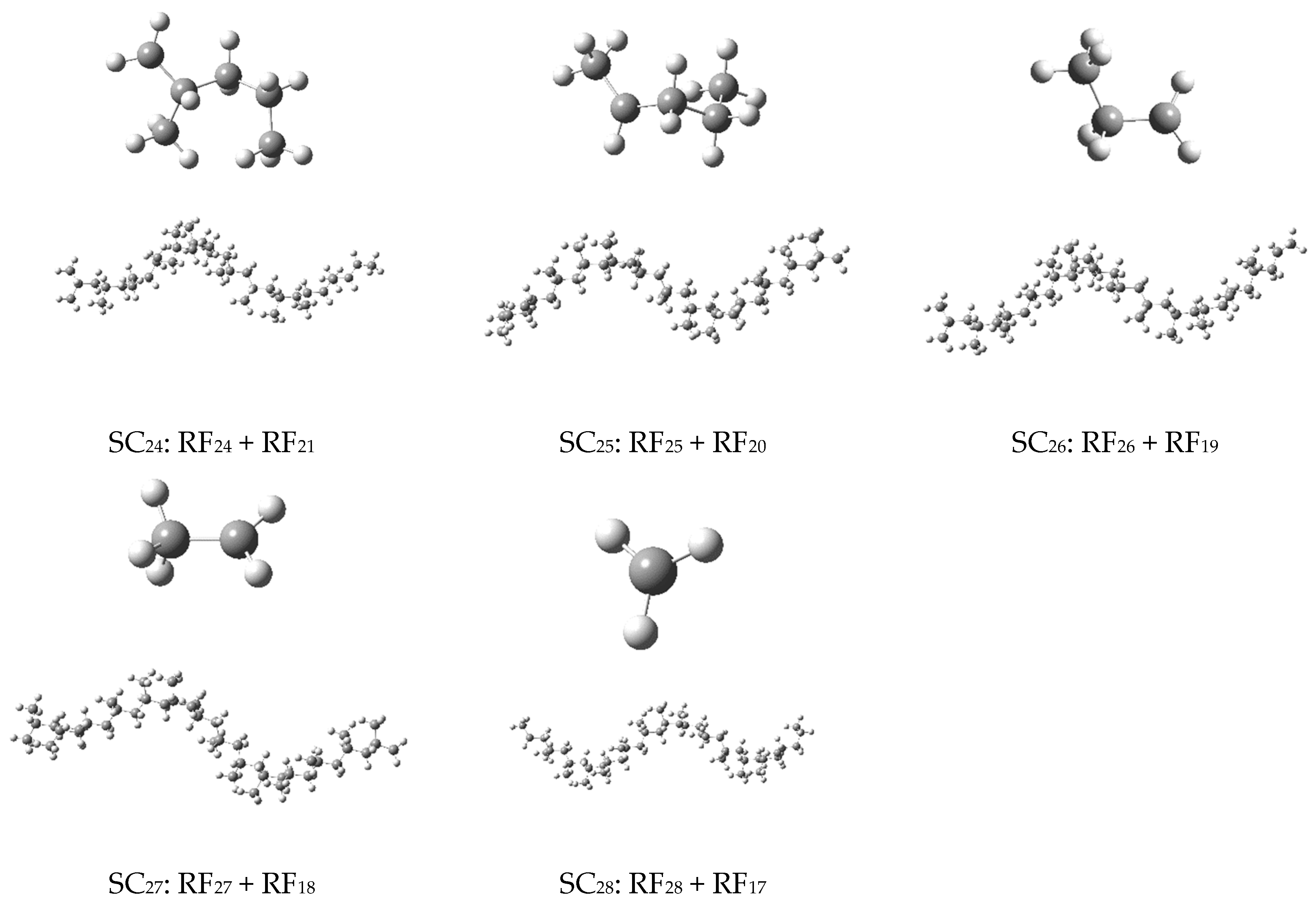
To improve the identification of the radical fragments generated after homolytic cleavage, a systematic nomenclature was adopted. Each scission event is denoted as SCn, where n indicates the carbon position after which the C–C bond cleavage occurs. The resulting radical fragments are labeled RFn and RF45−n, where the subscript indicates the number of carbon atoms contained in each fragment derived from the C45H92 oligomer model. For example, SC1 generates RF1 + RF44, whereas SC24 generates RF24 + RF21. This notation distinguishes the cleavage position from the size of the complementary fragments and avoids ambiguity in the structural assignments.
Figure 1 shows the optimized geometries corresponding to the intact PP oligomer model and the radical fragments generated after homolytic cleavage at different positions along the carbon chain. Global views of the oligomer and the corresponding fragment pairs are included to illustrate the structural changes induced by bond cleavage, including local variations in bond lengths and angles, as well as conformational changes after geometry relaxation. The spatial arrangements shown refer exclusively to the optimized geometries of the radical fragments.
Figure 1.
Optimized configurations of the PP oligomer model and radical intermediates C1–C28 calculated using DFT at the M06-2X/def2-TZVP level.
3. Results
To capture the mechanistic diversity of polypropylene pyrolysis, Gibbs free-energy profiles were constructed for each proposed pathway. Although the three routes share common radical-driven features, their energy landscapes differ in terms of activation barriers, intermediate stabilization, and overall thermodynamic trends. Each energy profile is therefore presented individually to highlight the distinct mechanistic behavior associated with the selected fragmentation sequence.
3.1. Route 1
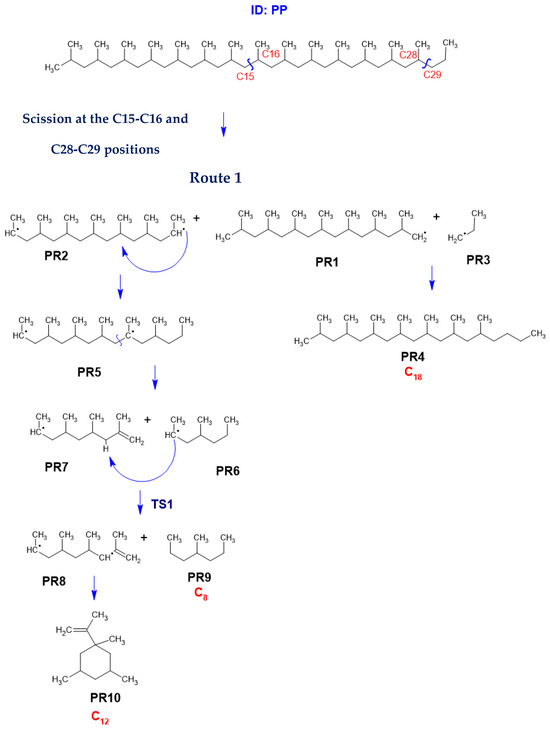
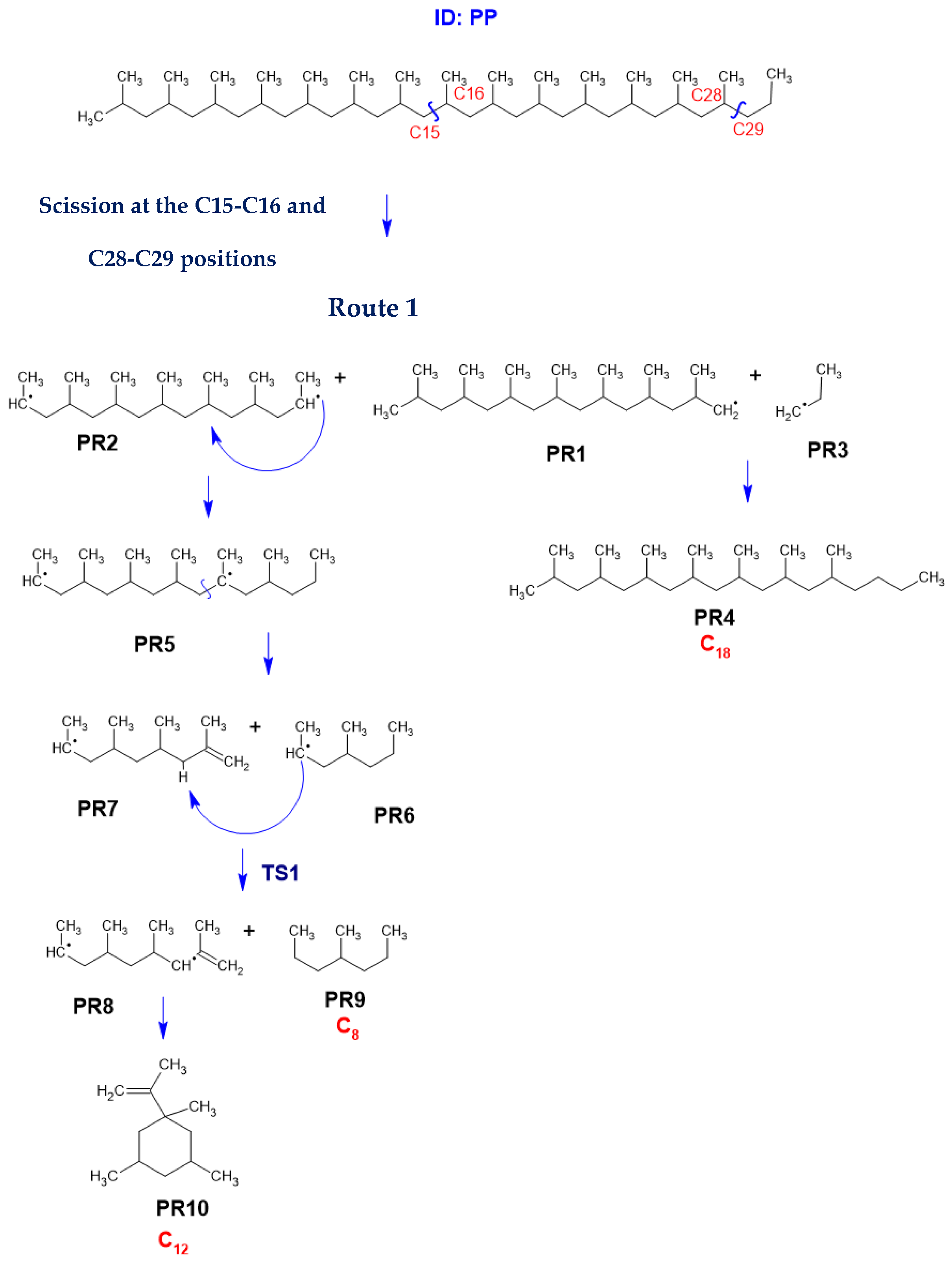
Route 1 initiates through homolytic cleavage of the C15–C16 and C28–C29 bonds. Reviews of non-degradable plastic pyrolysis describe random chain scission as a central feature of thermal degradation [34]. More specifically, free-radical degradation models for polypropylene identify random chain scission as a relevant mechanistic process [35]. Within the selected oligomer model, cleavage at specific mid-chain positions was evaluated to determine whether these sites can generate radical intermediates that subsequently evolve toward medium-chain hydrocarbon fragments. This analysis does not imply that the selected positions control the experimental product distribution or that the corresponding pathway is dominant under reactor conditions.
Detailed mechanistic models of polyolefin pyrolysis indicate that internal cleavage can contribute to the evolution of low-molecular-weight products [36]. Early analyses of poly-α-olefin pyrolysis support the formation of diverse hydrocarbon products during thermal degradation [37]. Experimental studies of polypropylene have further identified complex product spectra arising from radical transformations [38]. Within Route 1, the transformation of PR2 into PR5 and subsequently into the PR6/PR7 complex involves intramolecular hydrogen transfer, commonly referred to as backbiting. During this process, a radical center abstracts a hydrogen atom from another position within the same chain, generating an internal radical that can subsequently undergo β-scission.
The conversion of the PR6/PR7 complex through TS1 leads to PR8 and PR9 (C8), followed by the formation of PR10 (C12). Within the selected pathway, TS1 represents the highest-energy elementary step and is therefore the apparent rate-limiting transition state for Route 1. The formation of C8, C12, and C18 fragments is qualitatively compatible with the broad hydrocarbon distributions observed in PP-derived pyrolysis oils intended for alternative-fuel applications [39]. High-resolution compositional analyses of PP and PE waste pyrolysis oils also demonstrate that these liquids contain chemically diverse hydrocarbon families rather than narrowly defined single-product fractions [40]. Accordingly, the calculated carbon numbers characterize mechanistically accessible fragments but do not establish their experimental abundance or preferential formation.
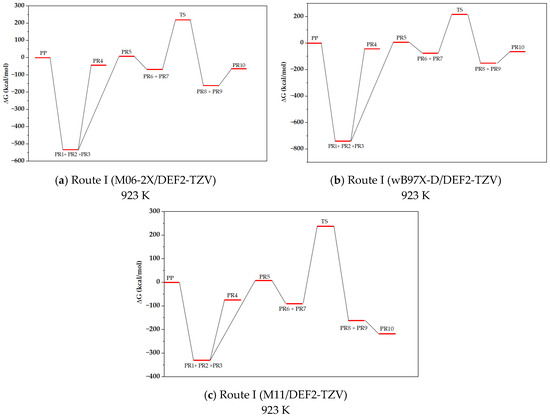
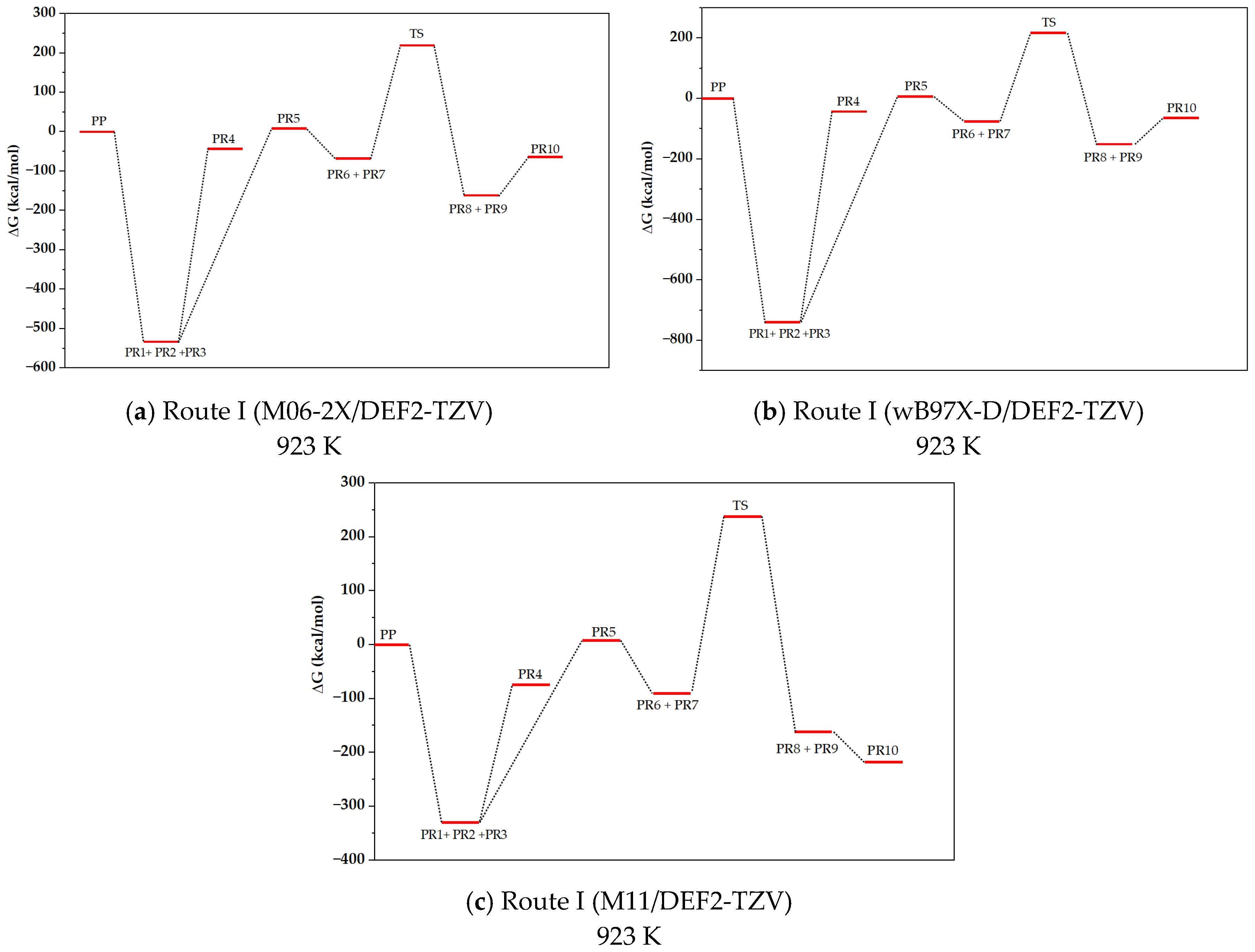
The proposed sequence of radical intermediates and transition states involved in Route 1 is schematically represented in Figure 2. The Gibbs free-energy diagrams for Route 1 at 923 K provide a comparative assessment of the radical-driven degradation pathway. Across the M06-2X, ωB97X-D, and M11 profiles calculated with the def2-TZVP basis set, the most prominent feature is the pronounced decrease in calculated Gibbs free energy during conversion of the initial oligomer model into the primary radical fragments PR1 + PR2 + PR3. The M11 functional provides an additional range-separated meta-hybrid description that is useful for evaluating the sensitivity of the energetic profiles to functional choice [41]. The calculated decrease ranges from approximately −330 kcal mol−1 with M11 to −740 kcal mol−1 with ωB97X-D, indicating that the thermochemical trend is strongly method-dependent and should be interpreted comparatively.
Figure 2.
Mechanistic representation of the proposed Route 1 for the pyrolytic degradation of the PP oligomer model, illustrating a plausible sequence toward C8, C12, and C18 hydrocarbon fragments. The main radical intermediates (PRx) and transition states (TS1–TS2) are shown.
The initial decrease in calculated Gibbs free-energy is substantially influenced by the −TΔS term in the expression ΔG = ΔH − TΔS. At 923 K, fragmentation of the initially constrained PP oligomer model into multiple radical species increases the translational and rotational entropy under the ideal-gas thermochemical approximation. The calculation of absolute molecular entropies in flexible systems requires careful treatment of conformational contributions and low-frequency modes [42]. Therefore, the pronounced decrease in ΔG should be interpreted as a comparative entropy-favored trend within the computational model rather than as direct evidence of spontaneous fragmentation under condensed-phase pyrolysis conditions.
The three profiles converge on a critical transition-state region located approximately 200–250 kcal mol−1 above the starting oligomer model. More importantly, the local Gibbs free-energy barrier (ΔG‡) calculated from the PR6 + PR7 intermediate to TS1 is approximately 290–330 kcal mol−1. These values should not be interpreted as direct equivalents of global apparent activation energies obtained experimentally. Intrinsic kinetic studies of PP pyrolysis distinguish elementary reaction behavior from reactor-scale apparent kinetics [43]. Reviews of thermal and catalytic polyolefin pyrolysis likewise emphasize that the observed conversion behavior reflects multiple initiation, propagation, termination, secondary-cracking, and transport-related phenomena [44].
The final stage of Route 1 shows relaxation toward PR10 (C12). The M11 functional predicts a lower calculated Gibbs free-energy for this configuration than M06-2X and ωB97X-D. Experimental analyses of tar and oil derived from waste-plastic pyrolysis and co-pyrolysis indicate broad compositional variability in condensed products [45]. Accordingly, the calculated lowering of Gibbs free-energy associated with PR10 should be interpreted as evidence of a mechanistically plausible molecular sequence rather than as a prediction of dominant product selectivity; this is shown in Figure 3.
Figure 3.
Gibbs free-energy profiles calculated for Route 1 of the pyrolytic degradation of the PP oligomer model at 923 K using different density functionals with the def2-TZVP basis set: (a) M06-2X/def2-TZVP, (b) ωB97X-D/def2-TZVP, and (c) M11/def2-TZVP. Relative Gibbs free energies are reported in kcal mol−1. The main radical intermediates and transition states involved in the route are indicated along each energetic profile.
3.2. Route 2
Route 2 describes a plausible radical-fragmentation pathway initiated through homolytic cleavage of the C15–C16 bond. This bond was selected from the comparatively labile positions identified through the bond dissociation energy analysis. The selection is chemically consistent with the susceptibility of substituted C–C environments in polypropylene, where methyl-substituted backbone positions can stabilize radical centers more effectively than linear polyethylene-like environments [11,43].
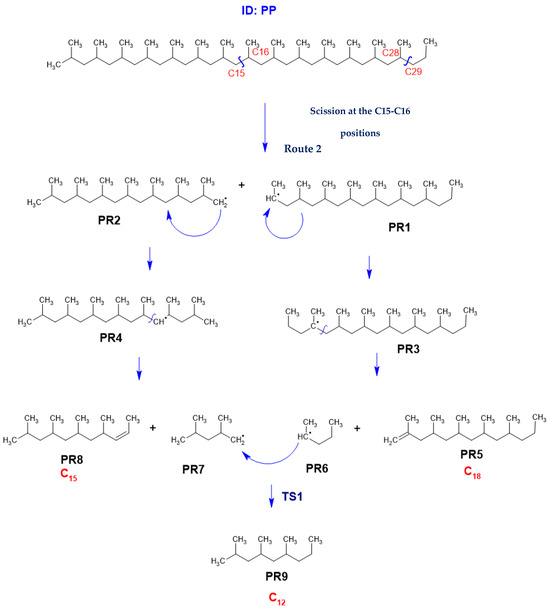
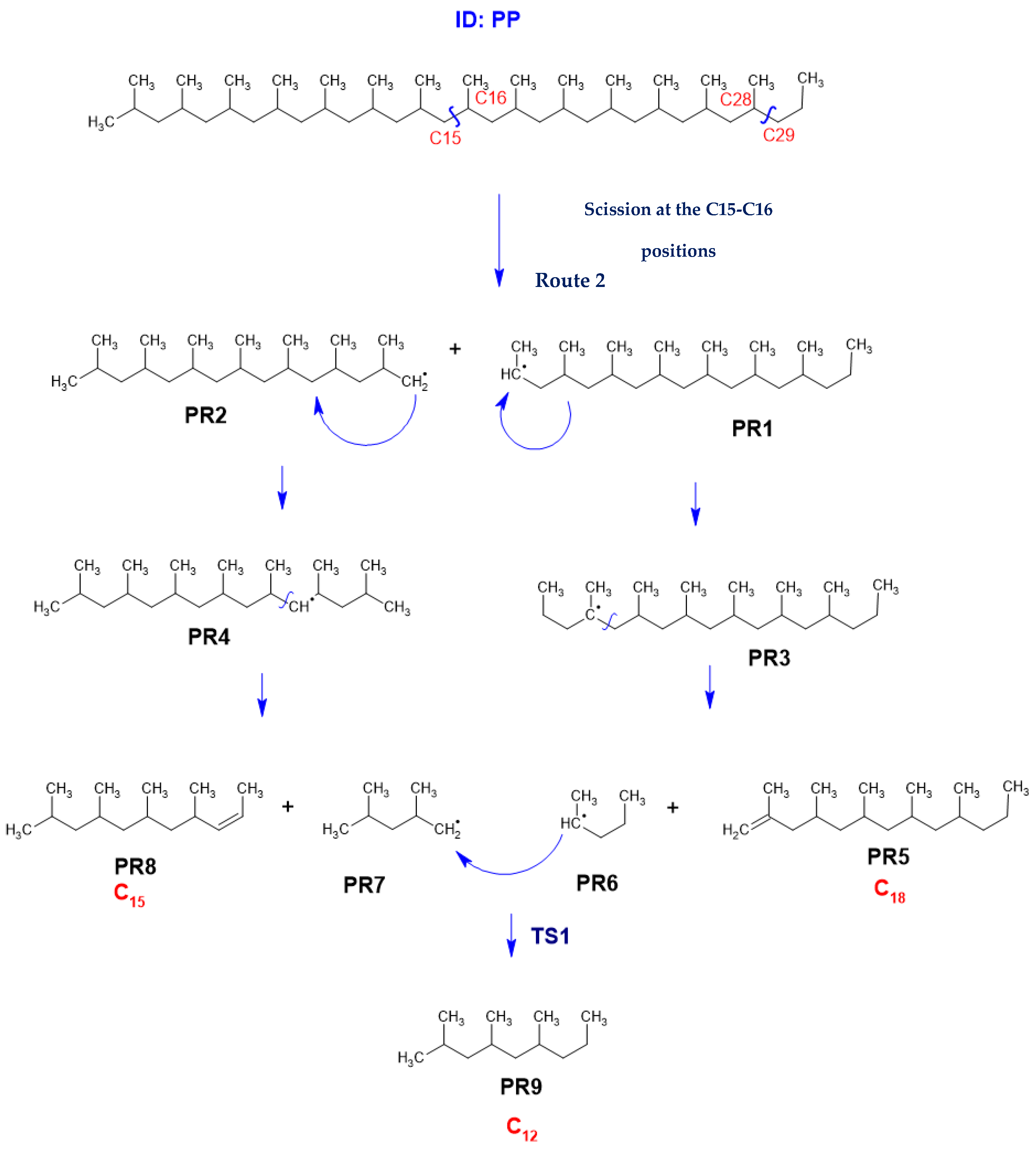
The initial scission generates PR1 and PR2. Subsequent hydrogen abstraction and radical migration steps, represented by PR2 → PR4 and PR1 → PR3, are followed by β-scission events leading to PR8 (C15) and PR5 (C18). These transformations are consistent with established descriptions of PP pyrolysis involving random chain scission, intramolecular hydrogen transfer, backbiting, and β-scission [15,33]. A relevant feature of Route 2 is the interaction between the secondary radicals PR6 and PR7 through TS1, leading to PR9 (C12). The resulting C12, C15, and C18 species should be interpreted as mechanistically accessible fragments within the selected pathway rather than as evidence of their preferential formation or quantitative abundance in experimental pyrolysis products, as shown in Figure 4.
Figure 4.
Mechanistic representation of the proposed Route 2 for the pyrolytic degradation of the PP oligomer model, illustrating a plausible sequence toward C12, C15, and C18 hydrocarbon fragments. The main radical intermediates (PRx) and transition states (TS1–TS2) are shown.
The Gibbs free-energy diagrams for Route 2 at 923 K provide a comparative thermodynamic and kinetic assessment of polypropylene degradation toward medium-chain hydrocarbon fragments. The pronounced decrease in calculated ΔG from the starting PP oligomer model to PR1 + PR2 + PR3 is strongly influenced by the −TΔS contribution under the ideal-gas thermochemical approximation. At elevated temperature, fragmentation into multiple radical species increases the translational and rotational entropy. Therefore, the marked lowering of calculated Gibbs free-energy should be interpreted as an entropy-favored comparative trend within the computational model rather than as direct evidence of spontaneous fragmentation, enhanced experimental selectivity, or increased product yield.
Reactor-scale product distributions are also sensitive to factors that lie outside the isolated oligomer model. Studies of polymeric material formulation illustrate that matrix architecture and composition can influence thermal behavior [46]. Experimental investigations of domestic plastic-waste pyrolysis show that mixed feedstocks generate broad fuel-grade hydrocarbon distributions [47]. Similarly, studies involving biomass-derived building blocks demonstrate that co-feed composition can modify gas and liquid-product evolution during pyrolysis [48]. These external examples are cited only to delimit the scope of the present model: they are not used as direct evidence for the elementary PP radical pathway evaluated here.
After the initial entropy-favored decrease in calculated ΔG, the system must overcome a local Gibbs free-energy barrier (ΔG‡) of approximately 300–330 kcal mol−1 from PR6 + PR7 to TS1. This elementary step is associated with radical rearrangement and C–C bond cleavage preceding β-scission. The calculated barrier should not be compared directly with global apparent activation energies derived from thermogravimetric or reactor-scale experiments because these quantities describe different levels of the degradation process. Non-isothermal thermogravimetric studies of PP pyrolysis report apparent kinetic parameters that depend on the selected model, heating conditions, and conversion interval [49], as shown in Figure 5.
Figure 5.
Energy diagrams for Route 2 of PP oligomer radical degradation calculated using (a) Route II (M06-2X/def2-TZVP), 923 K, (b) Route II (ωB97X-D/def2-TZVP), 923 K, and (c) Route II (M11/def2-TZVP), 923 K.
3.3. Route 3
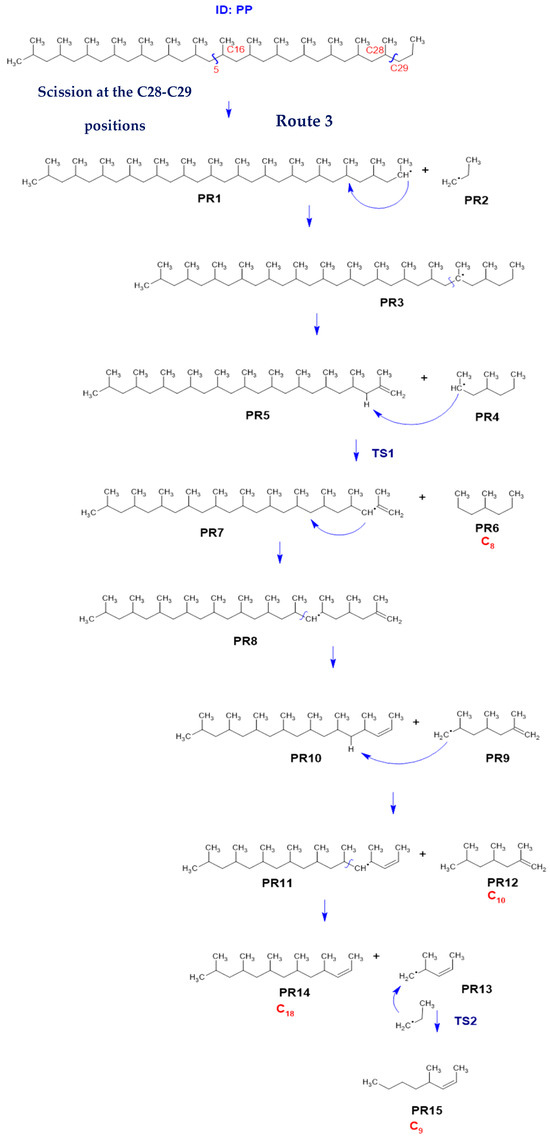
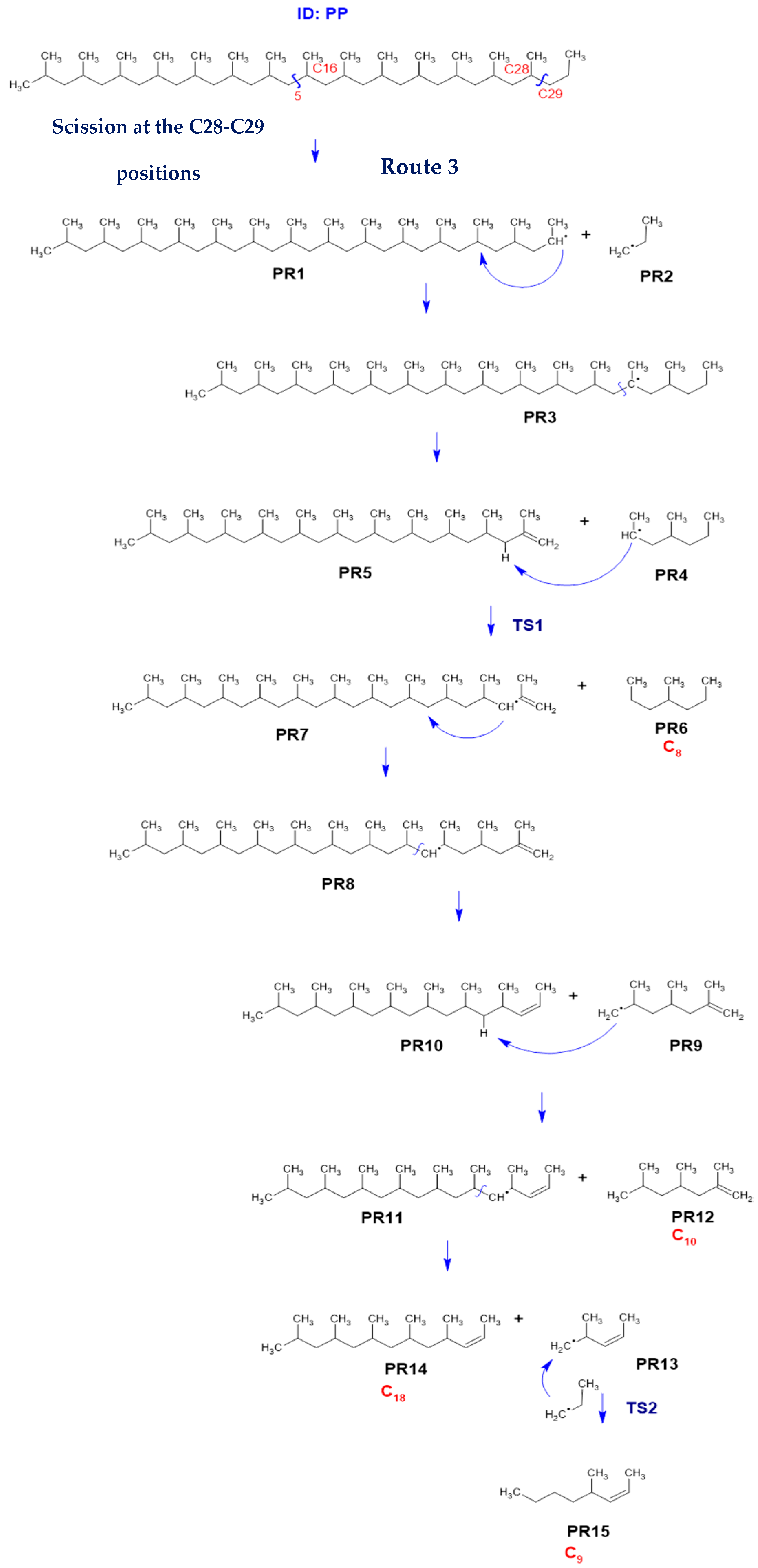
Route 3 begins with homolytic cleavage of the C28–C29 bond, selected as a representative mid-chain initiation site based on the bond dissociation-energy analysis. The selected position is chemically relevant because substituted carbon environments in polypropylene can promote the formation of comparatively stabilized radical centers and facilitate subsequent hydrogen-transfer and β-scission steps. Kinetic models of polyethylene and polypropylene degradation emphasize the importance of representing multiple elementary transformations rather than a single global event [50]. Experimental kinetic studies have likewise shown that the thermal degradation of PP and PE depends on the interaction among initiation, propagation, and secondary transformations [51]. Detailed models of vinyl-polymer degradation further reinforce the need to distinguish elementary reaction channels from lumped apparent kinetics [52].
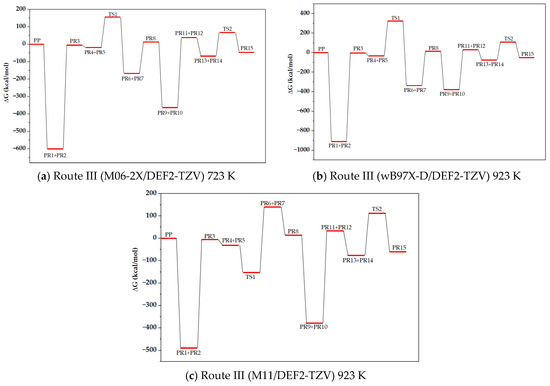
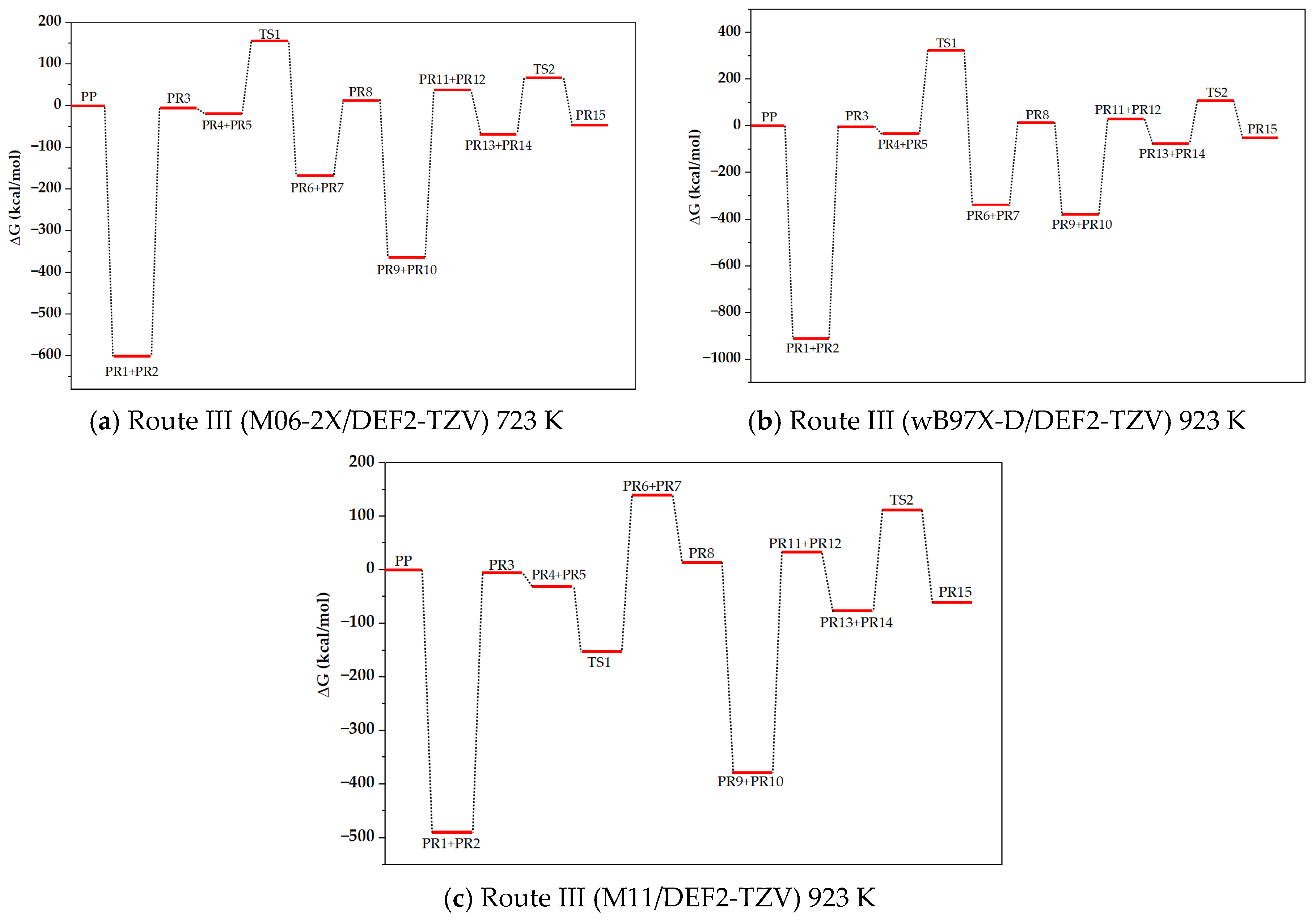
The conversion of PR1 into PR3 and subsequently into PR5 involves intramolecular hydrogen-transfer steps commonly described as backbiting reactions. Migration of the radical site along the chain generates internal radical environments that can undergo subsequent β-scission. The calculated sequence includes formation of PR6 (C8) through TS1, followed by additional transformations leading to PR12 (C10), PR14 (C18), and PR15 (C9). These carbon numbers characterize the molecular scope of the selected pathway. Pyrolysis oils obtained from plastic bottle caps have also been evaluated as complex liquid products for downstream combustion applications [53]. However, the calculated formation of C8–C18 fragments does not establish their relative abundance or demonstrate preferential production of a specific fuel fraction; this is shown in Figure 6.
Figure 6.
Mechanistic representation of the proposed Route 3 for the pyrolytic degradation of the PP oligomer model, illustrating a plausible sequence toward C8, C9, C10, and C18 hydrocarbon fragments. The main radical intermediates (PRx) and transition states (TS1–TS2) are shown.
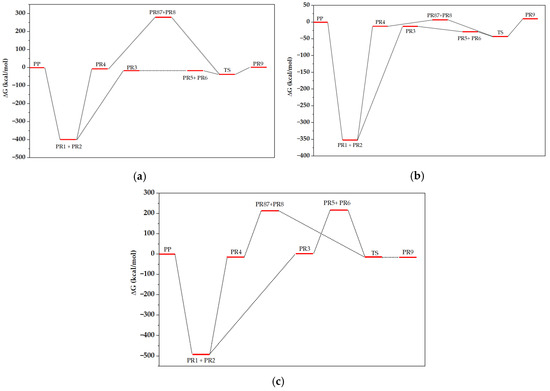
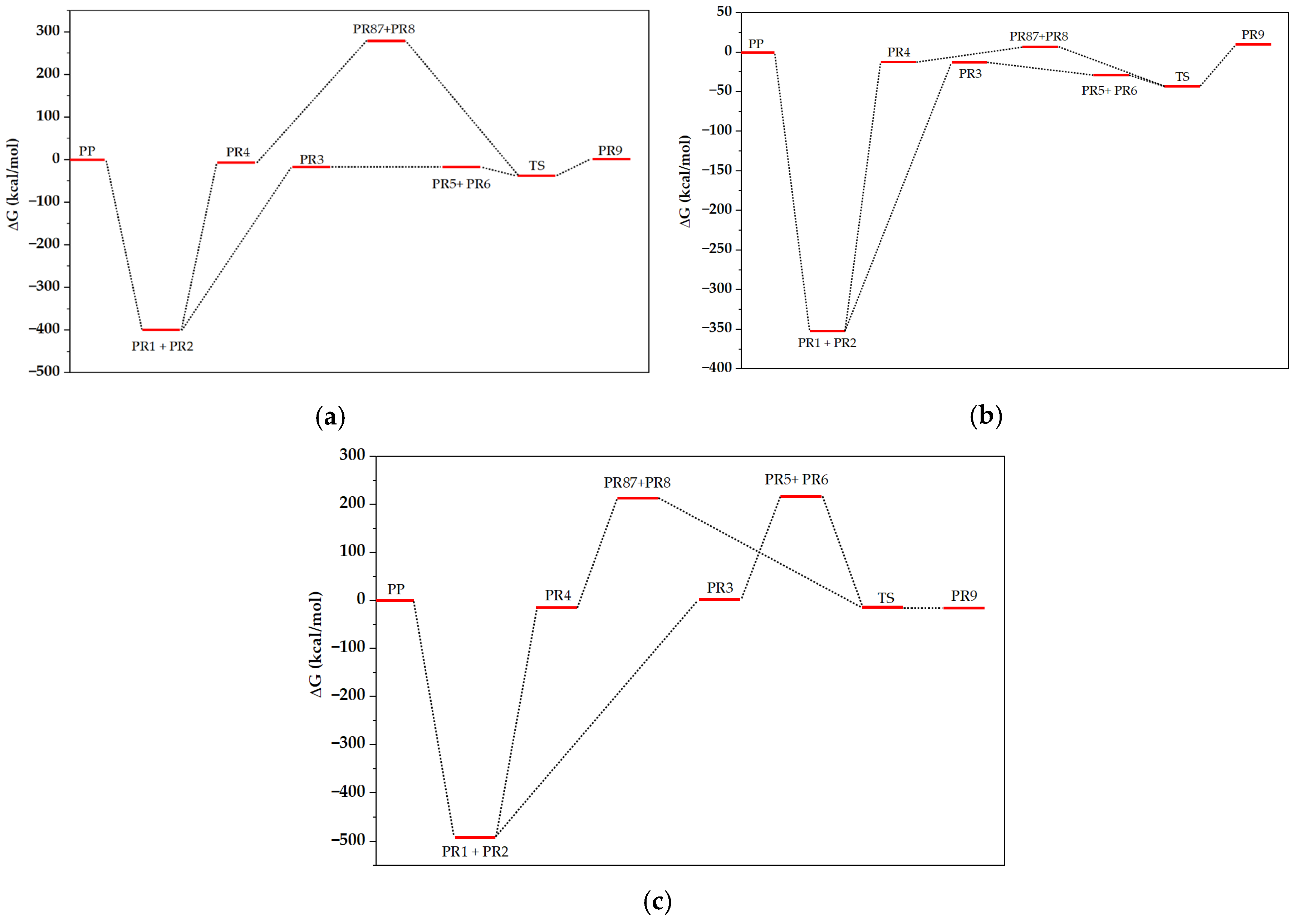
The Gibbs free-energy diagrams for Route 3 at 923 K provide a comparative assessment of the sequential radical rearrangement and chain fragmentation steps included in the selected pathway. The decrease in calculated Gibbs free-energy should not be interpreted exclusively as electronic stabilization. Under the ideal-gas thermochemical approximation, fragmentation into multiple species increases translational, rotational, and conformational entropy contributions at elevated temperature. Conformational entropy can be significant even in comparatively small flexible molecules and should be treated cautiously when interpreting calculated free-energy differences [54]. Consequently, the resulting ΔG values describe comparative thermochemical trends within the selected computational framework rather than absolute free-energy changes representative of condensed-phase polypropylene pyrolysis.
Route 3 includes two transition states associated with sequential radical rearrangement and chain-fragmentation events. The first transition state (TS1), located approximately +210 to +240 kcal mol−1 relative to the starting oligomer model, is associated with the β-scission step leading to the C8 fragment. The second transition state (TS2) governs subsequent transformations toward C9 and C10 fragments. The relative position of each transition state and the corresponding local Gibbs free-energy barrier (ΔG‡) should be considered separately because the energy of a transition state relative to the starting oligomer is not equivalent to the activation barrier measured from the immediately preceding intermediate. These quantities should be interpreted as elementary gas-phase DFT descriptors rather than as direct equivalents of global experimental activation energies.
The formation of PR14 (C18) is mechanistically relevant because this carbon number falls within a range commonly associated with liquid hydrocarbon fractions, whereas PR12 (C10) and PR15 (C9) represent lighter medium-chain fragments. Accordingly, Route 3 provides a plausible molecular sequence connecting mid-chain initiation with the formation of C8–C18 hydrocarbon fragments. Recent ultrahigh-resolution compositional analyses of waste and virgin polyolefin pyrolysis oils confirm that these liquids contain diverse hydrocarbon and oxygenate families across broad molecular distributions [55]. However, the calculated pathway does not establish the relative abundance of these fragments or demonstrate preferential production of a specific fuel fraction; this is shown in Figure 7.
Figure 7.
Gibbs free-energy (ΔG) profiles calculated for Route 3 of PP oligomer radical degradation at 923 K using different density functionals with the def2-TZVP basis set: (a) M06-2X/def2-TZVP, (b) ωB97X-D/def2-TZVP, and (c) M11/def2-TZVP. Relative Gibbs free energies are reported in kcal mol−1. The radical intermediates and transition states involved in the degradation pathway are indicated along each profile.
4. Conclusions
The present multi-functional DFT study provides a molecular-level assessment of selected radical pathways involved in polypropylene microplastics pyrolysis. A representative C45H92 oligomer model was used to examine how mid-chain homolytic cleavage, intramolecular hydrogen transfer, radical rearrangement, and β-scission can generate medium-chain hydrocarbon fragments. The calculated routes represent selected elementary sequences within the PP chain and should not be interpreted as complete descriptions of the condensed polymer phase or the reactor-scale degradation process.
Within the selected reaction set, Route 1 exhibited a comparatively more favorable thermochemical profile than Routes 2 and 3. The evaluated pathways generated fragments within the C8–C18 interval, demonstrating that several cracking, hydrogen migration, radical rearrangement, and β-scission sequences are mechanistically plausible within the selected computational framework. However, the calculated formation of these fragments does not establish their experimental abundance, the dominance of a particular pathway, or quantitative selectivity toward gasoline-, kerosene-, or diesel-range fractions. Such predictions would require microkinetic integration, analysis of competing reaction channels, and experimental product fitting.
The Gibbs free-energy profiles were strongly influenced by temperature-dependent entropy contributions arising from fragmentation into multiple molecular species under the ideal-gas thermochemical approximation. In particular, the −TΔS term generated pronounced decreases in calculated ΔG after the formation of multiple radical fragments. These decreases should be interpreted as comparative entropy-favored trends within the computational model rather than as direct evidence of spontaneous decomposition under condensed-phase pyrolysis conditions. Accordingly, the mechanistic interpretation relies on the combined evaluation of enthalpy changes (ΔH), Gibbs free-energy changes (ΔG), and local Gibbs free-energy barriers (ΔG‡).
The def2-TZVP profiles constituted the principal framework for the mechanistic discussion and showed that the relative description of radical intermediates and transition-state regions is sensitive to the selected functional. In contrast, the LANL2DZ-based calculations were retained only as lower-cost exploratory comparisons and were not treated as equivalent quantitative benchmarks for hydrocarbon radical thermochemistry. Overall, the results provide a comparative molecular framework for future studies integrating DFT calculations, microkinetic modeling, and experimental characterization of PP pyrolysis products.
Author Contributions
Conceptualization, J.A.H.F. and J.A.P.P.; Methodology, J.A.H.F. and J.A.P.P.; Software, J.A.H.F. and J.A.P.P.; Validation, J.A.H.F. and J.A.P.P.; Formal analysis, J.A.H.F., J.C. and J.A.P.P.; Investigation, J.A.H.F. and J.C.; Resources, J.A.H.F. and J.C.; Data curation, J.A.H.F., J.C. and J.A.P.P.; Writing—original draft, J.A.H.F., J.C. and J.A.P.P.; Writing—review & editing, J.A.H.F. and J.A.P.P.; Visualization, J.A.H.F. and J.C.; Supervision, J.A.H.F.; Project administration, J.A.H.F. and J.A.P.P.; Funding acquisition, J.A.H.F. All authors have read and agreed to the published version of the manuscript.
Funding
This research received no external funding.
Institutional Review Board Statement
Not applicable.
Data Availability Statement
The original contributions presented in this study are included in the article. Further inquiries can be directed to the corresponding authors.
Conflicts of Interest
The authors declare no conflict of interest.
References
- Li, J.; Xu, G. Circular economy towards zero waste and decarbonization. Circ. Econ. 2022, 1, 100002. [Google Scholar] [CrossRef]
- OECD. Global Plastics Outlook; OECD: Paris, France, 2022. [Google Scholar] [CrossRef]
- Moretti, C.; Junginger, M.; Shen, L. Environmental life cycle assessment of polypropylene made from used cooking oil. Resour. Conserv. Recycl. 2020, 157, 104750. [Google Scholar] [CrossRef]
- Schyns, Z.O.G.; Shaver, M.P. Mechanical Recycling of Packaging Plastics: A review. Macromol. Rapid Commun. 2020, 42, e2000415. [Google Scholar] [CrossRef] [PubMed]
- Li, H.; Aguirre-Villegas, H.A.; Allen, R.D.; Bai, X.; Benson, C.H.; Beckham, G.T.; Bradshaw, S.L.; Brown, J.L.; Brown, R.C.; Cecon, V.S.; et al. Expanding plastics recycling technologies: Chemical aspects, technology status and challenges. Green Chem. 2022, 24, 8899–9002. [Google Scholar] [CrossRef]
- EFSA Panel on Contaminants in the Food Chain (CONTAM). Presence of microplastics and nanoplastics in food, with particular focus on seafood. EFSA J. 2016, 14, e04501. [Google Scholar] [CrossRef] [PubMed]
- Sarker, M.; Rashid, M.M.; Molla, M. Waste polypropylene plastic conversion into liquid hydrocarbon fuel for producing electricity and energies. Environ. Technol. 2012, 33, 2709–2721. [Google Scholar] [CrossRef] [PubMed]
- Park, C.; Lee, J. Pyrolysis of polypropylene for production of fuel-range products: Effect of molecular weight of polypropylene. Int. J. Energy Res. 2021, 45, 13088–13097. [Google Scholar] [CrossRef]
- Weiland, F.; Qureshi, M.S.; Wennebro, J.; Lindfors, C.; Ohra-Aho, T.; Shafaghat, H.; Johansson, A.-C. Entrained flow gasification of polypropylene pyrolysis oil. Molecules 2021, 26, 7317. [Google Scholar] [CrossRef] [PubMed]
- Lamar, Y.R.; Noboa, J.; Miranda, A.S.T.; Streitwieser, D.A. Conversion of PP, HDPE and LDPE Plastics into Liquid Fuels and Chemical Precursors by Thermal Cracking. J. Polym. Environ. 2021, 29, 3842–3853. [Google Scholar] [CrossRef]
- Kartik, S.; Balsora, H.K.; Sharma, A.; Chakinala, A.G.; Asthana, A.; Goel, M.; Joshi, J.B. Distributed Activation Energy Model for thermal decomposition of polypropylene waste. In Springer Proceedings in Energy; Springer International Publishing: Cham, Switzerland, 2021; pp. 179–187. [Google Scholar] [CrossRef]
- Huang, J.B.; Zeng, G.S.; Li, X.S.; Cheng, X.C.; Tong, H. Theoretical studies on bond dissociation enthalpies for model compounds of typical plastic polymers. IOP Conf. Ser. Earth Environ. Sci. 2018, 167, 012029. [Google Scholar] [CrossRef]
- Armenise, S.; Wong, S.; Ramírez-Velásquez, J.M.; Launay, F.; Wuebben, D.; Nyakuma, B.B.; Rams, J.; Muñoz, M. Application of computational approach in plastic pyrolysis kinetic modelling: A review. React. Kinet. Mech. Catal. 2021, 134, 591–614. [Google Scholar] [CrossRef]
- Xuan, W.; Yan, S.; Dong, Y. Exploration of pyrolysis behaviors of waste plastics (Polypropylene Plastic/Polyethylene Plastic/Polystyrene plastic): Macro-Thermal kinetics and Micro-Pyrolysis Mechanism. Processes 2023, 11, 2764. [Google Scholar] [CrossRef]
- Nguyen, T.A.; Ichise, S.; Kinashi, K.; Sakai, W.; Tsutsumi, N.; Okubayashi, S. Spin trapping analysis of the thermal degradation of polypropylene. Polym. Degrad. Stab. 2022, 197, 109871. [Google Scholar] [CrossRef]
- Kruse, T.M.; Wong, H.-W.; Broadbelt, L.J. Mechanistic modeling of polymer pyrolysis: Polypropylene. Macromolecules 2003, 36, 9594–9607. [Google Scholar] [CrossRef]
- Kwon, H.; Mpourmpakis, G. Ab initio thermochemistry of highly flexible molecules for thermal decomposition analysis. J. Chem. Theory Comput. 2023, 19, 3652–3663. [Google Scholar] [CrossRef] [PubMed]
- Goerigk, L.; Hansen, A.; Bauer, C.; Ehrlich, S.; Najibi, A.; Grimme, S. A look at the density functional theory zoo with the advanced GMTKN55 database for general main group thermochemistry, kinetics and noncovalent interactions. Phys. Chem. Chem. Phys. 2017, 19, 32184–32215. [Google Scholar] [CrossRef] [PubMed]
- Gruzman, D.; Karton, A.; Martin, J.M.L. Performance of Ab Initio and Density Functional Methods for Conformational Equilibria of CnH2n+2 Alkane Isomers (n = 4–8). J. Phys. Chem. A 2009, 113, 11974–11983. [Google Scholar] [CrossRef] [PubMed]
- Zhao, Y.; Truhlar, D.G. The M06 suite of density functionals for main group thermochemistry, thermochemical kinetics, noncovalent interactions, excited states, and transition elements: Two new functionals and systematic testing of four M06-class functionals and 12 other functionals. Theor. Chem. Acc. 2007, 120, 215–241. [Google Scholar] [CrossRef]
- Chai, J.-D.; Head-Gordon, M. Long-range corrected hybrid density functionals with damped atom–atom dispersion corrections. Phys. Chem. Chem. Phys. 2008, 10, 6615. [Google Scholar] [CrossRef] [PubMed]
- Weigend, F.; Ahlrichs, R. Balanced basis sets of split valence, triple zeta valence and quadruple zeta valence quality for H to Rn: Design and assessment of accuracy. Phys. Chem. Chem. Phys. 2005, 7, 3297. [Google Scholar] [CrossRef] [PubMed]
- Martínez, M.C.; Benavente, R.; Gómez-Elvira, J.M. Molecular weight dependence and stereoselective chain cleavage during the early stages of the isotactic polypropylene pyrolysis. Polym. Degrad. Stab. 2017, 143, 26–34. [Google Scholar] [CrossRef]
- Pracht, P.; Bohle, F.; Grimme, S. Automated exploration of the low-energy chemical space with fast quantum chemical methods. Phys. Chem. Chem. Phys. 2020, 22, 7169–7192. [Google Scholar] [CrossRef] [PubMed]
- Gorges, J.; Grimme, S.; Hansen, A.; Pracht, P. Towards understanding solvation effects on the conformational entropy of non-rigid molecules. Phys. Chem. Chem. Phys. 2022, 24, 12249–12259. [Google Scholar] [CrossRef] [PubMed]
- Faisal, F.; Rasul, M.G.; Jahirul, M.I.; Chowdhury, A.A. Waste plastics pyrolytic oil is a source of diesel fuel: A recent review on diesel engine performance, emissions, and combustion characteristics. Sci. Total Environ. 2023, 886, 163756. [Google Scholar] [CrossRef] [PubMed]
- Giglio, E.; Marino, A.; Pizarro, P.; Escola, J.M.; Migliori, M.; Giordano, G.; Serrano, D.P. Critical issues for the deployment of plastic waste pyrolysis. Catal. Sci. Technol. 2023, 13, 5799–5820. [Google Scholar] [CrossRef]
- Sharma, V.; Hossain, A.K.; Griffiths, G.; Duraisamy, G.; Krishnasamy, A.; Ravikrishnan, V.; Sodré, J.R. Plastic waste to liquid fuel: A review of technologies, applications, and challenges. Sustain. Energy Technol. Assess. 2022, 53, 102651. [Google Scholar] [CrossRef]
- Wadt, W.R.; Hay, P.J. Ab initio effective core potentials for molecular calculations. Potentials for main group elements Na to Bi. J. Chem. Phys. 1985, 82, 284–298. [Google Scholar] [CrossRef]
- Hay, P.J.; Wadt, W.R. Ab initio effective core potentials for molecular calculations. Potentials for K to Au including the outermost core orbitals. J. Chem. Phys. 1985, 82, 299–310. [Google Scholar] [CrossRef]
- Roy, L.E.; Hay, P.J.; Martin, R.L. Revised basis sets for the LANL Effective Core Potentials. J. Chem. Theory Comput. 2008, 4, 1029–1031. [Google Scholar] [CrossRef] [PubMed]
- Schlegel, H.B. Optimization of equilibrium geometries and transition structures. J. Comput. Chem. 1982, 3, 214–218. [Google Scholar] [CrossRef]
- Grambow, C.A.; Pattanaik, L.; Green, W.H. Reactants, products, and transition states of elementary chemical reactions based on quantum chemistry. Sci. Data 2020, 7, 137. [Google Scholar] [CrossRef] [PubMed]
- Gebre, S.H.; Sendeku, M.G.; Bahri, M. Recent trends in the pyrolysis of Non-Degradable waste plastics. ChemistryOpen 2021, 10, 1202–1226. [Google Scholar] [CrossRef] [PubMed]
- Triacca, V.J.; Gloor, P.E.; Zhu, S.; Hrymak, A.N.; Hamielec, A.E. Free radical degradation of polypropylene: Random chain scission. Polym. Eng. Sci. 1993, 33, 445–454. [Google Scholar] [CrossRef]
- Levine, S.E.; Broadbelt, L.J. Detailed mechanistic modeling of high-density polyethylene pyrolysis: Low molecular weight product evolution. Polym. Degrad. Stab. 2009, 94, 810–822. [Google Scholar] [CrossRef]
- Van Schooten, J.; Evenhuis, J.K. Pyrolysis—Hydrogenation—GLC of poly-α-olefins. Polymer 1965, 6, 343–360. [Google Scholar] [CrossRef]
- Kiang, J.K.Y.; Uden, P.C.; Chien, J.C.W. Polymer reactions—Part VII: Thermal pyrolysis of polypropylene. Polym. Degrad. Stab. 1980, 2, 113–127. [Google Scholar] [CrossRef]
- Uebe, J.; Kryzevicius, Z.; Majauskiene, R.; Dulevicius, M.; Kosychova, L.; Zukauskaite, A. Use of polypropylene pyrolysis oil in alternative fuel production. Waste Manag. Res. 2022, 40, 1220–1230. [Google Scholar] [CrossRef] [PubMed]
- Ureel, Y.; Chacón-Patiño, M.L.; Kusenberg, M.; Rodgers, R.P.; Sabbe, M.K.; Van Geem, K.M. Characterization of PP and PE waste pyrolysis oils by Ultrahigh-Resolution Fourier Transform Ion Cyclotron Resonance Mass Spectrometry. Energy Fuels 2024, 38, 11148–11160. [Google Scholar] [CrossRef]
- Peverati, R.; Truhlar, D.G. Improving the accuracy of hybrid Meta-GGA density functionals by range separation. J. Phys. Chem. Lett. 2011, 2, 2810–2817. [Google Scholar] [CrossRef]
- Pracht, P.; Grimme, S. Calculation of absolute molecular entropies and heat capacities made simple. Chem. Sci. 2021, 12, 6551–6568. [Google Scholar] [CrossRef] [PubMed]
- Sidhu, N.; Mastalski, I.; Zolghadr, A.; Patel, B.; Uppili, S.; Go, T.; Maduskar, S.; Wang, Z.; Neurock, M.; Dauenhauer, P.J. On the intrinsic reaction kinetics of polypropylene pyrolysis. Matter 2023, 6, 3413–3433. [Google Scholar] [CrossRef]
- Abbas-Abadi, M.S.; Ureel, Y.; Eschenbacher, A.; Vermeire, F.H.; Varghese, R.J.; Oenema, J.; Stefanidis, G.D.; Van Geem, K.M. Challenges and opportunities of light olefin production via thermal and catalytic pyrolysis of end-of-life polyolefins: Towards full recyclability. Prog. Energy Combust. Sci. 2023, 96, 101046. [Google Scholar] [CrossRef]
- Gowda, S.; Karadimas, D.; Seay, J.R. Analysis of Tar and Oil Derived from Pyrolysis and Copyrolysis of Waste Plastics and Biomass. Ind. Eng. Chem. Res. 2025, 64, 8935–8942. [Google Scholar] [CrossRef]
- Chung, S.; Park, S.-A.; Park, S.B.; Kwak, H.; Oh, D.X.; Hwang, D.S.; Jeon, H.; Koo, J.M.; Park, J. Biobased super engineering plastic nanocomposite of cellulose nanofibers and isosorbide. Polym. Degrad. Stab. 2023, 215, 110445. [Google Scholar] [CrossRef]
- Ghodke, P.K.; Sharma, A.K.; Moorthy, K.; Chen, W.-H.; Patel, A.; Matsakas, L. Experimental investigation on pyrolysis of domestic plastic wastes for fuel grade hydrocarbons. Processes 2022, 11, 71. [Google Scholar] [CrossRef]
- Hubble, H.; Goldfarb, J.L. Synergistic effects of biomass building blocks on pyrolysis gas and bio-oil formation. J. Anal. Appl. Pyrolysis 2021, 156, 105100. [Google Scholar] [CrossRef]
- Dubdub, I. Kinetics Study of Polypropylene pyrolysis by Non-Isothermal Thermogravimetric Analysis. Materials 2023, 16, 584. [Google Scholar] [CrossRef] [PubMed]
- Ranzi, E.; Dente, M.; Faravelli, T.; Bozzano, G.; Fabini, S.; Nava, R.; Cozzani, V.; Tognotti, L. Kinetic modeling of polyethylene and polypropylene thermal degradation. J. Anal. Appl. Pyrolysis 1997, 40–41, 305–319. [Google Scholar] [CrossRef]
- Bockhorn, H.; Hornung, A.; Hornung, U.; Schawaller, D. Kinetic study on the thermal degradation of polypropylene and polyethylene. J. Anal. Appl. Pyrolysis 1999, 48, 93–109. [Google Scholar] [CrossRef]
- Marongiu, A.; Faravelli, T.; Ranzi, E. Detailed kinetic modeling of the thermal degradation of vinyl polymers. J. Anal. Appl. Pyrolysis 2006, 78, 343–362. [Google Scholar] [CrossRef]
- Maithomklang, S.; Sukjit, E.; Srisertpol, J.; Klinkaew, N.; Wathakit, K. Pyrolysis Oil Derived from Plastic Bottle Caps: Characterization of Combustion and Emissions in a Diesel Engine. Energies 2023, 16, 2492. [Google Scholar] [CrossRef]
- Chan, L.; Morris, G.M.; Hutchison, G.R. Understanding conformational entropy in small molecules. J. Chem. Theory Comput. 2021, 17, 2099–2106. [Google Scholar] [CrossRef] [PubMed]
- Ureel, Y.; Chacón-Patiño, M.L.; Kusenberg, M.; Ginzburg, A.; Rodgers, R.P.; Sabbe, M.; Van Geem, K. Compositional analysis of oxygenates and hydrocarbons in waste and virgin polyolefin pyrolysis oils by ultrahigh-resolution Fourier transform ion cyclotron resonance mass spectrometry. Energy Fuels 2025, 39, 1283–1295. [Google Scholar] [CrossRef]
Disclaimer/Publisher’s Note: The statements, opinions and data contained in all publications are solely those of the individual author(s) and contributor(s) and not of MDPI and/or the editor(s). MDPI and/or the editor(s) disclaim responsibility for any injury to people or property resulting from any ideas, methods, instructions or products referred to in the content. |
© 2026 by the authors. Licensee MDPI, Basel, Switzerland. This article is an open access article distributed under the terms and conditions of the Creative Commons Attribution (CC BY) license.