


Abstract
Microplastics (MPs; <5 mm) represent a growing environmental concern that increasingly challenges environmental monitoring, governance, and evidence-based decision-making. This review critically examines how current scientific understanding of microplastic sources, classification, occurrence, and environmental behavior can support environmental governance. MPs are classified as primary and secondary particles; however, persistent inconsistencies in size definitions, shape descriptors, and polymer identification limit the comparability of monitoring data and constrain the development of coherent regulatory frameworks. Evidence on the occurrence of MPs in surface waters and sediments highlights widespread contamination and pronounced spatial variability, raising challenges for risk assessment and policy harmonization across regions. Key transport pathways, including atmospheric deposition, terrestrial runoff, and riverine fluxes, are analyzed to illustrate how local emissions translate into large-scale environmental impacts. Rivers emerge as key components linking sources to receptors, offering relevant points for policy intervention and management measures. The review evaluates current policy responses to microplastic pollution, identifying significant gaps in standardized monitoring, data integration, and risk assessment approaches. It emphasizes the need for stronger alignment between scientific outputs and policy requirements, including the co-production of knowledge involving scientists, regulators, and stakeholders. By outlining pathways through which scientific evidence can inform regulatory design and environmental management, this study provides actionable insights for improving policy effectiveness. Advancing harmonized methodologies and integrating science into decision-making processes are essential steps toward mitigating microplastic pollution and supporting sustainable environmental governance.
1. Introduction
Synthetic organic polymers, commonly referred to as plastics, are widely used in modern society due to their favorable physicochemical properties and low production costs [1,2,3]. Their hydrophobicity, durability, resistance to thermal stress, and insulating properties have enabled extensive applications across sectors such as packaging, construction, textiles, transportation, and consumer goods, resulting in a continuous increase in global production and consumption since the mid-20th century [3,4,5]. This rapid expansion has generated large volumes of plastic waste, with production rising from approximately 300 million tons in 2016 to 359 million tons in 2018 and projected to reach up to 33 billion tons cumulatively by 2050 [1]. The environmental consequences are increasingly evident in freshwater and marine systems, where plastics represent persistent and widespread contaminants [6,7,8]. Additional inputs associated with the COVID-19 pandemic have further intensified plastic pollution [9,10,11,12]. Due to their long degradation times, plastics accumulate in the environment over decades or centuries [13,14], with increasing attention shifting from macro plastics to smaller fractions such as microplastics (MPs, <5 mm), generally defined as heterogeneous synthetic polymer particles ranging from approximately 0.1 μm to 5 mm in size and occurring in diverse morphologies, including fragments, fibers, films, foams, and beads, often containing additives or sorbed contaminants [15,16,17,18,19]. Nano plastics (NPs) are considered a smaller fraction derived from the further fragmentation of microplastics, exhibiting enhanced mobility and bioavailability due to their reduced size.
Microplastics encompass a wide range of polymer types, including polyethylene (PE), polypropylene (PP), polystyrene (PS), polyethylene terephthalate (PET), and polyvinyl chloride (PVC), as well as high-performance polymers such as PTFE, PMMA, and PHEMA [20,21]. They are commonly classified as primary MPs, intentionally manufactured at a microscopic scale, and secondary MPs, generated through fragmentation of larger plastic debris [22,23,24]. Secondary MPs dominate environmental observations and originate from diverse sources, including packaging materials, synthetic textiles, tire wear, fishing gear, and paints [25,26]. Their physicochemical properties strongly influence environmental fate, with low-density polymers prevailing in surface waters and higher-density polymers accumulating in sediments [27,28,29,30], contributing to their widespread occurrence across environmental compartments, including water, sediments, soils, and the atmosphere [25,31,32].
Recent review articles have extensively addressed specific aspects of microplastic pollution, including analytical methodologies, occurrence in aquatic systems, ecotoxicological effects, and human exposure pathways. However, most existing reviews tend to focus on isolated environmental compartments or thematic perspectives, such as marine pollution, wastewater systems, polymer characterization, or toxicological implications, often without integrating environmental transport mechanisms with regulatory and monitoring dimensions [26,30]. Furthermore, comparatively limited attention has been paid to the interactions between atmospheric deposition, terrestrial runoff, riverine transport, and marine accumulation as interconnected pathways shaping microplastic distribution patterns across aquatic ecosystems.
Despite the rapid expansion of microplastic research, significant uncertainties remain in linking emission sources, transport pathways, and environmental distribution patterns [33,34,35]. Current evidence consistently demonstrates that microplastics are ubiquitous contaminants detected in water, sediments, soils, biota, and the atmosphere, and that polymer density, shape, and size strongly influence environmental fate and compartmentalization. Rivers are increasingly recognized as both transport corridors and temporary sinks regulating retention, fragmentation, and remobilization processes [25,36,37]. However, important uncertainties remain regarding the relative contribution of different transport pathways, the temporal variability of microplastic fluxes, long-range atmospheric transport, and the cumulative interactions between freshwater and marine systems. In addition, methodological inconsistencies related to sampling strategies, particle classification, extraction, and analytical identification continue to limit cross-study comparability and the establishment of robust environmental baselines [25,36,37].
These scientific limitations have direct implications for environmental policy and decision-making. Methodological heterogeneity and fragmented datasets continue to hinder comparability across regions and constrain the development of harmonized monitoring frameworks and risk assessment strategies. As a result, the translation of scientific evidence into effective regulatory measures remains limited, despite increasing policy attention to microplastic pollution.
In this context, this review synthesizes current knowledge on microplastics in aquatic ecosystems, focusing on sources, classification, polymer diversity, occurrence, and environmental transport processes, while explicitly examining their relevance for environmental governance. The present manuscript adopts an integrative perspective by connecting environmental pathways, methodological challenges, and policy-related implications within a unified framework. Particular attention is given to the role of interconnected pathways, linking atmospheric, terrestrial, freshwater, and marine systems, and to the implications of methodological variability for monitoring and policy implementation. European regulatory frameworks are critically evaluated to assess how scientific evidence is currently integrated into policy and to identify existing gaps. By bridging environmental processes with policy needs, this review aims to support the development of harmonized monitoring strategies, improved risk assessment approaches, and more effective evidence-based decision-making for the management of microplastic pollution.
2. Materials and Methods
2.1. PRISMA-Based Literature Selection
This review was conducted in accordance with the PRISMA 2020 (Preferred Reporting Items for Systematic Reviews and Meta-Analyses) guidelines to ensure transparency, reproducibility, and methodological rigor in the literature selection process. A systematic literature search was conducted between October 2025 and March 2026 using the scientific databases Web of Science, Scopus, ScienceDirect, and Google Scholar, which were selected to ensure broad coverage of environmental, ecological, and engineering studies related to microplastics in aquatic systems. The search strategy was developed using predefined combinations of keywords related to microplastics, environmental compartments, transport mechanisms, and pollution pathways. Boolean operators (“AND”, “OR”) were applied to optimize retrieval. Representative search strings included: “microplastics” AND (“aquatic ecosystems” OR freshwater OR marine OR river OR sediment OR atmosphere OR soil), “microplastic transport” AND (“environmental fate” OR deposition OR riverine transport OR atmospheric transport), and “sources of microplastics” AND (“wastewater” OR textile fibers OR tire wear OR plastic degradation). Citation tracking of key review articles was additionally performed to identify relevant publications.
The PRISMA-based screening procedure was applied exclusively to peer-reviewed scientific literature, including original research articles and review papers addressing microplastic occurrence, sources, transport mechanisms, environmental distribution, analytical methodologies, and ecological implications across atmospheric, terrestrial, freshwater, estuarine, and marine systems (checklist in Supplementary). Studies were included if they provided sufficient methodological and contextual information relevant to the objectives of the review. Exclusion criteria included studies not directly focused on microplastics or aquatic systems, insufficient thematic relevance, and methodological or contextual overlap. The literature selection process for scientific publications is summarized in the PRISMA flow diagram (Figure S1), which describes the identification, screening, eligibility, and inclusion of peer-reviewed scientific studies.
To support cross-study interpretation, a qualitative methodological appraisal was additionally considered during evidence synthesis. Particular attention was given to polymer confirmation, contamination control (field/procedural blanks), particle-size thresholds, and reporting units, as these factors strongly influence comparability among MP studies (Table S1).
2.2. Policy and Regulatory Documents
Because this review also addresses governance and regulatory dimensions, policy and legal documents were identified separately and were not included in the PRISMA workflow. Regulatory sources were selected through targeted searches of official institutional websites and databases, including the European Commission, European Chemicals Agency (ECHA), European Environment Agency (EEA), European Parliament, European Union legal databases (EUR-Lex), ISO and ASTM standards, as well as reports from environmental agencies and international organizations. These documents were included based on relevance to microplastic monitoring, environmental risk assessment, wastewater treatment, regulatory restrictions, and harmonized policy frameworks. Policy and regulatory documents were considered complementary sources intended to contextualize environmental governance and were therefore treated separately from the scientific evidence synthesis.
2.3. Software and Data Visualization Tools
Figures and graphical materials included in this review were prepared using Microsoft Excel (Microsoft Corporation, Redmond, WA, USA), Microsoft PowerPoint (Microsoft Corporation, Redmond, WA, USA), and Canva (Canva Pty Ltd., Sydney, Australia).
3. Sources and Classification of Microplastics
The occurrence of MPs in aquatic ecosystems is intrinsically linked to their sources and release pathways. MPs are generally classified into primary microplastics, intentionally manufactured at a microscopic size, and secondary microplastics, generated through fragmentation of larger plastic materials [22,23,24]. Although this classification remains useful for source attribution and management prioritization, it only partially reflects the environmental complexity of MPs, which vary substantially in size, morphology, chemical composition, and environmental behavior.
3.1. Primary and Secondary Microplastics
Primary microplastics are intentionally produced for industrial, biomedical, and commercial applications. Historically, cosmetic and personal care products represented a major source through the use of plastic microbeads in exfoliating products and toothpaste [38,39]. Although bans have reduced these applications in several countries, industrial abrasives, biomedical polymers, and specialized commercial uses continue to contribute to environmental releases [40,41,42,43,44,45,46,47,48,49]. Their persistence reflects the limited availability of alternatives and incomplete waste management systems. In contrast, secondary microplastics dominate environmental observations and arise from the progressive fragmentation of larger plastic debris through physical, chemical, and biological weathering [49,50]. Mechanical abrasion, ultraviolet-induced photooxidation, and thermal degradation progressively weaken polymer structures, while microbial degradation generally remains slow and incomplete [51,52,53,54,55,56]. Major contributors include textile fibers released during washing, tire wear particles transported via runoff, paint particles, packaging materials, and agricultural plastics [33,57,58,59,60,61,62,63]. These diffuse and cumulative sources explain why secondary MPs are widely distributed across aquatic and terrestrial systems and remain considerably more difficult to control than intentional emissions.
From an environmental management perspective, primary MPs can be partially mitigated through regulatory restrictions, whereas secondary MPs require systemic interventions targeting plastic production, wastewater treatment, and diffuse urban runoff. Therefore, mitigation strategies should be adapted to source-specific emission pathways rather than generalized pollution control approaches [64,65].
3.2. Polymer Types and Physicochemical Diversity
The environmental fate of MPs strongly depends on polymer composition and physicochemical properties (Table 1). Common polymers include polyethylene (PE), polypropylene (PP), polyvinyl chloride (PVC), polystyrene (PS), polyethylene terephthalate (PET), and polycarbonate (PC), each characterized by distinct density, crystallinity, and chemical resistance [66,67]. These properties influence buoyancy, persistence, degradation, and contaminant interactions. Low-density polymers such as PE and PP tend to remain in surface waters, whereas denser polymers, including PET, PVC, and PS, are more frequently associated with sediment accumulation [68,69,70]. However, environmental distribution cannot be explained solely by density, as biofouling, fragmentation, turbulence, and hydrodynamic conditions can substantially alter particle transport and settling behavior [71,72].
Table 1.
Main types of plastics: classification, monomers, properties, and general applications.
Beyond physical transport, polymer composition affects the environmental role of MPs as contaminant vectors. Hydrophobic polymers with high surface-area-to-volume ratios can sorb persistent organic pollutants (POPs), including polycyclic aromatic hydrocarbons (PAHs) and polychlorinated biphenyls (PCBs), potentially altering contaminant mobility and organism exposure pathways [18,73,74,75,76,77,78]. Nevertheless, the extent to which MPs act as dominant pollutant carriers compared with natural particulates remains debated and likely depends on local environmental conditions (Figure 1).
Figure 1.
Relationship between the basic structure of a polymer and its properties [72].
3.3. Classification Challenges
Although the distinction between primary and secondary MPs remains widely accepted, environmental MPs rarely fit into simple categories. Particle size, morphology, polymer composition, additives, and weathering processes generate substantial heterogeneity that complicates classification and cross-study comparisons [22,79]. Morphological variability—including fragments, fibers, films, foams, and pellets—directly influences environmental transport and bioavailability. Fibers may remain suspended longer in the water column, whereas denser fragments preferentially accumulate in sediments [80,81,82]. In parallel, additives such as plasticizers, flame retardants, pigments, and stabilizers modify polymer behavior and toxicity, meaning that particles composed of the same base polymer may exhibit different environmental risks [83,84]. A major unresolved challenge concerns smaller particle fractions, particularly nano plastics, which remain difficult to detect despite potentially higher mobility and biological reactivity. Consequently, methodological heterogeneity in sampling, extraction, and analytical identification continues to hinder comparability among studies and may contribute to underestimation of environmental burdens [85,86].
These limitations emphasize the need for harmonized classification frameworks and standardized analytical protocols. Ongoing efforts by organizations such as ASTM and ISO represent important progress; however, future standardization efforts should better account for variability in particle size, morphology, additives, and composite materials to improve environmental risk assessment and policy implementation [87,88,89,90].
4. Occurrence and Levels of Microplastic Contamination in Aquatic Systems
Microplastics (MPs) are widely detected in marine and freshwater environments, including surface waters, sediments, biota, and remote aquatic habitats [25]. However, reported concentrations vary substantially due to differences in environmental conditions, analytical sensitivity, and methodological choices, particularly mesh size, sampling depth, and polymer identification methods [21,91,92]. This variability complicates direct comparisons among studies and emphasizes the need for integrated assessments that account for transport among environmental compartments.
4.1. Microplastics in Surface Waters
Surface waters are among the most intensively investigated compartments for assessing microplastic contamination, largely because many low-density polymers such as polyethylene (PE) and polypropylene (PP) remain suspended or float after release [31,36,81]. Nevertheless, surface concentrations should not be interpreted as representative of total microplastic burdens. Vertical distribution is strongly influenced by hydrodynamics, turbulence, particle size, density, and biofouling processes, which may redistribute MPs throughout the water column or promote temporary sediment deposition [28,68,70]. Smaller particles may remain suspended for prolonged periods, whereas denser or biofouled particles sink more rapidly. Consequently, surface-only sampling may underestimate contamination levels, particularly for smaller and denser particles.
Sampling methodology remains one of the primary sources of uncertainty in MP monitoring. Nets and filtration systems with mesh sizes between 100 and 500 µm are widely used, yet methodological inconsistencies substantially affect reported concentrations [87,91,92]. Larger meshes may underestimate contamination by excluding smaller particles, whereas finer meshes improve recovery but increase clogging and reduce sampling efficiency. As a result, apparent regional differences may partly reflect methodological artifacts rather than true environmental contrasts. For example, rivers sampled with a 300 µm mesh may appear less contaminated than those sampled at 100 µm, despite comparable environmental burdens [37,80].
Microplastic transport in surface waters is additionally influenced by meteorological and hydrological forcing. Wind-driven transport, stormwater pulses, floods, and seasonal mixing may redistribute particles horizontally and vertically, while convergence zones can promote local accumulation [28,35,37]. Therefore, surface waters should be viewed as dynamic transport interfaces rather than static reservoirs of contamination. Reliable assessments require harmonized methodologies and integration with sediment, atmospheric, and wastewater pathways to better represent the broader microplastic cycle [33,81,93].
4.2. Global Evidence of Contamination
Table 2 provides a comparative overview of microplastic (MP) concentrations reported in surface waters across diverse geographical regions [94,95,96,97,98,99,100,101,102,103,104,105,106,107,108,109]. Reported concentrations range across several orders of magnitude, from <0.05 particles/L in some Southeast Asian rivers to >10,000 particles/L in heavily urbanized waterways such as the Los Angeles River [93,94,95,96,97,98,99,100,101]. Higher concentrations are frequently reported in densely populated and industrialized regions, where urban runoff, wastewater discharges, and insufficient waste management contribute to continuous inputs. For example, the Saigon River (Vietnam) exhibited concentrations exceeding 40 particles/L, while Indonesian rivers showed elevated abundances of fragments and films associated with urban and industrial activities [94,95]. In contrast, several rivers in Malaysia and Thailand reported lower average concentrations (<0.3 particles/L), although methodological differences and hydrological dilution complicate direct comparison [96,97,98].
Table 2.
Representative studies on microplastic occurrence in surface waters.
European studies reveal a more nuanced pattern. Although some freshwater systems reported relatively moderate particle abundances, lower concentrations do not necessarily indicate reduced environmental significance [99]. For example, the Seine River contributes an estimated 924–1675 tons of plastic debris annually to marine environments, highlighting the importance of considering mass fluxes alongside concentration-based metrics [100]. Similarly, Swiss lakes function as long-term sinks due to limited flushing, allowing MPs to accumulate over time despite comparatively moderate inputs [99].
North American rivers, particularly highly urbanized systems, show some of the highest reported MP concentrations globally. The Los Angeles River exhibited values reaching nearly 13,000 particles/L, likely reflecting the combined effects of urban runoff, stormwater discharges, and the use of finer analytical methodologies [101]. These findings illustrate that extreme values may result from both environmental pressures and methodological sensitivity, reinforcing the need for caution when comparing datasets across studies.
Methodological differences continue to limit direct comparison among regions and may contribute to the underestimation of the true scale of microplastic pollution in surface waters.
4.3. Spatial Variability
Spatial variability in MP contamination reflects the interaction among urbanization, hydrology, land use, wastewater treatment efficiency, and monitoring methodology [102,103,104]. Highly urbanized catchments generally exhibit elevated MP abundances, particularly where industrial discharges, stormwater runoff, and inadequate waste management generate continuous inputs. However, concentration differences among regions should be interpreted cautiously, as methodological sensitivity strongly influences reported values. Regional contrasts further emphasize the importance of integrating concentration-based metrics with transport dynamics. For example, some European rivers may exhibit moderate particle concentrations but still contribute substantial annual plastic fluxes to marine systems, as reported for the Seine River [105,106,109]. Consequently, river systems should be viewed not only as contamination hotspots but also as transport corridors linking terrestrial, urban, and marine environments.
Evidence from North American rivers similarly highlights the combined influence of anthropogenic pressure and methodological choices. Urbanized systems, such as the Los Angeles River, reported among the highest MP abundances globally, although the use of finer analytical approaches may partly explain extreme concentrations [101]. Seasonal hydrology and storm-driven transport further contribute to spatial variability, reinforcing that MP contamination is not a steady-state process but one influenced by episodic mobilization events [106]. Importantly, rivers interact continuously with adjacent compartments. Atmospheric deposition, soil runoff, wastewater discharges, and sediment remobilization may all contribute to riverine MP burdens, while flood events can redistribute stored particles across terrestrial and aquatic systems [107]. This interconnected behavior supports the conceptual model proposed in Figure 2, where MPs circulate dynamically among atmosphere, soils, wastewater treatment plants, rivers, sediments, and marine environments.
Figure 2.
Microplastic cycle across interconnected compartments. Solid and dashed arrows indicate transport pathways, accumulation, remobilization, long-range transport, atmospheric exchange, and anthropogenic inputs connecting the atmosphere, soils, surface waters, sediments, wastewater treatment plants, and marine systems.
Lakes and sediments often function as long-term accumulation zones, whereas rivers act primarily as transport pathways. Biotic studies further demonstrate that exposure patterns vary considerably among species and habitats, indicating that ecological traits, particle size, and local hydrodynamics influence MP uptake [107]. Regional patterns indicate that urbanization, wastewater treatment, hydrology, and land use shape MP occurrence, although methodological uncertainty continues to limit confidence in cross-regional comparisons [107].
4.4. Environmental Significance and Methodological Uncertainty
The environmental significance of MPs extends beyond occurrence data, as contamination patterns are closely linked to human activities, hydrological conditions, and polymer-specific behavior [108,110]. Urbanization, industrial activities, and ineffective waste management consistently emerge as key drivers of elevated MP burdens, while polymer composition may provide useful information regarding likely emission sources.
Hydrological forcing strongly modulates MP fate. Flow velocity, turbulence, floods, and seasonal discharge determine whether particles remain suspended, accumulate in sediments, or are remobilized downstream [111,112,113]. Consequently, environmental monitoring should consider both short-term hydrological variability and long-term storage processes. At the same time, methodological heterogeneity remains a major source of uncertainty. Sampling depth, mesh size, extraction efficiency, and polymer identification methods substantially influence reported concentrations and may limit comparability among studies [100,114,115]. In particular, smaller and potentially more bioavailable particles are frequently underestimated due to analytical constraints. Part of the reported spatial variability may therefore reflect methodological artifacts rather than genuine environmental differences [115,116,117]. Consequently, evidence confidence varies across compartments and monitoring approaches, underscoring the need for harmonized protocols and integrated assessment frameworks (Table 3).
Table 3.
Critical synthesis of evidence, methodological limitations, confidence level, and policy relevance across major environmental compartments involved in the microplastic cycle.
The critical synthesis provided in Table 3 and the integrated conceptual framework (Figure 2 highlight that effective management of MP pollution requires cross-compartment monitoring strategies linking atmospheric deposition, terrestrial transport, wastewater pathways, rivers, sediments, and marine systems [25,56,115,116,117,118].
5. Sources, Transport, and Distribution of Microplastics in the Environment
The dispersal of microplastics (MPs) across aquatic ecosystems results from a complex interplay of emission sources, transport pathways, and environmental redistribution processes [25,119]. MPs are not only released directly into rivers, lakes, and coastal waters but also enter aquatic systems through atmospheric deposition, agricultural runoff, and urban wastewater effluents [120,121,122]. Once introduced, their transport and retention are controlled by hydrodynamics, geomorphology, and particle properties (Figure 3).
Figure 3.
Conceptual overview of microplastic sources, transport, exposure, and impacts in aquatic systems.
5.1. Major Emission Sources
Microplastics originate from a wide variety of human activities, and their pathways into aquatic systems are shaped by both point and diffuse sources (Figure 4). Wastewater treatment plants (WWTPs) are widely recognized as major point sources of MPs, receiving particles from domestic and industrial activities, particularly textile fibers and personal care products (Table 4) [123,124,125,126]. Although treatment processes such as sedimentation, filtration, and activated sludge can remove a substantial portion of these particles, the sheer volume of wastewater processed daily means that effluents still discharge significant loads of MPs into receiving rivers and lakes [127,128,129]. Despite technological improvements, complete MP removal remains difficult, and WWTPs continue to represent important point sources of contamination [126,129].
Figure 4.
Major point and diffuse sources of microplastics entering aquatic systems.
Industrial processes add another critical dimension. Plastic production, pellet handling, and textile manufacturing release MPs directly into wastewater streams [125,130]. In contrast, incomplete incineration of plastic waste can generate airborne particles that later deposit into soils and surface waters [131]. Textile-derived microfibers represent one of the most persistent and poorly controlled sources of MPs. Household laundering continuously releases synthetic fibers from polyester, nylon, and acrylic fabrics, many of which bypass conventional treatment barriers due to their small size [57,58,132,133,134]. This recurring source explains the dominance of fibers observed in many wastewater and atmospheric studies. Agricultural practices also play a key role in the dissemination of MPs [135]. Sewage sludge application and the degradation of agricultural plastics—including mulch films, greenhouse materials, and silage covers—introduce diffuse but continuous MP inputs into soils [136,137]. As these materials degrade under solar radiation, mechanical stress, and tillage, they fragment into microplastics that persist in soils for prolonged periods [26].
The synthesis presented in Table 4 highlights pronounced methodological heterogeneity in WWTP studies, including variability in particle-size detection, analytical sensitivity, and polymer identification [124,138,139,140,141,142]. Studies using finer mesh sizes and advanced spectroscopic techniques, such as micro-Fourier Transform Infrared (micro-FTIR) imaging or Raman spectroscopy, consistently report smaller and more diverse MP fractions, suggesting that conventional monitoring likely underestimates total burdens [141,142]. Moreover, the recurrent dominance of fibers across treatment stages reinforces the conclusion that textile-related emissions remain insufficiently controlled [57,58,126]. Solid waste mismanagement remains another important diffuse source [143,144,145,146,147,148,149,150,151,152,153]. Landfills and open dumps may gradually release MPs through fragmentation, leachate generation, and wind dispersal, particularly where containment and recycling systems are inadequate [38,154,155,156]. MP emissions arise from interconnected urban, industrial, agricultural, and domestic activities, highlighting the need for integrated source-control approaches across environmental compartments [33,157,158].
Table 4.
Sampling, detection, and characterization of microplastics in wastewater treatment plants (WWTPs).
5.2. Atmospheric Pathways
The atmosphere is increasingly recognized as an important pathway for the transport and redistribution of microplastics (MPs), linking terrestrial and aquatic systems through deposition and resuspension processes (Figure 5) [159,160,161]. MPs are emitted into the air from multiple sources, including textile fibers released during wear and laundering, tire abrasion, road dust, and incomplete combustion of plastics [108]. Available evidence suggests that airborne MPs may be transported across urban, rural, and remote regions, although transport distances vary according to particle size, meteorological conditions, and atmospheric dynamics [161,162]. Atmospheric fallout generally correlates with population density, with urban areas showing substantially higher concentrations than less populated regions due to traffic, textile emissions, and waste-management activities [108]. Deposition studies in metropolitan regions report atmospheric fallout rates reaching thousands of particles m−2 day−1, supporting the role of air as both a transport pathway and a temporary sink for MPs [163,164]. Atmospheric MPs are redistributed through both wet and dry deposition. Rain and snow may transfer particles into rivers, lakes, soils, and marine environments, whereas dry deposition and wind-driven resuspension promote repeated cycles of redistribution across environmental compartments [165,166]. These processes highlight the dynamic nature of MP cycling and support the interconnected environmental compartments (Figure 5).
Figure 5.
Schematic overview of major points and diffuse sources of microplastics entering aquatic systems. Solid and dashed arrows indicate different atmospheric transport, deposition, and transfer pathways between emission sources, the atmosphere, and aquatic systems.
The detection of MPs in remote and high-altitude regions, including mountain systems, protected areas, and marine atmospheres, suggests that atmospheric transport may contribute to long-range dispersal beyond local emission sources [167,168,169]. However, the relative importance of atmospheric transport compared with local inputs remains insufficiently quantified and likely varies across environments. The synthesis presented in Table 5 reveals pronounced contrasts in atmospheric deposition among environmental settings, ranging from <10 items m−2 day−1 in remote regions to >103–104 items m−2 day−1 in densely populated urban centers [163,164,165,166,167,168,169,170,171,172,173,174,175,176,177,178]. Across most studies, fibers dominate atmospheric fallout, frequently accounting for >80% of detected particles, supporting textile-related emissions as a major contributor [170,176]. Fragments and films become relatively more abundant in industrialized or traffic-influenced settings, indicating additional inputs from abrasion and plastic degradation [166,175].
Table 5.
Atmospheric microplastics: environmental compartment, abundance range, and dominant characteristics.
Indoor environments (Table 6) frequently exhibit MP concentrations comparable to or exceeding outdoor levels, largely due to textile shedding, furnishings, household activities, and ventilation systems [179,180,181,182,183]. Fibers overwhelmingly dominate indoor assemblages, while polymer profiles rich in PET, polyester (PES), polyamide (PA), and polypropylene (PP) indicate strong contributions from consumer materials [184,185,186,187,188,189]. Importantly, indoor and outdoor atmospheric compartments are closely connected through ventilation, deposition, and resuspension processes, suggesting bidirectional exchange between built and natural environments [181].
Table 6.
Indoor microplastics: exposure-relevant compartments and contamination profiles.
Atmospheric pathways indicate that MP contamination extends beyond aquatic systems and involves continuous exchange among atmospheric, terrestrial, and aquatic compartments [190,191]. Nevertheless, substantial uncertainties remain regarding long-range transport, deposition rates, and the contribution of atmospheric inputs to aquatic MP burdens, reinforcing the need for harmonized monitoring approaches and integrated mass-balance assessments.
5.3. Terrestrial Runoff and Soil–Water Transfer
Soils are increasingly recognized as both long-term sinks and potential secondary sources of microplastics (MPs) in terrestrial–aquatic systems [135,192], particularly sewage sludge application and the degradation of agricultural plastics, including mulch films, silage covers, and greenhouse materials (Figure 6) [41,42]. Repeated inputs may progressively enrich soils with MPs, promoting long-term retention within the soil matrix. Accumulated MPs may alter soil structure, microbial communities, and biogeochemical functioning, although the magnitude and persistence of these effects remain incompletely understood [193,194,195].
Figure 6.
Conceptual framework of soil-mediated microplastic retention and hydrologically driven transfer to aquatic systems.
The synthesis provided in Table 7 demonstrates widespread MP occurrence across agricultural, urban-adjacent, and remote soils, with most studies focusing on surface layers (0–30 cm), where anthropogenic inputs and biological activity are greatest [164,169,195]. Across continents, density separation combined with spectroscopic identification techniques—most commonly μ-FTIR, Raman spectroscopy, or Py–GC–MS—dominates analytical workflows, reflecting the need for robust polymer confirmation in complex soil matrices [196,197]. Polymer profiles consistently show the predominance of polyethylene (PE) and polypropylene (PP), followed by polyethylene terephthalate (PET) and polystyrene (PS), reflecting the widespread use of agricultural plastics, packaging materials, and synthetic textiles [198,199].
Table 7.
Overview of soil microplastics studies: depth ranges, analytical approaches, and dominant polymer types.
Several studies additionally report MPs at depths > 50 cm, indicating vertical redistribution through tillage, soil cracking, percolation, and bioturbation [196,215]. These findings suggest that soils function not only as surface repositories but also as delayed-release reservoirs with long-term storage potential.
However, soils should not be considered static compartments. Under specific hydrological conditions, rainfall, irrigation, and stormwater runoff may remobilize stored MPs through surface and subsurface transport pathways, transferring particles into rivers and drainage systems [199,222,223]. In intensively cultivated regions, such mobilization events may generate episodic pulses of contamination linked to seasonal precipitation and land-management practices [224,225]. The degradation of crop-protection films and silage covers under ultraviolet radiation, mechanical stress, and tillage further contributes to soil MP accumulation and delayed remobilization [62,135,137,145,226].
This dual role complicates catchment-scale MP budgets and highlights the importance of explicitly considering terrestrial–aquatic linkages when evaluating environmental transport, as neglecting soil-mediated pathways may underestimate delayed MP in-puts into freshwater systems and overlook long-term legacy effects associated with sludge application and agricultural plastic use [227,228,229,230]. Figure 6 emphasizes that soils act as intermediate reservoirs within the broader MP cycle, linking agricultural, atmospheric, and hydrological pathways. Consequently, targeted interventions—including improved sludge management, reduced agricultural plastic use, and erosion-control measures—may substantially reduce downstream contamination before particles enter aquatic systems.
5.4. Riverine Transport
Rivers are key transport pathways in the global microplastic (MP) cycle, connecting terrestrial environments with marine systems through continuous downstream transfer (Figure 7) [33,34,51]. Rivers receive MPs from multiple interacting sources, including wastewater effluents, stormwater runoff, atmospheric deposition, and agricultural drainage [33,34,51]. Modeling studies suggest that riverine pathways contribute substantially to marine plastic pollution, although reported estimates vary depending on watershed characteristics and model assumptions [8,231]. This variability indicates that rivers should be considered not only as transport routes but also as regulators of MP retention and release.
Figure 7.
Rivers as dynamic interfaces in the MP cycle: transport pathway, temporary storage compartments, and remobilization interfaces. The white arrows within the river channel represent the main downstream transport direction along the river continuum, while the purple dashed arrows indicate remobilization pathways from sediments and storage compartments back into the water column. Both arrow types are already defined in the figure legend as ‘Transport pathway (direct)’ and ‘Remobilization interfaces’, respectively.
Riverine transport is governed by the interaction among hydrodynamics, particle characteristics, and geomorphology [232,233]. Flow velocity and turbulence strongly influence whether MPs remain suspended in the water column or are deposited in sediments and riverbanks. In high-energy systems with strong currents, MPs are more likely to remain suspended, facilitating rapid downstream transport, whereas depositional environments favor localized accumulation [112,234]. Particle characteristics further modulate riverine fate. Size, density, and morphology influence settling behavior and resuspension potential [112]. Fibers generally remain suspended longer due to lower settling rates, whereas irregular fragments and denser particles accumulate more readily in sediments [235]. Similarly, denser polymers such as polyethylene terephthalate (PET) and polystyrene (PS) are frequently associated with sediment accumulation, whereas polyethylene (PE) and polypropylene (PP) are more likely to remain near the surface [233,234,235,236]. This selective transport influences both spatial contamination patterns and exposure pathways for aquatic organisms.
Geomorphological features—including reservoirs, floodplains, and meanders—act as temporary retention zones where MPs may accumulate before subsequent remobilization [232,236,237,238]. Floods, snowmelt, and dam releases can reactivate stored particles, generating episodic contamination pulses [224,227,236]. Empirical studies frequently report higher MP abundances in sediments than in overlying waters, indicating that riverbeds function as important temporary reservoirs [234,235,237]. However, hydrological disturbances and anthropogenic activities, including dredging and navigation, may remobilize deposited particles, highlighting sediments as both sinks and secondary sources [232,233,238]. Accounting for these interconnected retention and release mechanisms is essential for improving mass-balance estimates and predicting long-term transport across terrestrial–aquatic–marine systems [231,232,237].
5.5. Retention and Redistribution
The movement of microplastics (MPs) within river systems is governed by a dynamic balance between retention and remobilization processes rather than simple downstream transport [25,28]. Microplastics may remain temporarily stored in river sediments, floodplains, riparian soils, and reservoirs, which function as intermediate sinks within the broader MP cycle [65,233]. Deposition is influenced by particle density, morphology, and hydrodynamic conditions, with fine sediments and low-flow environments favoring retention [109].
However, retention is rarely permanent. Hydrological disturbances—including floods, snowmelt, stormwater pulses, and dam releases—may increase turbulence and flow velocity, remobilizing previously stored particles [224,227]. Such events can generate episodic contamination pulses, increase downstream transport, and redistribute MPs across aquatic compartments. This episodic behavior suggests that single-time-point monitoring may underestimate temporal variability and fail to capture remobilization events.
Retention–remobilization cycles have important ecological implications [13,108]. Sediments may function as temporary reservoirs that become secondary exposure sources during disturbance events, particularly for benthic organisms. From a monitoring perspective, this variability complicates the interpretation of concentration data, as sampling may reflect either baseline conditions or short-term contamination peaks depending on hydrological timing [16,18]. At the catchment scale, rivers should therefore be considered regulators of MP fluxes rather than passive conduits, temporarily storing particles and releasing them intermittently under changing environmental conditions [37]. This buffering capacity may delay downstream contamination signals and complicate mass-balance assessments, particularly when retention phases alternate with episodic release [118]. As illustrated in Figure 6, retention and remobilization processes shape the temporal variability and environmental fate of MPs across interconnected systems. Accounting for these dynamics is essential to improve long-term flux estimates and exposure assessments.
6. Legislation and Policy Frameworks
The recognition of microplastic (MP) pollution as a pervasive and transboundary problem has prompted policymakers, particularly within the European Union (EU), to strengthen regulatory frameworks. These initiatives focus on both reducing intentional uses of MPs and preventing the release of secondary MPs from consumer and industrial products. As summarized in Table 8, current regulatory frameworks increasingly recognize the relevance of microplastics to aquatic systems, shifting from narrow, product-specific bans toward broader, lifecycle-based approaches that directly or indirectly limit MP inputs to rivers, lakes, and marine environments.
The environmental evidence summarized in the previous sections highlights several regulatory challenges. High variability in reported MP concentrations, inconsistent size thresholds, and strong methodological heterogeneity complicate cross-regional comparisons and limit the translation of scientific evidence into harmonized policy measures. In particular, evidence from wastewater effluents, atmospheric deposition, and riverine transport indicates that diffuse emission pathways remain insufficiently addressed by existing regulatory frameworks. These findings support the need for source-specific prevention strategies and more harmonized monitoring approaches.
A milestone in this process was the 2020 opinion of the European Chemicals Agency (ECHA) Committee for Risk Assessment (RAC), which supported restrictions on intentionally added microplastics in products at concentrations above 0.01% by weight. The RAC further recommended stricter criteria for biodegradable polymers, highlighting the need for scientific evidence that these materials degrade effectively in natural environments such as soil, freshwater, or marine systems. The proposed restriction aims to prevent long-term accumulation of MPs by targeting avoidable uses in cosmetics, detergents, fertilizers, and industrial applications [239]. Building on this, the EU adopted Commission Regulation (EU) 2023/2055 in October 2023, which amends Annex XVII of the REACH Regulation to restrict the placing on the market and use of intentionally added microplastic particles (synthetic polymer microparticles) in products and mixtures (effective with phased deadlines through 2025–2035) (European Commission, REACH 2023) [240]. This regulation imposes detailed labelling, reporting, and information obligations on manufacturers, importers, and downstream users of products containing microplastics, representing the first EU-level binding instrument explicitly targeting microplastic sources beyond cosmetics and personal care products (European Commission, REACH 2023). Complementing the REACH restriction, the EU has introduced specific measures to reduce unintended microplastic releases from industrial handling. Recent EU initiatives have introduced measures targeting pellet loss prevention, requiring operators handling ≥ 5 tons/year of pellets to implement best-practice procedures to minimize spillage during production, transport, and storage, representing an important preventive action targeting one relevant pathway of unintentional microplastic release (European Commission, REACH 2023). The EU has also advanced broader strategies to reduce plastic pollution. Directive (EU) 2019/904 on the reduction of the impact of certain plastic products on the environment addresses the proliferation of single-use plastics, particularly in the marine environment [241]. By targeting items such as cutlery, plates, straws, and expanded polystyrene containers, this directive aims to reduce plastic litter entering aquatic ecosystems. In addition, Directive 94/62/EC regulates packaging waste, emphasizing recycling and recovery obligations for plastic packaging materials [242]. Fishing gear is a significant source of marine litter, including MPs originating from lost or abandoned nets and ropes. The EU has acknowledged this problem in the Waste Framework Directive (2008/98/EC), the Port Reception Facilities Directive (2000/59/EC), and the Control Regulation (1224/2009/EC), all of which encourage the collection and proper disposal of fishing gear to reduce inputs to the marine environment. Monitoring requirements under the Marine Strategy Framework Directive (2008/56/EC) require Member States to periodically assess and report on the abundance, composition, and properties of marine litter, including plastics. However, differences in sampling strategies, particle-size thresholds, and analytical protocols across Member States continue to limit data comparability, reinforcing the need for harmonized monitoring standards [243,244,245,246].
Table 8.
Overview of key regulatory instruments addressing microplastic pollution and their relevance for aquatic systems.
Chemical pollution linked to MPs is also addressed under the Environmental Quality Standards Directive (2008/105/EC), which sets limits for priority hazardous substances in surface waters [247]. While the directive does not explicitly regulate MPs, it covers many persistent organic pollutants (POPs), such as polycyclic aromatic hydrocarbons (PAHs) and polychlorinated biphenyls (PCBs), which adsorb onto plastic particles, thereby increasing ecological and health risks [248]. Collectively, these legislative efforts reflect a multi-layered policy approach aimed at restricting intentional MP uses, reducing plastic waste generation, improving waste management, and strengthening environmental monitoring. Nevertheless, challenges remain regarding enforcement, harmonization of monitoring methods, and integration of MPs into existing chemical and waste-management frameworks.
Beyond the EU, international and national initiatives further reinforce microplastic governance. At the international level, the United Nations Environment Assembly (UNEA) Resolution 5/14 established an intergovernmental negotiating committee (INC) to develop a legally binding global plastics treaty addressing plastic pollution, including microplastics, across the life cycle of plastics (UNEP, 2022) [249]. The Organisation for Economic Co-operation and Development (OECD) has published policy guidance on reducing microplastic emissions, providing member countries with strategies to mitigate both intentional and unintentional microplastic releases, including from textiles and tire wear (OECD 2019) [250]. At the national level, several countries have implemented microplastic-specific legislation. Canada’s Microbeads Regulations prohibit the manufacture, import, and sale of toiletries containing plastic microbeads under the Canadian Environmental Protection Act (Microbeads Regulations (CEPA, 2018) [251]. In the United States, the Microbead-Free Waters Act bans rinse-off cosmetics containing plastic microbeads and has set a precedent for source-based microplastic restrictions (USA, Microbead-Free Waters Act 2015), [252]. Other countries, such as Australia, South Korea, Italy, New Zealand, and Sweden, have adopted or proposed similar bans on microbeads and intentional microplastics in consumer products. The United Kingdom’s Environment Act 2021 establishes a framework for environmental targets and regulatory strategies applicable to microplastic monitoring and reduction initiatives (UK, Environment Act 2021) [253]. Additional subnational initiatives, including state-level risk assessments and strategies targeting tire-wear and textile-fiber emissions, further demonstrate increasing political commitment to microplastic mitigation.
Based on current environmental evidence, future regulatory priorities should include harmonized monitoring protocols, improved assessment of major emission pathways (particularly wastewater effluents, stormwater runoff, atmospheric deposition, textile fibers, tire wear, and plastic pellets), and stronger integration of MPs into environ-mental quality and chemical-risk frameworks through standardized reporting systems and catchment-scale assessments.
7. Research Gaps and Future Perspectives
Despite substantial advances in microplastic (MP) research, this review highlights several knowledge gaps that directly limit the effectiveness of environmental monitoring and regulatory action. The interpretation of existing evidence remains constrained by variability in study quality and methodological rigor. Many studies differ substantially in sampling design, particle-size thresholds, contamination control measures, polymer confirmation procedures, and reporting units, limiting cross-study comparability and increasing uncertainty in global assessments. In several cases, reliance on visual identification without spectroscopic confirmation, inconsistent use of field or procedural blanks, and limited reporting of methodological details reduce confidence in reported abundances and distribution patterns.
A major challenge remains the absence of standardized methodologies for MP sampling, separation, and identification across environmental compartments. Current inconsistencies in mesh sizes, analytical techniques, and reporting units hinder comparability between studies and prevent reliable large-scale assessments needed for policy implementation. A second critical gap concerns incomplete size coverage. Most monitoring efforts focus on particles larger than tens of micrometers, while smaller MPs and nano plastics remain largely excluded due to analytical limitations. This omission likely leads to systematic underestimation of environmental MP loads and compromises the development of robust emission inventories. MP transport is governed by interconnected pathways involving wastewater discharge, atmospheric deposition, terrestrial runoff, and riverine transfer; however, these pathways are frequently studied in isolation. The absence of integrated, multi-compartment monitoring frameworks restricts the ability to quantify relative source contributions and to evaluate the effectiveness of mitigation measures targeting specific emission pathways. River systems and soils emerge as priority compartments for policy-relevant research. Rivers function both as transport corridors and temporary sinks, while soils act as long-term reservoirs with episodic remobilization potential. Yet, long-term and catchment-scale datasets remain scarce, limiting predictive modeling and risk-based management. From a regulatory perspective, these gaps underscore the need for harmonized monitoring protocols, agreed size classifications, and coordinated reporting systems that can be incorporated into existing water and environmental quality directives.
Future studies would particularly benefit from greater methodological transparency, routine polymer confirmation, harmonized contamination-control procedures, and standardized reporting metrics to improve confidence in evidence synthesis and policy translation. Addressing these priorities will be essential to translating scientific evidence into effective policies that reduce microplastic emissions and mitigate their long-term environmental accumulation.
Although ecological and human-health implications of MPs remain highly relevant, a detailed evaluation of trophic transfer, bioaccumulation, and microplastic–contaminant interactions were beyond the primary scope of this review, which focused on sources, transport pathways, environmental distribution, and policy perspectives. These topics have been extensively discussed in recent dedicated reviews and remain a priority area for future interdisciplinary research integrating environmentally realistic exposure scenarios and long-term risk assessment [254].
8. Conclusions
Microplastics (MPs) are now recognized as pervasive and persistent contaminants across aquatic environments, with consistent evidence of their presence in rivers, lakes, estuaries, and marine systems worldwide. This review demonstrates that MP pollution is driven by a combination of point and diffuse sources, including wastewater effluents, atmospheric deposition, terrestrial runoff, and inadequate waste management. Rivers emerge as critical connectors between land and sea, functioning not only as transport pathways but also as dynamic systems where retention, sedimentation, and episodic remobilization strongly influence microplastic fluxes.
A central outcome of this synthesis is the recognition that MP distribution is controlled by tightly interconnected environmental compartments. Atmospheric transport enables long-range dispersal, soils act as long-term reservoirs with secondary release potential, and sediments represent temporary sinks within freshwater systems. These coupled processes challenge compartment-specific assessments and underscore the need for integrated, multi-pathway frameworks to accurately quantify sources, transport, and accumulation of MPs. Methodological heterogeneity—particularly in sampling strategies, size thresholds, and analytical techniques—remains a major obstacle to robust comparisons and large-scale environmental assessments.
Unlike previous reviews that frequently address individual environmental compartments or specific aspects of MP pollution in isolation, this review provides an integrated perspective linking sources, transport pathways, environmental redistribution, and policy dimensions across interconnected aquatic systems. Particular emphasis was placed on the role of retention–remobilization processes, cross-compartment interactions, and methodological variability as key factors shaping environmental distribution and uncertainty in MP assessments. By explicitly connecting environmental evidence with regulatory and monitoring implications, this review further identifies practical priorities for harmonized monitoring, source-oriented mitigation, and evidence-based policymaking.
From a regulatory and management perspective, the findings of this review highlight the urgency of harmonizing monitoring protocols and incorporating microplastics into existing environmental quality frameworks. While recent policy initiatives, especially within the European Union, represent important progress, effective mitigation will require improved quantification of diffuse sources and better integration of scientific evidence into regulatory practice. Advancing standardized monitoring and cross-compartment assessments is essential to support evidence-based policies and reduce the long-term accumulation of microplastics in aquatic ecosystems.
Supplementary Materials
The following supporting information can be downloaded at: https://www.mdpi.com/article/10.3390/microplastics5020130/s1, Figure S1: Flow diagram of the literature selection process used in this review on microplastics in aquatic ecosystems; Figure S2 Prisma checklist; Table S1. Qualitative methodological appraisal criteria used to interpret cross-study comparability of MP studies. Reference [255] is cited in Supplementary Materials.
Author Contributions
Conceptualization, F.P. and F.L.C.; methodology, F.L.C.; software, F.P. and I.P..; validation, F.L.C.; formal analysis, F.P. and I.P.; investigation, F.P.; resources, I.P.; data curation, F.P., I.P. and F.L.C.; writing—original draft preparation, F.P., I.P. and F.L.C.; writing—review and editing, F.P., I.P. and F.L.C.; visualization, F.P., I.P. and F.L.C.; supervision, F.L.C.; project administration, F.L.C.; funding acquisition, I.P. All authors have read and agreed to the published version of the manuscript.
Funding
This research received no external funding.
Data Availability Statement
No new data were created or analyzed in this study.
Acknowledgments
This work was carried out through the “Nucleu” Program within the National Research Development and Innovation Plan 2022–2027 with the support of the Romanian Ministry of Research, Innovation and Digitalization, Contract No. 3N/2022, Project Codes PN 23 22 01 01. During the preparation of this manuscript, the authors used AI technology to assist with language editing and text refinement. The authors have thoroughly reviewed and edited the AI-generated content and take full responsibility for the final version of the manuscript.
Conflicts of Interest
The authors declare no conflict of interest.
References
- Rossatto, A.; Zimmer Ferreira Arlindo, M.; Denardi de Souza, T.; Saraiva de Morais, M.; Ogrodowski, C.S. Microplastics in aquatic systems: A review of occurrence, monitoring and potential environmental risks. Environ. Sci. Adv. 2023, 13, 100396. [Google Scholar] [CrossRef]
- Nizamuddin, S.; Baloch, A.J.; Chen, C.; Arif, M.; Mujawar Mubarak, N. Bio-based plastics, biodegradable plastics, and compostable plastics: Biodegradation mechanism, biodegradability standards and environmental stratagem. Int. Biodeterior. Biodegrad. 2024, 195, 105887. [Google Scholar] [CrossRef]
- Peti, D.; Dobránsky, J.; Michalík, P. Recent advances in polymer recycling: A review of chemical and biological processes for sustainable solutions. Polymers 2025, 17, 603. [Google Scholar] [CrossRef] [PubMed]
- Castro-Dominguez, B.; Gröls, J.R.; Alkandari, S.; Perge, L.; Sierra-Avila, C.; Ramirez, H.Z.; de Lima Fontes, M.; Yamada, C.; Lazarini, S.C.; Silva, J.M.; et al. Biopolymers and biocomposites: A comprehensive review of feedstocks, functionalities, and advanced manufacturing techniques for sustainable applications. Biotechnol. Sustain. Mater. 2025, 2, 8. [Google Scholar] [CrossRef]
- Wu, F.; Misra, M.; Mohanty, A.K. Challenges and new opportunities on barrier performance of biodegradable polymers for sustainable packaging. Prog. Polym. Sci. 2021, 117, 101395. [Google Scholar] [CrossRef]
- Thushari, G.G.N.; Senevirathna, J.D.M. Plastic pollution in the marine environment. Heliyon 2020, 6, e04709. [Google Scholar] [CrossRef] [PubMed]
- Marcharla, E.; Vinayagam, S.; Gnanasekaran, L.; Soto-Moscoso, M.; Chen, W.-H.; Thanigaivel, S.; Ganesan, S. Microplastics in marine ecosystems: A comprehensive review of biological and ecological implications and its mitigation approach using nanotechnology for the sustainable environment. Environ. Res. 2024, 256, 119181. [Google Scholar] [CrossRef] [PubMed]
- Bel Hassen, M.; Bellaaj Zouari, A.; Abdennadher, M.; Assaf, J.-C.; Nakad, M.; Abboud, R.; Khammeri, Y.; Banni, M.; Panzeri, A.; Gomes, L.; et al. Plastics pollution: Pathways, impacts, and regulatory challenges in marine environments. Front. Environ. Sci. 2025, 13, 1635230. [Google Scholar] [CrossRef]
- de Sousa, F.D.B. Plastic and its consequences during the COVID-19 pandemic. Environ. Sci. Pollut. Res. 2021, 28, 46067–46078. [Google Scholar] [CrossRef] [PubMed]
- Ammendolia, J.; Saturno, J.; Brooks, A.L.; Jacobs, S.; Jambeck, J.R. An emerging source of plastic pollution: Environmental presence of plastic personal protective equipment (PPE) debris related to COVID-19 in a metropolitan city. Environ. Pollut. 2021, 269, 116160. [Google Scholar] [CrossRef] [PubMed]
- Mittal, M.; Mittal, D.; Aggarwal, N.K. Plastic accumulation during COVID-19: Call for another pandemic; bioplastic a step towards this challenge? Environ. Sci. Pollut. Res. 2022, 29, 11039–11053. [Google Scholar] [CrossRef] [PubMed]
- Khoo, K.S.; Ho, L.Y.; Lim, H.R.; Leong, H.Y.; Chew, K.W. Plastic waste associated with the COVID-19 pandemic: Crisis or opportunity? J. Hazard. Mater. 2021, 417, 126108. [Google Scholar] [CrossRef] [PubMed]
- Jiao, H.; Ali, S.S.; Alsharbaty, M.H.M.; Elsamahy, T.; Abdelkarim, E.; Schagerl, M.; Al-Tohamy, R.; Sun, J. A critical review on plastic waste life cycle assessment and management: Challenges, research gaps, and future perspectives. Ecotoxicol. Environ. Saf. 2024, 271, 115942. [Google Scholar] [CrossRef] [PubMed]
- Yousafzai, S.; Farid, M.; Zubair, M.; Naeem, N.; Zafar, W.; Asam, Z.U.Z.; Farid, S.; Ali, S. Detection and degradation of microplastics in the environment: A review. Environ. Sci. Adv. 2025, 4, 1142–1165. [Google Scholar] [CrossRef]
- Tuuri, E.M.; Leterme, S.C. How plastic debris and associated chemicals impact the marine food web: A review. Environ. Pollut. 2023, 321, 121156. [Google Scholar] [CrossRef] [PubMed]
- Ali, S.S.; Elsamahy, T.; Al-Tohamy, R.; Sun, J. A critical review of microplastics in aquatic ecosystems: Degradation mechanisms and removing strategies. Environ. Sci. Ecotechnol. 2024, 21, 100427. [Google Scholar] [CrossRef] [PubMed]
- Bhuyan, M.S.; Venkatramanan, S.; Selvam, S.; Szabo, S.; Hossain, M.M.; Rashed-Un-Nabi, M.; Paramasivam, C.R.; Jonathan, M.P.; Islam, M.S. Plastics in marine ecosystem: A review of their sources and pollution conduits. Reg. Stud. Mar. Sci. 2021, 41, 101539. [Google Scholar] [CrossRef]
- Chabi, K.; Ye, C.; Gad, M.; Rizk, N.M.; Yu, X. Toxicity of microplastics and nanoplastics in aquatic systems in interaction with biological–chemical contaminants: Advances in remediations. In Microplastics and Nanoplastics in Aquatic Environments; IntechOpen: London, UK, 2026. [Google Scholar] [CrossRef]
- Lalrinfela, P.; Vanlalsangi, R.; Lalrinzuali, K.; Babu, P.J. Microplastics: Their effects on the environment, human health, and plant ecosystems. Environ. Pollut. Manag. 2024, 1, 248–259. [Google Scholar] [CrossRef]
- Lewanska, M.; Barczynska, R. Microplastics from food packaging: Polymer degradation pathways, environmental distribution, and effects on the human gastrointestinal tract. Polymers 2025, 17, 2923. [Google Scholar] [CrossRef] [PubMed]
- Karak, P.; Parveen, A.; Modak, A.; Adhikari, A.; Chakrabortty, S. Microplastic pollution: A global environmental crisis impacting marine life, human health, and potential innovative sustainable solutions. Int. J. Environ. Res. Public Health 2025, 22, 889. [Google Scholar] [CrossRef] [PubMed]
- Ziani, K.; Ioniță-Mîndrican, C.B.; Mititelu, M.; Neacșu, S.M.; Negrei, C.; Moroșan, E.; Drăgănescu, D.; Preda, O.T. Microplastics: A real global threat for environment and food safety: A state-of-the-art review. Nutrients 2023, 15, 617. [Google Scholar] [CrossRef] [PubMed]
- Mohsin, M.A.; Abd Zaid, A.H. Microplastic pollution in the environment: A chemical engineering perspective on sources, fate, and mitigation strategies. Polymers 2025, 18, 29. [Google Scholar] [CrossRef] [PubMed]
- Ratnayake, A.S.; Gunawardhana, G.M.S.S.; Perera, U.L.H.P. The biography of microplastics (MPs): Occurrences, sources, weathering/degradation, characterization, ecological/human risks, removal methods, policy development, and current trends and future perspectives. Anthr. Coasts 2024, 7, 30. [Google Scholar] [CrossRef]
- Jolaosho, T.L.; Rasaq, M.F.; Omotoye, E.V.; Araomo, O.V.; Adekoya, O.S.; Abolaji, O.Y.; Hungbo, J.J. Microplastics in freshwater and marine ecosystems: Occurrence, characterization, sources, distribution dynamics, fate, transport processes, potential mitigation strategies, and policy interventions. Ecotoxicol. Environ. Saf. 2025, 294, 118036. [Google Scholar] [CrossRef] [PubMed]
- Bhowmik, A.; Saha, G. Microplastics in the rural environment: Sources, transport, and impacts. Pollutants 2026, 6, 3. [Google Scholar] [CrossRef]
- GESAMP. Sources, Fate and Effects of Microplastics in the Marine Environment: A Global Assessment; GESAMP Reports and Studies No. 90; GESAMP: London, UK, 2015. [Google Scholar]
- Yang, X.; Huang, G.; Geng, X.; Lyu, L.; Bi, H.; An, C. Deciphering the behavior and fate of microplastics in coastal aquatic environments: A comprehensive review illuminating coastal dynamics and driving mechanisms. Earth-Sci. Rev. 2025, 270, 105235. [Google Scholar] [CrossRef]
- Molazadeh, M.; Liu, F.; Lykkemark, J.; Iordachescu, L.; Nielsen, A.H.; Vollertsen, J. What is hiding below the surface—MPs including TWP in an urban lake. Environ. Int. 2023, 182, 108282. [Google Scholar] [CrossRef] [PubMed]
- Rashid, S.; Majeed, L.R.; Mehta, N.; Radu, T.; Martín-Fabiani, I.; Bhat, M.A. Microplastics in terrestrial ecosystems: Sources, transport, fate, mitigation, and remediation strategies. Euro-Mediterr. J. Environ. Integr. 2025, 10, 2633–2659. [Google Scholar] [CrossRef]
- Sunny, A.R.; Sazzad, S.A.; Islam, M.A.; Mithun, M.H.; Hussain, M.; Raposo, A.; Bhuiyan, M.K.A. Microplastics in aquatic ecosystems: A global review of distribution, ecotoxicological impacts, and human health risks. Water 2025, 17, 1741. [Google Scholar] [CrossRef]
- Chaudhary, H.D.; Shah, G.; Bhatt, U.; Singh, H.; Soni, V. Microplastics and plant health: A comprehensive review of sources, distribution, toxicity, and remediation. npj Emerg. Contam. 2025, 1, 8. [Google Scholar] [CrossRef]
- Matavos-Aramyan, S. Addressing the microplastic crisis: A multifaceted approach to removal and regulation. Environ. Adv. 2024, 17, 100579. [Google Scholar] [CrossRef]
- Das, B.K.; Das, S.; Kumar, V.; Roy, S.; Mitra, A.; Mandal, B. Microplastics in ecosystems: Ecotoxicological threats and strategies for mitigation and governance. Front. Mar. Sci. 2025, 12, 1672484. [Google Scholar] [CrossRef]
- Sun, J.; Peng, Z.; Zhu, Z.-R.; Fu, W.; Dai, X.; Ni, B.-J. Atmospheric microplastics deposition contributes to microplastic pollution in urban waters. Water Res. 2022, 225, 119116. [Google Scholar] [CrossRef] [PubMed]
- D’Avignon, G.; Gregory-Eaves, I.; Ricciardi, A. Microplastics in lakes and rivers: An issue of emerging significance to limnology. Environ. Rev. 2022, 30, 228–244. [Google Scholar] [CrossRef]
- Gao, S.; Orlowski, N.; Bopf, F.K.; Breuer, L. A review on microplastics in major European rivers. WIREs Water 2024, 11, e1713. [Google Scholar] [CrossRef]
- Bikiaris, N.; Nikolaidis, N.F.; Barmpalexis, P. Microplastics (MPs) in cosmetics: A review on their presence in personal-care, cosmetic, and cleaning products and sustainable alternatives. Cosmetics 2024, 11, 145. [Google Scholar] [CrossRef]
- Han, J.H.; Kim, H.S. Microplastics in cosmetics: Emerging risks for skin health and the environment. Cosmetics 2025, 12, 171. [Google Scholar] [CrossRef]
- Subramani, R.; Leon, R.R.; Nageswaren, R.; Rusho, M.A.; Shankar, K.V. Tribological performance enhancement in FDM and SLA additive manufacturing: A holistic review. Lubricants 2025, 13, 298. [Google Scholar] [CrossRef]
- Damiati, L.A.; El-Yaagoubi, M.; Damiati, S.A.; Kodzius, R.; Sefat, F.; Damiati, S. Role of polymers in microfluidic devices. Polymers 2022, 14, 5132. [Google Scholar] [CrossRef] [PubMed]
- Chruściel, J.J. Most important biomedical and pharmaceutical applications of silicones. Materials 2025, 18, 2561. [Google Scholar] [CrossRef] [PubMed]
- Ishihara, K. Biomimetic polymers with phosphorylcholine groups as biomaterials for medical devices. Proc. Jpn. Acad. Ser. B Phys. Biol. Sci. 2024, 100, 579–606. [Google Scholar] [CrossRef] [PubMed]
- Al-Shalawi, F.D.; Mohamed Ariff, A.H.; Jung, D.W.; Mohd Ariffin, M.K.A.; Seng Kim, C.L.; Brabazon, D.; Al-Osaimi, M.O. Biomaterials as implants in the orthopedic field for regenerative medicine: Metal versus synthetic polymers. Polymers 2023, 15, 2601. [Google Scholar] [CrossRef] [PubMed]
- Liang, W.; Zhou, C.; Bai, J.; Zhang, H.; Long, H.; Jiang, B.; Wang, J.; Huang, X.; Zhang, H.; Zhao, J. Prospective applications of bioactive materials in orthopedic therapies: A review. Heliyon 2024, 10, e36152. [Google Scholar] [CrossRef] [PubMed]
- Kukkola, A.; Chetwynd, A.J.; Krause, S.; Lynch, I. Beyond microbeads: Examining the role of cosmetics in microplastic pollution and spotlighting unanswered questions. J. Hazard. Mater. 2024, 476, 135053. [Google Scholar] [CrossRef] [PubMed]
- Mitrano, D.M.; Wohlleben, W. Microplastic regulation should be more precise to incentivize both innovation and environmental safety. Nat. Commun. 2020, 11, 5324. [Google Scholar] [CrossRef] [PubMed]
- Pourmadadi, M.; Aslani, A.; Holghoomi, R.; Fathi-Karkan, S.; Rahdar, A.; Kharaba, Z.; Pandey, S. Harnessing bio-waste for biomedical applications: A new horizon in sustainable healthcare. Eur. J. Med. Chem. Rep. 2024, 12, 100234. [Google Scholar] [CrossRef]
- Moshkbid, E.; Cree, D.E.; Bradford, L.; Zhang, W. Biodegradable alternatives to plastic in medical equipment: Current state, challenges, and the future. J. Compos. Sci. 2024, 8, 342. [Google Scholar] [CrossRef]
- Singh, A.; Sarethy, I.P.; Bhatt, E. Microplastics: An in-depth analysis of its fate, environmental impact, implications, and innovative remediation strategies. Soil Sediment Contam. 2025, 1–36. [Google Scholar] [CrossRef]
- Kye, H.; Kim, J.; Ju, S.; Lee, J.; Lim, C.; Yoon, Y. Microplastics in water systems: A review of their impacts on the environment and their potential hazards. Heliyon 2023, 9, e14359. [Google Scholar] [CrossRef] [PubMed]
- Lakshmipraba, J. Photo/hydro/thermal degradation of macro-plastics into micro- and nano-forms. In Microplastics and Pollutants; Sivasankar, V., Sunitha, T.G., Eds.; Springer: Cham, Switzerland, 2024. [Google Scholar] [CrossRef]
- Yavuz, V.S. Impact of temperature and flow rate on oxygen dynamics and water quality in major Turkish rivers. Sci. Rep. 2025, 15, 22830. [Google Scholar] [CrossRef] [PubMed]
- Zhai, X.; Zhang, X.-H.; Yu, M. Microbial colonization and degradation of marine microplastics in the plastisphere: A review. Front. Microbiol. 2023, 14, 1127308. [Google Scholar] [CrossRef] [PubMed]
- Gupta, G.K.; Dixit, M.; Chot, E.; Shukla, P. Insights into microbial enzymatic biodegradation of plastics and microplastics: Technological updates. ACS Environ. Au 2025, 5, 520–542. [Google Scholar] [CrossRef] [PubMed]
- Zhang, Y.; Cao, Y.; Chen, B.; Zhang, B. A critical review on temperature-mediated marine plastic biodegradation. Eco-Environ. Health 2025, 4, 100177. [Google Scholar] [CrossRef] [PubMed]
- Samal, K.; Samal, S.R.; Mishra, S.; Nayak, J.K. Sources, transport, and accumulation of synthetic microfiber wastes in aquatic and terrestrial environments. Water 2024, 16, 2238. [Google Scholar] [CrossRef]
- Akyildiz, S.H.; Fiore, S.; Bruno, M.; Sezgin, H.; Yalcin-Enis, I.; Yalcin, B.; Bellopede, R. Release of microplastic fibers from synthetic textiles during household washing. Environ. Pollut. 2024, 357, 124455. [Google Scholar] [CrossRef] [PubMed]
- Mahagamage, M.G.Y.L.; Gamage, S.G.; Rathnayake, R.M.S.K.; Gamaralalage, P.J.D.; Hengesbugh, M.; Abeynayaka, T.; Welivitiya, C.; Udumalagla, L.; Rajitha, C.; Suranjith, S. Mitigating microfiber pollution in laundry wastewater: Insights from a filtration system case study in Galle, Sri Lanka. Microplastics 2024, 3, 599–613. [Google Scholar] [CrossRef]
- Turner, A. Paint particles in the marine environment: An overlooked component of microplastics. Water Res. X 2021, 12, 100110. [Google Scholar] [CrossRef] [PubMed]
- Gaylarde, C.C.; Baptista Neto, J.A.; Fonseca, E.M. Paint fragments as polluting microplastics: A brief review. Mar. Pollut. Bull. 2021, 162, 111847. [Google Scholar] [CrossRef] [PubMed]
- Briassoulis, D. Agricultural plastics as a potential threat to food security, health, and environment through soil pollution by microplastics: Problem definition. Sci. Total Environ. 2023, 892, 164533. [Google Scholar] [CrossRef] [PubMed]
- Wan, Y.; Yang, Y.; Zhou, W. Agricultural plastic mulch: A brief review of development, composition and catalytic upcycling strategies. Catalysts 2025, 15, 310. [Google Scholar] [CrossRef]
- Bajt, O. From plastics to microplastics and organisms. FEBS Open Bio 2021, 11, 954–966. [Google Scholar] [CrossRef] [PubMed]
- Cai, Z.; Li, M.; Zhu, Z.; Wang, X.; Huang, Y.; Li, T.; Gong, H.; Yan, M. Biological degradation of plastics and microplastics: A recent perspective on associated mechanisms and influencing factors. Microorganisms 2023, 11, 1661. [Google Scholar] [CrossRef] [PubMed]
- Seewoo, B.J.; Wong, E.V.S.; Mulders, Y.R.; Goodes, L.M.; Eroglu, E.; Brunner, M.; Gozt, A.; Toshniwal, P.; Symeonides, C.; Dunlop, S.A. Impacts associated with plastic polymers across their life cycle: A review. Heliyon 2024, 10, e32912. [Google Scholar] [CrossRef] [PubMed]
- Rani, A. Types and sources of microplastics: The ubiquitous environmental contaminant: A review. J. Polym. Mater. 2024, 39, 17–35. [Google Scholar] [CrossRef]
- Stride, B.; Abolfathi, S.; Bending, G.D.; Pearson, J. Quantifying microplastic dispersion due to density effects. J. Hazard. Mater. 2024, 466, 133440. [Google Scholar] [CrossRef] [PubMed]
- Mir, R.; Albarqi, S.; Albalawi, W.; Alanazi, G.; Alsubaie, S.S.; Alghaban, R.I.; Alanazi, H.S.; Alsharif, N.T.; Aljammaz, M.M.; Alghabban, N.F.; et al. Elucidation of mechanisms by which microplastics facilitate cyanobacteria growth. Metabolites 2025, 15, 383. [Google Scholar] [CrossRef] [PubMed]
- Pal, D.; Prabhakar, R.; Barua, V.B.; Zekker, I.; Burlakovs, J.; Krauklis, A.; Hogland, W. Microplastics in aquatic systems: Distribution, interactions, and health risks. Environ. Sci. Pollut. Res. 2025, 32, 56–88. [Google Scholar] [CrossRef]
- Kudzin, M.H.; Piwowarska, D.; Festinger, N.; Chruściel, J.J. Risks associated with polyvinyl chloride in the environment. Materials 2023, 17, 173. [Google Scholar] [CrossRef] [PubMed]
- Khaleel, S.I. General polymers, structure, properties and applications: A review. IJEAST 2025, 7, 183–206. [Google Scholar] [CrossRef]
- Luo, X.; Chen, L.; Jiang, Y. Transport behavior of polyethylene microplastics under UV aging and surfactants. Environ. Pollut. 2026, 388, 127356. [Google Scholar] [CrossRef] [PubMed]
- Menéndez-Pedriza, A.; Jaumot, J. Interaction of environmental pollutants with microplastics. Toxics 2020, 8, 40. [Google Scholar] [CrossRef] [PubMed]
- Joo, S.H.; Liang, Y.; Kim, M.; Byun, J.; Choi, H. Microplastics with adsorbed contaminants: Mechanisms and treatment. Environ. Chall. 2021, 3, 100042. [Google Scholar] [CrossRef] [PubMed]
- Pirvu, F.; Pascu, L.F.; Paun, I.; Stoica, C.; Iancu, V.I.; Niculescu, M.; Stinga, M.V.; Chiriac, F.L. Sorption of PAHs onto microplastics in Romanian waters. Water Res. 2025, 287, 124483. [Google Scholar] [CrossRef] [PubMed]
- Cojocaru, V.C.; Cristea, I.N.; Paris, I.A.; Ionescu, I.A.; Chiriac, F.L. Adsorption of organic contaminants on polystyrene microplastics. Sustainability 2024, 16, 7743. [Google Scholar] [CrossRef]
- Tenea, A.G.; Dinu, C.; Rus, P.A.; Ionescu, I.A.; Gheorghe, S.; Iancu, V.I.; Vasile, G.G.; Pascu, L.F.; Chiriac, F.L. Adsorption dynamics of heavy metals onto microplastics. Heliyon 2024, 10, e35364. [Google Scholar] [CrossRef] [PubMed]
- Jiang, F.; Gao, C.; Chan, A.W.H.; Topping, D.O.; Zhang, H.; Li, W.; Coe, H.; Liu, X.; Ching, J. Atmospheric micro/nanoplastics: Sources and fate. Curr. Pollut. Rep. 2025, 11, 53. [Google Scholar] [CrossRef]
- Tamminga, M.; Hengstmann, E.; Deuke, A.-K.; Fischer, E.K. Microplastic concentrations, characteristics, and fluxes in water bodies of the Tollense catchment, Germany, with regard to different sampling systems. Environ. Sci. Pollut. Res. 2022, 29, 11345–11358. [Google Scholar] [CrossRef]
- Ainali, N.M.; Bikiaris, D.N.; Lambropoulou, D.A. Microplastics across aquatic matrices. Appl. Sci. 2026, 16, 772. [Google Scholar] [CrossRef]
- Kefer, S.; Miesbauer, O.; Langowski, H.-C. Environmental vs. engineered microplastic particles. Polymers 2021, 13, 2881. [Google Scholar] [CrossRef] [PubMed]
- Namjoufar, M.; Wei, Y.; Maloney, K.J.-R.; Laghaei, M.; Patadiya, J.; Hadigheh, S.A.; Naebe, M.; Zabihi, O. Mechanical recycling of plastic waste: Role of additives. J. Environ. Chem. Eng. 2026, 14, 121559. [Google Scholar] [CrossRef]
- Chen, Y.; Chen, Q.; Zhang, Q.; Zuo, C.; Shi, H. Chemical additives on microplastic fibers: Occurrence and risks. Rev. Environ. Contam. Toxicol. 2022, 260, 22. [Google Scholar] [CrossRef]
- Rahman, M.M.; Islam, S.; Mubasshira; Islam, M.S.; Ahammad, R.; Islam, M.A.; Hasib, M.A.; Rahman, M.S.; Moshwan, R.; Ehsan, M.M.; et al. Polymer Composites in Additive Manufacturing: Current Technologies, Applications, and Emerging Trends. Polymers 2026, 18, 192. [Google Scholar] [CrossRef] [PubMed]
- Islam, M.A.; Mobarak, M.H.; Rimon, M.I.H.; Al Mahmud, M.Z.; Ghosh, J.; Ahmed, M.M.S.; Hossain, N. Additive manufacturing in polymer research. Polym. Test. 2024, 132, 108364. [Google Scholar] [CrossRef]
- Rani, M.; Ducoli, S.; Depero, L.E.; Prica, M.; Tubić, A.; Ademovic, Z.; Morrison, L.; Federici, S. Extraction methods of microplastics. Molecules 2023, 28, 5710. [Google Scholar] [CrossRef] [PubMed]
- ASTM D8333-20; Standard Practice for Preparation of Water Samples with High, Medium, or Low Suspended Solids for Identification and Quantification of Microplastic Particles and Fibers Using Raman Spectroscopy, IR Spectroscopy, or Pyrolysis-GC/MS. ASTM: West Conshohocken, PA, USA.
- U.S. Environmental Protection Agency. Microplastics Research. Available online: https://www.epa.gov/water-research/microplastics-research (accessed on 12 January 2026).
- Standardized ISO Methodologies for the Assessment of Microplastics: An Update on Key Developments. Available online: https://www.spectroscopyonline.com/view/standardized-iso-methodologies-for-the-assessment-of-microplastics-an-update-on-key-developments (accessed on 12 January 2026).
- Jaikumar, I.M.; Tomson, M.; Meyyazhagan, A.; Balamuralikrishnan, B.; Baskaran, R.; Pappuswamy, M.; Kamya, H.; Khalili, E.; Farajnezhad, M. Microplastic pollution in freshwater and marine environments. Green Anal. Chem. 2025, 12, 100202. [Google Scholar] [CrossRef]
- Paul, A.; Rony, P.K.; Tanvir, M.A.; Naiema, N. Microplastics in water: Occurrence, detection, and impacts. Water Pract. Technol. 2026, 21, 123–144. [Google Scholar] [CrossRef]
- Chaukura, N.; Kefeni, K.K.; Chikurunhe, I.; Nyambiya, I.; Gwenzi, W.; Moyo, W.; Nkambule, T.T.I.; Mamba, B.B.; Abulude, F.O. Microplastics in the aquatic environment—The occurrence, sources, ecological impacts, fate, and remediation challenges. Pollutants 2021, 1, 95–118. [Google Scholar] [CrossRef]
- Ta, A.T.; Sandhy, B. Microplastic pollution in surface water of the Chao Phraya River in Ang Thong Area. Environ. Asia 2019, 12, 48–53. [Google Scholar] [CrossRef]
- Alam, F.C.; Sembiring, E.; Muntalif, B.S.; Suendo, V. Microplastic distribution in surface water and sediment river around slum and industrial area (case study: Ciwalengke River, Indonesia). Chemosphere 2019, 224, 637–645. [Google Scholar] [CrossRef] [PubMed]
- Pariatamby, A.; Hamid, F.S.; Bhatti, M.S.; Anuar, N. Status of microplastic pollution in aquatic ecosystem with a case study on Cherating River, Malaysia. J. Eng. Technol. Sci. 2020, 52, 222. [Google Scholar] [CrossRef]
- Hwi, T.Y.; Ibrahim, Y.S.; Khalik, W. Microplastic abundance, distribution, and composition in Sungai Dungun, Malaysia. Sains Malays. 2020, 49, 1479–1490. [Google Scholar] [CrossRef]
- Johansson, E.; Ericsson, E.H. Quantification for the flow of microplastic particles in urban environment: A case of the Chao Phraya River. In Minor Field Study; KTH Royal Institute of Technology: Stockholm, Sweden, 2018. [Google Scholar]
- Faure, F.; Saini, C.; Potter, G.; Galgani, F.; de Alencastro, L.F.; Hagmann, P. An evaluation of surface micro and mesoplastic pollution in pelagic ecosystems of the Western Mediterranean Sea. Environ. Sci. Pollut. Res. 2015, 22, 12190–12197. [Google Scholar] [CrossRef] [PubMed]
- Treilles, R.; Gasperi, J.; Tramoy, R.; Dris, R.; Gallard, A.; Partibane, C.; Tassin, B. Microplastic and microfiber fluxes in the Seine River: Flood events versus dry periods. Sci. Total Environ. 2022, 805, 150123. [Google Scholar] [CrossRef] [PubMed]
- Moore, C.J.; Lattin, G.L.; Zellers, A.F. Quantity and type of plastic debris flowing from two urban rivers to coastal waters and beaches of Southern California. J. Integr. Coast. Zone Manag. 2011, 11, 65–73. [Google Scholar] [CrossRef]
- Lin, H.T.; Schneider, F.; Aziz, M.A.; Wong, K.Y.; Arunachalam, K.D.; Praveena, S.M.; Sethupathi, S.; Chong, W.C.; Nafisyah, A.L.; Parthasarathy, P.; et al. Microplastics in Asian rivers: Geographical distribution and detected types. Environ. Pollut. 2024, 349, 123985. [Google Scholar] [CrossRef] [PubMed]
- Huang, Q.; Liu, M.; Cao, X.; Liu, Z. Occurrence of microplastics pollution in the Yangtze River. Water Res. 2023, 229, 119431. [Google Scholar] [CrossRef] [PubMed]
- Yuan, W.; Christie-Oleza, J.A.; Xu, E.G.; Li, J.; Zhang, H.; Wang, W.; Lin, L.; Zhang, W.; Yang, Y. Environmental fate of microplastics in large rivers. Water Res. 2022, 210, 118002. [Google Scholar] [CrossRef] [PubMed]
- Büngener, L.; Schäffer, S.-M.; Schwarz, A.; Schwalb, A. Microplastics in a small river: Occurrence and influencing factors. J. Contam. Hydrol. 2024, 264, 104366. [Google Scholar] [CrossRef] [PubMed]
- Hashmi, S.I.; Barrick, A.; Hoang, T.C. Discovery of microplastics in the Alabama River. J. Hazard. Mater. 2025, 495, 138813. [Google Scholar] [CrossRef] [PubMed]
- Gad, A.K.; Toner, K.; Benfield, M.C.; Midway, S.R. Microplastics in mainstem Mississippi River fishes. Front. Environ. Sci. 2023, 10, 1065583. [Google Scholar] [CrossRef]
- Liu, H.; Luo, J.; Xing, J.; Ciric, L.; Bhatti, M. Bridging science and policy towards integrated management of urban plastic pollution: A global review of patterns, drivers, and solutions. Environ. Impact Assess. Rev. 2026, 118, 108323. [Google Scholar] [CrossRef]
- Mihai, F.-C.; Gündoğdu, S.; Markley, L.A.; Olivelli, A.; Khan, F.R.; Gwinnett, C.; Gutberlet, J.; Reyna-Bensusan, N.; Llanquileo-Melgarejo, P.; Meidiana, C.; et al. Plastic pollution and circular economy opportunities. Sustainability 2022, 14, 20. [Google Scholar] [CrossRef]
- Li, B.; Wan, H.; Cai, Y.; Peng, J.; Li, B.; Jia, Q.; Yuan, X.; Wang, Y.; Zhang, P.; Hong, B.; et al. Human activities affect microplastic deposition. Sci. Total Environ. 2022, 820, 153187. [Google Scholar] [CrossRef] [PubMed]
- Chen, X.; Zhang, P.; Lu, J.; Chen, Y.; Zhang, J. Hydrology modulates microplastic transport. J. Mar. Sci. Eng. 2025, 13, 428. [Google Scholar] [CrossRef]
- Kumar, R.; Sharma, P.; Verma, A.; Jha, P.K.; Singh, P.; Gupta, P.K.; Chandra, R.; Prasad, P.V.V. Transport and deposition of microplastics. Water 2021, 13, 2710. [Google Scholar] [CrossRef]
- Molazadeh, M.; Calabro, G.; Liu, F.; Tassin, B.; Rovelli, L.; Lorke, A.; Dris, R.; Vollertsen, J. Role of turbulence in microplastic deposition. Sci. Total Environ. 2024, 911, 168540. [Google Scholar] [CrossRef] [PubMed]
- Campanale, C.; Savino, I.; Pojar, I.; Massarelli, C.; Uricchio, V.F. Sampling and analysis methodologies for microplastics. Sustainability 2020, 12, 6755. [Google Scholar] [CrossRef]
- Nyadjro, E.S.; Cebrian, J.; Cox, T.E.; Wang, Z.; Lau, Y.H.; Konefal, A.M.; Turnage, G.; Offner, T.; Gilpin, R.; Boyer, T.; et al. Data harmonization in microplastics research. Microplastics 2026, 5, 11. [Google Scholar] [CrossRef]
- Wang, B.; Chen, X.; Xiong, X.; Wu, W.; He, Q.; Hu, H.; Wu, C. Spatial analysis of microplastic communities. Sci. Total Environ. 2023, 885, 163788. [Google Scholar] [CrossRef] [PubMed]
- Dong, H.; Zhang, R.; Wang, X. Microplastic loads in freshwater lakes. npj Clean. Water 2025, 8, 29. [Google Scholar] [CrossRef]
- Corbau, C.; Lazarou, A.; Bajt, O.; Filipović Marijić, V.; Simčič, T.; Coltorti, M.; Pignoni, E.; Simeoni, U. Citizen science in plastic pollution monitoring. Water 2025, 17, 2668. [Google Scholar] [CrossRef]
- Li, Y.; Tao, L.; Wang, Q.; Wang, F.; Li, G.; Song, M. Potential health impact of microplastics: A review of environmental distribution, human exposure, and toxic effects. Environ. Health 2023, 1, 249–257. [Google Scholar] [CrossRef] [PubMed]
- Kehayias, G.; Kanellopoulou, P.; Kechagias, A.; Giannakas, A.E.; Salmas, C.E.; Maimaris, T.N.; Karakassides, M.A. Distribution of microplastics in aquatic ecosystems. Water 2025, 17, 3432. [Google Scholar] [CrossRef]
- Singh, S.; Jain, M.S. Terrestrial microplastics as emerging aquatic pollutants. J. Hazard. Mater. Plast. 2026, 2, 100039. [Google Scholar] [CrossRef]
- Belioka, M.P.; Achilias, D.S. Plastic waste management and microplastics accumulation. Water Emerg. Contam. Nanoplastics 2024, 3, 14. [Google Scholar] [CrossRef]
- Acarer, S. Microplastics in wastewater treatment plants. Water Sci. Technol. 2023, 87, 685–710. [Google Scholar] [CrossRef] [PubMed]
- Sadia, M.; Mahmood, A.; Ibrahim, M.; Irshad, M.K.; Quddusi, A.H.A.; Bokhari, A.; Mubashir, M.; Chuah, L.F.; Show, P.L. Microplastics pollution from wastewater treatment plants. Environ. Technol. Innov. 2022, 28, 102946. [Google Scholar] [CrossRef]
- Bayo, J.; Olmos, S.; López-Castellanos, J. Microplastics in wastewater treatment plants. Water 2021, 13, 1339. [Google Scholar] [CrossRef]
- Talukdar, A.; Kundu, P.; Bhattacharya, S.; Dutta, N. Microplastic contamination in wastewater: Sources, distribution, detection and remediation through physical and chemical-biological methods. Sci. Total Environ. 2024, 916, 170254. [Google Scholar] [CrossRef] [PubMed]
- Bodzek, M.; Pohl, A.; Rosik-Dulewska, C. Microplastics in wastewater treatment plants: Characteristics and removal technologies. Water 2024, 16, 3574. [Google Scholar] [CrossRef]
- Yaseen, A.; Assad, I.; Sofi, M.S.; Hashmi, M.Z.; Bhat, S.U. Microplastics in wastewater treatment plants. Environ. Res. 2022, 212, 113258. [Google Scholar] [CrossRef] [PubMed]
- Kurt, Z.; Özdemir, I.; James, A.M.R. Effectiveness of microplastics removal in wastewater treatment plants. J. Environ. Chem. Eng. 2022, 10, 107831. [Google Scholar] [CrossRef]
- Korzin, A.; Sturm, M.T.; Myers, E.; Schober, D.; Ronsse, P.; Schuhen, K. Upstream microplastic removal in industrial wastewater. Clean. Technol. 2025, 7, 67. [Google Scholar] [CrossRef]
- Chen, G.; Feng, Q.; Wang, J. Microplastics in the atmosphere and risks to humans. Sci. Total Environ. 2020, 703, 135504. [Google Scholar] [CrossRef] [PubMed]
- Allen, E.; Henninger, C.E.; Garforth, A.; Asuquo, E. Microfiber Pollution: A Systematic Literature Review to Overcome the Complexities in Knit Design to Create Solutions for Knit Fabrics. Environ. Sci. Technol. 2024, 58, 4031–4045. [Google Scholar] [CrossRef] [PubMed]
- Zhou, H.; Zhou, L.; Ma, K. Microfiber from textile dyeing and printing wastewater of a typical industrial park in China: Occurrence, removal and release. Sci. Total Environ. 2020, 739, 140329. [Google Scholar] [CrossRef] [PubMed]
- Ndagano, U.N.; Cahill, L.; Smullen, C.; Gaughran, J.; Kelleher, S.M. The Current State-of-the-Art of the Processes Involved in the Chemical Recycling of Textile Waste. Molecules 2025, 30, 299. [Google Scholar] [CrossRef] [PubMed]
- Chen, Z.; Carter, L.J.; Banwart, S.A.; Kay, P. Microplastics in Soil–Plant Systems: Current Knowledge, Research Gaps, and Future Directions for Agricultural Sustainability. Agronomy 2025, 15, 1519. [Google Scholar] [CrossRef]
- Hooge, A.; Hauggaard-Nielsen, H.; Heinze, W.M.; Lyngsie, G.; Ramos, T.M.; Sandgaard, M.H.; Vollertsen, J.; Syberg, K. Fate of microplastics in sewage sludge and in agricultural soils. TrAC Trends Anal. Chem. 2023, 166, 117184. [Google Scholar] [CrossRef]
- Ramage, S.J.F.F.; Coull, M.; Cooper, P.; Campbell, C.D.; Prabhu, R.; Yates, K.; Dawson, L.A.; Devalla, S.; Pagaling, E. Microplastics in agricultural soils following sewage sludge applications: Evidence from a 25-year study. Chemosphere 2025, 376, 144277. [Google Scholar] [CrossRef] [PubMed]
- Dyachenko, A.; Mitchell, J.; Arsem, N. Extraction and identification of microplastic particles from secondary wastewater treatment plant (WWTP) effluent. Anal. Methods 2015, 9, 1412–1418. [Google Scholar] [CrossRef]
- Mason, S.; Garneau, D.; Sutton, R.; Chu, Y.; Ehmann, K.; Barnes, J.; Rogers, D. Microplastic pollution is widely detected in US municipal wastewater treatment plant effluent. Environ. Pollut. 2016, 218, 1045–1054. [Google Scholar] [CrossRef] [PubMed]
- Peller, J.; Nevers, M.B.; Byappanahalli, M.; Nelson, C.; Babu, B.G.; Evans, M.A.; Kostelnika, E.; Keller, M.; Johnston, J.; Shidle, S. Sequestration of microfibers and other microplastics by green algae, Cladophora, in the US Great Lakes. Environ. Pollut. 2021, 276, 116695. [Google Scholar] [CrossRef] [PubMed]
- Pivokonsky, M.; Cermakova, L.; Novotna, K.; Peer, P.; Cajthaml, T.; Janda, V. Occurrence of microplastics in raw and treated drinking water. Sci. Total Environ. 2018, 643, 1644–1651. [Google Scholar] [CrossRef] [PubMed]
- Mukotaka, A.; Kataoka, T.; Nihei, Y. Rapid analytical method for characterization and quantification of microplastics in tap water using a Fourier-transform infrared microscope. Sci. Total Environ. 2021, 790, 1482312. [Google Scholar] [CrossRef] [PubMed]
- Robin, R.S.; Karthik, R.; Purvaja, R.; Ganguly, D.; Anandavelu, I.; Mugilarasan, M.; Ramesh, R. Holistic assessment of microplastics in various coastal environmental matrices, southwest coast of India. Sci. Total Environ. 2020, 703, 134–947. [Google Scholar] [CrossRef] [PubMed]
- Alavian Petroody, S.S.; Hashemi, S.H.; van Gestel, C.A.M. Factors affecting microplastic retention and emission by a wastewater treatment plant on the southern coast of Caspian Sea. Chemosphere 2020, 261, 128–179. [Google Scholar] [CrossRef] [PubMed]
- Duis, K.; Coors, A. Microplastics in the aquatic and terrestrial environment: Sources (with a specific focus on personal care products), fate and effects. Environ. Sci. Eur. 2016, 28, 2. [Google Scholar] [CrossRef] [PubMed]
- Browne, M.; Crump, P.; Niven, S.; Teuten, E.; Tonkin, A.; Galloway, T.; Thompson, R. Accumulation of microplastic on shorelines worldwide: Sources and sinks. Environ. Sci. Technol. 2011, 45, 9175–9179. [Google Scholar] [CrossRef] [PubMed]
- Lares, M.; Ncibi, M.; Sillanpää, M.; Sillanpää, M. Occurrence, identification and removal of microplastic particles and fibers in conventional activated sludge process and advanced MBR technology. Water Res. 2018, 133, 236–246. [Google Scholar] [CrossRef] [PubMed]
- Leslie, H.; Brandsma, S.; van Velzen, M.; Vethaak, A. Microplastics en route: Field measurements in the Dutch river delta and Amsterdam canals, wastewater treatment plants, North Sea sediments and biota. Environ. Int. 2017, 101, 133–142. [Google Scholar] [CrossRef] [PubMed]
- Russell, M.; Webster, L. Microplastics in sea surface waters around Scotland. Mar. Pollut. Bull. 2021, 116, 112210. [Google Scholar] [CrossRef] [PubMed]
- Simon, M.; Alst, N.V.; Vollertsen, J. Quantification of microplastic mass and removal rates at wastewater treatment plants applying Focal Plane Array (FPA)-based Fourier Transform Infrared (FT-IR) imaging. Water Res. 2018, 142, 1–9. [Google Scholar] [CrossRef] [PubMed]
- Ziajahromi, S.; Neale, P.A.; Rintoul, L.; Leusch, F.D.L. Wastewater treatment plants as a pathway for microplastics: Development of a new approach to sample wastewater-based microplastics. Water Res. 2017, 112, 93–99. [Google Scholar] [CrossRef] [PubMed]
- Raju, S.; Carbery, M.; Kuttykattil, A.; Senthirajah, K.; Lundmark, A.; Rogers, Z.; Palanisami, T. Improved methodology to determine the fate and transport of microplastics in a secondary wastewater treatment plant. Water Res. 2020, 173, 115549. [Google Scholar] [CrossRef] [PubMed]
- Yuvedha, S.; Yoganandhan, U.; Nampoothiri, N.V.N. Quantitative analysis of microplastics in wastewater from treatment plant by visual identification and FT-IR imaging using H2O2 and FeSO4: A case study. Mater. Sci. Eng. 2019, 561, 012026. [Google Scholar] [CrossRef]
- Gupta, A.; Verma, A.; Atri, R.K. Landfills as a potential source and origin of microplastics: Formation, composition, and environmental risks. Front. Environ. Sci. 2025, 13, 1689154. [Google Scholar] [CrossRef]
- Wojnowska-Baryła, I.; Bernat, K.; Zaborowska, M. Plastic Waste Degradation in Landfill Conditions: The Problem with Microplastics, and Their Direct and Indirect Environmental Effects. Int. J. Environ. Res. Public Health 2022, 19, 13223. [Google Scholar] [CrossRef] [PubMed]
- Rafiq, A.; Xu, J.-L. Microplastics in waste management systems: A review of analytical methods, challenges and prospects. Waste Manag. 2023, 171, 54–70. [Google Scholar] [CrossRef] [PubMed]
- Zeng, L.; Li, L.; Xiao, J.; Zhou, P.; Han, X.; Shen, B.; Dai, L. Microplastics in the Environment: A Review Linking Pathways to Sustainable Separation Techniques. Separations 2025, 12, 82. [Google Scholar] [CrossRef]
- Nikpay, M.; Toorchi Roodsari, S. Crafting a Scientific Framework to Mitigate Microplastic Impact on Ecosystems. Microplastics 2024, 3, 165–183. [Google Scholar] [CrossRef]
- Liu, J.; Zheng, L. Microplastic migration and transformation pathways and exposure health risks. Environ. Pollut. 2025, 368, 125700. [Google Scholar] [CrossRef] [PubMed]
- Evangeliou, N.; Grythe, H.; Klimont, Z.; Heyes, C.; Eckhardt, S.; Lopez-Aparicio, S. Atmospheric transport is a major pathway of microplastics to remote regions. Nat. Commun. 2020, 11, 3381. [Google Scholar] [CrossRef] [PubMed]
- Long, X.; Fu, T.-M.; Yang, X.; Tang, Y.; Zheng, Y.; Zhu, L.; Shen, H.; Ye, J.; Wang, C.; Wang, T.; et al. Efficient Atmospheric Transport of Microplastics over Asia and Adjacent Oceans. Environ. Sci. Technol. 2022, 56, 6243–6252. [Google Scholar] [CrossRef] [PubMed]
- Rednikin, A.R.; Frank, Y.A.; Rozhin, A.O.; Vorobiev, D.S.; Fakhrullin, R.F. Airborne Microplastics: Challenges, Prospects, and Experimental Approaches. Atmosphere 2024, 15, 1380. [Google Scholar] [CrossRef]
- Wright, S.L.; Ulke, J.; Font, A.; Chan, K.L.A.; Kelly, F.J. Atmospheric microplastic deposition in an urban environment and an evaluation of transport. Environ. Int. 2020, 136, 105411. [Google Scholar] [CrossRef] [PubMed]
- Zhang, Z.; Chen, Y. Effects of microplastics on wastewater and sewage sludge treatment and their removal: A review. Chem. Eng. J. 2020, 382, 122955. [Google Scholar] [CrossRef]
- Dong, H.; Wang, L.; Wang, X.; Xu, L.; Chen, M.; Gong, P.; Wang, C. Microplastics in a Remote Lake Basin of the Tibetan Plateau: Impacts of Atmospheric Transport and Glacial Melting. Environ. Sci. Technol. 2021, 55, 12951–12960. [Google Scholar] [CrossRef] [PubMed]
- Klein, M.; Fischer, E.K. Microplastic abundance in atmospheric deposition within the Metropolitan area of Hamburg, Germany. Sci. Total Environ. 2019, 685, 96–103. [Google Scholar] [CrossRef] [PubMed]
- Allen, S.; Allen, D.; Phoenix, V.R.; Le Roux, G.; Durántez Jiménez, P.; Simonneau, A.; Binet, S.; Galop, D. Atmospheric transport and deposition of microplastics in a remote mountain catchment. Nat. Geosci. 2019, 12, 339–344. [Google Scholar] [CrossRef]
- Brahney, J.; Hallerud, M.; Heim, E.; Hahnenberger, M.; Sukumaran, S. Plastic rain in protected areas of the United States. Science 2020, 368, 1257–1260. [Google Scholar] [CrossRef] [PubMed]
- Wang, X.; Wei, N.; Liu, K.; Zhu, L.; Li, C.; Zong, C.; Li, D. Exponential decrease of airborne microplastics: From megacity to open ocean. Sci. Total Environ. 2022, 849, 157702. [Google Scholar] [CrossRef] [PubMed]
- Cai, L.; Wang, J.; Peng, J.; Tan, Z.; Zhan, Z.; Tan, X.; Chen, Q. Characteristic of microplastics in the atmospheric fallout from Dongguan city, China: Preliminary research and first evidence. Environ. Sci. Pollut. Res. 2017, 24, 24928–24935. [Google Scholar] [CrossRef] [PubMed]
- Truong, T.N.S.; Strady, E.; Kieu-Le, T.C.; Tran, Q.V.; Le, T.M.T.; Thuong, Q.T. Microplastic in atmospheric fallouts of a developing Southeast Asian megacity under tropical climate. Chemosphere 2021, 272, 129874. [Google Scholar] [CrossRef] [PubMed]
- Stanton, T.; Johnson, M.; Nathanail, P.; MacNaughtan, W.; Gomes, R.L. Freshwater and airborne textile fibre populations are dominated by ‘natural’, not microplastic, fibres. Sci. Total Environ. 2019, 666, 377–389. [Google Scholar] [CrossRef] [PubMed]
- Roblin, B.; Ryan, M.; Vreugdenhil, A.; Aherne, J. Ambient atmospheric deposition of anthropogenic microfibers and microplastics on the western periphery of Europe (Ireland). Environ. Sci. Technol. 2020, 54, 11100–11108. [Google Scholar] [CrossRef] [PubMed]
- Hee, Y.Y.; Hanif, N.M.; Weston, K.; Latif, M.T.; Suratman, S.; Rusli, M.U.; Mayes, A.G. Atmospheric microplastic transport and deposition to urban and pristine tropical locations in Southeast Asia. Sci. Total Environ. 2023, 902, 166153. [Google Scholar] [CrossRef] [PubMed]
- González-Pleiter, M.; Edo, C.; Aguilera, Á.; Viúdez-Moreiras, D.; Pulido-Reyes, G.; González-Toril, E.; Osuna, S.; de Diego-Castilla, G.; Leganés, F.; Fernández-Piñas, F.; et al. Occurrence and transport of microplastics sampled within and above the planetary boundary layer. Sci. Total Environ. 2021, 761, 143213. [Google Scholar] [CrossRef] [PubMed]
- Chang, D.Y.; Jeong, S.; Shin, J.; Park, J.; Park, C.R.; Choi, S.; Chun, C.H.; Chae, M.Y.; Lim, B.C. First quantification and chemical characterization of atmospheric microplastics observed in Seoul, South Korea. Environ. Pollut. 2023, 327, 121481. [Google Scholar] [CrossRef] [PubMed]
- Liu, H.; Wang, X.; Shi, Q.; Liu, Y.; Lei, H.; Chen, Y. Microplastics in arid soils: Impact of different cropping systems (Altay, Xinjiang). Environ. Pollut. 2022, 303, 119162. [Google Scholar] [CrossRef] [PubMed]
- Allen, S.; Allen, D.; Moss, K.; Le Roux, G.; Phoenix, V.R.; Sonke, J.E. Examination of the ocean as a source for atmospheric microplastics. PLoS ONE 2020, 15, e0232746. [Google Scholar] [CrossRef] [PubMed]
- Soltani, N.S.; Taylor, M.P.; Wilson, S.P. Quantification and exposure assessment of microplastics in Australian indoor house dust. Environ. Pollut. 2021, 283, 117064. [Google Scholar] [CrossRef] [PubMed]
- Yao, Y.; Glamoclija, M.; Murphy, A.; Gao, Y. Characterization of microplastics in indoor and ambient air in northern New Jersey. Environ. Res. 2022, 207, 112142. [Google Scholar] [CrossRef] [PubMed]
- Vianello, A.; Jensen, R.L.; Liu, L.; Vollertsen, J. Simulating human exposure to indoor airborne microplastics using a Breathing thermal Manikin. Sci. Rep. 2019, 9, 8670. [Google Scholar] [CrossRef] [PubMed]
- O’Brien, S.; Okoffo, E.D.; O’Brien, J.W.; Ribeiro, F.; Wang, X.; Wright, S.L.; Samanipour, S.; Rauert, C.; Toapanta, T.Y.A.; Albarracin, R.; et al. Airborne emissions of microplastic fibres from domestic laundry dryers. Sci. Total Environ. 2020, 747, 141175. [Google Scholar] [CrossRef] [PubMed]
- Gaston, E.; Woo, M.; Steele, C.; Sukumaran, S.; Anderson, S. Microplastics differ between indoor and outdoor air masses: Insights from multiple microscopy methodologies. Appl. Spectrosc. 2020, 74, 1079–1098. [Google Scholar] [CrossRef] [PubMed]
- Liao, Z.; Ji, X.; Ma, Y.; Lv, B.; Huang, W.; Zhu, X.; Fang, M.; Wang, Q.; Wang, X.; Dahlgren, R.; et al. Airborne microplastics in indoor and outdoor environments of a coastal city in Eastern China. J. Hazard. Mater. 2021, 417, 126007. [Google Scholar] [CrossRef] [PubMed]
- Torres-Agullo, A.; Karanasiou, A.; Moreno, T.; Lacorte, S. Airborne microplastic particle concentrations and characterization in indoor urban microenvironments. Environ. Pollut. 2022, 308, 119707. [Google Scholar] [CrossRef] [PubMed]
- Zhang, L.; Xie, Y.; Liu, J.; Zhong, S.; Qian, Y.; Gao, P. An overlooked entry pathway of microplastics into agricultural soils from application of sludge-based fertilizers. Environ. Sci. Technol. 2020, 54, 4248–4255. [Google Scholar] [CrossRef] [PubMed]
- Cui, J.; Chen, C.; Gan, Q.; Wang, T.; Li, W.; Zeng, W.; Xu, X.; Chen, G.; Wang, L.; Lu, Z.; et al. Indoor microplastics and bacteria in the atmospheric fallout in urban homes. Sci. Total Environ. 2022, 852, 158233. [Google Scholar] [CrossRef] [PubMed]
- Fang, M.; Liao, Z.; Ji, X.; Zhu, X.; Wang, Z.; Lu, C.; Shi, C.; Chen, Z.; Ge, L.; Zhang, M.; et al. Microplastic ingestion from atmospheric deposition during dining/drinking activities. J. Hazard. Mater. 2022, 432, 128674. [Google Scholar] [CrossRef] [PubMed]
- Xie, Y.; Li, Y.; Feng, Y.; Cheng, W.; Wang, Y. Inhalable microplastics prevails in air: Exploring the size detection limit. Environ. Int. 2022, 162, 107151. [Google Scholar] [CrossRef] [PubMed]
- Carriera, F.; Di Fiore, C.; Avino, P. Occurrence of microplastics in the atmosphere: An overview on sources, analytical challenges, and human health effects. Atmosphere 2024, 15, 863. [Google Scholar] [CrossRef]
- Torres-Agullo, A.; Karanasiou, A.; Moreno, T.; Lacorte, S. Overview on the occurrence of microplastics in air and implications from the use of face masks during the COVID-19 pandemic. Sci. Total Environ. 2021, 800, 149555. [Google Scholar] [CrossRef] [PubMed]
- Kang, Q.; Zhang, K.; Dekker, S.C.; Mao, J. Microplastics in soils: A comprehensive review. Sci. Total Environ. 2025, 960, 178298. [Google Scholar] [CrossRef] [PubMed]
- Aralappanavar, V.K.; Mukhopadhyay, R.; Yu, Y.; Liu, J.; Bhatnagar, A.; Praveena, S.M.; Li, Y.; Paller, M.; Adyel, T.M.; Rinklebe, J.; et al. Effects of microplastics on soil microorganisms and microbial functions in nutrients and carbon cycling—A review. Sci. Total Environ. 2024, 924, 171435. [Google Scholar] [CrossRef] [PubMed]
- Han, L.; Chen, L.; Feng, Y.; Kuzyakov, Y.; Chen, Q.; Zhang, S.; Chao, L.; Cai, Y.; Ma, C.; Sun, K.; et al. Microplastics alter soil structure and microbial community composition. Environ. Int. 2024, 185, 108508. [Google Scholar] [CrossRef] [PubMed]
- Chen, Y.; Wu, Y.; Ma, J.; An, Y.; Liu, Q.; Yang, S.; Qu, Y.; Chen, H.; Zhao, W.; Tian, Y. Microplastics pollution in the soil mulched by dust-proof nets: A case study in Beijing, China. Environ. Pollut. 2021, 275, 116600. [Google Scholar] [CrossRef] [PubMed]
- Lou, F.; Wang, J.; Sima, J.; Lei, J.; Huang, Q. Mass concentration and distribution characteristics of microplastics in landfill mineralized refuse using efficient quantitative detection based on Py-GC/MS. J. Hazard. Mater. 2023, 459, 132098. [Google Scholar] [CrossRef] [PubMed]
- Salehi, Z.; Hashemi, S.H.; Flury, M. Micro- and mesoplastics in farmlands with different irrigation water sources. Water Air Soil Pollut. 2023, 234, 267. [Google Scholar] [CrossRef]
- Zhang, J.; Zou, G.; Wang, X.; Ding, W.; Xu, L.; Liu, B.; Mu, Y.; Zhu, X.; Song, L.; Chen, Y. Exploring the occurrence characteristics of microplastics in typical maize farmland soils with long-term plastic film mulching in Northern China. Front. Mar. Sci. 2021, 8, 800087. [Google Scholar] [CrossRef]
- Wang, X.; Ren, S.; Chai, Y.; Zhong, X.; He, C.; Li, X.; Zheng, C.; Chai, S. Sources, pollution, and ecological impacts of soil microplastics—A review. Environ. Chem. Saf. 2025, 1, 9600042. [Google Scholar] [CrossRef]
- Yan, P.; Hao, X.; Zhang, S. Extraction and decontamination of microplastics from high organic matter soils: A simple, cost-saving and high efficient method. J. Environ. Manag. 2023, 344, 118381. [Google Scholar] [CrossRef] [PubMed]
- Luo, Q.; Zhang, X.; Wang, C.; Yang, N.; Sun, Z.; Feng, L. Characteristics of microplastics in dryland soils after long-term film mulching and the effect of cropping type in western Liaoning Province, China. Land Degrad. Dev. 2024, 35, 1466–1476. [Google Scholar] [CrossRef]
- Yu, L.; Zhang, J.; Liu, Y.; Chen, L.; Tao, S.; Liu, W. Distribution characteristics of microplastics in agricultural soils from the largest vegetable production base in China. Sci. Total Environ. 2021, 756, 143860. [Google Scholar] [CrossRef] [PubMed]
- Zhang, J.; Li, Z.; Zhou, X.; Ding, W.; Wang, X.; Zhao, M.; Li, H.; Zou, G.; Chen, Y. Long-term application of organic compost is the primary contributor to microplastic pollution of soils in a wheat–maize rotation. Sci. Total Environ. 2023, 866, 161123. [Google Scholar] [CrossRef] [PubMed]
- Li, Q.; Zeng, A.; Jiang, X.; Gu, X. Are microplastics correlated to phthalates in facility agriculture soil? J. Hazard. Mater. 2021, 412, 125164. [Google Scholar] [CrossRef] [PubMed]
- Hao, Y.; Sun, H.; Zeng, X.; Dong, G.; Kronzucker, H.J.; Min, J.; Xia, C.; Lam, S.S.; Shi, W. Smallholder vegetable farming produces more soil microplastics pollution than large-scale farming. Environ. Pollut. 2023, 317, 120805. [Google Scholar] [CrossRef] [PubMed]
- Liang, J.; Chen, X.; Zha, S.; Chen, X.; Yu, Y.; Duan, X.; Cao, Y.; Liang, Y. Distribution and characteristics of microplastics in agricultural soils around Gehu lake, China. Water Air Soil Pollut. 2023, 234, 517. [Google Scholar] [CrossRef]
- Khan, M.A.; Huang, Q.; Khan, S.; Wang, Q.; Huang, J.; Fahad, S.; Sajjad, M.; Liu, Y.; Mašek, O.; Li, X.; et al. Abundance, spatial distribution, and characteristics of microplastics in agricultural soils and their relationship with contributing factors. J. Environ. Manag. 2023, 328, 117006. [Google Scholar] [CrossRef] [PubMed]
- Liu, X.; He, S.; Tong, Y.; Liu, Z.; Li, W.; Xiayihazi, N.; Lu, J. Microplastic pollution in urban green-belt soil in Shihezi City, China. Environ. Sci. Pollut. Res. 2022, 29, 59403–59413. [Google Scholar] [CrossRef] [PubMed]
- Liu, X.; Cheng, P.; Zhou, J.; Fan, Y.; Fu, Y.; Tan, L.; Lan, J.; Zhang, L.; Gu, H.; Bi, Y. Microplastic characteristics in Equus kiang (Tibetan Wild Ass) feces and soil on the Southern Tibetan Plateau, China. Environ. Sci. Technol. 2023, 57, 9732–9743. [Google Scholar] [CrossRef] [PubMed]
- Kim, S.-K.; Kim, J.-S.; Lee, H.; Lee, H.-J. Abundance and characteristics of microplastics in soils with different agricultural practices: Importance of sources with internal origin and environmental fate. J. Hazard. Mater. 2021, 403, 123997. [Google Scholar] [CrossRef] [PubMed]
- Kim, W.-K.; Park, H.; Ishii, K.; Ham, G.-Y. Investigation on microplastics in soil near landfills in the Republic of Korea. Sustainability 2023, 15, 12057. [Google Scholar] [CrossRef]
- Choi, Y.R.; Kim, Y.-N.; Yoon, J.-H.; Dickinson, N.; Kim, K.-H. Plastic contamination of forest, urban, and agricultural soils: A case study of Yeoju city in the Republic of Korea. J. Soils Sediments 2021, 21, 1962–1973. [Google Scholar] [CrossRef]
- Katsumi, N.; Kusube, T.; Nagao, S.; Okochi, H. Accumulation of microcapsules derived from coated fertilizer in paddy fields. Chemosphere 2021, 267, 129185. [Google Scholar] [CrossRef] [PubMed]
- Reethu, M.; Biswajit, R.; Aravind, G.H.; Rafaz, A.K.; Sandeep, K.; Sijinkumar, A.V.; Warrier, A.K. A first report on the spatial and temporal variability of microplastics in coastal soils of an urban town in south-western India: Pre- and post-COVID scenario. Mar. Pollut. Bull. 2023, 190, 114888. [Google Scholar] [CrossRef] [PubMed]
- Tajwar, M.; Hasan, M.; Shreya, S.S.; Rahman, M.; Sakib, N.; Gazi, M.Y. Risk assessment of microplastic pollution in an industrial region of Bangladesh. Heliyon 2023, 9, e17949. [Google Scholar] [CrossRef] [PubMed]
- Nematollahi, M.J.; Keshavarzi, B.; Mohit, F.; Moore, F.; Busquets, R. Microplastic occurrence in urban and industrial soils of Ahvaz metropolis: A city with a sustained record of air pollution. Sci. Total Environ. 2022, 819, 152051. [Google Scholar] [CrossRef] [PubMed]
- Tunali, M.M.; Myronyuk, O.; Tunali, M.; Yenigün, O. Microplastic abundance in human-influenced soils in recreational, residential, and industrial areas. Water Air Soil Pollut. 2022, 233, 433. [Google Scholar] [CrossRef]
- Crossman, J.; Hurley, R.R.; Futter, M.; Nizzetto, L. Transfer and transport of microplastics from biosolids to agricultural soils and the wider environment. Sci. Total Environ. 2020, 724, 138334. [Google Scholar] [CrossRef] [PubMed]
- Helcoski, R.; Yonkos, L.T.; Sanchez, A.; Baldwin, A.H. Wetland soil microplastics are negatively related to vegetation cover and stem density. Environ. Pollut. 2020, 256, 113391. [Google Scholar] [CrossRef] [PubMed]
- Fernandes, E.M.S.; de Souza, A.G.; Barbosa, R.F.d.S.; Rosa, D.d.S. Municipal park grounds and microplastics contamination. J. Polym. Environ. 2022, 30, 5202–5210. [Google Scholar] [CrossRef]
- Perfetti-Bolaño, A.; Araneda, A.; Muñoz, K.; Barra, R.O. Occurrence and distribution of microplastics in soils and intertidal sediments at Fildes Bay, Maritime Antarctica. Front. Mar. Sci. 2022, 8, 774055. [Google Scholar] [CrossRef]
- Quilliam, R.S.; Pow, C.J.; Shilla, D.J.; Mwesiga, J.J.; Shilla, D.A.; Woodford, L. Microplastics in agriculture—A potential novel mechanism for the delivery of human pathogens onto crops. Front. Plant Sci. 2023, 14, 1152419. [Google Scholar] [CrossRef] [PubMed]
- Kudzin, M.H.; Mrozińska, Z.; Sikora, M.; Żyłła, R. Ecohydrological pathways of water quality under climate change: Nature-based solutions for pollutant flux regulation. Water 2026, 18, 347. [Google Scholar] [CrossRef]
- Hu, T.Y.; Kuan, W.H. Seasonal rainfall and land-use impacts on microplastic characteristics in an endangered salmon stream. Sci. Rep. 2025, 16, 3590. [Google Scholar] [CrossRef] [PubMed]
- Freitas, P.G.V.; Oliveira, A.C.d.P.; Mayrink, L.F.; Coimbra, E.C.L.; Guimarães, L.d.M.; Mounteer, A.H. Influence of urbanization and seasonality on microplastics in a small Brazilian inland stream. Microplastics 2025, 4, 86. [Google Scholar] [CrossRef]
- Ćaleta, B.; Hackenberger Kutuzović, B.; Jug, D.; Jug, I.; Hackenberger Kutuzović, D. Impact of different soil tillage practices on microplastic particle abundance and distribution. Soil Syst. 2025, 9, 63. [Google Scholar] [CrossRef]
- Severe, E.; Ray, S.S.; Li, W.; Zumr, D.; Dostál, T.; Surridge, B.W.J.; Krasa, J.; Wilken, F.; Fiener, P.; Stumpp, C.; et al. Rainfall-induced lateral and vertical microplastic transport of varying sizes in agricultural fields. Environ. Sci. Process. Impacts 2025, 27, 2968–2981. [Google Scholar] [CrossRef] [PubMed]
- Rai, M.; Pant, G.; Pant, K.; Aloo, B.N.; Kumar, G.; Singh, H.B.; Tripathi, V. Microplastic pollution in terrestrial ecosystems and its interaction with other soil pollutants: A potential threat to soil ecosystem sustainability. Resources 2023, 12, 67. [Google Scholar] [CrossRef]
- Wang, F.; Yu, Y.; Yang, S.; Han, Y.; Yao, H. Microplastics and soil microbiomes. BMC Biol. 2025, 23, 273. [Google Scholar] [CrossRef] [PubMed]
- Adhikari, K.; Pearce, C.I.; Sanguinet, K.A.; Bary, A.I.; Chowdhury, I.; Eggleston, I.; Xing, B.; Flury, M. Accumulation of microplastics in soil after long-term application of biosolids and atmospheric deposition. Sci. Total Environ. 2024, 912, 168883. [Google Scholar] [CrossRef] [PubMed]
- Meijer, L.J.J.; van Emmerik, T.; van der Ent, R.; Schmidt, C.; Lebreton, L. More than 1000 rivers account for 80% of global riverine plastic emissions into the ocean. Sci. Adv. 2021, 7, eaaz5803. [Google Scholar] [CrossRef] [PubMed]
- Guo, M.; Noori, R.; Abolfathi, S. Microplastics in freshwater systems: Dynamic behaviour and transport processes. Resour. Conserv. Recycl. 2024, 205, 107578. [Google Scholar] [CrossRef]
- Owowenu, E.K.; Nnadozie, C.F.; Akamagwuna, F.; Noundou, X.S.; Uku, J.E. A critical review of environmental factors influencing the transport dynamics of microplastics in riverine systems: Implications for ecological studies. Aquat. Ecol. 2023, 57, 557–570. [Google Scholar] [CrossRef]
- Erni-Cassola, G.; Dolf, R.; Burkhardt-Holm, P. Microplastics in the water column of the Rhine River near Basel: 22 months of sampling. Environ. Sci. Technol. 2024, 58, 5491–5499. [Google Scholar] [CrossRef] [PubMed]
- Dittmar, S.; Ruhl, A.S.; Altmann, K.; Jekel, M. Settling velocities of small microplastic fragments and fibers. Environ. Sci. Technol. 2024, 58, 6359–6369. [Google Scholar] [CrossRef] [PubMed]
- Rolf, M.; Laermanns, H.; Horn, J.; Kienzler, L.; Pohl, C.; Dierkes, G.; Kernchen, S.; Laforsch, C.; Löder, M.G.J.; Bogner, C. Multi-method analysis of microplastic distribution by flood frequency and local topography in Rhine floodplains. Sci. Total Environ. 2024, 927, 171927. [Google Scholar] [CrossRef] [PubMed]
- Liro, M.; Zielonka, A.; Hajdukiewicz, H.; Czajka, A.; Mikuś, P.; Dzida, J.; Russell, C. Rivers as microplastic factories. Environ. Res. Lett. 2025, 20, 051005. [Google Scholar] [CrossRef]
- Geng, X.; Boufadel, M.C.; Lopez, E.P. Modeling impacts of river hydrodynamics on fate and transport of microplastics in riverine environments. Mar. Pollut. Bull. 2023, 196, 115602. [Google Scholar] [CrossRef] [PubMed]
- European Chemicals Agency (ECHA) Committee for Risk Assessment (RAC). Opinion on the Safety of Microplastics; ECHA: Helsinki, Finland, 2020.
- European Commission. Commission Regulation (EU) 2023/2055 of 25 September 2023 Amending Annex XVII to Regulation (EC) No 1907/2006 (REACH) as Regards Synthetic Polymer Microparticles. Off. J. Eur. Union 2023, L238, 67–100. [Google Scholar]
- European Parliament and Council. Directive (EU) 2019/904 on the reduction of the impact of certain plastic products on the environment. Off. J. Eur. Union 2019, L155, 1–19. [Google Scholar]
- European Parliament and Council. Directive 94/62/EC on packaging and packaging waste. Off. J. Eur. Union 1994, L365, 10–23. [Google Scholar]
- European Parliament and Council. Directive 2008/98/EC on waste and repealing certain directives. Off. J. Eur. Union 2008, L312, 3–30. [Google Scholar]
- European Parliament and Council. Directive 2000/59/EC on port reception facilities for ship-generated waste and cargo residues. Off. J. Eur. Union 2000, L332, 81–90. [Google Scholar]
- Council of the European Union. Regulation (EC) No 1224/2009 establishing a Community control system for ensuring compliance with the rules of the common fisheries policy. Off. J. Eur. Union 2009, L343, 1–50. [Google Scholar]
- European Parliament and Council. Directive 2008/56/EC establishing a framework for community action in the field of marine environmental policy (Marine Strategy Framework Directive). Off. J. Eur. Union 2008, L164, 19–40. [Google Scholar]
- European Parliament and Council. Directive 2008/105/EC on environmental quality standards in the field of water policy. Off. J. Eur. Union 2008, L348, 84–97. [Google Scholar]
- Weber, C.J.; Weihrauch, C.; Opp, C.; Chifflard, P. Investigating microplastic dynamics in soils: Orientation for sampling strategies and sample pre-processing. Land Degrad. Dev. 2021, 32, 270–284. [Google Scholar] [CrossRef]
- UNEP. Inc-Plastic Pollution; UNEP: Nairobi, Kenya, 2022; Available online: https://www.unep.org/inc-plastic-pollution (accessed on 12 January 2026).
- OECD. Policies to Reduce Microplastics Pollution in Water; OECD: Paris, France, 2019; Available online: https://www.oecd.org/en/publications/policies-to-reduce-microplastics-pollution-in-water_7ec7e5ef-en.html (accessed on 12 January 2026).
- Government of Canada. Microbeads Regulations (CEPA); Health Canada: Ottawa, ON, Canada, 2018; Available online: https://www.canada.ca/en/health-canada/services/chemical-substances/other-chemical-substances-interest/microbeads.html (accessed on 4 December 2025).
- USA. Microbead-Free Waters Act; US Congress: Washington, DC, USA, 2015. Available online: https://mp-1.itrcweb.org/regulatory-context/ (accessed on 4 December 2025).
- UK. Environment Act 2021; UK Parliament: London, UK, 2021. Available online: https://www.legislation.gov.uk/ukpga/2021/30/contents (accessed on 4 December 2025).
- Cimpean, I.-A.; Stefan, D.S.; Chiriac, F.L. Interactions between microplastics and organic pollutants in aquatic systems: Impacts on environmental fate, transport, and risk assessment. Environments 2026, 13, 238. [Google Scholar] [CrossRef]
- Page, M.J.; McKenzie, J.E.; Bossuyt, P.M.; Boutron, I.; Hoffmann, T.C.; Mulrow, C.D.; Shamseer, L.; Tetzlaff, J.M.; Akl, E.A.; Brennan, S.E.; et al. The PRISMA 2020 statement: An updated guideline for reporting systematic reviews. BMJ 2021, 372, n71. [Google Scholar] [CrossRef]
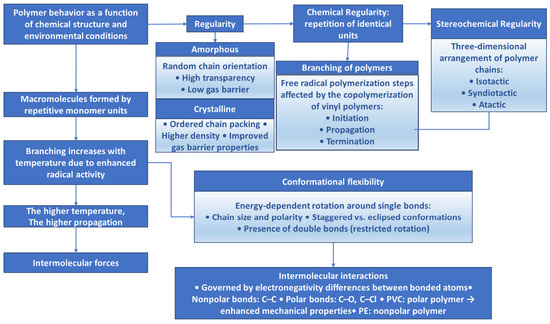
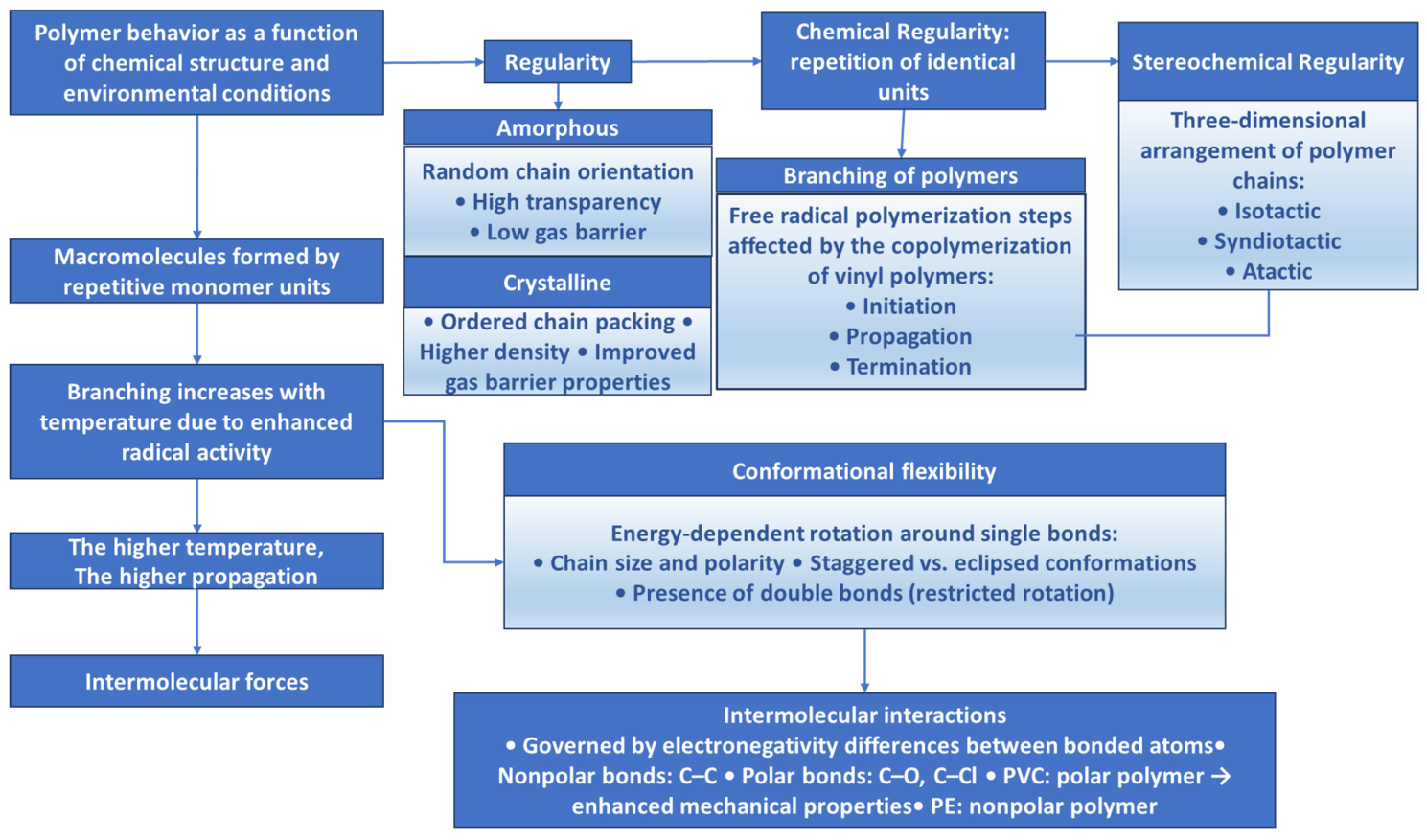
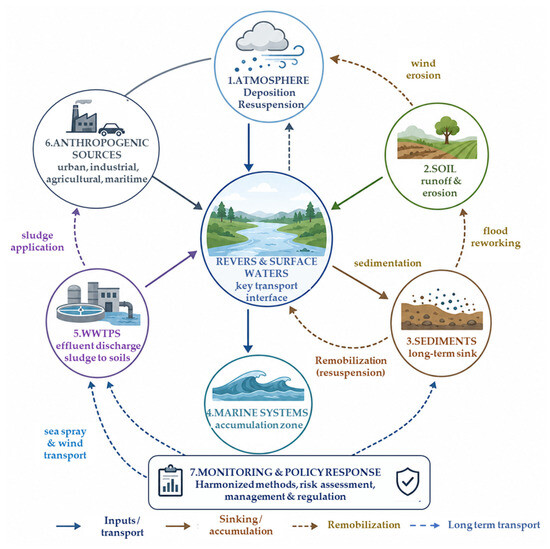
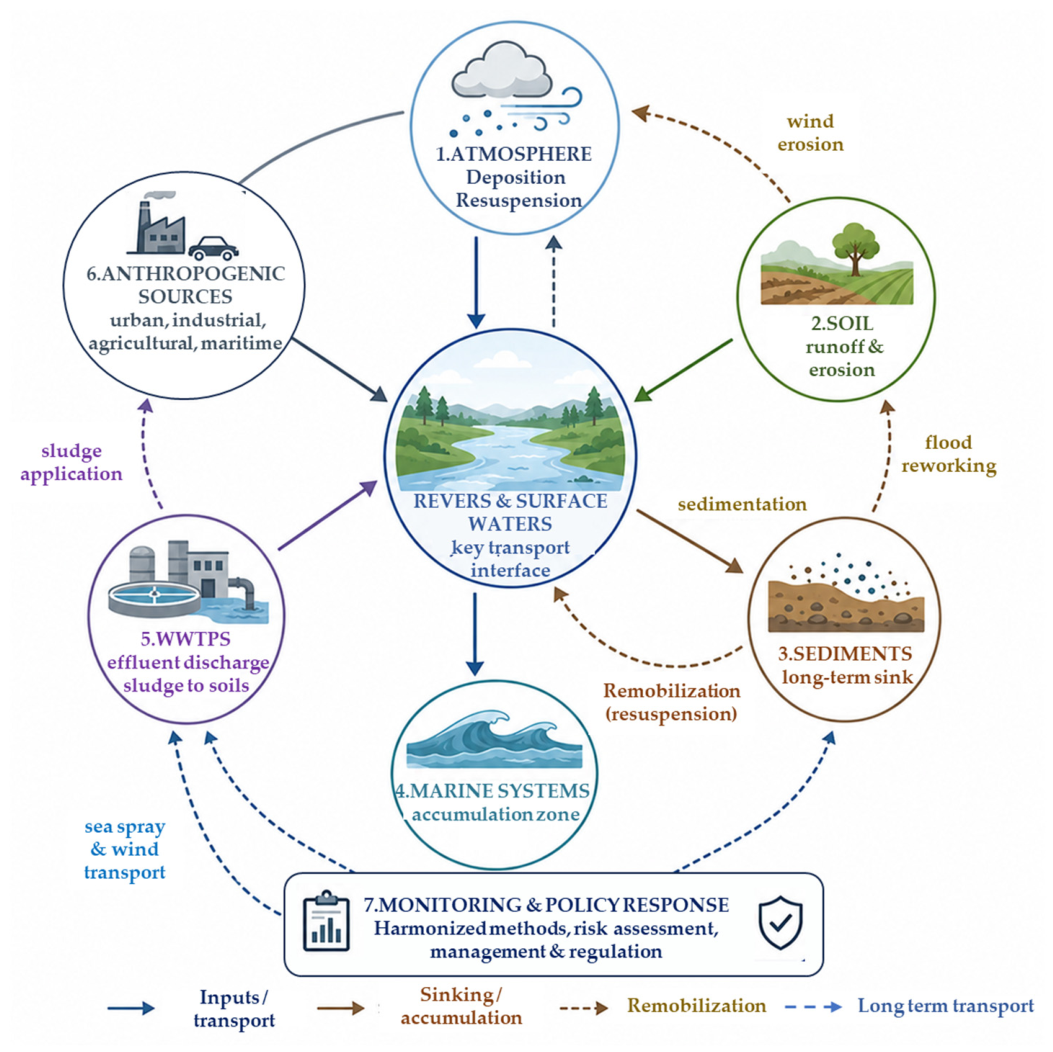
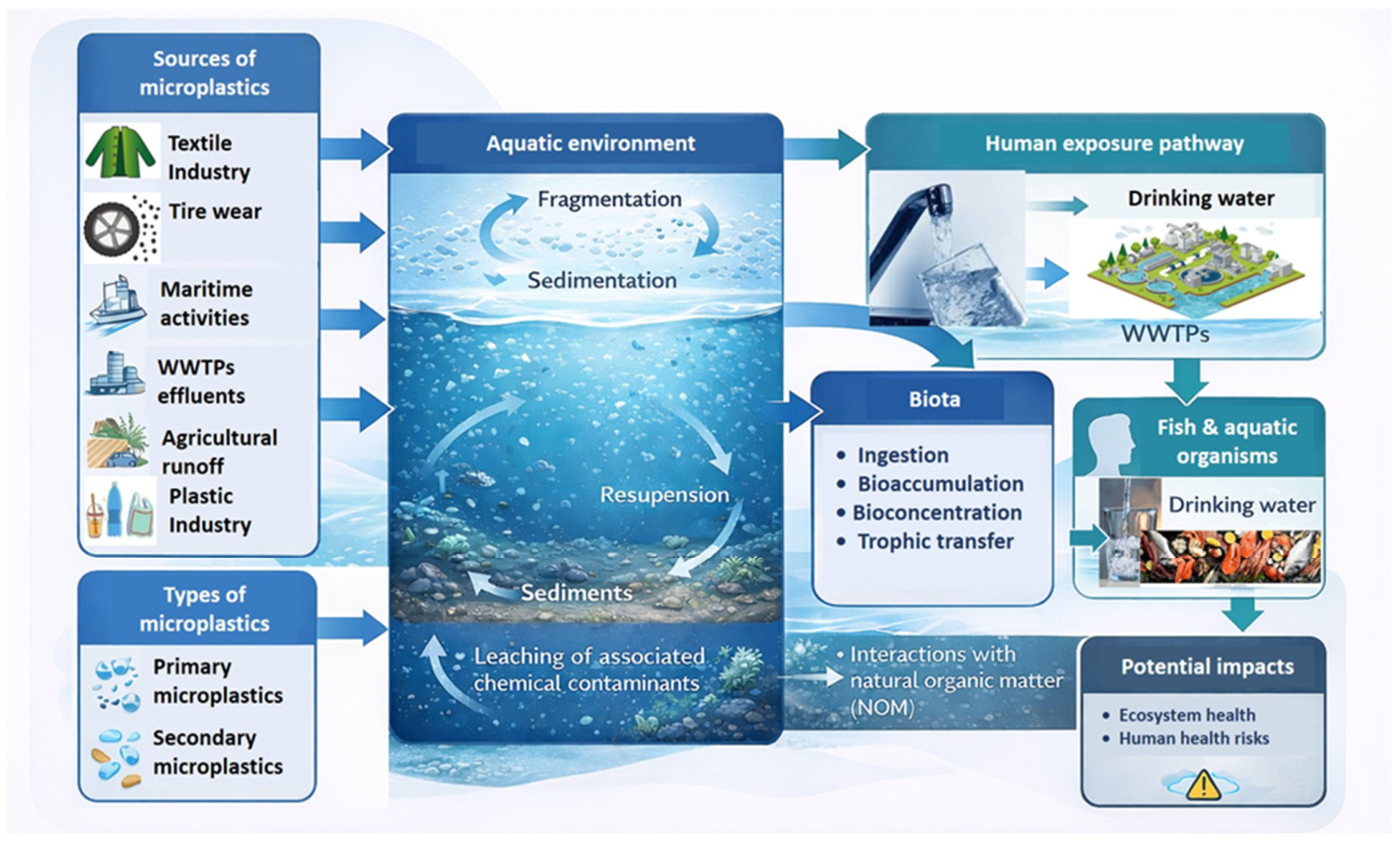
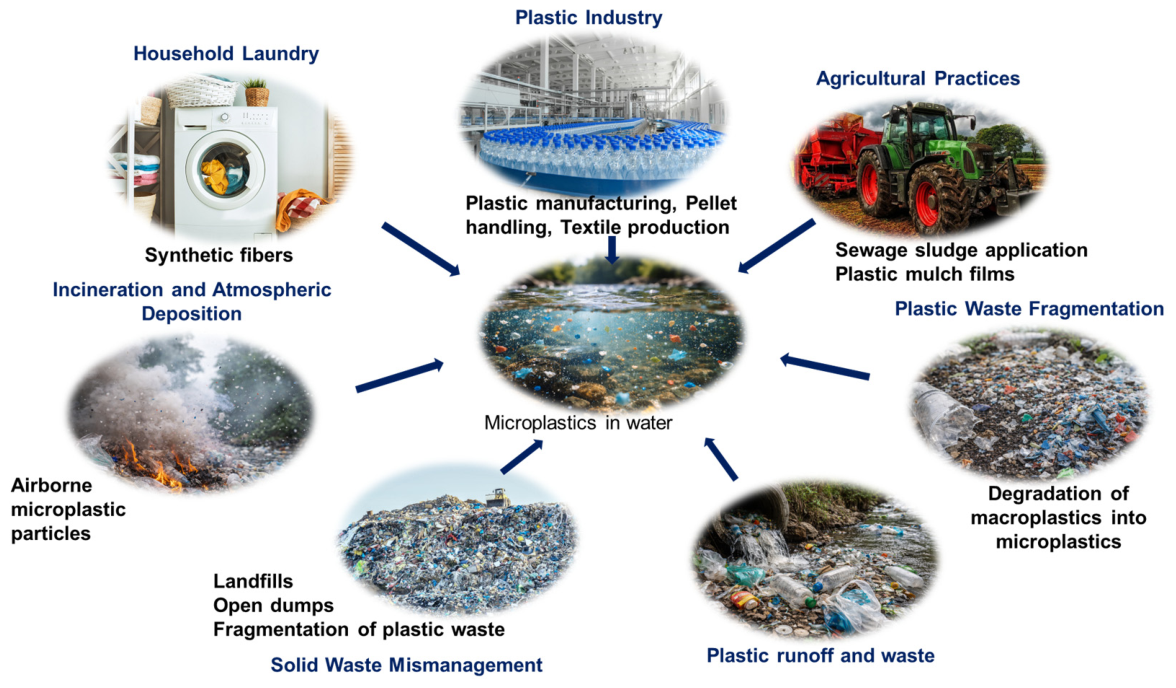
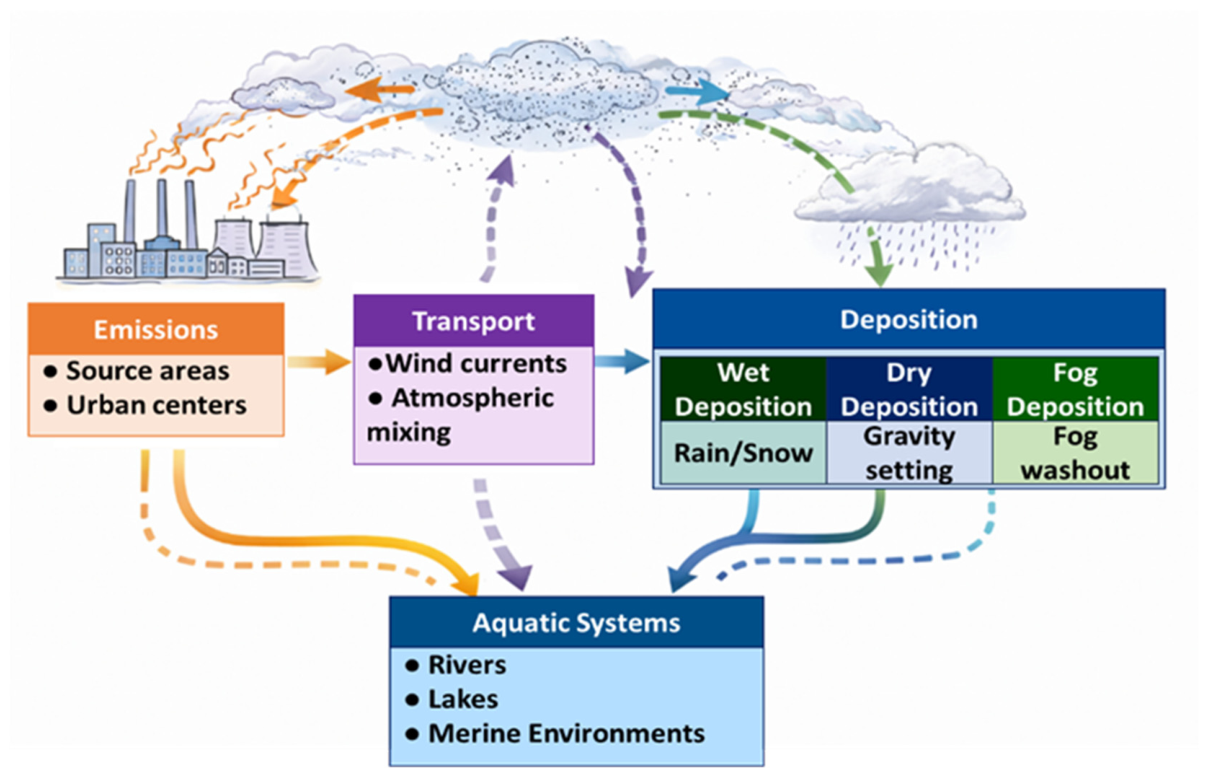
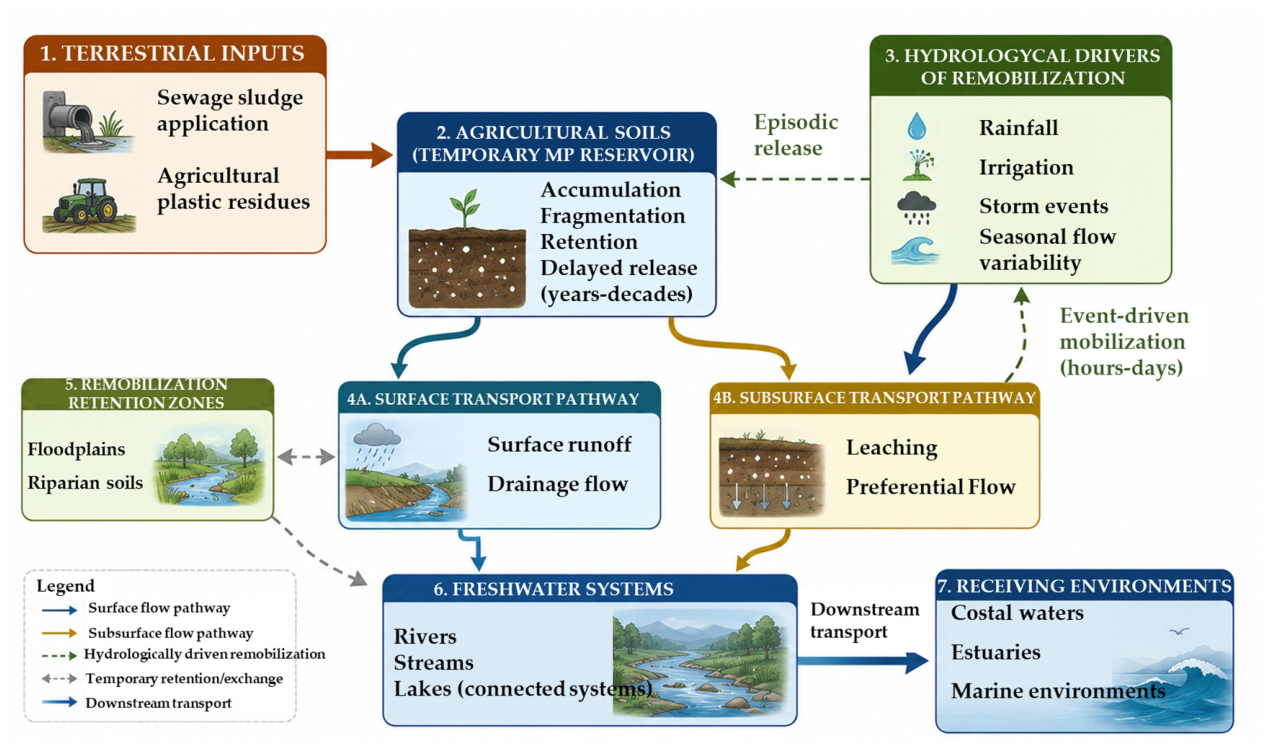
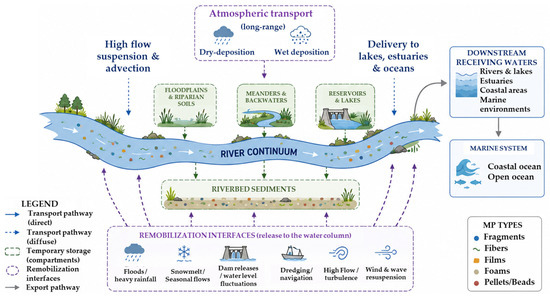
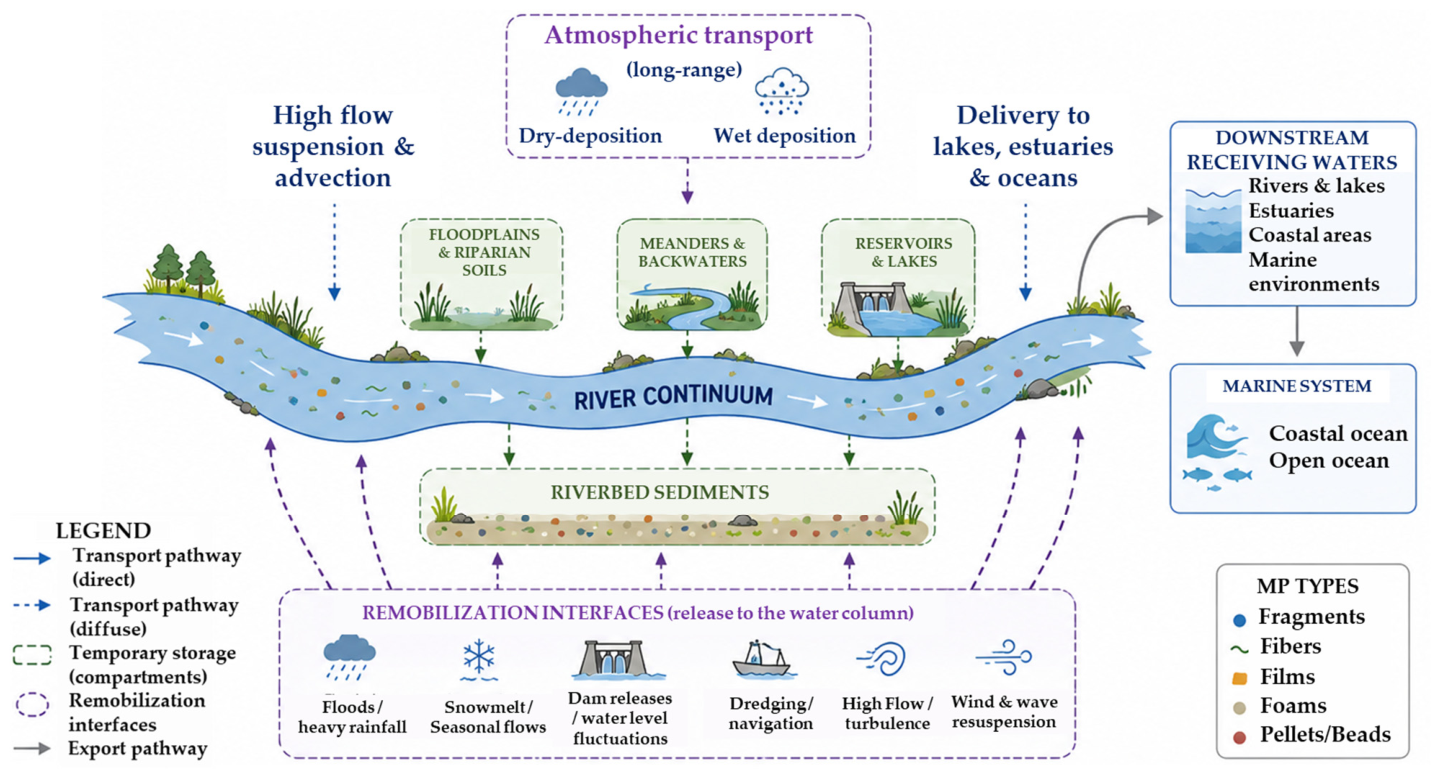

Disclaimer/Publisher’s Note: The statements, opinions and data contained in all publications are solely those of the individual author(s) and contributor(s) and not of MDPI and/or the editor(s). MDPI and/or the editor(s) disclaim responsibility for any injury to people or property resulting from any ideas, methods, instructions or products referred to in the content. |
© 2026 by the authors. Licensee MDPI, Basel, Switzerland. This article is an open access article distributed under the terms and conditions of the Creative Commons Attribution (CC BY) license.