


Abstract
This study investigates the distribution and concentration of microplastics (MPs) across the littoral profile of a beach, from dune base to offshore sector, including an estuarine channel and Sabellaria alveolata bioconstructions. The research was conducted at Pino di Lenne beach (Taranto, Ionian Sea), a wave-dominated, microtidal littoral system representing a unique natural laboratory with minimal anthropogenic pressure. An eco-friendly extraction protocol was used, combining methods that were already known in the literature. Olive oil proved highly effective in isolating a wide range of MP densities from sediment samples. Statistical analysis identified key accumulation zones, with the highest mean concentrations found in the submerged sandbar (2435 MPs/kg), Sabellaria bioconstructions (2324 MPs/kg), and the base of the dune (2065 MPs/kg). Fibres were the predominant morphology across all sub-environments. Distribution is interpreted as controlled by hydrodynamic processes and biological activity. The submerged beach drives MP transport, with the sandbar and shoreface acting as dynamic sinks. Sabellaria bioconstructions function as biological trap, actively incorporating MPs into their tubular structures. The dune base acts as a sink for wind-blown and storm-deposited plastics. These sub-environments function as critical littoral traps for MPs, essential for developing targeted monitoring and remediation strategies in similar coastal systems.
1. Introduction
The scientific interest in the presence of microplastics (MPs, plastic particles with a size range of 1 μm to 5 mm [1]) in the environment has surged globally. This surge in research is directly linked to the escalating plastic production (exceeding 430 million tonnes annually [2]) driven by their low-cost and versatile applications. Crucially, the advantageous properties of plastics (such as their chemical stability, corrosion resistance, and resistance to biodegradation) become environmental liabilities when waste enters natural systems [3].
Today MPs can be considered ubiquitous, being distributed across all environmental domains—atmosphere, hydrosphere, biosphere, and lithosphere [4,5,6,7,8,9,10,11,12]—and their main terminal sink is represented by marine sedimentary environments [13,14]. Furthermore, MPs transported by rivers and floating in lakes, seas and oceans invariably accumulate in the seabed sediment [15,16,17,18,19]. For these reasons, sediments of distal shelf and deep-sea environments have been analysed by numerous authors in marine basins across the globe [20,21]. The input of MPs from continental areas has been assessed through studies of MP concentrations in fluvial [22,23,24], deltaic [25,26] and estuarine deposits [27,28].
However, the MP content on emerged beaches is undoubtedly the most extensively studied subject in the literature, as these environments often exhibit the highest concentrations [29]. They are distributed along the sandy coastlines of seas and oceans worldwide [30], including the Mediterranean Sea [31,32,33,34], Atlantic Ocean [29,35], Indian Ocean [36], and Pacific Ocean [37]. In these dynamic transitional environments, the action of waves, tides, and wind results in a complex and dynamic distribution of MPs [38]. Notably, MPs retained here undergo continuous fragmentation through sunlight exposure, mechanical abrasion, and microbial activity [3,18,39,40], contributing to their pervasive dispersion. Furthermore, MPs tend to infiltrate into the backshore sands, extending their presence to deeper sediment layers [36].
As highlighted, numerous studies have focused on MP concentrations in emerged beach and deep-sea environments, whereas investigations of submerged nearshore areas (from the shoreface to offshore sectors) and cross-shore MP distribution across littoral sub-environments are largely limited at high spatial resolutions [39]. Yet, the dynamics of the submerged beach are the primary driver of the final distribution of MPs along the coast, onto the emerged beach, and towards the open sea [41,42,43,44].
The complex interactions between the presence of MPs in the water column and seabed sediments with marine habitats lead to environmental imbalances and the entry of MPs into the food chain [45,46] even in the most remote sectors of our oceans (Arctic [47]; Antarctica [48]). Nevertheless, certain habitats can help retain MPs, reducing their mobility and dispersion in marine environments, as occurs in mangroves, coral reefs, and seagrass meadows, e.g., [49]. Recently, sabellariid reefs (particularly those formed by Sabellaria alveolata [50], and Sabellaria spinulosa [51]) seem to function as dynamic MP interceptors by directly incorporating particles into their tubular structures.
Sabellaria bioconstructions grow upward from the seabed by actively binding sand grains suspended in the water column using a strong adhesive that functions effectively in fully saturated conditions [52]. Through this process, these structures can also indirectly incorporate anthropogenic particles, including microplastics [53].
This study was conducted at Pino di Lenne beach (Taranto, northern Ionian Sea, southern Italy), a zone of significant natural value located within the Stornara Nature Reserve, which holds dual SIC (Site of Community Interest) and SPA (Special Protection Area) protected status. The study site is therefore subject to minimal anthropogenic pressure and can be considered representative of an extensive coastal sector (approximately 50 km) and of many wave-dominated, microtidal beaches in the Mediterranean Sea. Furthermore, this beach sector features several Sabellaria alveolata bioconstructions and an estuarine channel. For these reasons, it can be considered a unique “natural laboratory” for analysing MP dynamics.
Consequently, this study addresses critical knowledge gaps by pursuing the following primary objectives: -Mapping MP concentration and distribution along the entire beach profile, from the emerged sector (dune base–foreshore) to the submerged sector (from the upper shoreface to offshore); -Comparing the obtained values with the percentages of MPs contained in the estuarine channel and in the worm bioconstructions; -Determining the dynamics of MPs within individual sub-environments; -Developing a conceptual framework for understanding distribution patterns applicable to wave-dominated beaches, informing targeted remediation strategies for MPs in high-accumulation sub-environments. These objectives are pursued through the application of an integrated sampling strategy covering the entire beach profile and the use of an olive oil-based extraction method to ensure a reliable quantification of MPs in sandy sediments.
Finally, to quantify MP accumulation in sandy beach environments, reliable extraction methods are essential. Standard flotation methods using NaCl, NaI, or ZnCl2 [54] separate low-density plastics from sediments, though emerging oil-based approaches [55] offer cost-effective, eco-compatible alternatives by exploiting plastic lipophilicity. This study specifically employs an innovative olive oil-based methodology to extract MPs from beach sands, integrating different procedures described in the literature. By combining a full cross-shore investigation from dune to offshore, the inclusion of estuarine and biogenic structures, and the application of an innovative olive oil-based extraction method, this study provides a comprehensive framework for understanding MP dynamics in wave-dominated Mediterranean beach systems.
2. Materials and Methods
2.1. Study Area
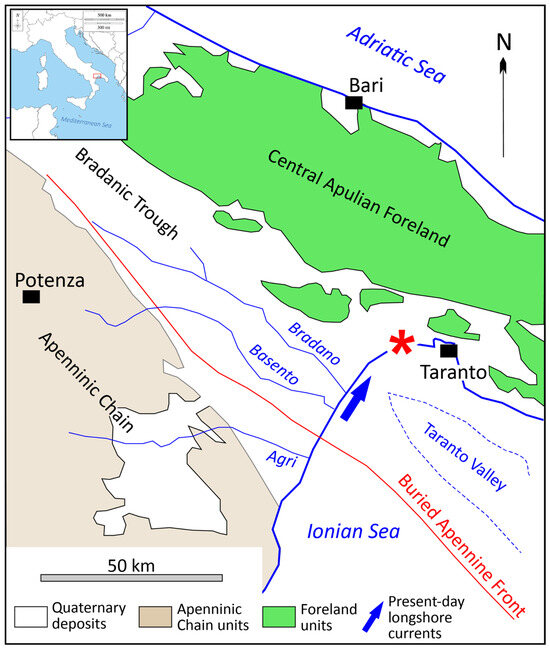
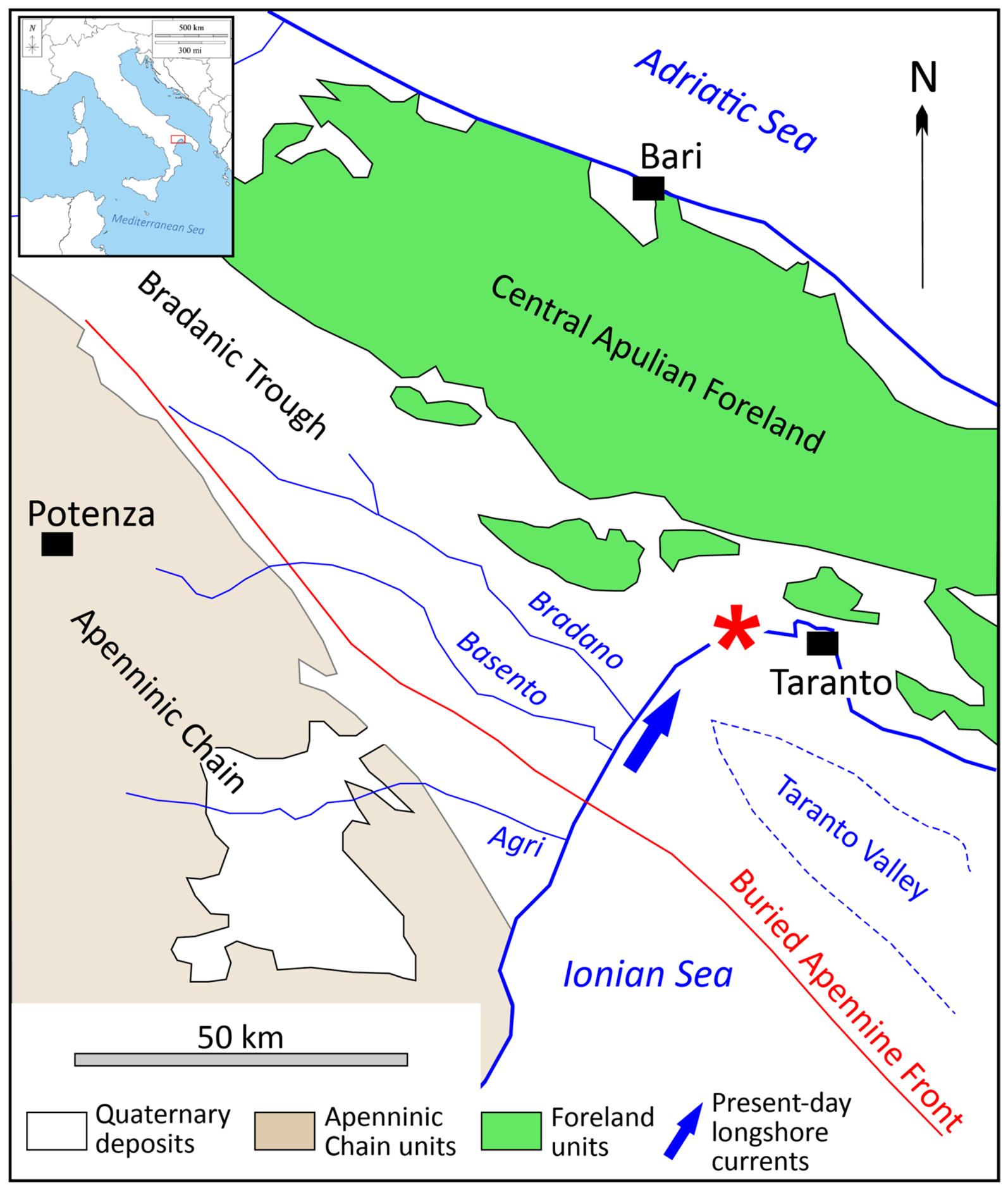
The Taranto coastal area reflects the post-LGM evolution of marine deposits, documented from the shallow shelf to the upper slope in semi-enclosed, semi-open, and open marine basins [56,57,58,59,60,61,62,63]. Regarding the present-day coastal system, the major fluvial systems along the Ionian margin—namely the Agri, Bradano, and Basento rivers—deliver clastic material to the marine environment, derived both from the erosion of the Apennine Chain units and from the reworking (cannibalization) of Quaternary sedimentary units. These sediment inputs contribute to the littoral sediment budget, supplying the easternmost coastal sectors. In fact, sediment transport is predominantly controlled by longshore drift, which follows a net direction from SSW to NNE, facilitating sediment redistribution toward the study area. Minor contributions are associated with small rivers originating from the calcareous sectors of the foreland located just northeast of the study area (Figure 1).
Figure 1.
Schematic geological map of the north-eastern Ionian Sea, illustrating the main geodynamic domains of the Southern Apenninic Chain. The study area (red asterisk) is situated between the Apulian Foreland and the Bradanic Trough. Present-day fluvial sedimentary input from the chain is transported alongshore to the NE, toward the study area. The main cities are marked with black squares.
The Ionian coastal stretch is here characterized by a laterally continuous series of sandy beaches with a variably wide subaerial sector [64]. Pino di Lenne site hosts a largely well-preserved sandy beach system with a stable dune transitioning into a riparian forest. The area includes the mouth of the Lenne stream, fed by a karst spring; its partially armoured outlet supports bioconstructions formed by the polychaete Sabellaria alveolata. Pino di Lenne is subject to numerous institutional measures. The first is part of the State Nature Reserve of Stornara, which protects a coastal forest, and Rete Natura 2000 “Pinete dell’Arco Jonico”. The area is subject to significant landscape restrictions under Italian Legislative Decree 42/2004, ensuring full alignment with Puglia’s Regional Territorial Landscape Plan (PPTR). Furthermore, its location within the coastal zone triggers additional layers of protection concerning local waterways and adjacent lands, establishing a comprehensive legal framework designed to preserve both the natural habitat and the integrity of the coastal landscape. At the same time Pino di Lenne is an area known for sport fishing, and it is a popular vacation spot in the summer. Furthermore, as a free-access beach, Pino di Lenne exhibits a more “intact” accumulation in its emerged portion, which allows for a clearer investigation of marine depositional dynamics [65], whereas managed beaches tend to reflect the effectiveness of local cleaning services.
2.2. Sediment Sampling
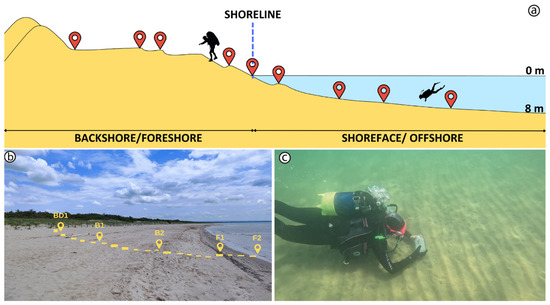
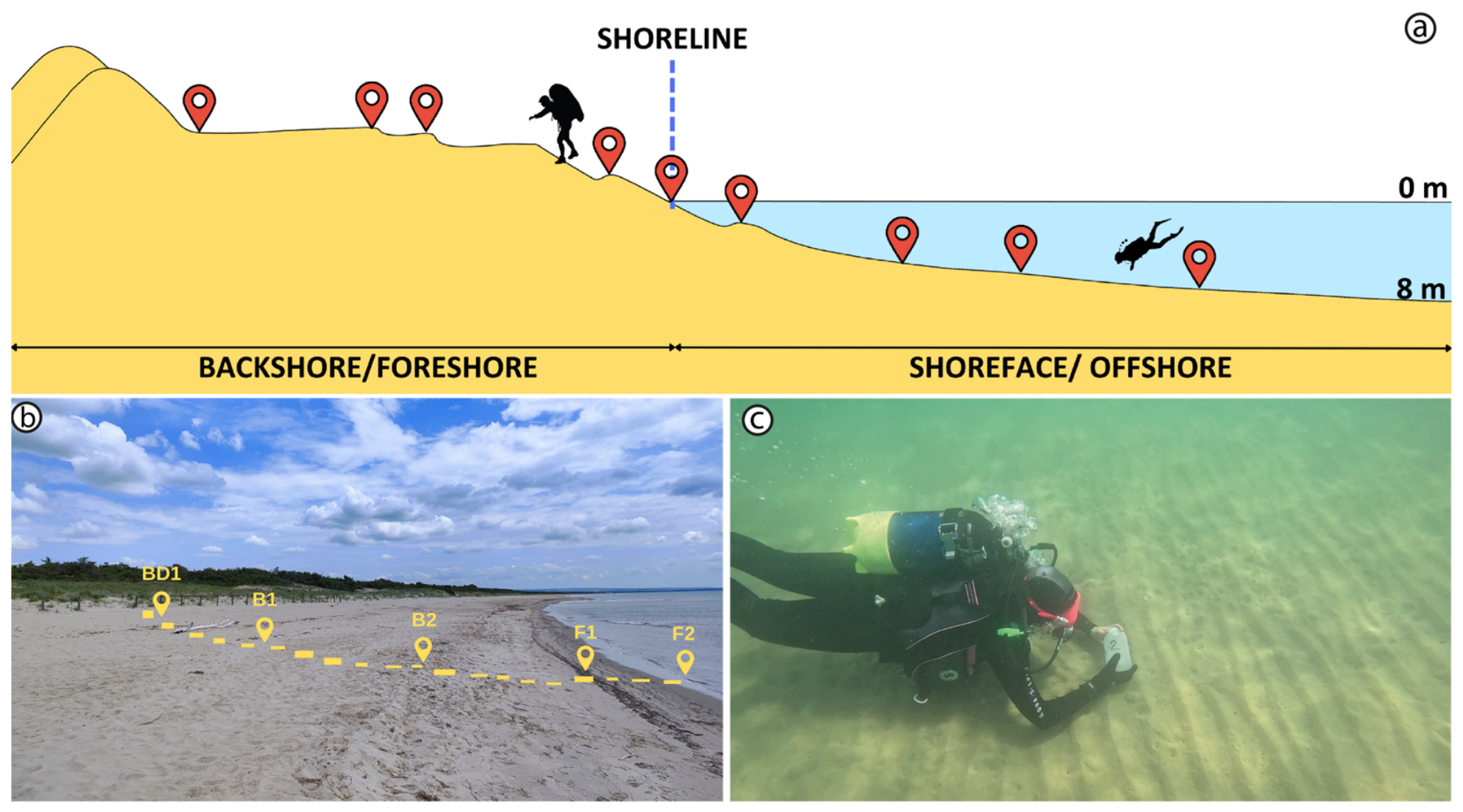
A general morpho-sedimentary survey was performed in May 2024, in the emerged and submerged sectors of the beach, aimed at individuation and description of single sub-environments with their variations in depth and along the shoreline (for a total area of more than 1500 m2). For the analysis of MP distribution in the Pino di Lenne beach, the sampling campaign was structured to achieve comprehensive representation of the various morpho-sedimentary sub-environments of the beach system [44,66,67], ranging from the foredune toe to the offshore sector (Figure 2); additional samples were collected along the estuary channel and within the worm bioconstruction.
Figure 2.
Images taken during the collection campaign: (a) summary diagram of the beach profile with sampling points; (b) samples collection transect taken in the backshore sector of the Pino di Lenne beach (BD1 at basedune, B1 and B2 along the backshore; F1 and F2 in foreshore); (c) GoPro image acquired during underwater sampling in the shoreface sector (note the presence of quasi-straight and asymmetric ripples, locally moving toward the coastline).
Sediment samples were collected from each sub-environment, including the channel and the worm bioconstruction, for a total of 40. In the submerged beach sector in particular, samples were taken at 2 m depth intervals (−2, −4, −6, and −8 m), extending below the local storm wave base, which is located at approximately −6 m depth. Finally, four samples were collected from the estuary of the Lenne stream and four samples (20 × 20 × 20 cm) from the Sabellaria alveolata bioconstruction. For sampling, clear and new plastic containers with a capacity of 500 g and a metal ladle were used to collect the uppermost 5 cm of surface sediment for the evaluation of sedimentological parameters of each sub-environment, and clear and new plastic containers with a capacity of 100 g for MP concentration characterisation. For the bioconstruction, the samples were collected using a knife and were put in clear and new plastic containers. The samples collected for MP evaluation were stored in a portable refrigerator for transport by car from the beach to the university, where they were stored in glass containers in a clean laboratory protected from light and at a controlled temperature of 6 °C. At each sampling site, GPS coordinates were recorded (as well for submerged samples) to ensure precise spatial localization.
2.3. Laboratory Analysis
In the laboratory, each sample was oven-dried at a temperature of 35 °C in aluminium-coated glass beakers for 48 h. Sediment particle size analyses were performed following international standard procedures of the American Society for Testing and Materials and the British Standard (ASTM D-421, D-422 and BS 1377).
Particle size data were presented in the usual form by calculating the modal and statistical parameters in tabular form and plotting them in cumulative curves and histograms, using a specific Microsoft Excel application (Gradistat© v8).
Then, in a second step, MP particles were separated from the sediment samples. Several methods for separating MPs by density from a matrix already exist in the literature using solutions such as ZnCl2, NaCI, and ZnBr2. These solutions are capable of separating the most common polymers (PET, PVC, PC), but on the other hand, their use is expensive and poses potential risks to the environment and human health [22]. An ecologically sustainable alternative was proposed by [55] and later refined with an additional sample freezing step, as recommended by [68]. This technique takes advantage of the oleophilic characteristics of plastics, employing olive oil as a separation medium to facilitate the extraction of MPs from the matrix. The applied protocol integrates previously validated extraction procedures reported in the literature. Previous studies experimentally demonstrate the effectiveness of the method in isolating a broad spectrum of polymer types.
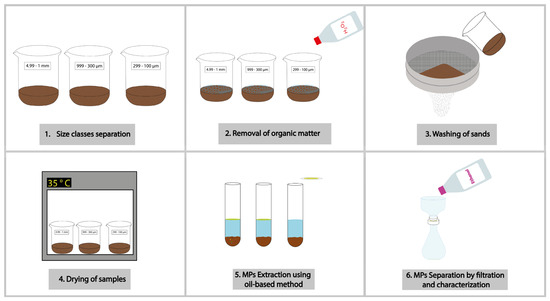
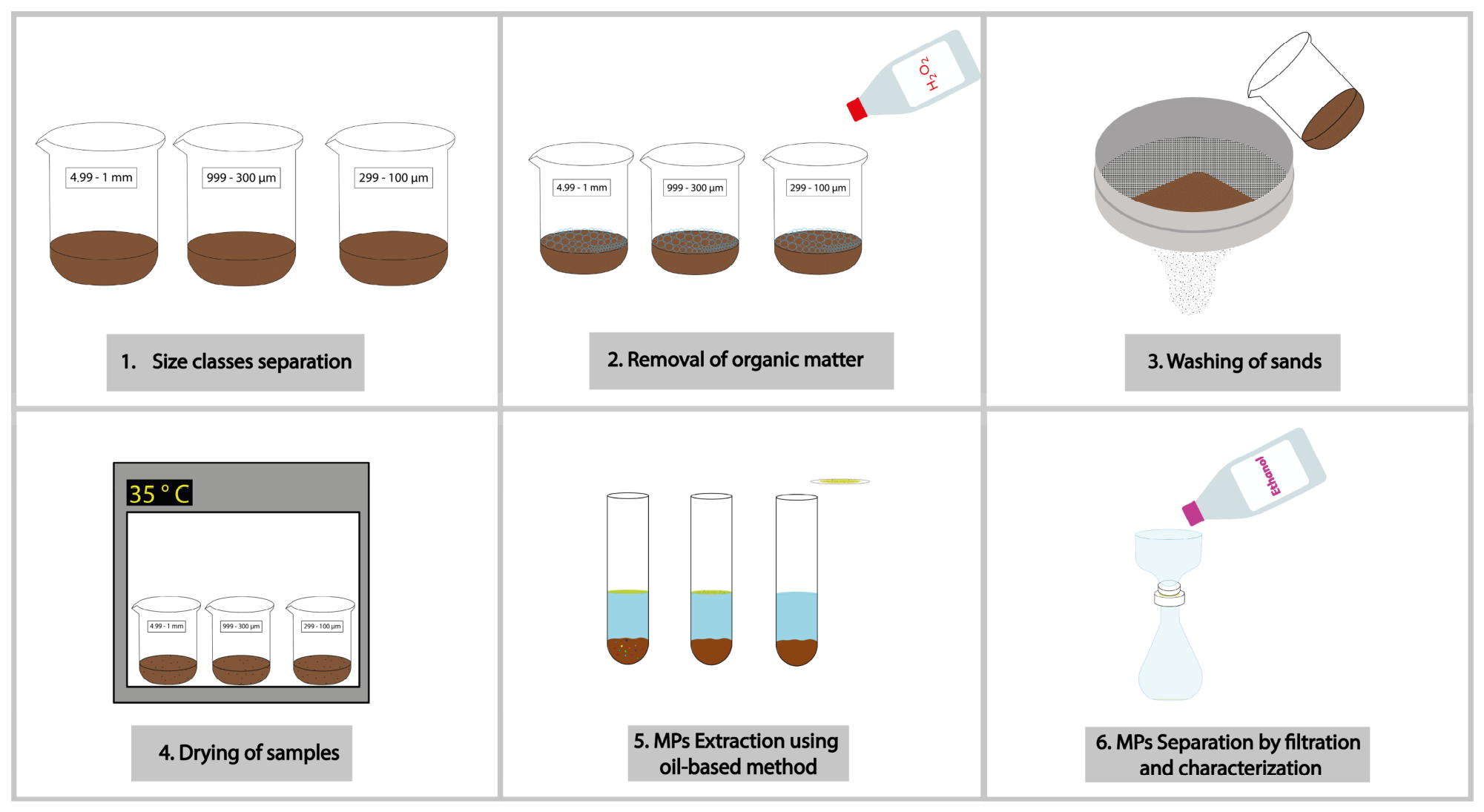
The six-phase procedure (Figure 3) applied in this study for the MP identification in the collected samples is summarized in Table 1.
Figure 3.
Representation of MP extraction from beach sediments using a new protocol that combines different laboratory stage implementation, known in the literature.
Table 1.
Schematic representation of the laboratory stages used for MP extraction from beach sediments.
2.4. Contamination and Quality Controls
To minimize background contamination, we implemented risk prevention measures: minimizing the presence of operators in the work area during extraction and analysis processes; operators during all work steps wore only 100% cotton clothing; three blank samples were included during microscopic observation; all procedures were performed under a fume hood under controlled conditions. The procedure phases were all carried out in glass beakers with pre-cleaned aluminium instruments. During the extraction procedure, field blank samples were analysed in parallel for each sample. This procedure yielded a variable number of MPs, equal to 3 ± 1. This value was subtracted from the final total count for each sample. For greater precision, blank samples were also carried out on olive oil. As a final step, the results obtained on our worm bioconstruction sample were compared using the methodology proposed by [51,72].
2.5. Statistical Analysis
Statistical analyses were performed using IBM SPSS Statistics (version 18). Although spatial autocorrelation along the shore-normal gradient may exist, sub-environments were defined as operational geomorphological units based on field observations, and were treated as independent groups for exploratory comparison using one-way ANOVA. To assess differences in MP concentrations (expressed as MPs/kg) across the various depositional sub-environments, a one-way Analysis of Variance (ANOVA) was conducted. Before the ANOVA, the assumption of homogeneity of variances was tested using Levene’s test. As the test was not significant (p > 0.05), the assumption was considered met, and the standard ANOVA procedure was applied.
Following a significant ANOVA result, post hoc comparisons were carried out using Tukey’s HSD and Bonferroni tests to identify specific differences between sub-environments. Effect sizes were also calculated, including partial eta squared (η2) and omega squared (ω2), to quantify the magnitude of the observed differences. Sub-environments were further grouped into homogeneous subsets based on MP concentrations to aid interpretation. A significance threshold of α = 0.05 was adopted for all statistical tests.
3. Results
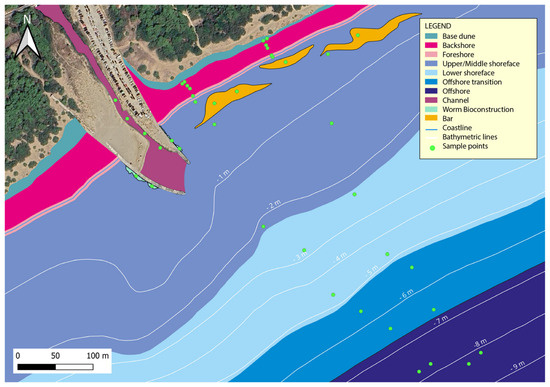
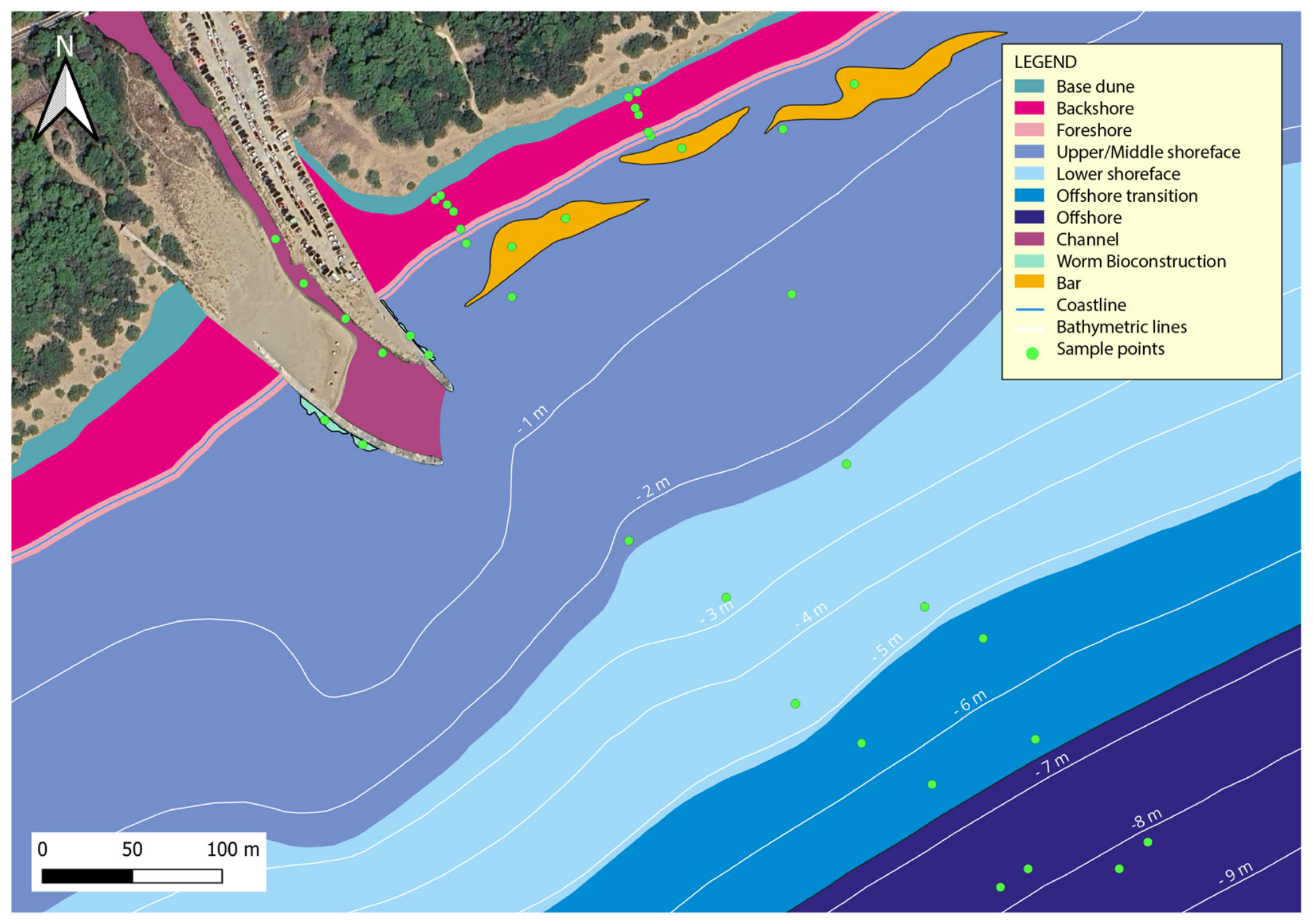
The morpho-sedimentary analysis allowed the recognition of distinct sub-environments along the beach profile (Figure 4).
Figure 4.
A Google satellite image of the study area at Pino di Lenne showing the sample’s acquisition points (green points), the bathymetric lines (white lines) and the coastline (light blue line). The study area was subdivided into sub-environments (to each one was assigned a different colour) as follows: base dune, backshore, foreshore, upper/middle shoreface, sandbar, lower shoreface, offshore transition, offshore, channel and worm bioconstruction.
The back dune of Pino di Lenne is bordered by pine woods and river vegetation. The monitored area extends from the dune base to the beginning of the offshore zone, covering both the emerged and submerged portions of the beach. The emerged sector of the beach environment extends for approximately 25 m and is characterised by the presence of vegetated dunes, about 4 m high, and a gentle slope, with an inclination of around ~2°; the backshore shows three main berms that correspond to the main morphological variations of the emerged beach profile. The total width of the beach system, measured from the dune base to the −6 m isobath (wave closure depth), is approximately 509 m, of which 25 m corresponds to the emerged portion and 484 m to the submerged portion. The depth of the submerged sector increases steadily until the wave closure depth, at −6 m, over an area extending about 470 m from the shoreline, with an average slope of ~1° and local variations associated with sandbar formations. The upper/middle shoreface sector, closer to the shoreline, presents a sequence of detached rhythmic bars. The analysed environment is further characterised by the presence of the armoured mouth of the Torrente Lenne (about 15 km W from the city of Taranto), a river originating from a karstic spring at about 23 m above sea level that flows for only 24 km before reaching the sea.
Finally, the sedimentary environment is characterised by the presence of a worm bioconstruction built by Sabellaria alveolata. The worm bioconstructions, located on both sides of the inlet, develop from hard natural substrates or anthropogenic blocks and subsequently expand over sandy bottoms.
Interpretation
The survey of the analysed coastal sector indicates a stable beach, characterised by a well-developed dune system and an extensive back-dune area with abundant vegetation. No morphological features associated with erosional phases were observed on the emerged beach. In the submerged sector, coarse deposits are observed, which can be assimilated to the rhythmic and transverse bars described by [41,42,43,44]. These rhythmic bars, which typify the entire Taranto Ionian arc, require a constant sediment supply, low nearshore slopes (around 2°), and are associated with the coupling between incident and edge waves [73]. They likely form from the interaction of incident and edge waves [74] or from the interplay between the erodible surf zone bed and longshore currents [75]. Their presence may indicate a stagnating alongshore drift, where bottom sediments are largely preserved in a self-contained equilibrium system.
The presence of Sabellaria bioconstructions further enriches the ecological diversity of the analysed environment. Sabellaria is a marine polychaete that constructs reef-like structures by trapping available sediments from the water column, often resuspended by currents [76,77,78,79]. These worms actively select particles based on size and density, but can also passively incorporate other materials, including anthropogenic debris such as microplastics (MPs) and other man-made fragments, as recently reported by [41,42,43,44]. The resulting bioconstructions increase the morphological complexity of the seabed and provide habitat for a wide variety of taxa.
3.1. Textural Data
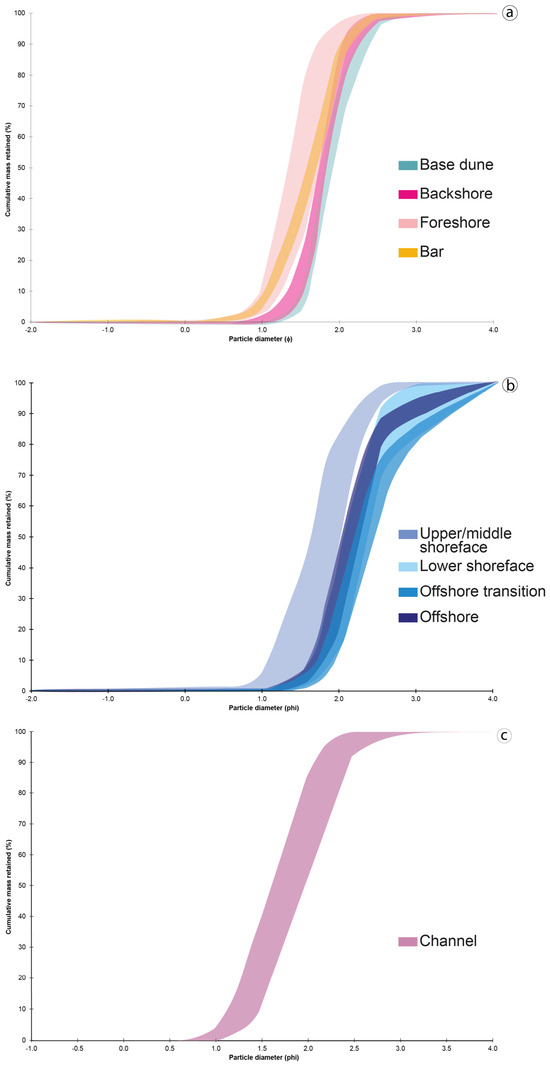
Particle size analyses performed on the samples collected on the beach and in the estuary provided a complete data set of the sediment distribution in the different sub-environments. The cumulative curves of emerged and submerged sectors of Pino di Lenne beach and the estuary resulting from the granulometric analyses are shown in Figure 5a–c.
Figure 5.
Cumulative curves graphs of (a) sub-environment beach emerged sector, (b) sub-environment beach submerged sector and (c) estuary.
The cumulative curves show that samples collected on the emerged and submerged beach (Figure 5a,b) mainly fall within the range of medium sands. The particle size distributions are all unimodal, so the statistical parameters of these curves are reliable. In general, the sediments are well sorted or very well sorted. The kurtosis values are low up to a depth of 4 m (platykurtic or mesokurtic distributions), then they increase towards the offshore area, and the distributions are leptokurtic. Skewness values indicate asymmetrical curves towards the end portion. Samples collected in the estuary (Figure 5c) are represented by well-sorted medium sands along the entire channel profile. Kurtosis values are variable from mesokurtic to platykurtic towards the mouth of the channel. Skewness values indicate symmetrical curves along the estuary channel profile.
Interpretation
The distribution of grain sizes and their statistical parameters are typical of beach environments, with slight lateral differences for each sub-environment (see the granulation splits of different colours in Figure 5a,b). Based on the obtained data, at the time of sampling, the sedimentary dynamic trend of the beach seems to indicate characteristics of relative stability despite the portion of beach analysed (located to the east of the armed structure of the estuary), which seems less fed than that developed in the west (Figure 4).
Obviously, the proximity of the samples taken in the estuary makes the variations along the channel very small and of little significance for its sedimentary dynamics.
A qualitative microscopic observation of the modal fractions indicates that the sediments constituting this beach sector are composed of hybrid extrabacinal sands sensu [80]. This composition is closely linked to fluvial inputs of Apennine origin, which, by littoral drift, deposit this material along the entire Ionian Arc. Although the contribution of bioclasts is limited, remains of taxa typical of the littoral environments of the Taranto Arc, characterised by the presence of a fairly stable Posidonia oceanica, are found among the bioclasts.
3.2. Microscope Evaluation of MPs and Statistical Analysis
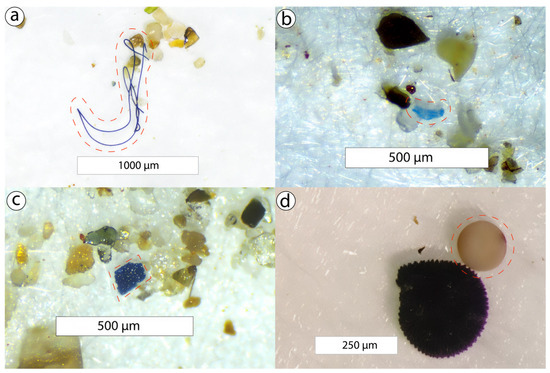
MP analysis was carried out on all the sediment samples collected along the analysed coastal sector. Below is a description of the results obtained in this phase, divided into sub-environments (from dunes to offshore transition zone) and the channel and worm bioconstruction samples. Through visual examination, four different morphological classes of MPs were identified (Figure 6), distinguishing between coloured and colourless.
Figure 6.
Microscopic images of the four classes of MPs recorded: fibres (a), film (b), fragments (c) and pellets (d).
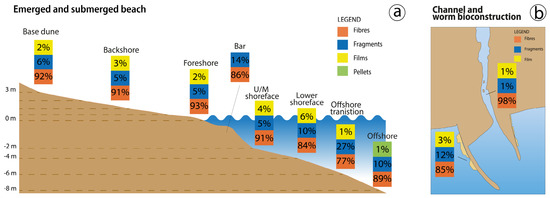
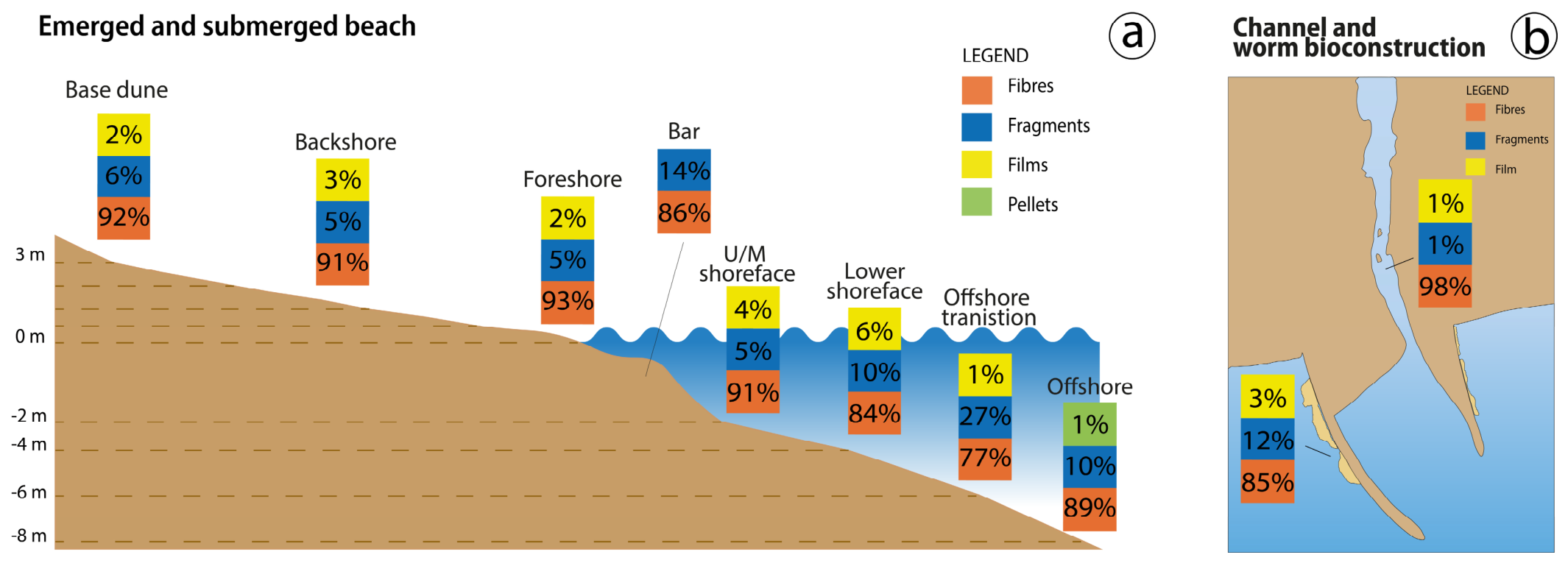
The most common colours found are black and blue. The most abundant particles are fibres predominantly black and blue, but also red, green, purple, pink, orange and yellow were also present. The concentration and colours of MPs in 1 kg of sediment (MPs/kg) were estimated in emerged and submerged sectors and in the channel and worm bioconstruction, as shown in the following pictures and tables (Figure 7).
Figure 7.
The concentration of the MPs was estimated for each sample collected. Schematic profile of the beach environment (a) and plan view of the channel and bioconstruction (b), with pie charts showing the distribution of MP morphologies.
The results of the white olive oil samples showed an average value of 3 MPs ± 1, which were subtracted from the final count for each sample. Examples of the four main classes of MP morphologies recognised under an optical microscope are shown in Figure 6.
Two examples of colour classes (blue (a) and red (b)) and of transparent category (c) of MPs identified are shown in Figure 7.
A one-way Analysis of Variance (ANOVA) was conducted to assess whether MP concentrations (MPs/kg) varied significantly across ten distinct depositional microenvironments: foreshore, backshore, base dune, upper middle shoreface, sandbar, lower shoreface, offshore transition, offshore, channel, and worm bioconstruction.
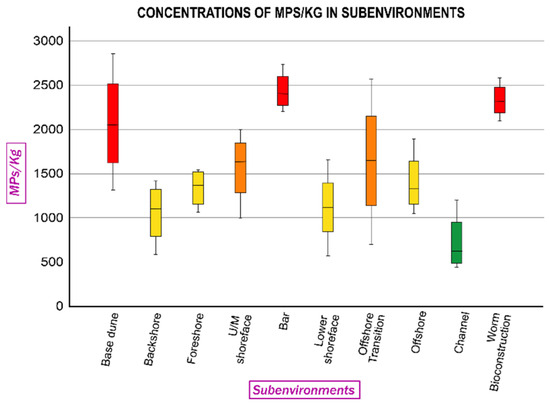
Descriptive statistics revealed notable variability in MP concentrations across these settings (Figure 7).
The highest mean concentration was found in the sandbar environment (2435.23 MPs/kg), followed by worm bioconstruction (2323.75 MPs/kg) and base dune (2065.00 MPs/kg). In contrast, the lowest concentrations were recorded in the channel (717.59 MPs/kg) and backshore (1051.24 MPs/kg).
Levene’s test for homogeneity of variances was non-significant (p = 0.643), confirming that the assumption of equal variances was met. The ANOVA test revealed statistically significant differences among microenvironments, F(9, 30) = 6.743, p < 0.001. The effect size was considerable, with a partial eta squared (η2) = 0.669, indicating that about 67% of the variability in MP concentrations was explained by the type of environment. The more conservative omega squared (ω2) = 0.126 supported a moderate to strong practical effect.
To identify specific differences between environments, Bonferroni-corrected post hoc comparisons were carried out. Several pairwise differences were statistically significant (p < 0.05), particularly involving environments with the highest concentrations. The following comparisons yielded significant differences:
Sandbar had significantly higher concentrations than:
- Upper middle shoreface (mean difference = 1101.70 MPs/kg, p = 0.033);
- Base dune (1383.99 MPs/kg, p = 0.003);
- Offshore transition (1347.41 MPs/kg, p = 0.006);
- Channel (1606.16 MPs/kg, p < 0.001);
- Offshore (1213.11 MPs/kg, p = 0.014).
Base dune showed significantly higher concentrations than channel (1272.51 MPs/kg, p = 0.008). Worm bioconstruction exhibited significantly higher concentrations than:
- Offshore transition (1213.11 MPs/kg, p = 0.014);
- Channel (1606.16 MPs/kg, p < 0.001).
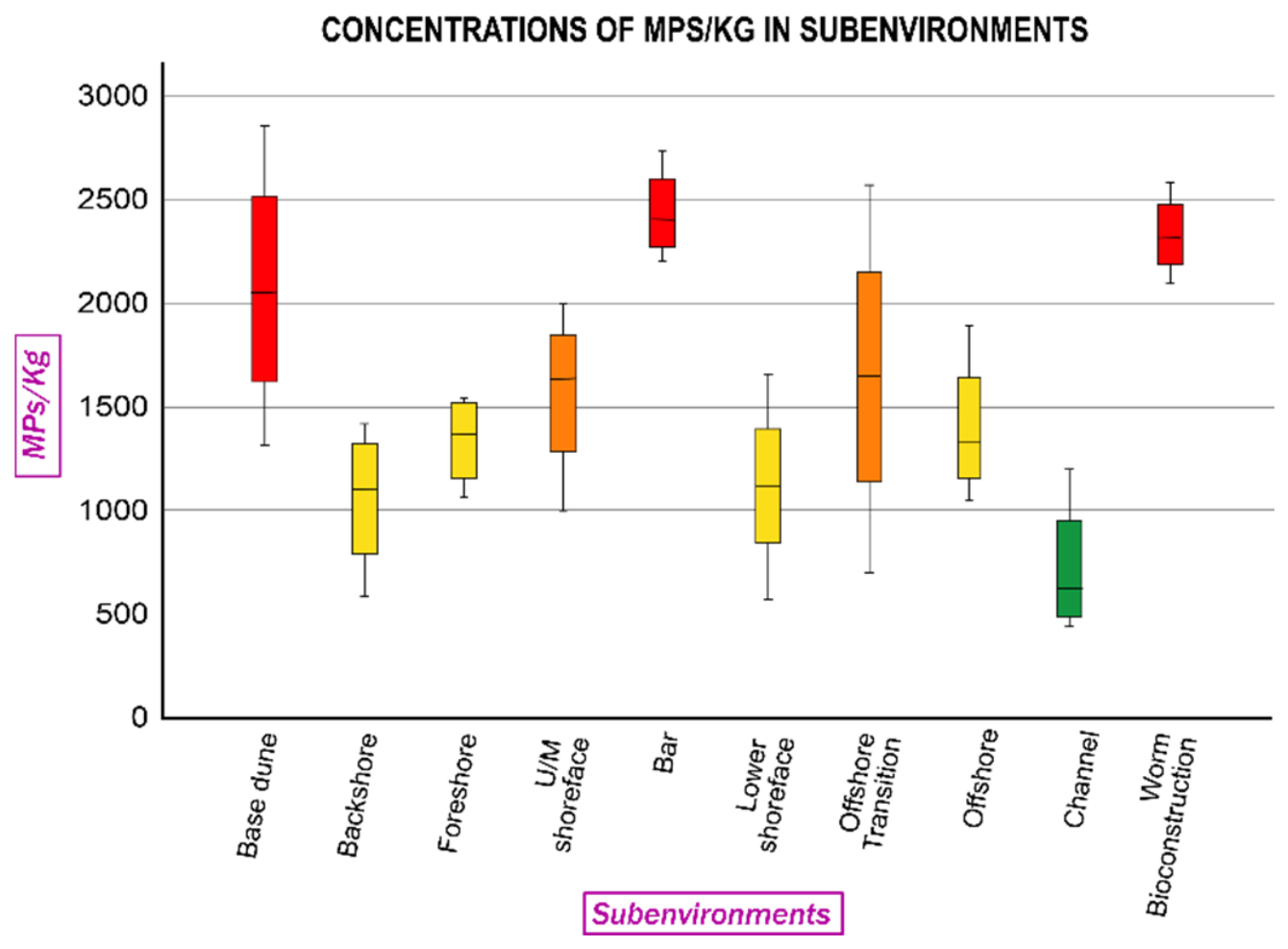
Finally, homogeneous subsets derived from Tukey’s HSD test grouped the environments into clusters of similar MP concentrations. The lowest group included channel, backshore, and offshore transition, whereas the highest group encompassed sandbar, worm bioconstruction, and base dune, emphasizing spatial heterogeneity in MP deposition across these coastal and marine environments. On the other hand, lower concentrations were found in channel, backshore and offshore transition (Figure 8).
Figure 8.
A one-way analysis of variance (ANOVA) of the MP concentrations in the ten sub-environments revealed significant differences in accumulation. This highlighted that the sandbar, worm bioconstruction and base dune environments are hotspots for MP accumulation. Legend: -green, Class 1: 500–999 MPs/kg; -orange, Class 2: 1000–1499 MPs/kg; -yellow, Class 3: 1500–1999 MPs/kg; -red, Class 4: >2000 MPs/kg.
Interpretation
Fibres were the dominant type of MPs identified in all sediment samples, followed by fragments, while films and pellets occurred in smaller proportions. The observed distribution of MPs reveals distinct spatial variability among the investigated depositional settings.
Environments such as sandbar, worm bioconstruction, and base dune exhibited the highest MP concentrations, indicating their role as accumulation hotspots. This pattern likely reflects a combination of hydrodynamic retention, sediment reworking, and biological mediation. The complex structures of worm bioconstructions can trap fibres and fragments effectively, while the morphology of the sandbar and base dune zones favours microplastic retention due to lower current velocities and selective sedimentation processes.
Conversely, the channel, offshore, and offshore transition zones showed lower MP concentrations, suggesting that higher hydrodynamic energy and sediment mobility promote resuspension and dispersal rather than deposition.
Overall, these results indicate that the spatial heterogeneity of microplastic concentrations appears to be strongly influenced by hydrodynamic conditions and substrate characteristics. Nearshore and biologically active zones act as key sinks for MPs within the coastal sedimentary system, whereas deeper or transitional environments primarily function as pathways for their transport and redistribution.
4. Discussion
4.1. The Olive Oil Method
The use of an integrated methodology proved to be essential in this work, for the final estimation of MP concentration in each sub-environment of the Pino di Lenne beach, part of a protected area, and for the evaluation of MP distribution along the beach environment, including the emerged and submerged sectors. The guidelines proposed by [78] were used to divide into three main classes each sample for understanding how MPs are distributed according to size: class 1: 4.99 mm–1 mm, class 2: 999 μm–300 μm, class 3: 299 μm–100 μm; the removal of organic matter employing the use of H2O2, the separation of residual organic matter by distilled water and the last drying of the samples in a ventilated oven were implemented following [55]. The most innovative extraction methodology that uses the olive oil method and the exploitation of ethanol for the removal of oil traces has proved to be that proposed by [81], which enabled estimating numerous MPs in 1 kg of sediment, as emerged from the comparison of the result in this work with MP concentration present in other works.
The applied method, which was initially proposed for the MPs in soil samples, has proved to be useful for identifying different classes of MPs in sediment samples collected in beach environments, river channels, and worm bioconstructions. Regarding the worm bioconstruction, comparing the results obtained with the methodology used in this work with that of [81], which uses a hypersaline solution mixed with sodium chloride, the standard deviation (175.80 MPs/kg) calculated between the worm bioconstruction samples proposed in this work and the sample analysed by [82] is low, and the final results are comparable.
4.2. Distribution of MPs in Sub-Environments
The significantly higher concentrations recorded here, compared to studies using density separation, highlight the enhanced recovery rate of the olive oil protocol, particularly for fibres and denser polymers. Only one paper in the literature investigated the presence of MPs in sediment samples from the Ionian Sea, from which an average value of 468.8 ± 410.7 MPs/kg was found [83]. Regarding research carried out in the Mediterranean Sea that has studied the submerged beach sector, lower MP densities were found in the following: Capalbio (southern coast of Tuscany, Tyrrhenian Sea), which is part of WWF Oasis, and where for analysed sandy loam and/or silty clay deposits, a distribution of 466 ± 297 MPs/kg [31] was found; in ten locations affected by different types and degrees of anthropogenic pressure along the Spanish Mediterranean inner continental shelf, sediments with a high fraction lower than 63 μm revealed 46 to 280 MPs/kg [84], showing highly heterogeneous distribution of MPs in sediments; and in Grand Harbour (Valletta, Malta), eight samples located in the more anthropized part of the harbour and two located in an area which is not directly subjected to human activities, distributed between 4 and 22 m depths, revealed a distribution varying from 0 to 23 MPs/kg, [85]. Concerning the results found in the emerged sector of Mediterranean beaches, a trend of MP density values was found in seven sediment samples, ranging from 0.7 to 42 ± 19 in Terragona city [32] that developed closer to an important discharge of a big WWTP, and an concentration of 22.8 ± 3.8 to 71 ± 7.1 MPs kg−1 was found in Agua Amarga (Western Mediterranean, Southeast coast of Spain), an area that comprises two beaches, with low (included in a protected natural area) and high anthropogenic pressure [33].
The MP concentration values reported in this study suggest that the olive-oil method is more efficient in terms of the number of MPs extracted from sediments.
Sediment characterisation indicates that Pino di Lenne is a stable beach environment for the period analysed, fed by large fluvial inputs coming from the southern Apennines and distributed through the littoral drift throughout the Ionian Arc.
To assess the spatial variability of MPs, the mean concentration and standard deviation were calculated for each sub-environment (Figure 8). The highest MP concentration was recorded in the sandbar, while the lowest occurred in the channel. Intermediate values followed a decreasing order from worm bioconstruction, base dune, offshore transition, upper/middle shoreface, offshore, foreshore, lower shoreface, backshore, to the channel.
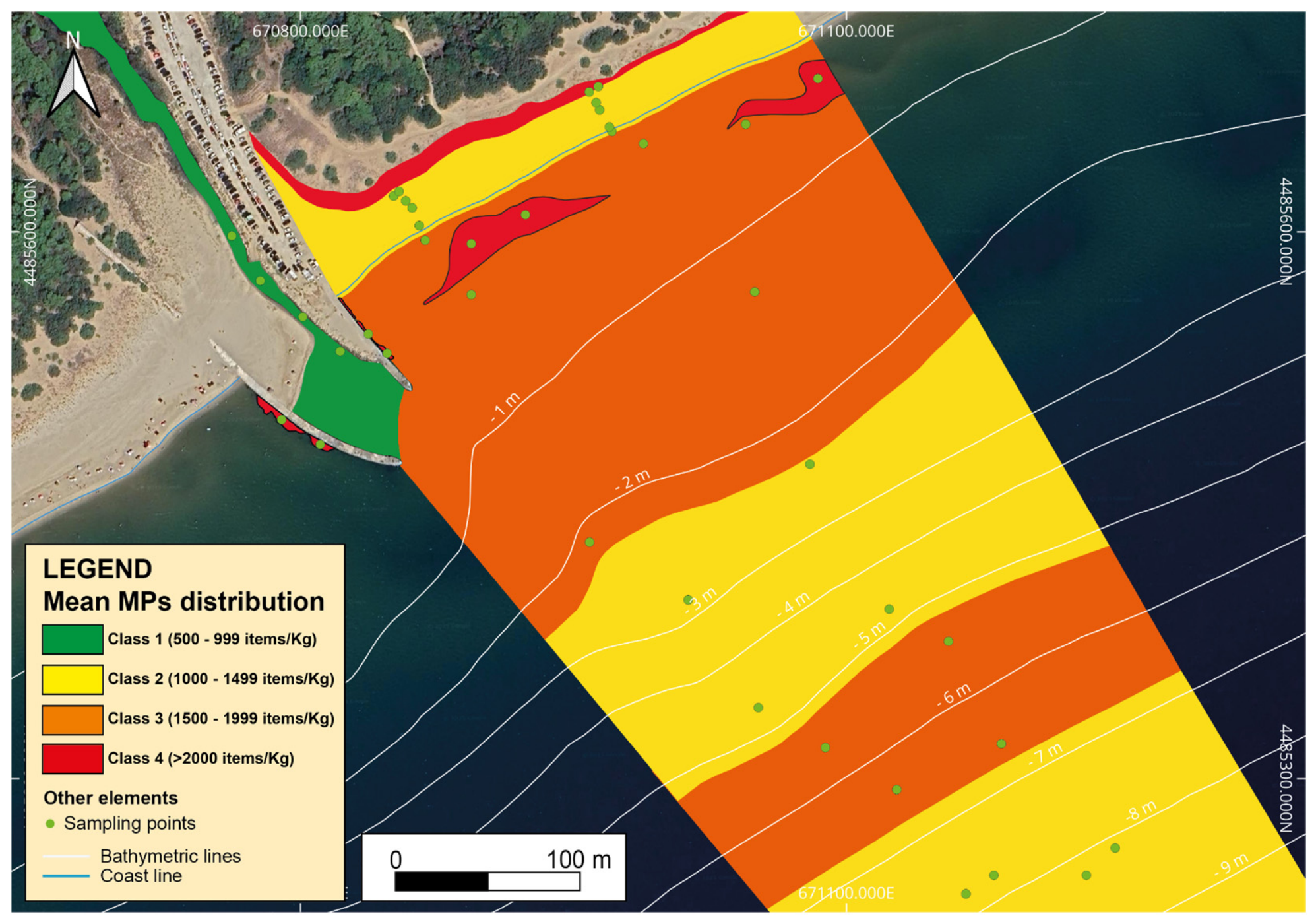
To visualise MP spatial distribution across the Pino di Lenne beach, four concentration classes were defined based on the observed range of concentrations (Figure 8): -Class 1: 500–999 MPs/kg; -Class 2: 1000–1499 MPs/kg; -Class 3: 1500–1999 MPs/kg; -Class 4: >2000 MPs/kg.
The highest densities (>2000 MPs/kg) were observed in the sandbar, base dune, and worm bioconstruction zones, confirming their role as accumulation hotspots. Slightly lower but still elevated values (<2000 MPs/kg) were found in the upper/middle shoreface and offshore sectors. Conversely, the lowest concentrations were detected in the channel (717.59 MPs/kg), consistent with its low discharge and limited sediment supply, while backshore, lower shoreface, and foreshore sectors exhibited relatively moderate values. Although standard deviations varied considerably—from high values in the offshore transition (±664.40 MPs/kg) to low values in the worm bioconstruction (±175.80 MPs/kg)—the overall pattern indicates well-defined depositional trends.
Figure 9 shows the final map of MP distribution, highlighting the preferential accumulation of particles in depositional and biologically structured zones (base dune, sandbar, and worm bioconstruction), contrasting with the reduced retention observed in hydrodynamically active settings such as the channel and offshore transition. This spatial representation supports the interpretation of distinct sedimentary controls on MP accumulation across the Pino di Lenne coastal system.
Figure 9.
Spatial distribution of MP classes across sub-environments of Pino di Lenne beach. Sandbar, dune base and worm bioconstruction show the highest values corresponding to class 4. U/L shoreface and offshore transition show class 3 values, and backshore, foreshore, lower shoreface and offshore show class 2 values. The only environment with the lowest values, which corresponds to class 1, is the channel.
4.3. Environmental Interpretation and Implications
As shown by the distribution analysis (Figure 9), MP accumulation is highest in depositional areas and in zones characterised by biological structures (e.g., worm bioconstructions), while dynamic sectors such as the channel and offshore transition exhibit lower concentrations [15,69].
The spatial pattern of MPs identified along the Pino di Lenne beach reflects the influence of hydrodynamic energy, sediment texture, and biological mediation on MP transport and accumulation [38]. The base dune, sandbar, and worm bioconstruction zones represent key accumulation hotspots, where lower current velocities and sediment trapping mechanisms favour MP deposition. In contrast, the channel and offshore transition areas act as dynamic corridors, where high hydrodynamic energy promotes resuspension and offshore transport.
Seasonal variations may influence MP redistribution, as suggested by previous studies. The literature suggests that during winter storms, degraded plastics accumulate at the dune base and are buried by sedimentation [36], while in summer, reduced hydrodynamic activity may lead to stabilization and preservation of previously deposited MPs [38].
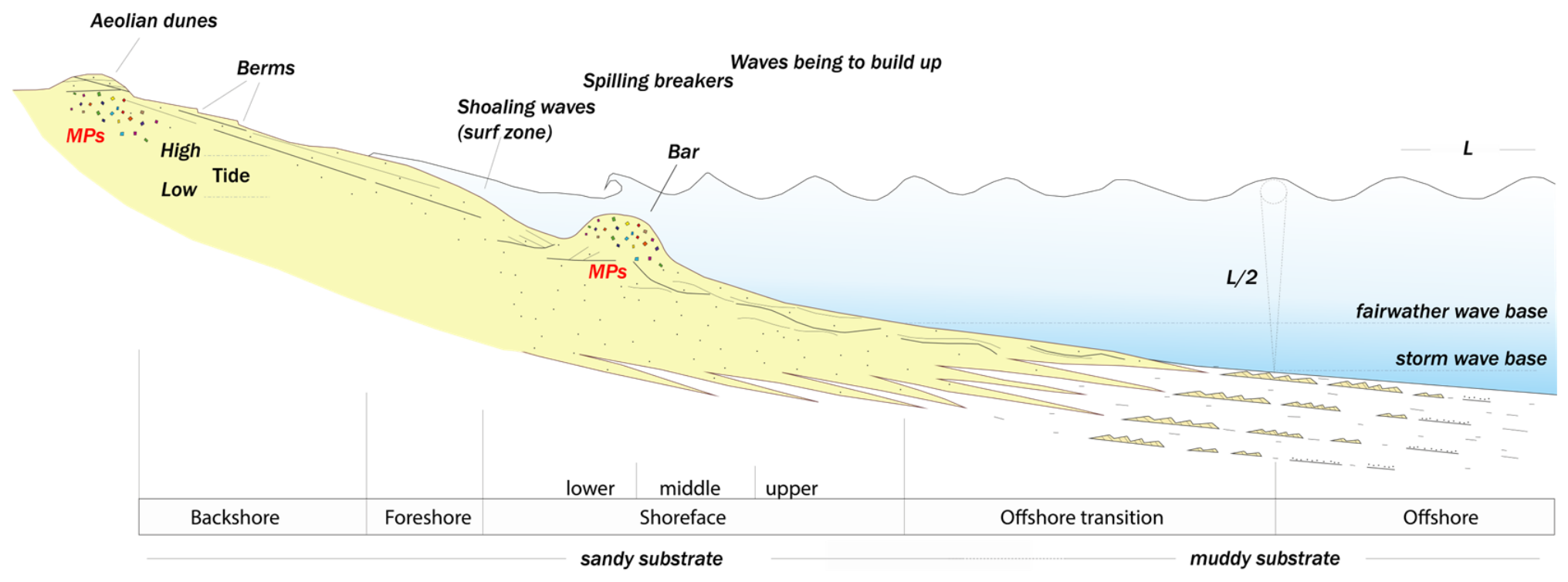
The comparative analysis of emerged and submerged sectors highlights that the submerged areas, subject to continuous remobilisation, exhibit slightly higher MP densities (Figure 10).
Figure 10.
Schematic distribution of MPs along the beach profile during the winter and summer period (modified by [86]. In the winter period, the macrolitters accumulate on the storm berm and, as a result, plastic degraded by wind, solar energy and waves accumulates at the base of the dune; at the same time, the sedimentation processes take place up to a higher depth. In the summer period, macrolitters accumulate on the ordinary berm, and similarly MPs accumulate at the base of the dune; sedimentary processes occur at shallower depths, and sedimentary accumulation, corresponding to the winter offshore transition limit, remains unaffected by summer transport mechanisms; L = wavelength, L/2 = half-wavelength.
This may be linked to ongoing fragmentation and redistribution processes driven by wave and current activity. During the storms, macrolitters accumulate on the berms, and degraded plastic fragments are subsequently deposited and trapped at the dune base. As a consequence, the base dune functions as a long-term depositional environment, where MPs transported by wind or storm surges are progressively buried and preserved within the sediment (Figure 10). The evolution of the beach further explains the observed vertical and lateral distribution patterns (Figure 10). Simultaneously, sedimentation extends to greater depths, allowing MPs to settle even in the offshore transition zone. In summer, sedimentary processes are restricted to shallower depths, and previously deposited MPs remain buried beneath the fair-weather wave base, unaffected by remobilisation.
Overall, the Pino di Lenne coastal system exemplifies how natural morphodynamic stability and biological structures jointly govern MP accumulation and redistribution.
5. Conclusions
This study provides the first high-resolution analysis of MP distribution across the entire littoral profile of a sandy beach, from the emerged to the submerged sector, establishing the Pino di Lenne beach as a pivotal “natural laboratory” for understanding the complex interactions between sediment dynamics, biological activity, and MP accumulation.
The results reveal significant spatial heterogeneity, identifying three primary accumulation hotspots: the submerged sandbar, Sabellaria alveolata bioconstructions, and the base of the coastal dune. This pattern suggests that MP distribution is interpreted as controlled by hydrodynamic processes and biological activity. The sandbar may act as a dynamic sieve [42], intercepting MPs transported by longshore currents. The Sabellaria bioconstructions may act as biological traps, actively incorporating particles into their tubular structures. Finally, the dune base appears to serves as a sink for wind-blown and storm-deposited plastics [87], acting as a physical barrier only remobilized during extreme storm events. Conversely, the estuarine channel exhibited the lowest MP concentration (class 1), a finding attributed to its limited drainage basin and minimal fluvial sediment input.
The integrated, eco-friendly olive oil-based extraction protocol proved highly effective, offering a reliable and cost-efficient method that could be adopted by regulatory bodies for standardized monitoring.
This research provides a framework for interpreting MP distribution patterns in wave-dominated coastal systems, demonstrating that effective pollution mitigation requires a holistic understanding of the entire littoral profile. The findings provide a scientific basis for targeted remediation strategies, directly contributing to the sustainable management and protection of marine and coastal ecosystems as outlined in UN Sustainable Development Goal 14. Ultimately, this work underscores that constant, multi-scale, and interdisciplinary monitoring is essential to preserve sandy beaches, a precious resource that must be safeguarded for future generations.
Author Contributions
T.F.: Writing—original draft, Conceptualization, Data curation, Investigation, Methodology, Formal analysis, Resources, Visualization. S.N.L.: Writing—review and editing, Conceptualization, Data curation, Investigation, Formal analysis, Resources, Validation. A.R.: Investigation, Methodology, Formal analysis, Resources. C.S.: Investigation, Methodology, Formal analysis, Resources. F.V.: Data curation, Investigation. R.T.: Resources. Investigation, A.d.L.: Resources. Investigation A.S.: Data curation, Formal analysis, Validation. G.L.B.: Formal analysis. M.M.: Funding acquisition, Supervision Validation Visualization, Writing—review and editing. All authors have read and agreed to the published version of the manuscript.
Funding
The research belongs to the activities of the RETURN Extended Partnership, supported under the National Recovery and Resilience Plan (NRRP), Mission 4, Component 2, Investment 1.3- D.D. 1243 2/8/2022, European Union NextGenerationEU (no. PE00000005, CUP: B53C22004020002—author involved: S.L. and A.R., University of Bari Aldo Moro). Furthermore, this research was funded by the European Union–Next Generation EU, M4C2 Mission 4, Component 2, CUP H53D23011410001 mission of the Italian National Recovery and Resilience Plan, investment 1.1, PRIN22PNRR-P2022WNCEC “BERMS-Beach EnviRonMentS: towards a holistic approach for the study of sandy beaches Project” (Scientific responsible: M. Moretti) author involved: T.F. and M.M.
Institutional Review Board Statement
Not applicable.
Data Availability Statement
The raw data supporting the conclusions of this article will be made available by the authors on request.
Acknowledgments
The authors are deeply grateful to Giuseppe Mastronuzzi for discussing the data and reporting the Sabellaria bioconstruction in the area under investigation.
Conflicts of Interest
The authors declare no conflict of interest.
References
- EFSA Panel on Contaminants in the Food Chain (CONTAM). Presence of microplastics and nanoplastics in food, with particular focus on seafood. EFS2 2016, 14, e04501. [Google Scholar] [CrossRef]
- Europe, P. Plastics—The Fast Facts 2023; Plastic Europe: Brussels, Belgium, 2023. [Google Scholar]
- Crawford, C.B.; Quinn, B. Microplastic Pollutants; Elsevier: Amsterdam, The Netherlands, 2017; ISBN 978-0-12-809406-8. [Google Scholar]
- Barnes, D.K.A.; Galgani, F.; Thompson, R.C.; Barlaz, M. Accumulation and fragmentation of plastic debris in global environments. Philos. Trans. R. Soc. B Biol. Sci. 2009, 364, 1985–1998. [Google Scholar] [CrossRef]
- Rillig, M.C. Microplastic in Terrestrial Ecosystems and the Soil? Environ. Sci. Technol. 2012, 46, 6453–6454. [Google Scholar] [CrossRef] [PubMed]
- Desforges, J.-P.W.; Galbraith, M.; Dangerfield, N.; Ross, P.S. Widespread distribution of microplastics in subsurface seawater in the NE Pacific Ocean. Mar. Pollut. Bull. 2014, 79, 94–99. [Google Scholar] [CrossRef]
- Dris, R.; Gasperi, J.; Rocher, V.; Saad, M.; Renault, N.; Tassin, B. Microplastic contamination in an urban area: A case study in Greater Paris. Environ. Chem. 2015, 12, 592–599. [Google Scholar] [CrossRef]
- Dris, R.; Imhof, H.; Sanchez, W.; Gasperi, J.; Galgani, F.; Tassin, B.; Laforsch, C. Beyond the ocean: Contamination of freshwater ecosystems with (micro-)plastic particles. Environ. Chem. 2015, 12, 539–550. [Google Scholar] [CrossRef]
- Gasperi, J.; Dris, R.; Mirande-Bret, C.; Mandin, C.; Langlois, V.; Tassin, B. First overview of microplastics in indoor and outdoor air. In Proceedings of the 15th EuCheMS International Conference on Chemistry and the Environment, Leipzig, Germany, 20–24 September 2015. [Google Scholar]
- Fischer, E.K.; Paglialonga, L.; Czech, E.; Tamminga, M. Microplastic pollution in lakes and lake shoreline sediments—A case study on Lake Bolsena and Lake Chiusi (central Italy). Environ. Pollut. 2016, 213, 648–657. [Google Scholar] [CrossRef]
- Li, J.; Liu, H.; Paul Chen, J. Microplastics in freshwater systems: A review on occurrence, environmental effects, and methods for microplastics detection. Water Res. 2018, 137, 362–374. [Google Scholar] [CrossRef]
- Wong, G.; Löwemark, L.; Kunz, A. Microplastic pollution of the Tamsui River and its tributaries in northern Taiwan: Spatial heterogeneity and correlation with precipitation. Environ. Pollut. 2020, 260, 113935. [Google Scholar] [CrossRef]
- Woodall, L.C.; Sanchez-Vidal, A.; Canals, M.; Paterson, G.L.J.; Coppock, R.; Sleight, V.; Calafat, A.; Rogers, A.D.; Narayanaswamy, B.E.; Thompson, R.C. The deep sea is a major sink for microplastic debris. R. Soc. Open Sci. 2014, 1, 140317. [Google Scholar] [CrossRef] [PubMed]
- Clark, J.R.; Cole, M.; Lindeque, P.K.; Fileman, E.; Blackford, J.; Lewis, C.; Lenton, T.M.; Galloway, T.S. Marine microplastic debris: A targeted plan for understanding and quantifying interactions with marine life. Front. Ecol. Environ. 2016, 14, 317–324. [Google Scholar] [CrossRef]
- Van Sebille, E.; Wilcox, C.; Lebreton, L.; Maximenko, N.; Hardesty, B.D.; Van Franeker, J.A.; Eriksen, M.; Siegel, D.; Galgani, F.; Law, K.L. A global inventory of small floating plastic debris. Environ. Res. Lett. 2015, 10, 124006. [Google Scholar] [CrossRef]
- Ballent, A.; Corcoran, P.L.; Madden, O.; Helm, P.A.; Longstaffe, F.J. Sources and sinks of microplastics in Canadian Lake Ontario nearshore, tributary and beach sediments. Mar. Pollut. Bull. 2016, 110, 383–395. [Google Scholar] [CrossRef] [PubMed]
- Wang, J.; Tan, Z.; Peng, J.; Qiu, Q.; Li, M. The behaviors of microplastics in the marine environment. Mar. Environ. Res. 2016, 113, 7–17. [Google Scholar] [CrossRef] [PubMed]
- Andrady, A.L. The plastic in microplastics: A review. Mar. Pollut. Bull. 2017, 119, 12–22. [Google Scholar] [CrossRef] [PubMed]
- Zhu, X.; Rochman, C.M.; Hardesty, B.D.; Wilcox, C. Plastics in the deep sea—A global estimate of the ocean floor reservoir. Deep Sea Res. Part I Oceanogr. Res. Pap. 2024, 206, 104266. [Google Scholar] [CrossRef]
- Yang, S.; Li, P.; Jiao, Y.; Li, Z.; Ruan, Y.; Yang, Q. A bibliometric analysis of microplastic pollution in aquatic environments from 2013 to 2023. Sustain. Environ. Res. 2025, 35, 19. [Google Scholar] [CrossRef]
- Read, F.; Turner, A. Presence and characteristics of plastics and microplastics on the seabed of the western English Channel. Mar. Pollut. Bull. 2026, 222, 118779. [Google Scholar] [CrossRef]
- He, B.; Smith, M.; Egodawatta, P.; Ayoko, G.A.; Rintoul, L.; Goonetilleke, A. Dispersal and transport of microplastics in river sediments. Environ. Pollut. 2021, 279, 116884. [Google Scholar] [CrossRef]
- Ghinassi, M.; Michielotto, A.; Uguagliati, F.; Zattin, M. Mechanisms of microplastics trapping in river sediments: Insights from the Arno river (Tuscany, Italy). Sci. Total Environ. 2023, 866, 161273. [Google Scholar] [CrossRef]
- Chen, R.; Zhao, X.; Wu, X.; Wang, J.; Wang, X.; Liang, W. Research progress on occurrence characteristics and source analysis of microfibers in the marine environment. Mar. Pollut. Bull. 2024, 198, 115834. [Google Scholar] [CrossRef] [PubMed]
- Leslie, H.A.; Brandsma, S.H.; van Velzen, M.J.M.; Vethaak, A.D. Microplastics en route: Field measurements in the Dutch river delta and Amsterdam canals, wastewater treatment plants, North Sea sediments and biota. Environ. Int. 2017, 101, 133–142. [Google Scholar] [CrossRef]
- Pellegrini, C.; Saliu, F.; Bosman, A.; Sammartino, I.; Raguso, C.; Mercorella, A.; Galvez, D.S.; Petrizzo, A.; Madricardo, F.; Lasagni, M. Hotspots of microplastic accumulation at the land-sea transition and their spatial heterogeneity: The Po River prodelta (Adriatic Sea). Sci. Total Environ. 2023, 895, 164908. [Google Scholar] [CrossRef]
- Peng, G.; Zhu, B.; Yang, D.; Su, L.; Shi, H.; Li, D. Microplastics in sediments of the Changjiang Estuary, China. Environ. Pollut. 2017, 225, 283–290. [Google Scholar] [CrossRef]
- Fulfer, V.M.; Walsh, J.P. Extensive estuarine sedimentary storage of plastics from city to sea: Narragansett Bay, Rhode Island, USA. Sci. Rep. 2023, 13, 10195. [Google Scholar] [CrossRef]
- Mesquita, Y.W.; Massignani, C.C.V.N.; Di Domenico, M.; Nagai, R.H. Microplastic occurrence, distribution, and zonation at Paraná’s beaches—South of Brazil. Environ. Sci. Pollut. Res. 2025, 32, 12883–12895. [Google Scholar] [CrossRef] [PubMed]
- Browne, M.A.; Crump, P.; Niven, S.J.; Teuten, E.; Tonkin, A.; Galloway, T.; Thompson, R. Accumulation of Microplastic on Shorelines Woldwide: Sources and Sinks. Environ. Sci. Technol. 2011, 45, 9175–9179. [Google Scholar] [CrossRef]
- Cannas, S.; Fastelli, P.; Guerranti, C.; Renzi, M. Plastic litter in sediments from the coasts of south Tuscany (Tyrrhenian Sea). Mar. Pollut. Bull. 2017, 119, 372–375. [Google Scholar] [CrossRef] [PubMed]
- Expósito, N.; Rovira, J.; Sierra, J.; Folch, J.; Schuhmacher, M. Microplastics levels, size, morphology and composition in marine water, sediments and sand beaches. Case study of Tarragona coast (western Mediterranean). Sci. Total Environ. 2021, 786, 147453. [Google Scholar] [CrossRef]
- Asensio-Montesinos, F.; Blaya-Valencia, G.; Corbí, H.; Beltrán-Sanahuja, A.; Sanz-Lázaro, C. Microplastic accumulation dynamics in two Mediterranean beaches with contrasting inputs. J. Sea Res. 2022, 188, 102269. [Google Scholar] [CrossRef]
- Cocozza, P.; Serranti, S.; Setini, A.; Cucuzza, P.; Bonifazi, G. Monitoring of contamination by microplastics on sandy beaches at Vulcano Island (Sicily, Italy) by hyperspectral imaging. Environ. Sci. Pollut. Res. 2024, 32, 16898–16911. [Google Scholar] [CrossRef]
- Yu, X.; Ladewig, S.; Bao, S.; Toline, C.A.; Whitmire, S.; Chow, A.T. Occurrence and distribution of microplastics at selected coastal sites along the southeastern United States. Sci. Total Environ. 2018, 613, 298–305. [Google Scholar] [CrossRef] [PubMed]
- Mondal, V.; Bhattacharya, S.; Kolandhasamy, P.; Rajendran, R. Vertical profiling of microplastic contamination in coastal sediments of Tamil Nadu, Southeast India. Mar. Pollut. Bull. 2026, 222, 118733. [Google Scholar] [CrossRef]
- Bissen, R.; Chawchai, S. Microplastics on beaches along the eastern Gulf of Thailand—A preliminary study. Mar. Pollut. Bull. 2020, 157, 111345. [Google Scholar] [CrossRef] [PubMed]
- Chubarenko, I.; Krivoshlyk, P.; Esiukova, E.; Zobkov, M.; Fetisov, S. Natural sorting of sediments in the wave run-up zone works for microplastics as well. Mar. Pollut. Bull. 2024, 208, 117060. [Google Scholar] [CrossRef]
- Yang, H.; Chen, G.; Wang, J. Microplastics in the Marine Environment: Sources, Fates, Impacts and Microbial Degradation. Toxics 2021, 9, 41. [Google Scholar] [CrossRef] [PubMed]
- Zhang, K.; Hamidian, A.H.; Tubić, A.; Zhang, Y.; Fang, J.K.H.; Wu, C.; Lam, P.K.S. Understanding plastic degradation and microplastic formation in the environment: A review. Environ. Pollut. 2021, 274, 116554. [Google Scholar] [CrossRef]
- Wright, L.D.; Short, A.D. Morphodynamic variability of surf zones and beaches: A synthesis. Mar. Geol. 1984, 56, 93–118. [Google Scholar] [CrossRef]
- Lapietra, I.; Lisco, S.; Capozzoli, L.; De Giosa, F.; Mastronuzzi, G.; Mele, D.; Milli, S.; Romano, G.; Sabatier, F.; Scardino, G.; et al. A Potential Beach Monitoring Based on Integrated Methods. J. Mar. Sci. Eng. 2022, 10, 1949. [Google Scholar] [CrossRef]
- Lapietra, I.; Lisco, S.N.; Milli, S.; Rossini, B.; Moretti, M. Sediment provenance of a carbonate bioclastic pocket beach—Le Dune (Ionian Sea, South Italy). J. Palaeogeogr. 2022, 11, 238–255. [Google Scholar] [CrossRef]
- Lapietra, I.; Lisco, S.; Mastronuzzi, G.; Milli, S.; Pierri, C.; Sabatier, F.; Scardino, G.; Moretti, M. Morpho-sedimentary dynamics of Torre Guaceto beach (Southern Adriatic Sea, Italy). J. Earth Syst. Sci. 2022, 131, 64. [Google Scholar] [CrossRef]
- Bour, A.; Avio, C.G.; Gorbi, S.; Regoli, F.; Hylland, K. Presence of microplastics in benthic and epibenthic organisms: Influence of habitat, feeding mode and trophic level. Environ. Pollut. 2018, 243, 1217–1225. [Google Scholar] [CrossRef]
- Smith, M.; Love, D.C.; Rochman, C.M.; Neff, R.A. Microplastics in seafood and the implications for human health. Curr. Environ. Health Rep. 2018, 5, 375–386. [Google Scholar] [CrossRef]
- Fragão, J.; Bessa, F.; Otero, V.; Barbosa, A.; Sobral, P.; Waluda, C.M.; Guímaro, H.R.; Xavier, J.C. Microplastics and other anthropogenic particles in Antarctica: Using penguins as biological samplers. Sci. Total Environ. 2021, 788, 147698. [Google Scholar] [CrossRef] [PubMed]
- Huang, Y.; Zhang, W.; Zhang, S.; Jin, F.; Fang, C.; Ma, X.; Wang, J.; Mu, J. Systematical insights into distribution and characteristics of microplastics in near-surface waters from the East Asian Seas to the Arctic Central Basin. Sci. Total Environ. 2022, 814, 151923. [Google Scholar] [CrossRef] [PubMed]
- Huang, Y.; Xiao, X.; Xu, C.; Perianen, Y.D.; Hu, J.; Holmer, M. Seagrass beds acting as a trap of microplastics—Emerging hotspot in the coastal region? Environ. Pollut. 2020, 257, 113450. [Google Scholar] [CrossRef]
- Mancin, N.; dell’Acqua, F.; Riccardi, M.P.; Lo Bue, G.; Marchini, A. Fractal analysis highlights analogies in arenaceous tubes of Sabellaria alveolata (Metazoa, Polychaeta) and agglutinated tests of foraminifera (Protista). PLoS ONE 2022, 17, e0273096. [Google Scholar] [CrossRef]
- Lo Bue, G.; Marchini, A.; Musa, M.; Croce, A.; Gatti, G.; Riccardi, M.P.; Lisco, S.; Mancin, N. First attempt to quantify microplastics in Mediterranean Sabellaria spinulosa (Annelida, Polychaeta) bioconstructions. Mar. Pollut. Bull. 2023, 196, 115659. [Google Scholar] [CrossRef]
- Gruet, Y. Granulometric evolution of the sand tube in relation to growth of the polychaete Annelid Sabellaria alveolata (Linné) (Sabellariidae). Ophelia 1984, 23, 181–193. [Google Scholar] [CrossRef]
- Lo Bue, G.; Musa, M.; Marchini, A.; Riccardi, M.P.; Dubois, S.F.; Lisco, S.; Moretti, M.; de Luca, A.; Mancin, N. Microplastic pollution in the littoral environment: Insights from the largest Mediterranean Sabellaria spinulosa (Annelida) reef and shoreface sediments. Mar. Pollut. Bull. 2025, 217, 118132. [Google Scholar] [CrossRef] [PubMed]
- Enders, K.; Lenz, R.; Stedmon, C.A.; Nielsen, T.G. Abundance, size and polymer composition of marine microplastics ≥ 10 μm in the Atlantic Ocean and their modelled vertical distribution. Mar. Pollut. Bull. 2015, 100, 70–81. [Google Scholar] [CrossRef]
- Crichton, E.M.; Noël, M.; Gies, E.A.; Ross, P.S. A novel, density-independent and FTIR-compatible approach for the rapid extraction of microplastics from aquatic sediments. Anal. Methods 2017, 9, 1419–1428. [Google Scholar] [CrossRef]
- Cotecchia, F.; Vitone, C.; Sollecito, F.; Mali, M.; Miccoli, D.; Petti, R.; Milella, D.; Ruggieri, G.; Bottiglieri, O.; Santaloia, F.; et al. A geo-chemo-mechanical study of a highly polluted marine system (Taranto, Italy) for the enhancement of the conceptual site model. Sci. Rep. 2021, 11, 4017. [Google Scholar] [CrossRef]
- Massari, F.; Cotugno, P.; Tursi, A.; Milella, P.; Lisco, S.; Scardino, G.; Scicchitano, G.; Rizzo, A.; Valenzano, E.; Moretti, M.; et al. Mapping of Organotin compounds in sediments of Mar Piccolo (Taranto, Italy) using Gas Chromatography-Mass Spectrometry analysis and geochemical data. In Proceedings of the 2021 International Workshop on Metrology for the Sea; Learning to Measure Sea Health Parameters (MetroSea); IEEE: Reggio Calabria, Italy, 2021; pp. 21–26. [Google Scholar]
- Lisco, S.; Corselli, C.; De Giosa, F.; Mastronuzzi, G.; Moretti, M.; Siniscalchi, A.; Marchese, F.; Bracchi, V.; Tessarolo, C.; Tursi, A. Geology of Mar Piccolo, Taranto (southern Italy): The physical basis for remediation of a polluted marine area. J. Maps 2016, 12, 173–180. [Google Scholar] [CrossRef]
- Lisco, S.; Lapietra, I.; Laviano, R.; Mastronuzzi, G.; Fracchiolla, T.; Moretti, M. Sedimentological features of asbestos cement fragments in coastal environments (Taranto, southern Italy). Mar. Pollut. Bull. 2023, 187, 114469. [Google Scholar] [CrossRef]
- Moretti, M.; Festa, V.; Lisco, S.N.; Mastronuzzi, G. Note Illustrative della Carta geologica d’Italia alla scala 1:50.000, F. 493 Taranto. ISPRA 2025. [Google Scholar] [CrossRef]
- Niccolini, G.; Bertini, A.; Degl’Innocenti, N.; Lisco, S.; Moretti, M.; Scardino, G.; Mastronuzzi, G. Holocene landscape changes and human impact in Southern Italy: A case-study from the Mar Piccolo semi-enclosed marine basin (Taranto). Catena 2025, 254, 108962. [Google Scholar] [CrossRef]
- Rizzo, A.; De Giosa, F.; Di Leo, A.; Lisco, S.; Moretti, M.; Scardino, G.; Scicchitano, G.; Mastronuzzi, G. Geo-Environmental Characterisation of High Contaminated Coastal Sites: The Analysis of Past Experiences in Taranto (Southern Italy) as a Key for Defining Operational Guidelines. Land 2022, 11, 878. [Google Scholar] [CrossRef]
- Valenzano, E.; Scardino, G.; Cipriano, G.; Fago, P.; Capolongo, D.; De Giosa, F.; Lisco, S.; Mele, D.; Moretti, M.; Mastronuzzi, G. Holocene morpho-sedimentary evolution of the Mar Piccolo basin (Taranto, Southern Italy). Geogr. Fis. Din. Quat. 2018, 41, 119–135. [Google Scholar]
- Scardino, G.; De Giosa, F.; D’Onghia, M.; Demonte, P.; Fago, P.; Saccotelli, G.; Valenzano, E.; Moretti, M.; Velardo, R.; Capasso, G.; et al. The Footprints of the Wreckage of the Italian Royal Navy Battleship Leonardo Da Vinci on the Mar Piccolo Sea-Bottom (Taranto, Southern Italy). Oceans 2020, 1, 77–93. [Google Scholar] [CrossRef]
- Corbau, C.; Lazarou, A.; Bajt, O.; Filipović Marijić, V.; Simčič, T.; Coltorti, M.; Pignoni, E.; Simeoni, U. Citizen Science for Monitoring Plastic Pollution from Source to Sea: A Systematic Review of Methodologies, Best Practices, and Challenges. Water 2025, 17, 2668. [Google Scholar] [CrossRef]
- Moretti, M.; Tropeano, M.; Van Loon, A.J.; Acquafredda, P.; Baldacconi, R.; Festa, V.; Lisco, S.; Mastronuzzi, G.; Moretti, V.; Scotti, R. Texture and composition of the Rosa Marina beach sands (Adriatic coast, southern Italy): A sedimentological/ecological approach. Geologos 2016, 22, 87–103. [Google Scholar] [CrossRef]
- Van Loon, A.T.; Moretti, M.; Tropeano, M.; Acquafredda, P.; Baldacconi, R.; Festa, V.; Lisco, S.; Mastronuzzi, G.; Moretti, V.; Scotti, R. Tracing the source of the bio/siliciclastic beach sands at Rosa Marina (Apulian coast, SE Italy). In Sediment Provenance; Elsevier: Amsterdam, The Netherlands, 2017; pp. 25–47. [Google Scholar]
- Scopetani, C.; Chelazzi, D.; Martellini, T.; Pellinen, J.; Ugolini, A.; Sarti, C.; Cincinelli, A. Occurrence and characterization of microplastic and mesoplastic pollution in the Migliarino San Rossore, Massaciuccoli Nature Park (Italy). Mar. Pollut. Bull. 2021, 171, 112712. [Google Scholar] [CrossRef]
- European Commission; Joint Research Centre; MSFD Technical Group on Marine Litter. Guidance on the Monitoring of Marine Litter in European Seas: An Update to Improve the Harmonised Monitoring of Marine Litter Under the Marine Strategy Framework Directive; Publications Office: Luxembourg, 2023. [Google Scholar] [CrossRef]
- Scopetani, C.; Chelazzi, F.; Mikola, J.; Leiniö, V.; Heikkinen, R.; Cincinelli, A.; Pellinen, J. Olive oil-based method for the extraction, quantification and identification of microplastics in soil and compost samples. Sci. Total Environ. 2020, 733, 139338. [Google Scholar] [CrossRef]
- Battaglini, E.; Miralles, P.; Lotti, N.; Soccio, M.; Fiorini, M.; Coscollà, C. Analysis of microplastics in commercial vegetable edible oils from Italy and Spain. Food Chem. 2024, 443, 138567. [Google Scholar] [CrossRef]
- Lo Bue, G.; Festa, R.M.; Musa, M.; Riccardi, M.P.; Croce, A.; Marchini, A.; Manci, N. Microplastic quantification in Sabellaria reefs: A validated protocol for extraction from biogenic agglutinated matrices. Environ. Sci. Pollut. Res. 2026, 33, 4939–4953. [Google Scholar] [CrossRef]
- Hom-ma, M.; Sonu, C. Rhythmic pattern of longshore bars related to sediment characteristics. Coast. Eng. Proc. 1962, 8, 16. [Google Scholar] [CrossRef]
- Bowen, A.J.; Inman, D.L. Edge waves and crescentic bars. J. Geophys. Res. 1971, 76, 8662–8671. [Google Scholar] [CrossRef]
- Sonu, C.J. Field observation of nearshore circulation and meandering currents. J. Geophys. Res. 1972, 77, 3232–3247. [Google Scholar] [CrossRef]
- Naylor, L.A.; Viles, H.A. A Temperate Reef Builder: An Evaluation of the Growth, Morphology and Composition of Sabellaria alveolata (L.) Colonies on Carbonate Platforms in South Wales; GeoScienceWorld: McLean, VA, USA, 2000. [Google Scholar] [CrossRef]
- Fournier, J.; Etienne, S.; Le Cam, J.-B. Inter-and intraspecific variability in the chemical composition of the mineral phase of cements from several tube-building polychaetes. Geobios 2010, 43, 191–200. [Google Scholar] [CrossRef]
- Gravina, M.F.; Cardone, F.; Bonifazi, A.; Bertrandino, M.S.; Chimienti, G.; Longo, C.; Marzano, C.N.; Moretti, M.; Lisco, S.; Moretti, V.; et al. Sabellaria spinulosa (Polychaeta, Annelida) reefs in the Mediterranean Sea: Habitat mapping, dynamics and associated fauna for conservation management. Estuar. Coast. Shelf Sci. 2018, 200, 248–257. [Google Scholar] [CrossRef]
- Lisco, S.N.; Acquafredda, P.; Gallicchio, S.; Sabato, L.; Bonifazi, A.; Cardone, F.; Corriero, G.; Gravina, M.F.; Pierri, C.; Moretti, M. The sedimentary dynamics of Sabellaria alveolata bioconstructions (Ostia, Tyrrhenian Sea, central Italy). J. Palaeogeogr. 2020, 9, 2. [Google Scholar] [CrossRef]
- Zuffa, G.G. Optical analyses of arenites: Influence of methodology on compositional results. In Provenance of Arenites; Springer: Berlin/Heidelberg, Germany, 1985; pp. 165–189. [Google Scholar]
- Scopetani, C.; Chelazzi, D.; Cincinelli, A.; Esterhuizen-Londt, M. Assessment of microplastic pollution: Occurrence and characterisation in Vesijärvi lake and Pikku Vesijärvi pond, Finland. Environ. Monit. Assess. 2019, 191, 652. [Google Scholar] [CrossRef]
- Lo Bue, G.; Musa, M.; Kaestner, A.; Di Martino, D.; Busi, M.; Shakoorioskooie, M.; Riccardi, M.P.; Mancin, N. Imaging of microplastics in bio-engineered marine substrates: A neutron tomography approach. In Abstract Book, Geology for a Sustainable Management of Our Planet; Società Geologica Italiana: Roma, Italy, 2024; p. 126. [Google Scholar]
- Cofano, V.; Mele, D.; Lacalamita, M.; Di Leo, P.; Scardino, G.; Bravo, B.; Cammarota, F.; Capolongo, D. Microplastics in inland and offshore sediments in the Apulo-Lucanian region (Southern Italy). Mar. Pollut. Bull. 2023, 197, 115775. [Google Scholar] [CrossRef]
- Filgueiras, A.V.; Gago, J.; Campillo, J.A.; León, V.M. Microplastic distribution in surface sediments along the Spanish Mediterranean continental shelf. Environ. Sci. Pollut. Res. 2019, 26, 21264–21273. [Google Scholar] [CrossRef]
- Romeo, T.; Pietro, B.; Pedà, C.; Consoli, P.; Andaloro, F.; Fossi, M.C. First evidence of presence of plastic debris in stomach of large pelagic fish in the Mediterranean Sea. Mar. Pollut. Bull. 2015, 95, 358–361. [Google Scholar] [CrossRef]
- Walker, R.G.; Plint, A.G. Wave-and Storm-Dominated Shallow Marine Systems. In Facies Models: Response to Sea Level Change; Walker, R.G., James, N.P., Eds.; Geological Association of Canada: St. John’s, NL, Canada, 1992; pp. 219–238. [Google Scholar]
- Sasso, C.; Rizzo, A.; Mastronuzzi, G.; Anfuso, G.; Lapietra, I.; Liso, I.S.; Marsico, A.; Sozio, A.; Scicchitano, G. Unveiling coastal pollution: A multi-technology approach to micro and macro litter assessment for the environmental characterization of beaches. Mar. Pollut. Bull. 2025, 220, 118423. [Google Scholar] [CrossRef] [PubMed]

Disclaimer/Publisher’s Note: The statements, opinions and data contained in all publications are solely those of the individual author(s) and contributor(s) and not of MDPI and/or the editor(s). MDPI and/or the editor(s) disclaim responsibility for any injury to people or property resulting from any ideas, methods, instructions or products referred to in the content. |
© 2026 by the authors. Licensee MDPI, Basel, Switzerland. This article is an open access article distributed under the terms and conditions of the Creative Commons Attribution (CC BY) license.