


Abstract
Plastic pellet spills are a growing environmental concern, yet response strategies remain limited and poorly adapted. This study evaluates whether existing oil spill recovery tools, including booms, skimmers, and specialized vessels, can be repurposed to respond to acute releases of plastic pellets at sea. Plastic pellets, although small (typically 1–5 mm in diameter), exhibit variation in physical properties, including polymer type, size, shape, color, and density. These features strongly influence dispersion dynamics and the feasibility of cleanup. Our analysis reveals critical limitations in current response technologies, primarily due to their oil-centric design and lack of consideration for the unique behavior of plastic pellets. By bridging expertise in oil spills and emerging plastic threats, we outline opportunities for adaptive, cross-sector response strategies tailored to the realities of plastic-pellet spills. This study includes a field demonstration in the Northern Adriatic Sea, where oil-spill skimmers and booms were successfully tested for plastic pellet recovery under real-world marine conditions.
1. Introduction
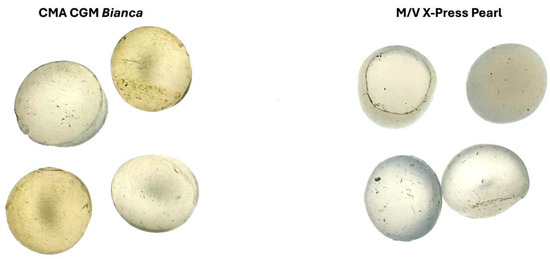
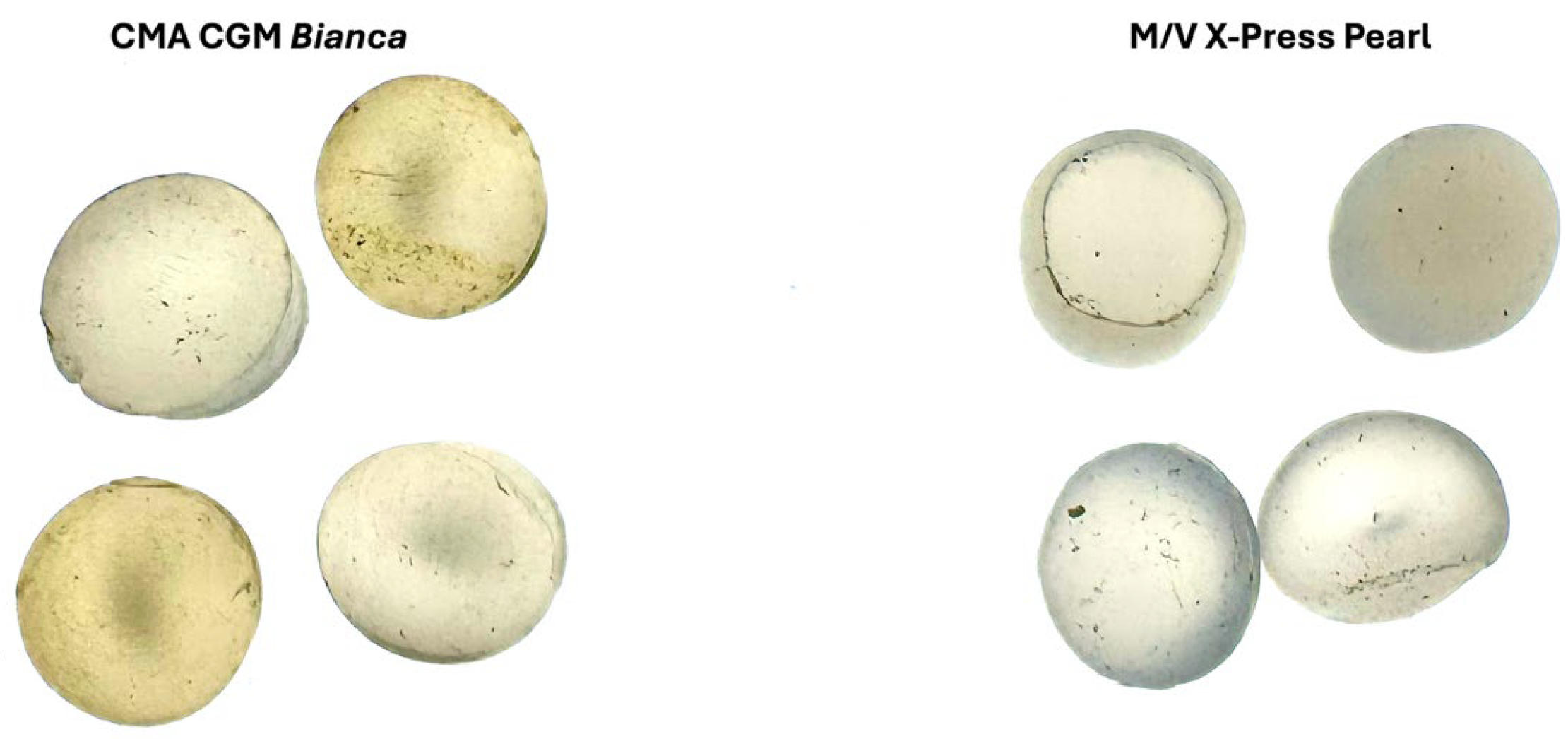
Plastic pellets have been found in coastal and open-ocean environments since the 1970s, resulting from both chronic and acute spills [1]. These microplastic-sized pellets, commonly referred to as nurdles, are pre-production polymer granules that are melted to manufacture plastic products [2]. They typically measure 1–5 mm in diameter, are lentil- or cylindrical-shaped, have smooth, hydrophobic surfaces, and are primarily white or translucent (Figure 1). Polyethylene (PE) and polypropylene (PP) pellets are among the most prevalent types found in the marine environment [3]. These polymers have densities ranging from 0.89 to 0.96 g/cm3, resulting in positive buoyancy in seawater, which can facilitate their dispersal via wind, surface currents, and wave dynamics. Their small size and physical behavior make recovery efforts, especially containment and collection, challenging [4]. Conversely, other polymers denser than seawater, such as polystyrene (PS), polyethylene terephthalate (PET), or polyvinyl chloride (PVC), are more likely to accumulate in sediments and are less commonly observed during surface spill events. The largest spill occurred in May 2021, when the cargo vessel M/V X-Press Pearl suffered a major accident while anchored 18 km off Sri Lanka’s western coast. A fire broke out on board, leading to explosions and a complex rescue operation. Because the vessel carried 1486 containers filled with various raw materials, hazardous chemicals, and finished goods, the incident became even more challenging for the crew and rescuers. The fire was extinguished on 1 June, but salvage efforts failed to prevent the ship from completely sinking until 17 June. During this time, many containers burned, fell into the sea, or were washed ashore, and their contents, including plastic pellets, ended up in the environment [4]. More than 1000 metric tons of pellets and debris were collected from affected shorelines. Although some booms were reportedly deployed, there was no large-scale offshore recovery of floating pellets. Most of the plastic was transported by wind and currents to the shore, where clean-up was conducted manually and mechanically [4,5]. A year earlier, a separate, smaller incident occurred in the Port of New Orleans, Louisiana, USA. During cargo handling operations at the port, the vessel CMA CGM Bianca was caught in a sudden storm. Strong winds caused the loss of four containers, one of which held approximately 20 metric tons of PE pellets (Figure 1). Upon impact, the container ruptured, and a large portion of its contents spilled into the Mississippi River. The situation was further complicated by additional pellet leakage during subsequent container recovery operations. An accounting of the spill chronicled the events, revealing that plastic-pellet spills fall through the proverbial cracks in regulatory coverage. It was unclear whether federal, state, or local agencies were responsible for responding to the spill, or what the most appropriate approaches were for containing and recovering the released material. Ultimately, much of the cleanup fell upon community groups. This case study proposes drawing on decades of research and methods used by the oil spill response community [6]. Responding to pellet spills is challenging because pellets disperse rapidly and are difficult to recover, often leaving significant amounts in the ecosystem [7,8]. For example, due to their small size and low density, floating plastic pellets can be transported several kilometers offshore within a few hours by wind and surface currents. In contrast, oil slicks tend to remain more cohesive and typically drift more slowly under similar conditions [9,10]. A swift and well-coordinated response is essential to recover plastic pellets before they disperse or become stranded along shorelines. Equally necessary is the use of equipment that is appropriately matched to the physical behavior of plastic materials and prevailing sea conditions. Delays in action significantly reduce recovery efficiency and increase the likelihood of long-term environmental impacts. Using poorly matched tools may result in incomplete removal or unintended redistribution of pollutants.
Figure 1.
Representative images of PE pellets from the CMA CGM Bianca and the M/V X-Press Pearl spills.
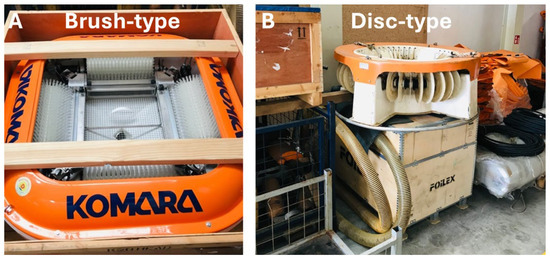
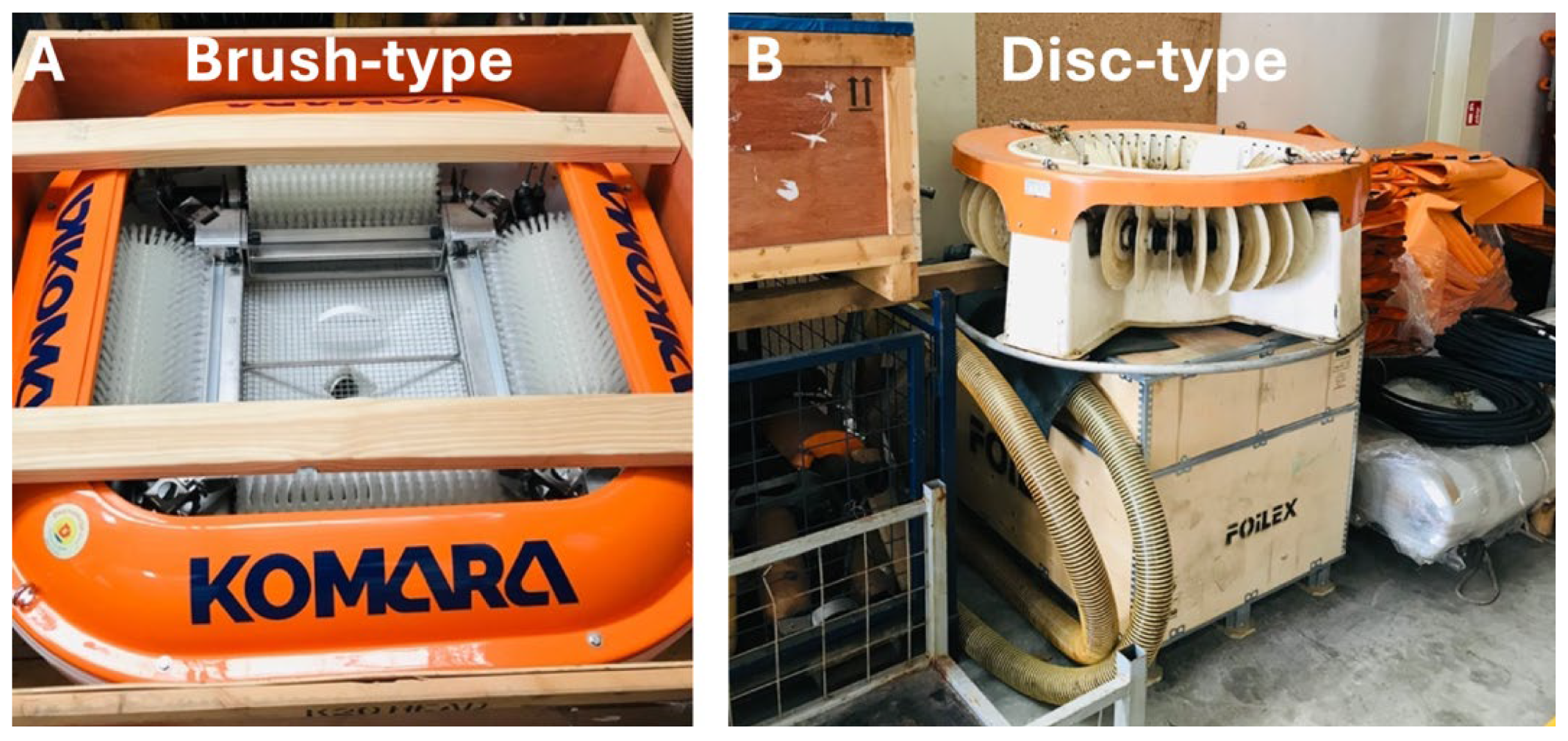
These incidents illustrate both the scale and operational complexity of plastic pellet spill response in real marine environments. Plastic pellet pollution, although chemically distinct from oil, exhibits surface behaviors and dispersion dynamics like those of oil [11]. This similarity suggests that certain oil spill response tools may be adapted to address incidents involving plastic pellets. Oil spill response has benefited from decades of development, standardization, and field validation, as documented in resources like the ExxonMobil Oil Spill Response Field Manual [12]. In contrast, plastic pellet pollution remains largely unaddressed by formal response frameworks [6]. Although plastic pellets have long been excluded from formal response protocols because they are classified as non-hazardous materials, recent efforts, including workshops by the U.S. National Oceanic and Atmospheric Administration (NOAA) and the U.S. Coast Guard, indicate a shift in regulatory awareness. Legislation is currently under consideration in the U.S. Congress to address this regulatory gap [13]. This gap highlights the need to explore existing technologies for potential adaptation to pellet spills. A seemingly straightforward solution is to repurpose existing oil-spill recovery technologies for plastic-pellet collection. One potential class of devices includes skimmers, mechanical devices designed to remove floating contaminants from the water surface. Skimmers can be self-propelled, used from shore, or operated from vessels, and their efficiency depends on sea conditions and the type of oil being recovered [14]. Different types of skimmers include disk, weir, and brush, each with specific operational characteristics [10]. Brush skimmers use rotating bristles to collect material via contact, providing flexibility for variable surface textures, albeit with generally lower recovery purity (Figure 2A). Disc skimmers employ rotating oleophilic discs that adhere to floating material, demonstrating high selectivity and low water uptake in calm conditions (Figure 2B). Weir skimmers operate by floating weirs that allow the water surface layer, including floatable matter, to overflow into a collection chamber, making them highly effective at capturing large volumes but also entraining more water and debris [15]. These systems, originally developed for oil recovery, operate under the assumption of oleophilic adherence or surface overflow, both of which differ when collecting discrete solid particles, such as pellets. The operational efficiency of skimmers is significantly influenced by wave height, current speed, and oil buoyancy [16]. As a result, the selection and deployment of the appropriate skimmer type for pellet recovery are not obvious and require further investigation to enable translation of this technology to other contaminants in spill scenarios. To address this gap, the present study moves beyond conceptual analogy and provides a structured, operational evaluation of oil spill recovery technologies for acute plastic-pellet spill response. The novelty of this work lies in combining comparative skimmer-suitability modeling with field-scale proof-of-concept testing under realistic marine conditions, thereby linking theoretical response assessment with operational feasibility in a way that has not previously been formalized for plastic-pellet spill scenarios. Herein, we conduct performance modeling to evaluate the adaptability of oil spill response skimmers for plastic pellet recovery. In doing so, we identify the appropriate skimmer type for plastic pellet recovery under realistic operational constraints and environmental conditions.
Figure 2.
Examples of (A) brush-type and (B) disc-type skimmers.
The skimmers considered in this study included the Komara skimmer (disc skimmer, Vikoma International Ltd., Cowes, Isle of Wight, UK), the DESMI disc skimmer (DESMI Ro-Clean A/S, Odense S, Denmark), and the DESMI brush skimmer (DESMI Ro-Clean A/S, Odense S, Denmark). These operational differences form the basis for the comparative evaluation framework developed in the following section.
2. Materials and Methods
In all modeling exercises presented herein, we focused on PE and PP pellets, as these polymers are positively buoyant in seawater and among the most frequently observed during surface spill events [17].
2.1. Theoretical Model of Plastic Recovery
To evaluate the applicability of oil spill response equipment for plastic pellet recovery, a theoretical model was developed to quantify the effective recovery rate of various skimmer types under realistic marine conditions. The primary objective is to estimate the volume of floating plastic pellets and entrained seawater collected per hour (, in m3/h), considering the performance characteristics of the equipment and the influence of key environmental variables. The model is based on the following general expression:
In this model, represents the estimated gross recovery rate (m3/h), i.e., the total volume of floating surface material (plastic pellets and entrained water) collected by a combination of n skimmers. Nominal recovery values (Ai) provided by manufacturers are typically based on controlled conditions and target material efficiency, with minimal water uptake. However, under real sea conditions, environmental factors such as wave height and current speed reduce both selectivity and overall recovery performance, as reflected in the correction functions . While the model aims to estimate the volume of plastic pellets collected per hour, expression 1 reflects the gross recovery volume, including both pellets and entrained water. This choice was made to align with standard skimmer performance ratings, which are typically expressed in m3/h. However, because the actual fraction of plastic pellets in the recovered volume can vary with environmental conditions, isolating the true pellet volume or mass requires additional data on the pellet density distribution. This distinction is necessary when evaluating skimmer efficiency for plastic pellet recovery. To distinguish operational throughput from material-specific performance, gross recovery rate is defined here as the total recovered surface volume (pellets and entrained water), whereas actual recovery efficiency refers to the pellet-specific fraction effectively retained within that recovered volume under given environmental and operational conditions. The actual pellet-only fraction within can be approximated through field calibration for each skimmer type. Plastics with a density less than seawater (approximately 1.025 g/cm3) will float, while those with a higher density will sink. This study focused solely on floating pellets. The skimmer-specific performance factor Fᵢ is defined as a function of environmental and operational correction terms:
This multiplicative structure was selected to preserve model transparency while allowing independent first-order representation of the dominant operational constraints affecting skimmer performance. Each correction term was defined as a bounded, dimensionless modifier on the interval [0,1], enabling consistent scaling of nominal recovery performance under progressively less favorable environmental and deployment conditions. In this model, for each skimmer type, the efficiency factor Fᵢ is expressed as the product of four correction terms reflecting environmental and operational factors: wave height, current velocity, pellet characteristics, and deployment orientation (Table 1).
Table 1.
Description of model correction factors and their parameter ranges.
The correction factors are defined as normalized, monotonically decreasing functions on the interval [0,1], representing a gradual reduction in skimmer efficiency as environmental and operational conditions become increasingly unfavorable. The analysis incorporates varying sea conditions based on the Beaufort scale, which correlates wind speed with wave height [18]. The wave height correction factor fi(w) accounts for the loss of skimmer efficiency as wave height increases. It is defined within the normalized range, where f1(w) = 1 for calm seas (w ≤ 0.2 m) and decreases as the height of waves increases. This reflects reduced surface stability. The current velocity correction factor gi(c) is defined to reflect the effect of horizontal water movement on skimmer performance. A value of gi(c) = 1 is assigned for current speeds of up to 0.2 m/s, representing optimal conditions. As the factor decreases toward gi(c) = 0, it assumes a reduced residence time of particles next to the skimmer, including increased turbulence. The boundaries span the transition from maximum operational feasibility to turbulent disruption during recovery. The pellet-specific correction factor k(s) accounts for differences in buoyancy, shape, and density. It is normalized to 1.0 for HDPE pellets (ρ ≤ 0.95 g/cm3) and takes values <1 for other polymers due to buoyancy effects, and its detailed parametrization is identified as a subject for future empirical calibration. The deployment orientation factor m(α) represents the positional effectiveness of the skimmer during recovery. Although the precise relationship between skimmer orientation and recovery performance may vary across device types, a cosine-based correction function was selected to approximate the general reduction in recovery efficiency as the deployment angle increases relative to the incoming flow direction [19]. Thus, the correction factor is defined as m(α) = cos(α), where α is the inclination angle from the horizontal. The function yields m(0°) = 1 (optimal positioning), and decreases to m(90°) = 0, reflecting complete loss of performance due to vertical misalignment.
2.2. Model Implementation
The formulation enables quantitative comparison of different skimmer types under various marine conditions, provided that at least some quantitative values within the specified range are available. The comparison is particularly useful for response planners to simulate spill scenarios using a range of environmental inputs. To implement and analyze this model, two programming environments were used: R version 4.3.1 (RStudio) for statistical simulations and plotting and MATLAB R2020a for numerical modeling. The methodological objective of this framework is not to reproduce full hydrodynamic spill behavior or vessel-scale interception dynamics but to provide a transparent, first-order, comparative tool for evaluating skimmer suitability under operationally relevant environmental conditions. The model was therefore intentionally formulated as a simplified, scenario-based framework in which normalized correction functions are used to represent the directional influence of environmental and operational constraints on recovery performance. This structure enables consistent comparison among skimmer types while preserving operational interpretability and maintaining direct relevance to response planning. In addition, a first-order qualitative sensitivity screening was performed to assess the relative influence of wave height, current velocity, pellet characteristics, and deployment angle on comparative skimmer performance. Because pellet-specific empirical response functions remain insufficiently constrained, this screening was used only to identify dominant operational controls rather than to derive a fully calibrated predictive sensitivity model.
3. Results
3.1. Theoretical Modeling of Skimmer Recovery Under Varying Sea Conditions
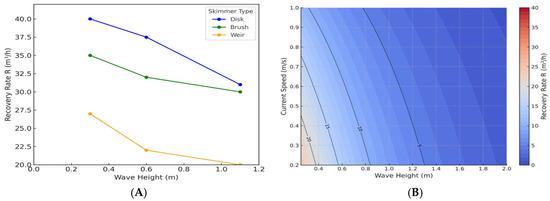
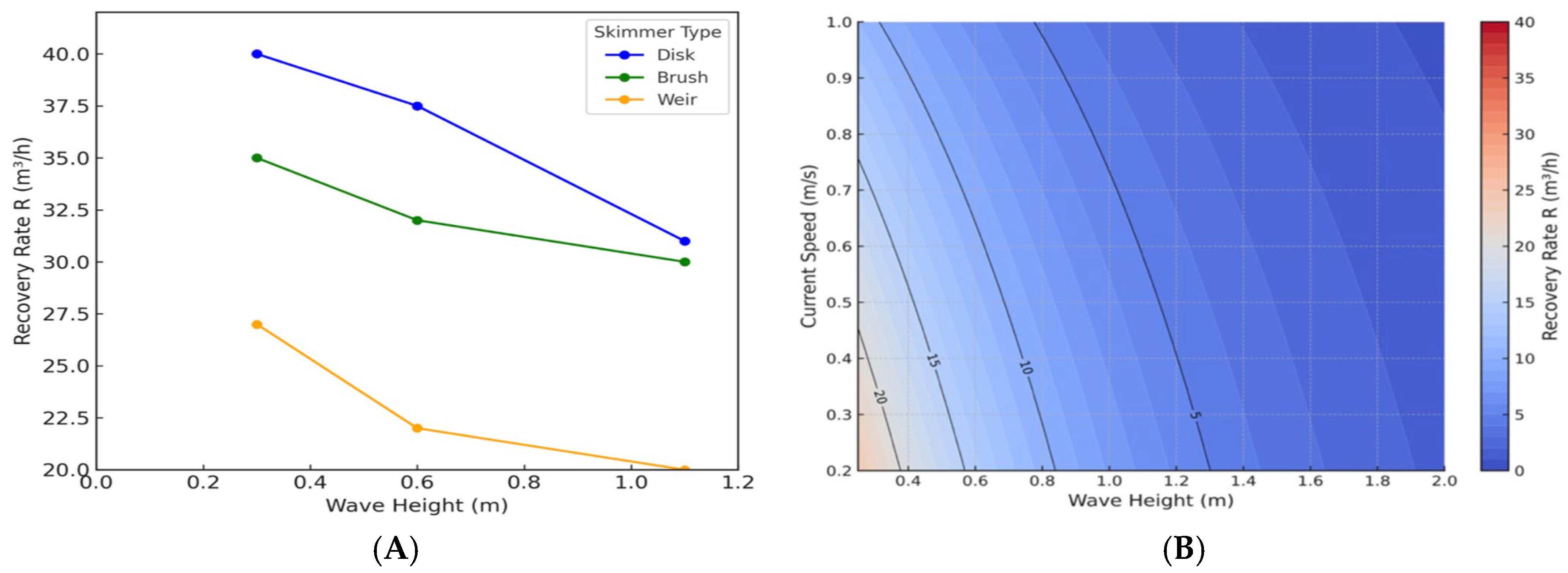
The theoretical assessment evaluates the applicability of oil spill recovery equipment for collecting floating plastic pellets and determines the minimum recovery time, analogous to oil spill scenarios [20]. Using a structured model, we simulated the gross recovery rates of various skimmer types, including disk, brush, and weir, under different wave heights and current speeds. The objective was to identify which technologies perform most efficiently across varying sea conditions and assess the extent to which environmental parameters influence skimmer effectiveness. As these results represent deterministic comparative model outputs, figures are presented without uncertainty bounds and should be interpreted as first-order scenario comparisons rather than experimentally calibrated performance envelopes. Figure 3A represents the gross recovery efficiency ( in m3/h) with equivalent mass conversion (kg/h) of different skimmer types under varying sea conditions. Sea states were categorized based on wave height: calm sea (<0.5 m), moderate sea (0.5–1.25 m), and rough sea (>1.25 m). The results presented in Figure 3 refer specifically to positively buoyant plastic pellets, namely, PE and PP, which dominate during surface spill events. Within the assumptions of the comparative model, disk skimmers exhibited the highest relative recovery performance, followed by brush and, finally, weir skimmers. Performance declines across all types under rough sea conditions, highlighting environmental sensitivity. These values represent recovery rates based on modeled correction factors for environmental conditions. The maximum value of 42 m3/h corresponds to optimal disk skimmer performance under calm sea conditions, reflecting nominal equipment capacity adjusted for wave height, current velocity, and system configuration [21]. The figure illustrates the decrease in recovery efficiency across sea states, emphasizing the importance of environmental correction in skimmer selection. These modeled trends indicate greater environmental sensitivity under rougher sea states, particularly for systems that depend more on surface stability and residence time. Figure 3B shows a plot illustrating the relationship between wave height and the calculated gross recovery rate (, in m3/h) for different skimmer types. The results indicate that increased wave height consistently reduces skimmer efficiency, particularly for weir systems. Notably, while disk and brush skimmers differ significantly in recovery rate for calm sea, they are almost equally efficient for a wave height of 1.1 m. This trend highlights the importance of matching skimmer technology to prevailing sea conditions during spill response operations. The simulation incorporates environmental correction factors to capture the nonlinear response surface, emphasizing the decline in recovery efficiency as sea conditions become increasingly rough.
Figure 3.
(A) The relationship between wave height and the calculated gross recovery rate (R in m3/h) for low-density polyethylene (LDPE) pellets with a typical diameter of 3–5 mm, density of 0.91–0.93 g/cm3, and rounded cylindrical shape. (B) Modeled relationship between wave height and current speed on recovery rate (R in m3/h), based on brush skimmer performance data. Calculations refer to low-density polyethylene (LDPE) pellets with a diameter of 3–5 mm, a density of 0.91–0.93 g/cm3, and a rounded cylindrical shape. A first-order qualitative sensitivity screening further indicated that wave height and current velocity exerted the strongest relative influence on gross recovery performance across all skimmer types. Among the evaluated systems, brush skimmers showed the greatest comparative robustness to environmental variability, whereas weir skimmers were consistently the most sensitive to changing operational conditions.
3.2. Field Test of Skimmer Performance with Popcorn Proxy
In addition, as empirical support for this approach, a full-scale field exercise was conducted in the coastal waters of the northern Adriatic Sea, where popcorn was used as a proxy material to simulate a plastic-pellet spill response. Popcorn serves as an appropriate proxy because it exhibits comparable floating behavior and surface area-to-mass ratio, enabling realistic simulation of surface dispersion patterns without posing ecological risk.
This field demonstration provides first-order empirical support for future calibration of the recovery correction factor. The exercise was intentionally conducted at sea rather than in a laboratory to simulate a realistic marine accident scenario under variable, uncontrolled conditions. The skimmer equipment and recovery procedures were not modified and followed standard oil spill protocols. Unlike laboratory experiments, where environmental parameters can be held constant, this open-water setting provided a more credible assessment of the equipment’s effectiveness in the face of wind, waves, and surface currents. The exercise was organized by the Adriatic Training and Research Centre in collaboration with the Primorje-Gorski Kotar County; the Port Authority of Rijeka, Croatia; and the specialized marine pollution response company Dezinsekcija d.o.o. It was conducted on 28 September 2018, under calm sea conditions. Eight bags containing approximately 500 L of popcorn were released into the sea, serving as a proxy for floating solid pollutants such as plastic pellets. Two specialized vessels equipped with skimmer systems participated in the response. All released material was successfully recovered within thirty minutes of deployment. These results indicate that floating solid matter with comparable surface behavior can be mechanically recovered under favorable conditions using existing oil spill response equipment. The firsthand involvement provided valuable insight into the practical deployment and efficiency of skimmer-equipped vessels in recovering both oil-like and solid floating pollutants under controlled conditions. The skimming vessels, originally designed for oil recovery, successfully collected the floating popcorn under real-world sea conditions. This field result should be interpreted as an operational demonstration of recovery feasibility under favorable conditions, rather than as a controlled quantitative validation of recovery efficiency.
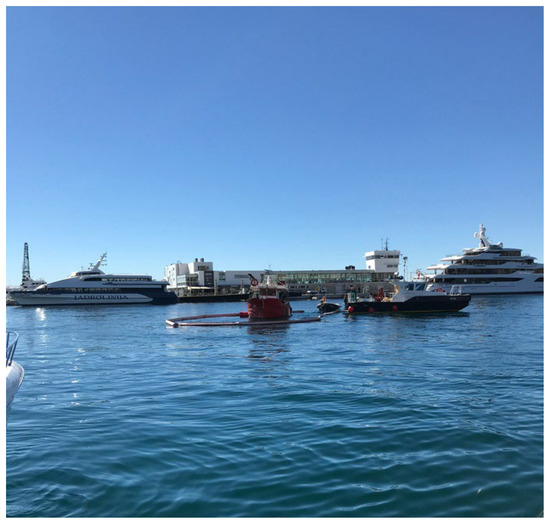
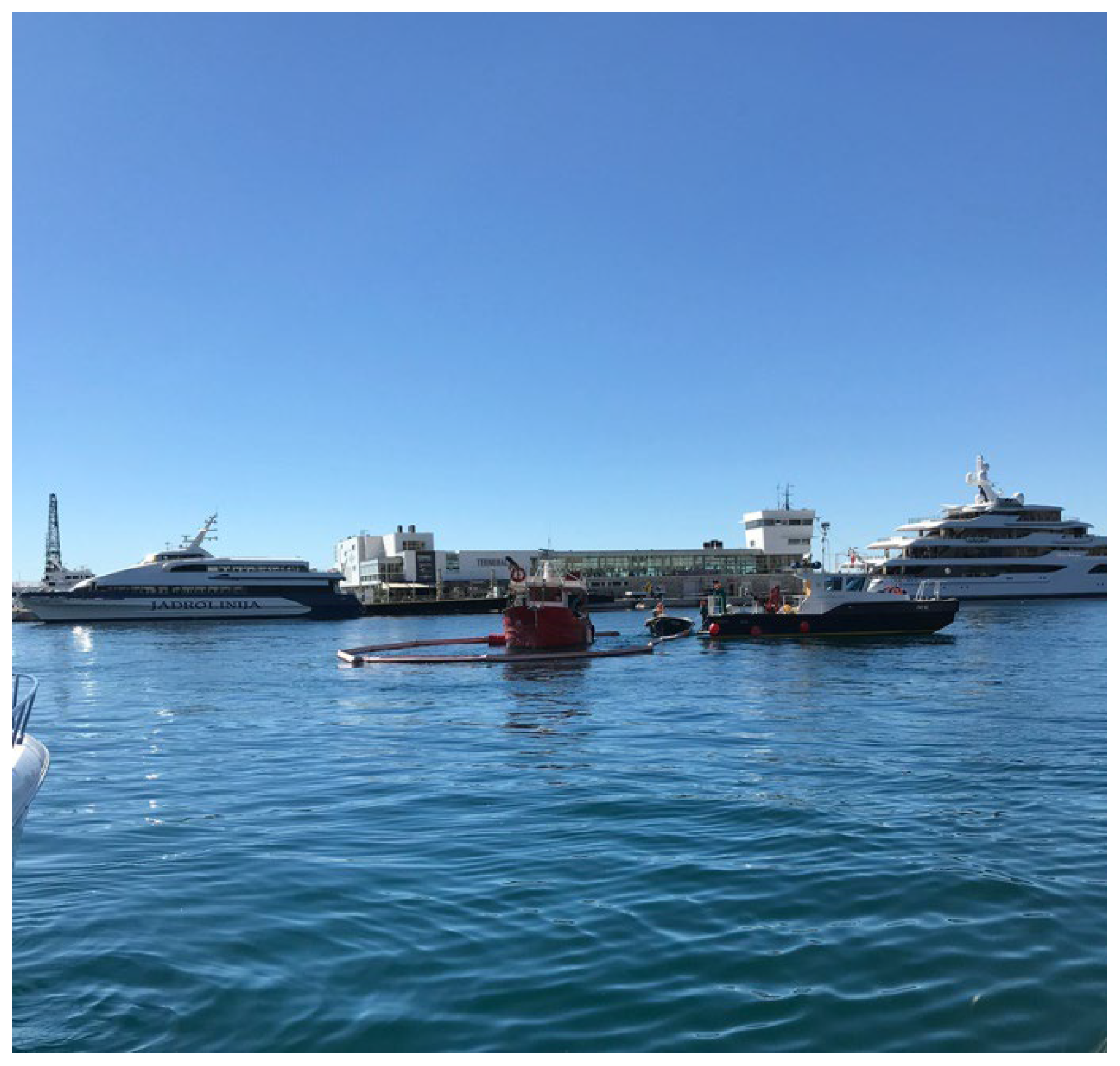
Figure 4 shows the field deployment of a specialized oil vessel equipped with a weir-type skimmer, commonly used for port and coastal operations, making it suitable for surface recovery. Two types of booms were considered: curtain and fence. Curtain booms are generally considered effective in wave heights of up to 1 m, while fence booms are recommended for calmer conditions with waves below 0.5 m [22]. These practical thresholds reflect operational field guidelines, which may differ from the model’s stricter correction-function range (f(w) = 1 for w ≤ 0.2 m, decreasing for higher wave heights), introduced to capture a gradual efficiency loss under dynamic conditions. The recovery operation was initiated immediately after release, so large-scale dispersal did not occur, and the test represents an early-response containment scenario under calm sea conditions. Based on the released volume (approximately 500 L of popcorn), the number of floating items was estimated at approximately 5.5 × 10⁵ pieces, corresponding to a recovery rate on the order of 106 items h−1 under favorable conditions. This value should be interpreted as a first-order empirical calibration for floating solids, while additional calibration is required to account for dispersion processes, areal density variations, and performance degradation under rougher sea states.
Figure 4.
Marine response exercise: popcorn recovery by a specialized vessel simulating a plastic particle spill response.
4. Discussion
This study explored the applicability of existing oil spill response technologies, particularly mechanical skimmers, for addressing plastic pellet pollution events involving characteristic floating polymer types. Through a recovery-based modeling framework, we integrated nominal skimmer performance characteristics with environmental parameters including wave height, current velocity, and equipment–pellet interaction. While disk skimmers exhibited the highest modeled recovery rates across tested scenarios, their deployment is not universally optimal. Brush skimmers, for example, are often preferred in high-viscosity or debris-laden environments due to their robustness and lower maintenance requirements. Weir skimmers, though less efficient in calm conditions, offer operational simplicity and are widely available in emergency stockpiles maintained by coast guards and spill response organizations. Additionally, procurement costs, ease of deployment, and compatibility with specific spill scenarios all influence the selection of skimming technology. Therefore, the recovery rate should be considered alongside logistical, economic, and operational constraints when selecting appropriate equipment. Conversely, brush and weir skimmers, while effective in calmer waters, showed a significant decline in performance as wave height and current velocity increased. The negative correlation between sea-state intensity and gross recovery performance, consistently observed across model outputs, highlights the importance of selecting response equipment according to site-specific hydrodynamic conditions. The gross recovery rates used in this analysis are based on publicly available manufacturer specifications intended for oil spill scenarios. While these values provide a practical benchmark, plastic pellets differ from oil in density, cohesion, and hydrodynamic behavior, and actual field performance may vary. For instance, weir skimmers often ingest substantial amounts of water along with debris, necessitating the integration of separation systems to isolate plastic particles. Brush skimmers, though designed for viscous hydrocarbons, could be enhanced by engineered mesh systems that increase surface area and capture efficiency. Disk skimmers, which rely on adhesion-based recovery, may be upgraded with surfaces modified using superhydrophobic or triboelectric materials to attract and retain floating plastics. These proposed modifications would maintain mechanical compatibility with existing platforms but require targeted field validation. Although the present work is primarily theoretical, it draws on a real-world response exercise conducted in the northern Adriatic Sea, where popcorn was used as a biodegradable proxy for floating plastics. In this field simulation, a dedicated oil spill response vessel successfully recovered floating popcorn using conventional skimming technology. The exercise was conducted in coastal waters under realistic wind and wave conditions, providing greater ecological and operational relevance than laboratory trials. Given the similarity in floating behavior between popcorn and plastic pellets, the exercise provides empirical plausibility for the modeled assumptions. Overall, this study presents a structured evaluation framework for matching available response technologies with plastic pellet spill scenarios. The use of dimensionless weighting parameters enabled cross-comparison of diverse environmental and mechanical variables, while gross recovery rates expressed in m3/h preserved operational relevance. Government agencies and industry responders worldwide already maintain oil spill response equipment, including skimmers and booms. Assessing whether this existing response infrastructure can be effectively repurposed for floating plastic pellet spills is both practical and relevant for improving real-world preparedness and mitigation. The findings contribute a decision-support framework for selecting appropriate equipment combinations under different marine conditions. From an operational perspective, post-recovery separation of pellets from entrained water remains a key engineering limitation of gross mechanical recovery and an important target for system optimization. Likewise, storage capacity, temporary onboard handling, and transfer logistics become increasingly important once recovered material must be retained, offloaded, and processed within the response chain. These constraints do not diminish the value of early containment and mechanical interception; rather, they define the next engineering layer required for practical field implementation. In this context, the present study demonstrates operational compatibility with existing oil spill response infrastructure, including conventional vessels, skimmers, and deployment logic, while highlighting the engineering steps still required for full system integration.
The present framework should be interpreted as an initial operational and conceptual step rather than a fully validated predictive model. Its physical and statistical rigor remains constrained by the limited availability of empirical calibration data for plastic pellet recovery under controlled, repeatable marine conditions. While the proposed structure enables comparative evaluation of skimmer suitability across realistic spill scenarios, further validation through replicated field trials, controlled recovery experiments, and direct model-to-observation calibration will be required to establish quantitatively robust response protocols for plastic pellet spills. Further empirical validation and targeted engineering enhancements are therefore recommended to translate these findings into actionable response protocols.
5. Conclusions
The global rise in plastic pellet spills presents an emerging challenge for marine pollution response. Despite their solid form and hydrophobic properties, plastic pellets can exhibit surface transport behavior like oil, but their discrete nature requires adapted recovery approaches. Field exercises in the northern Adriatic Sea demonstrated that existing oil recovery equipment, including skimmers and booms, can be operationally deployed to recover floating solid material under realistic marine conditions. Using popcorn as a harmless floating analogue, response teams successfully conducted recovery operations, supporting the mechanical compatibility and deployment feasibility of conventional oil spill response systems in plastic spill scenarios. Building on this operational demonstration, a comparative response suitability model was used to examine how skimmer type, environmental conditions, and pellet behavior may influence expected recovery performance. Within the assumptions of this framework, disk skimmers showed the highest relative resilience under moderate sea conditions, while brush and weir skimmers appeared more sensitive to wave dynamics. These results should be interpreted as comparative technical estimates rather than direct experimental performance rankings. A timely response remains critical, as plastic pellets can disperse rapidly and become increasingly difficult to recover. Early containment using booms may improve local concentration and operational recovery potential. While the present framework retains standard manufacturer performance parameters, actual recovery efficiency will depend on field conditions and requires further empirical validation. Adapting oil spill response technologies for plastic pellet recovery remains operationally promising, but further work is needed to refine recovery efficiency, material handling, and offloading logistics. These findings support the practical potential of existing oil spill response tools as an initial response option for floating plastic pellet spills under favorable conditions.
Author Contributions
Conceptualization, M.J. and C.M.R.; methodology, M.J., B.D.J. and T.L.; software, M.J. and C.M.R.; validation, M.J. and C.M.R.; formal analysis, M.J. and T.L.; investigation, M.J. and B.D.J.; resources, M.J. and T.L.; writing—original draft preparation, M.J., C.M.R. and T.L.; writing—review and editing, M.J., C.M.R., B.D.J. and T.L.; visualization, M.J., B.D.J. and T.L.; supervision, C.M.R. and T.L.; project administration, M.J. and B.D.J. All authors have read and agreed to the published version of the manuscript.
Funding
This research received no external funding.
Institutional Review Board Statement
Not applicable.
Informed Consent Statement
Not applicable.
Data Availability Statement
The data supporting the findings of this study are available within the article. Additional model inputs and supporting materials are available from the corresponding author upon reasonable request.
Conflicts of Interest
The authors declare no conflicts of interest.
References
- Carpenter, E.; Smith, K. Plastics on the Sargasso sea surface. Science 1972, 175, 1240–1241. [Google Scholar] [CrossRef] [PubMed]
- Noviyanti Puteri, M.; Ti Gew, L.; Chyuan Ong, H.; Chiau Ming, L. Technologies to eliminate microplastic from water: Current approaches and future prospects. Environ. Int. 2025, 199, 109397. [Google Scholar] [CrossRef] [PubMed]
- Law, K.L.; Morét-Ferguson, S.; Goodwin, D.S.; Zettlet, E.R.; DeForce, E.; Kukulka, T.; Proskurowski, G. Distribution of Surface Plastic Debris in the Eastern Pacific Ocean from an 11-Year Data Set. Environ. Sci. Technol. 2024, 48, 4732–4738. [Google Scholar]
- OSRL. Available online: https://www.osrl.com/knowledge-hub/resource-library/response/spill-journal-x-press-pearl/ (accessed on 28 February 2026).
- Pondala, S.; Mohan Botsa, S. Physical, thermal, chemical and biological approaches for plastics degradation—A review. Clean. Chem. Eng. 2025, 11, 100162. [Google Scholar] [CrossRef]
- James, B.; Reddy, C. Coastal and Marine Pollution: Source to Sink, Mitigation and Management; Wiley: Hoboken, NJ, USA, 2025; pp. 403–424. [Google Scholar]
- Folbert, M.; Stoorvogel, J.; Löhr, A. Plastic pellet spills and leakages during maritime transportation: A transdisciplinary approach to understand the complex causal pathways. Mar. Pollut. Bull. 2025, 218, 118194. [Google Scholar] [CrossRef] [PubMed]
- Mayorga Adame, C.G.; Gacutan, J.; Charlesworth, B.; Roughan, M. Unravelling coastal plastic pollution dynamics along southeastern Australia: Insights from oceanographic modelling informed by empirical data. Mar. Pollut. Bull. 2025, 213, 117525. [Google Scholar] [CrossRef] [PubMed]
- Đorđević, M.; Mohović, Đ.; Krišković, A.; Legović, T. Hierarchical Optimization of Oil Spill Response Vessels in Case of Accidental Pollution of Bays and Coves. J. Mar. Sci. Eng. 2022, 10, 772. [Google Scholar] [CrossRef]
- Đorđević, M.; Šabalja, Đ.; Mohović, Đ.; Brčić, D. Optimization Methodology for Skimmer Device Selection for Removal of the Marine Oil Pollution. J. Mar. Sci. Eng. 2022, 10, 925. [Google Scholar] [CrossRef]
- Margeta, A.; Šabalja, Đ.; Đorđević, M. The Presence and Danger of Microplastics in the Oceans. Multidiscip. Sci. J. Marit. Res. 2021, 35, 224–230. [Google Scholar] [CrossRef]
- ExxonMobil. Available online: https://crrc.unh.edu/sites/default/files/migrated_unmanaged_files/dwg/exxon_oil_spill_response_field_manual.pdf (accessed on 4 June 2025).
- Tunnell, J.W.; Dunning, K.H.; Scheef, L.P.; Swanson, K.M. Measuring plastic pellet (nurdle) abundance on shorelines throughout the Gulf of Mexico using citizen scientists: Establishing a platform for policy-relevant research. Mar. Pollut. Bull. 2020, 151, 110794. [Google Scholar] [CrossRef] [PubMed]
- Gavlová, A.; Jachimowicz, P.; Praus, P.; Bednář, P. Environment changes everything. How relevant are laboratory studies of sorption of pollutants on microplastics? A critical review. J. Environ. Chem. Eng. 2025, 13, 115655. [Google Scholar] [CrossRef]
- Cho, S.; Lee, Y.; Kang, M.; Lee, S.; Lee, Y.; Kim, S.; Chung, S.; Moon, M. Hierarchically-structured ratchet skimmer with superhydrophilicity for continuous recovery of high-viscosity oil. Mar. Pollut. Bull. 2025, 211, 117479. [Google Scholar] [CrossRef] [PubMed]
- Corcoran, P.L.; De Haan Ward, J.; Arturo, I.A.; Belontz, S.L.; Moore, T.; Hill-Svehla, C.M.; Robertson, K.; Wood, K.; Jazvac, K. A comprehensive investigation of industrial plastic pellets on beaches across the Laurentian Great Lakes and the factors governing their distribution. Sci. Total Environ. 2020, 747, 141227. [Google Scholar] [CrossRef] [PubMed]
- Kant Singh, C.; Kaur Sodhi, K.; Saha, K.; Sarma, S.; Shree, P.; Singh, P. Insight into the environmental impact of microplastics: A perspective on the sources, detection, ecotoxicity, and remediation. Total Environ. Microbiol. 2025, 1, 100009. [Google Scholar] [CrossRef]
- Ervik, H.; Mészey, A.; Røsvik, A.; Munro Jenssen, B. Organic contaminants and toxic elements in marine plastic debris, water and sediments in small freshwater lakes in a Norwegian coastal archipelago. Heliyon 2026, 12, e44232. [Google Scholar] [CrossRef]
- Gontarek-Castro, E.; Hasler, M.; Narra, M.; Gołąbiewska, A.; Jutrzenks Trzebiatowska, P. Utilization routes of plastic waste from the marine environment: A review. Waste Manag. 2026, 210, 115221. [Google Scholar] [CrossRef] [PubMed]
- Baig, M.B.; Alsenani, T.R.; Koondhar, M.A.; Albsha, L.; Mahariq, I.; Touti, E. A comprehensive review of floating renewable energy technologies. Energy Strategy Rev. 2026, 64, 102082. [Google Scholar] [CrossRef]
- Lekan Jolaosho, T.; Folashade Rasaq, M.; Omotoye, E.; Araomo, O.; Shakirat Adekota, O.; Yusuf Abolaji, O.; Hungbo, J. Microplastics in freshwater and marine ecosystems: Occurrence, characterization, sources, distribution dynamics, fate, transport processes, potential mitigation strategies, and policy interventions. Ecotoxicol. Environ. Saf. 2025, 294, 118036. [Google Scholar] [CrossRef] [PubMed]
- Zhang, P.; Ullah Haider, F.; Liu, T.; Wang, L.; Li, S. Microplastics-induced plant stress in terrestrial ecosystems: Sources, transport, biological impacts, and remediation strategies. Plant Stress 2026, 20, 101285. [Google Scholar] [CrossRef]

Disclaimer/Publisher’s Note: The statements, opinions and data contained in all publications are solely those of the individual author(s) and contributor(s) and not of MDPI and/or the editor(s). MDPI and/or the editor(s) disclaim responsibility for any injury to people or property resulting from any ideas, methods, instructions or products referred to in the content. |
© 2026 by the authors. Licensee MDPI, Basel, Switzerland. This article is an open access article distributed under the terms and conditions of the Creative Commons Attribution (CC BY) license.