


Abstract
The sustainability, crop production, and food safety of agriculture are increasingly challenged by microplastic pollution, as agricultural soils are the largest reservoirs and may serve as points of contact for plastic particles in the food chain. This review provides a comprehensive overview of plant materials, fate and uptake pathways, detection techniques, and the possible risks of microplastics in agriculture. Agroecosystems are also a source of microplastics, such as plastic mulch films, sewage sludge, compost and manure additives, wastewater irrigation, polymer-coated fertilizers, greenhouse materials, atmospheric deposition, and decomposition of discarded agricultural plastics. Their distribution and mobility in soil are controlled by polymer composition, particle size, morphology, density, surface ageing, soil texture, organic matter content, tillage practices, runoff, leaching, and soil biota. Recent data show that microplastics, especially smaller microplastics and nanoplastics, can attach to root surfaces, penetrate plants via cracks in roots, areas of lateral root development, and apoplastic pathways, and eventually move to tissues aboveground. Plant tissue detection is often accomplished by digestion of the sample, density separation, visual and fluorescence microscopy, Fourier-transform infrared spectroscopy, Raman spectroscopy, pyrolysis–gas chromatography mass spectrometry, and electron microscopy, but standardization of these methods remains a significant challenge. Microplastics can disrupt seed germination, root structure, nutrient absorption, photosynthesis, oxidative homeostasis, biomass buildup, yield development, and quality. Further, their capacity to transport additives, plasticizers, heavy metals, and persistent organic pollutants raises concerns about the transfer of contaminants to edible plant parts and their potential transfer to human diets. Further studies are needed focusing on field-realistic exposure conditions, long-term crop–soil interactions, nanoplastics behaviour, standardised analysis procedures, uptake and translocation pathways, edible crop risk assessments, and sustainable mitigation approaches to reduce microplastics in agroecosystems.
1. Introduction
Plastic materials have become essential in current agricultural production as they are used to manage crops, increase the efficiency of resource utilization, control soil temperatures and moisture, control weeds, protect crops, and aid irrigation, packaging, storage, and controlled delivery of agrochemicals [1]. The wide applications of agricultural plastics include mulch films and greenhouse covers, drip-irrigation pipes, seedling trays, silage films, fertilizer coatings, pesticide containers, and packaging materials. Nevertheless, there has been a growing reliance on plastic-based technologies, which have also created a continuous environmental burden, especially when collection, recycling, and disposal systems are inadequate. Plastic residues are subjected to ultraviolet radiation, temperature changes, mechanical abrasion, tillage, irrigation, and biological activity in the field, which slowly break them down into smaller particles. Microplastics, which are often assumed to be plastic materials less than 5 mm in size, are increasingly recognised as pollutants of land and farmland [2,3]. Microplastics are generally defined as plastic particles smaller than 5 mm, whereas nanoplastics are typically considered to be particles smaller than 1 µm (or <1000 nm), although a universally accepted definition is still under discussion [3]. Importantly, nanoplastics differ from larger microplastics not only in size but also in mobility, reactivity, and potential ability to cross biological barriers, which makes their behavior in soil–plant systems particularly uncertain and analytically challenging [4].
Though microplastic studies were originally centred on marine environments, there is increasing evidence that terrestrial systems can also be significant sources of plastic inputs and major sources of microplastic contamination [2,4]. Of particular interest are the agricultural soils, which are directly exposed to repeated anthropogenic inputs and are closely associated with food production. Microplastics find their way into agroecosystems in diverse ways, such as the decay of plastic mulch film, the application of sewage sludge and bio-sewage solids, the amendments of composts and manures, irrigation using wastewater, atmospheric deposition, the coating of fertilizers using polymers, greenhouse materials, and the fragmentation of garbage agro-film. Plastic mulching is by far one of the most immediate sources, which is deposited over the soil and in most instances does not get eliminated after the harvesting of the crops [3]. Similarly, sewage sludge and biosolids can play a vital role in the movement of microplastics through wastewater-treatment plants to soils of agricultural lands, resulting in their eventual deposition in immobilized soil [5,6].
Agroecosystems are sinks but can also be considered a second source of microplastics. Once incorporated into soil, microplastics may persist for a long time, with most conventional polymers being non-biodegradable [4,7]. Their distribution, movement, and change are regulated by polymer type, particle size, shape, density, surface charge, ageing condition, soil texture, organic content, soil aggregation, water flow, tillage, runoff, leaching, or even by the activity of soil organisms [3,8]. The smaller particles can be transported either vertically through soil pores or horizontally through surface runoff and soil erosion, whereas fibres and films can be trapped within soil aggregates or organic remains. Biological transport and bioturbation can also contribute to the redistribution of microplastics via earthworms, insects, roots, and microorganisms [4,7]. These processes imply that in agricultural soils, microplastics can be stored, transformed, transported, or leached into the immediate environment through the dynamic processes of these compartments.
The presence of microplastics in agricultural soils can also be detrimental to soil health by altering soil physical, chemical, and biological properties. Microplastics can affect the bulk density, porosity, water-holding capacity, aggregate stability, aeration, and hydraulic conductivity of soil and, consequently, affect soil structure and water flow [7,8]. They can also modify nutrient cycling, organic matter interactions, enzyme activity, microbial community structure, and social interactions among soil organisms [4,7]. In addition, pesticides, heavy metals, antibiotics, persistent organic pollutants, and plastic additives, including plasticisers, stabilizers, pigments, and flame retardants, may be adsorbed and transferred by microplastic surfaces [8]. These interactions can alter the mobility, bioavailability, and toxicity of contaminants in soil. Given the critical importance of soil health to crop yields and ecosystem stability, microplastics on farmland are increasingly recognised as an issue in sustainable farming.
Crop growth and physiological performance are also possible effects of microplastics. Experimental studies have demonstrated that microplastics and nanoplastics can affect seed germination, root growth, root structure, nutrient uptake, photosynthesis, oxidative stress responses, biomass development, and yield [3,9]. Their effects are very sensitive to the type of polymer, particle size, morphology, concentration, exposure time, the crop plant, and environmental factors. Microplastics and nanoplastics are of particular concern because they are in closer contact with plant root surfaces and experience greater biological uptake. The proposed pathways of plant uptake include adhesion onto the root surfaces, entry via root cracks, lateral root emergence sites, apoplastic transport, endocytosis, entry through plasmodesmata, and post-foliar entry at the stomata [9]. Once inside, the particles may be deposited in roots or translocated to stems, leaves, fruits and grains, but the level of translocation under actual field conditions is not well understood.
The possibility of microplastics and other contaminants migrating into edible crop tissues affects crop quality and food safety. With micro- and nanoplastics being consumed as an integral part of edible plants, they might be incorporated into the human food supply either as their own particles or as the carriers of adsorbed contaminants and washed-out additives [9]. Furthermore, changes in plant metabolism, oxidative balance, nutrient absorption, and stress resilience caused by microplastics may influence nutritional value, market availability, and yield stability. However, current information on these risks is insufficient, with the majority of studies conducted under controlled laboratory conditions with high particle concentrations, short exposure periods, or with pure commercial particles, which might not be representative of aged, irregular microplastics in farm soils [3,8,9]. Therefore, field-based evidence is needed to challenge realistic exposure conditions and the actual risks to crops and consumers.
The main shortcoming of the analysis is its ability to detect microplastics in plant tissues. Plant samples may contain complex organic matrices, such as cellulose, lignin, pigments, waxes, proteins, starch, and minerals, which can interfere with extraction, purification, and identification. The protocols in place are usually founded on sample washing, tissue digestion, density separation, filtration, visual or fluorescence microscopy, Fourier-transform infrared spectroscopy, Raman spectroscopy, pyrolysis–gas chromatography–mass spectrometry and scanning electron microscopy [9]. These techniques have their advantages and disadvantages in terms of particle size limits for detection, polymer identification, sample throughput, contamination, and quantification accuracy. Lack of standardized procedures to isolate and identify microplastics and nanoplastics in the plant tissues does not allow comparisons between studies, and this endangers risk assessment.
Despite numerous reviews on microplastics in terrestrial ecosystems, major gaps remain in understanding environmentally realistic plant uptake, analytical limitations, and methodological uncertainties associated with microplastic and nanoplastic detection in agroecosystems. Most existing reviews primarily focus on occurrence, distribution, or toxicity, often relying on laboratory-based or hydroponic experiments, and lack critical evaluation of analytical reliability, contamination artifacts, and evidence supporting internalization and translocation pathways. This review differs by providing a critical synthesis that integrates plant uptake mechanisms, rhizosphere interactions, physiological effects, and advanced detection methods, with a focus on environmental realism, methodological limitations, and analytical uncertainties. By doing so, it aims to clarify which findings are experimentally supported and which remain hypothetical, offering a framework for future research and standardization in the study of microplastics and nanoplastics in agroecosystems.
Objectives of this review:
- Critically evaluate major sources, transport pathways, and environmental fate of microplastics and nanoplastics within agroecosystems.
- Assess environmentally realistic mechanisms of plant uptake, internalization, and translocation of microplastics and nanoplastics.
- Synthesize current knowledge on rhizosphere interactions and physiological responses of plants to microplastic exposure.
- Critically compare advanced analytical and scanning techniques used for detection and characterization of microplastics in plant tissues, emphasizing methodological limitations, contamination bias, and analytical uncertainty.
- Identify major research gaps, methodological inconsistencies, and future directions necessary for improving standardization and risk assessment in agroecosystem microplastic research.
2. Methodology of Literature Review
This review was conducted using a structured literature-search strategy to critically evaluate current knowledge regarding microplastics and nanoplastics in agroecosystems, with particular emphasis on plant uptake mechanisms, rhizosphere interactions, physiological effects, and analytical detection techniques in plant tissues [3,9]. Scientific databases including Scopus, Web of Science, PubMed, and Google Scholar were systematically searched for relevant peer-reviewed publications. The literature screening and study-selection process was conducted and reported in accordance with the PRISMA guidelines. A total of 642 records were initially identified through database searching, and one additional record was identified through other sources. After duplicate removal, 511 database records were screened, 276 reports were assessed for eligibility, and 100 studies from database searches were included. In addition, one study identified through other sources was included after eligibility assessment. Therefore, a total of 101 studies were finally included in this review. The detailed selection process and reasons for exclusion are shown in the PRISMA flow diagram (Figure 1, checklist in Supplementary Materials).
Figure 1.
PRISMA flow diagram showing the identification, screening, eligibility assessment, exclusion reasons, and final inclusion of studies used in this review. A total of 642 records were identified through database searches, and 13 additional records were identified through other methods. After duplicate removal and screening, 101 studies were finally included in the review.
The literature searches primarily covered studies published between 2015 and 2026, with greater emphasis placed on recent publications from 2021 onward to ensure inclusion of recent advances in analytical methodologies, environmental risk assessment, and plant–microplastic interaction studies. Search terms included combinations of keywords such as “microplastics in agroecosystems,” “nanoplastics and plant uptake,” “microplastic translocation in plants,” “microplastic detection in plant tissues,” “rhizosphere interactions,” “FTIR,” “Raman spectroscopy,” “SEM-EDS,” and “Py-GC/MS”.
Studies were included if they: (i) investigated microplastic or nanoplastic occurrence, behavior, uptake, translocation, or physiological effects in agricultural or plant systems; (ii) evaluated analytical or imaging techniques for microplastic detection; or (iii) addressed rhizosphere interactions, co-contaminant transport, and food-safety implications relevant to agroecosystems [3,9]. Experimental studies, greenhouse experiments, hydroponic studies, field investigations, methodological papers, and recent review articles were considered.
Studies focused exclusively on marine ecosystems, lacking analytical methodology, containing duplicate reports, conference abstracts without full data, and non-English publications were excluded from the final evaluation. The selected literature was critically assessed to distinguish experimentally supported findings from hypothetical or still-debated mechanisms, particularly regarding plant internalization pathways, vascular translocation, edible tissue accumulation, and nanoplastic transport under environmentally realistic conditions [9].
Special attention was given to methodological limitations, analytical uncertainty, contamination bias, environmental realism, and differences between hydroponic and field-based experimental systems. In particular, the reliability of reported microplastic detection was evaluated by considering the known limitations of commonly used analytical techniques. Visual microscopy was considered useful for preliminary particle screening, but insufficient for polymer confirmation. Py-GC/MS was regarded as valuable for polymer-specific mass quantification, although it is destructive and does not provide information on particle size, shape, or number. Similarly, conventional FTIR was not considered adequate alone for reliable particle-level identification of microplastics; therefore, studies using micro-FTIR, focal plane array-based FTIR imaging, Raman microscopy, or Laser Direct Infrared Imaging Spectroscopy (LDIR) were critically assessed in terms of their ability to provide polymer-specific identification, particle morphology, and improved analytical reliability. However, these methods may still be affected by particle size limitations, matrix interference, fluorescence effects, surface weathering, spectral-library dependence, and sample-preparation artifacts. Therefore, greater weight was given to studies that combined appropriate sample preparation, contamination control, spectroscopic or thermal confirmation, and transparent reporting of detection limits and uncertainty. A PRISMA-style literature screening and selection framework was followed to improve transparency and reproducibility of the review process, as shown in Figure 1.
3. Microplastics in Agroecosystems: Sources and Pathways
Farm activities and environmental compartments are leading to a significant increase in the amount of microplastics in agricultural soils, as they receive direct inputs of plastic materials and indirect inputs through environmental compartments. Plastic residues in the soil matrix of agroecosystems may persist for a long time, unlike in aquatic systems, where microplastics may be swept by currents over long distances. This can be attributed to the fact that plastics are reused, agricultural residues are not completely eliminated, synthetic plastics degrade slowly, and organic amendments, irrigation, deposition, and surface runoff continue to be used [10,11,12]. This leads agricultural soils to serve as microplastic sinks but also as secondary sources from which microplastics can be reintroduced into groundwater, surface water, crops, soil organisms, and surrounding ecosystems [8,13].
3.1. Agricultural Sources
Plastic mulch films contain the highest amount of microplastics in agricultural soil. Mulching has become very common to maintain soil moisture, increase soil temperature, reduce weeds, reduce evaporation, and increase crop yield. Different sources of Microplastics in Agricultural soil are shown in Figure 2. However, conventional mulch covers are generally very difficult to remove after crop harvesting, especially when they are small, thin, buried, or damaged by field practices [8,14,15]. The residues of mulch that are exposed to high ultraviolet radiation, changes in temperature, mechanical erosion, tillage, microbial activity, etc., undergo a gradual process of ageing and erosion, forming films, fragments, and smaller particles that settle in the top and bottom soils [15]. Repeated or prolonged application of plastic mulch can thus significantly elevate microplastic levels in agricultural soils, especially in intensive vegetable, cotton, and horticultural farming systems [8,12].
Figure 2.
Conceptual diagram of Sources and Pathways of Microplastics in Agricultural Ecosystem such as Plastic mulch and equipment, Fertilizers and Pesticides, Animal feed and seeds, Atmospheric deposition, Irrigation water, Biosolid and compost. Created in BioRender. Cow, F. (2026) https://BioRender.com/p0gn3n1 (accessed on 23 May 2026).
Another significant source of agricultural microplastics is greenhouse plastics. Solar radiation, wind, temperature changes, and mechanical stresses are among the environmental factors that expose greenhouse covers, plastic tunnels, shade nets, insulation materials, and plastic ropes, leading to cracking, embrittlement, and fragmentation [10,11]. Even though greenhouse plastics are usually deposited on the surface, the degraded particles can be moved to soil by direct fallout, cleaning operations, wind-blown deposition, rain wash, or by discarding old plastic in or around cultivated lands. Repeated changes in greenhouse films in protected cultivation systems and inadequate waste-handling systems may generate continuous plastic debris inputs to the soil around the facility [10,12].
Other sources of microplastic pollution in agroecosystems include irrigation pipes, drip lines, plastic connectors, containers and agricultural packaging. Polymer-based pipes and emitters are often used in drip irrigation systems and can degrade due to sunlight, pressure fluctuations, chemical exposure, and mechanical disturbances. Broken irrigation pipes and packaging materials can release plastic directly into fields, and containers of pesticides, fertilisers, bags, nursery pots, twines, and plastic trays can disintegrate into secondary microplastics in the field [10,16]. Such sources are of special interest in highly managed farms, where various plastic products are applied in parallel during crop production, harvesting, storage and transportation.
Seed covering and controlled-release fertilizers are new sources of deliberately created or secondary microplastics in agro-soil. Handling of seeds, reduction in dust, delivery of pesticides, and uniform germination and crop establishment are improved with polymer-based seed coatings, but some coating materials are synthetic polymers that remain even after seed germination [17]. On the same note, controlled-release fertilizers in the form of polymers are engineered to manage the release of nitrogen and nutrients, but the polymer coating may stay in the soil even after dissolution of the fertilizer and thus be broken down into microplastic particles [18,19]. Recent research has shown that such materials can be an overlooked source of microplastic pollution, as they are sprayed directly onto the soil and may be hard to detect once in the field [17,19].
3.2. Environmental Sources
Microplastics are most commonly known to enter agricultural soils via sewage sludge and biosolids, which are significant environmental routes. Domestic laundry, personal care products, synthetic and industrial discharges, waste packaging, and runoff contribute to microplastics in wastewater-treatment plants. A significant percentage of particles can be trapped in sludge during the treatment process, and as such, it can be used on farmland as an organic amendment [5,6,20]. Even though biosolids have the potential to enhance soil organic matter and nutrients, frequent application can introduce fibres, fragments, films, and pellets into agricultural soils, leading to long-term accumulation [5]. Microplastic fibres are more common in sludge-amended soils and are often linked to textile-based particles [6,21].
Agroecosystems may also be contaminated with microplastics in the form of compost, manure, and organic fertilizers. Plastic containers, household waste, agricultural films, livestock bedding materials, synthetic fibres, and organic waste stream contaminations can be added to organic amendments [12,22]. Compost of municipal solid waste or poorly sorted organic waste might contain visible plastic fragments and small fragments that survive the composting process. It is also possible that compost and manure might contribute to microplastic loading through regular use to increase soil fertility and structure, and they might not be properly controlled [10,12,22].
Other sources of microplastics to agricultural soils are irrigation water and wastewater reuse. Surface water, treated wastewater, reclaimed irrigation water, and groundwater from urban, industrial, and domestic sources contain fibres, fragments, films, and microbeads [11,13]. In regions with limited water, wastewater reuse is promoted for field irrigation, but microplastic elimination during treatment is incomplete, and particles may still enter the fields during irrigation [13]. Depending on particle properties and soil structure, particles may be held near the soil surface, transported downward through tillage, or transported downward as infiltrating water when deposited [23].
Atmospheric deposition is another source of microplastics in agricultural landscapes, though it is again diffuse. Man-made fabrics, road dust, industrial effluents, plastic decomposition, city life, and agriculture are sources of airborne fibres and fragments. These particles may be blown by wind and be deposited on crop canopies, bare soil, greenhouses and irrigation systems [11,16]. Fibres, small and lightweight particles, are of special interest to atmospheric deposition and may travel a long way before depositing. This channel suggests that even areas where there is scanty direct plastic utilization can have microplastics as a result of local or distant sources [16].
Tire wear and road runoff are also increasingly recognized as sources of microplastic pollution in agricultural systems, especially in areas near roads, settlements, and drainage systems. Major sources of MPs in agriculture are described in Table 1. Friction between vehicle tyres and road surfaces produces tyre wear particles that may contain synthetic rubber, carbon black, additives, and related metals [24,25]. When it rains, such particles may be carried by stormwater runoff into roadside soils, ditches, streams, and agricultural fields. Particles of road origin can thus be a significant source of microplastics and additive-related pollutants, particularly in peri-urban agriculture and agricultural activities near high-traffic roads [24,26,27].
Table 1.
Major agricultural sources of microplastics.
3.3. Transport and Fate in Soil
Once in agricultural soil, the physical, hydrological, chemical, and biological processes redistribute microplastics. One of the most significant contributors to the incorporation of microplastics is tillage, as it incorporates surface residues deeper, fragments larger pieces of plastic into smaller ones, and horizontally redistributes particles across arable areas [8,10]. Traditional ploughing, rotary cultivation, harrowing, harvesting, and mechanical weeding can cover mulch residues and other plastic fragments in the soil profile, making them less visible and more persistent. Frequent soil disturbance can also increase contact among microplastics, soil aggregates, organic matter, roots, and microorganisms [8].
Both the vertical and lateral motion of microplastics are affected by irrigation and rainfall. Particles on the soil surface may be washed off by water flow, carried down the runoff, or even carried into the soil through infiltrating and preferential flow paths [23,25]. According to recent rainfall-simulation work, the mobility of microplastics can be controlled not only by soil conditions but also by their shape, density, buoyancy, and polymer type, with fibres typically showing greater retention in soil than more mobile particles [25]. In irrigated soil columns, microplastics can still be retained in the top layer despite multiple wetting-drying cycles, but some particles can move to deeper layers via fractures, macropores, or cracks in the soil [23]. All these findings indicate that agricultural soils can both retain microplastics and release them under specific hydrologic conditions.
Macropores such as soil cracks, root channels, earthworm burrows, and others can provide preferential pathways for microplastics to move. These paths may facilitate rapid movement of small particles during heavy rainfall or irrigation activities in structured soils, particularly when the soil surface is compacted, and cracks link the surface to the deep horizons [23]. However, filtration, straining, aggregation, and attachment of soil particles tend to control the transportation of microplastics. Therefore, interactions between the properties of microplastics and soil structure (pore-size distribution, aggregate stability, clay content, and organic matter) determine the depth or actual movement [13,23].
Microplastic retention and mobility depend on soil texture. Big pores can be present in sandy soils and may therefore allow greater particle movement, although smaller fragments and fibres may move more readily in clayey and loamy soils, which are more effective at holding particles by attaching, aggregating, and blocking pores [13,25]. Other effects that organic matter may have on microplastic fate include increasing aggregation, altering surface charge, enhancing hydrophobic interactions, and promoting biofilm growth on plastic surfaces [8,13]. The processes may stabilize the microplastics in the soil aggregates or help to transport them, and the organic colloids or dissolved organic matter can be used as vectors. Therefore, microplastics’ behaviour in soil cannot be described as a single phenomenon but rather as a combination of particle characteristics, soil physicochemical properties, hydrological conditions, and soil bioactivity [13].
The fate of the microplastics in agricultural soils has two roles concerning microbial activity. On the one hand, microbial colonization leads to the development of biofilms on plastic surfaces, which may alter the density of particles, their surface roughness, hydrophobicity, and contact with soil minerals and organic matter [8,15]. On the other hand, other microorganisms have the ability to partially break down plastic polymers or additives, but complete field mineralization of conventional plastics is generally slow [15]. Microplastics may affect microbial communities by altering habitat structure, carbon availability, enzyme activity, and pollutant sorption. By doing so, microplastics cannot be considered inert soil particles; rather, they are dynamic surfaces subject to biota and biogeochemical processes in the soil [8,15]. The main processes that determine the long-term destiny of agricultural plastics are ageing, fragmentation, and weathering. When exposed to ultraviolet light, oxidation, cracking, embrittlement, colour change, surface roughening, and chemical modification of plastic residues take place [15]. These alterations lead to the probability of breaking down into smaller microplastics and nanoplastics and can also contribute to the release of additives like plasticizers, stabilizers, antioxidants, and pigments [15]. Older particles are more likely to be reactive and to have greater surface area, thus possibly interacting more with nutrients, metals, pesticides, antibiotics, and organic pollutants [8,15,30]. Thus, the amount of microplastics in agroecosystems is not the only factor influencing the environmental risk of microplastics; their degree of ageing, chemical structure, and ability to interact with co-contaminants also influence this risk.
Microplastic pathways in agroecosystems are, in general, complex and source-dependent. Particles are introduced by direct agricultural sources, such as mulch films, greenhouse plastics, irrigation materials, seed coatings, and polymer-coated fertilizers, in normal crop production, and by environmental sources, such as biosolids, compost, wastewater irrigation, atmospheric deposition, and road runoff, in diffuse and continuous contributions. Microplastics once in soil are redistributed, retained, weathered, fragmented and interact with biology. Knowledge of these pathways is vital in assessing their long-term effects on the quality of soil, crop production and food safety and in coming up with practical mitigation strategies for sustainable agricultural management.
4. Microplastic Interaction with Soil and Rhizosphere
Microplastics affect agricultural soils through physical, chemical, and biological mechanisms. When incorporated into soil, they do not act as inert particles; rather, their size, shape, polymer type, surface charge, ageing status, and concentration determine their effects on soil structure, water dynamics, microbial activity, contaminant mobility, and rhizosphere processes [31,32].
Microplastics can alter soil structure, porosity, water retention, and aggregation by altering the spatial arrangement of soil particles. Pores of the ground may be artificially created by fibres, films, fragments, and foams or may be blocked depending on their morphology and abundance. To illustrate, fibrous microplastics could enhance soil aeration, alter bulk density, and film-like particles could disrupt soil aggregate development and decrease soil cohesion [31,32]. These variations affect the water flow and water storage in the soil profile. Thus, microplastics influence soil physical properties, but this effect is not always present; it depends heavily on soil texture, microplastic shape, particle size, and exposure time [31,32,33].
Microplastics also interact with microbial communities and soil enzymes. Microbial colonization of microplastic particles is found to occur on the surface of microplastic particles, commonly referred to as the plastisphere. This habitat may not be the same as the soil surrounding it since plastic surfaces prefer certain types of bacteria and fungi that can attach to, colonize or even partially degrade polymer surfaces [32,34]. Microplastics present in the rhizosphere can modify microbial diversity, community structure, and metabolism by altering soil aeration, moisture, dissolved organic matter, and nutrient availability [33,34]. Microbial changes may affect enzyme activities in the carbon, nitrogen, and phosphorus cycles, such as dehydrogenase, urease, phosphatase, sucrase, and catalase [32,33,34]. Microplastics can decrease enzyme activities in some instances by causing physical stress, nutrient deficiency, or disruption of microbial metabolism; in other instances, enzyme activities may be enhanced by microbial adaptation or the formation of biofilms on plastic surfaces [32,34].
The other significant interaction is the adsorption and carrier qualities of microplastics of pesticides, heavy metals, antibiotics, and other contaminants. Microplastics are hydrophobic (have large surface area volume ratios), and, upon ageing, functional groups with oxygen (carbonyl and hydroxyl groups) are capable of increasing contaminant sorption [35,36,37]. Agricultural soils are usually characterized by pesticides, veterinary antibiotics, fertilizers, and heavy metals, so the mobility, persistence, degradation, and bioavailability of these pollutants can be modified by microplastics [35,36]. When applied to pesticides, the polyethylene microplastics of mulch-film adsorb compounds such as carbendazim, malathion, difenoconazole, imidacloprid, and flumioxazin, which influence pesticide retention and degradation in soil [36,37,38] have been revealed. Similarly, microplastics can sequester heavy metals via electrostatic interactions, surface complexation, and biofilm-mediated mechanisms, potentially altering metal availability to soil organisms and plants [35]. Antibiotics may also be deposited on the surfaces of old plastics, which may act as reservoirs or even transport systems, thereby contributing to antibiotic persistence and the development of microbial resistance in soil [35].
An important insight into the behaviour of microplastics is that the rhizosphere differs in chemical and biological properties from bulk soil. Root exudates, such as sugars, amino acids, organic acids, phenolics, flavonoids, and mucilage, are released by plant roots and affect pH, nutrient availability, microbial recruitment, and soil aggregation near plant roots [39]. Such exudates may coat microplastic surfaces, altering their surface charge, facilitating microbial binding, and promoting microplastic aggregation, mobility, and degradation [39,40]. Root mucilage is particularly significant because it forms a gel-like biofilm network that traps water, binds soil particles, and provides a carbon-rich environment for microorganisms [40]. Consequently, microplastics in the rhizosphere can be entrained in mucilage and microbial biofilms, rendering them less mobile in certain instances and enhancing microbial colonization and biochemical conversion in others [39,40].
Rhizosphere biofilms also control the behavior of microplastics by forming extracellular polymeric materials that attach to particles, entrap contaminants, and create micro-environments with unique redox conditions, pH, and enzyme activity [34,40]. These biofilms can increase pesticide and metals adsorption onto microplastics or catalyze some weathering of plastic surfaces with microbial enzymes and organic acids [34,35,40]. The rhizosphere, then, can be a hotspot of plant–microbe–pollutant interactions because of microplastics in the rhizosphere. They can modify nutrient cycling, contaminant bioavailability, root development, and plant responses to stress, indicating that the rhizosphere is a valuable site for understanding the ecological fate of microplastics in agricultural systems [33,39,40,41].
5. Uptake Mechanisms and Translocation in Plants
Microplastics and nanoplastics may interact with plant surfaces and, under certain conditions, may enter plant tissues through both underground and above-ground routes. Their uptake is primarily dependent on the size, shape, surface charge, the type of polymer, ageing behavior, exposure concentration, plant species, root anatomy, leaf morphology, and the developmental stage of the plant species [9,42,43,44,45,46]. Overall, the larger microplastics tend to be more adsorbed to the outermost surfaces of roots or leaves, but the smaller microplastics, and in particular nanoplastics, are more likely to cross biological barriers and enter the inner tissues of plants [9,42,46]. Uptake of MPs from roots to above-ground parts is shown in Figure 3.
Figure 3.
Transport of MPs from the root to the above parts of the plant (transfer from roots to the above parts such as leaves and shoots) describes the mechanism of transfer by xylem sap and phloem sap of plants. Created in BioRender. Cow, F. (2026) https://BioRender.com/xnh0j65 (accessed on 23 May 2026).
Although multiple uptake and translocation pathways have been proposed for microplastics and nanoplastics in plants, the current evidence remains highly method-dependent and not fully consistent across studies. Many reported mechanisms are derived from controlled laboratory experiments using simplified hydroponic systems, pristine polymer particles, and elevated exposure concentrations, which may not accurately represent field conditions in agricultural soils. In particular, internalization of particles and their movement beyond root surfaces remains difficult to confirm unequivocally due to limitations in distinguishing true tissue penetration from surface adhesion, sample contamination, and analytical artifacts. Therefore, many uptake pathways described in the literature should be interpreted as potential or hypothesized routes rather than fully established biological processes, and their validity may vary depending on particle size, polymer type, plant species, and experimental methodology.
5.1. Root Uptake Pathways
One of the most significant pathways by which microplastics and nanoplastics enter crop plants grown in polluted agricultural soils is root uptake [9,46]. To begin with, these particles can attach to the root epidermis, root cap, mucilage, and root hairs via electrostatic attraction, hydrophobic interactions, or entrapment in root exudates and rhizosphere biofilms [9,42]. Root hairs increase the surface area of contact between roots and soil particles; hence, they can determine the contact and subsequent retention of microplastics in the area close to the root surface, especially in soils rich in organic matter or with strong microbial activity [9,47].
Once adhesive is applied, particles can enter roots via structurally susceptible root parts, including root tips, epidermal cracks, wounds, and lateral roots of emergence [9,45,48]. Of particular interest is the lateral root junction, which inherently disrupts the continuity of the epidermis and cortical tissues and may serve as a crack entry site for small plastic particles [9,48]. Recent results also show that root wounds may allow the entry and transport of microplastics in crop plants, suggesting that mechanical damage from tillage, transplanting, nematodes, or soil abrasion may expose plants to microplastics in the agricultural environment [45].
Microplastics and nanoplastics can be transported into the root via the apoplastic pathway, which involves movement through cell walls and intercellular spaces, or via potential symplastic pathways that include transport across membranes and plasmodesmata [9,42]. The apoptotic route is believed to play a crucial role in negatively charged or very small nanoplastics, as the particles can enter cell wall pores and travel to the vascular tissues [42]. But the endodermis has a strong barrier, the Casparian strip, which limits the free movement of particles into the stele [9,42]. So, only small particles can bypass physical obstacles or enter through cracks, wounds, or other lateral root junctions to reach the xylem vessels [9,45,48].
Another way nanoplastics can enter the cell is through endocytosis processes [9,42]. Due to their small nanoscale size, nanoplastics can affect the plasma membranes and can be internalized into vesicle-like structures, especially when they have a small diameter to fit through plant cell-wall pore sizes or membrane-associated uptake routes [9,42,46]. Size-dependent endocytosis-like uptake, however, is highly size-dependent; particles bigger than the nanoscale are less likely to penetrate intact walls of the cell and are rather left on the surface of the root or in apoplasts [9,42].
However, evidence for endocytosis-like uptake of nanoplastics is mainly based on laboratory studies and remains uncertain under natural soil conditions. Many findings rely on pristine fluorescent particles and simplified systems, which may not represent real environmental plastics. Distinguishing true internalization from surface adhesion is still a key methodological limitation [9,42,46].
5.2. Foliar Uptake Pathways
Another potential route is foliar uptake, especially in regions where atmospheric deposition of airborne microplastics and nanoplastics occurs on crop foliage due to plastic mulching, road dust, or wastewater aerosols, greenhouse films, or agricultural activities in the immediate vicinity [43,44]. Particles can be stored on adaxial and abaxial leaf surfaces, particularly on stomata, trichomes, and wax coating, as well as surface depressions [43,44]. Leaf roughness, wax composition, stomatal density, trichome density, rainfall, irrigation, and wind conditions are factors that influence particle retention [43,44].
Deposited aerosols on leaves can become stuck to the cuticle or enter the interior tissues via stomata, cracked cuticles, or surface lesions [43,44]. It has been experimentally demonstrated that smaller nanoplastics can more easily penetrate the interiors of leaves than larger ones, whereas larger microplastics remain primarily attached to the epidermis or are entrapped at stomatal openings [43,44]. Foliar application of polystyrene nanoplastics in maize and soybean was demonstrated to enter into leaf tissues via stomata and cuticle routes, with larger sizes being deposited primarily on the leaf surface [43]. Similarly, foliar exposure of leafy vegetables to polystyrene nanoplastics resulted in particle accumulation at stomatal apertures and within epidermal and cuticular regions, and was species-specific, depending on leaf structure and trichome density [44].
The damage and wounds to the cuticles can also increase foliar entry by reducing the protective effect of the leaf surface on the barrier [43,44]. After being introduced into leaf tissues, nanoplastics can be translocated via apoplastic and potential symplastic pathways to vascular bundles [9,43]. Nevertheless, foliar uptake remains less well understood compared to root uptake, and the efficiency of leaf-to-shoot or leaf-to-root transport depends on particle size, leaf anatomy, transpiration rate, and plant species [9,43,44].
5.3. Internal Transport and Accumulation
Microplastics and nanoplastics can be absorbed into roots or leaves and then be carried by vascular tissue. Transpiration flow is the primary way of carrying water upward from roots to stems and leaves through the xylem [9,42]. Nanoplastics entering the root stele can be transported through the xylem vessels and accumulate in above-ground tissues, such as stems and leaves [9,42,46]. Conversely, phloem-mediated transport can serve to redistribute materials from source tissues to sink organs, e.g., young leaves, fruits, grains, and tubers, although this route has not been as well established as xylem transport [9,43,46].
Maximum accumulation normally occurs in roots, since they are the initial point of contact and have several physical barriers that impede particle movement [9,46]. Nevertheless, nanoplastics and small microplastics detected have been observed to move through roots to shoots, where they can be concentrated in stems, leaves, and edibles [9,42,46]. This is of concern in crop plants, where potential areas of exposure for humans and animals include edible organs such as leafy vegetables, fruits, grains, and tubers [44,46,48]. Crop plants have been reported to accumulate cracks, and foliar accumulation has been observed in leafy vegetables, suggesting that both soil-to-root and air-to-leaf routes may contribute to contamination of plant edible parts [43,44,48]. Plant uptake mechanisms and translocation in plants are described in Table 2.
Table 2.
Plant uptake mechanisms and translocation of microplastics/nanoplastics in Plants.
Microplastics and nanoplastics are distributed differently across crop species and growth stages. Plant species that have thinner roots, more lateral root junctions, higher rates of transpiration, higher stomatal density, or a rougher leaf surface can exhibit increased uptake or retention of particles [9,43,44]. Leafy vegetables may be more susceptible to foliar deposition because edible tissues are in direct contact with air, and root and tuber crops may be more susceptible to soil-borne particles because they are in direct contact with contaminated soil [44,46]. The growth stage is also significant, as active elongation of root tips, new lateral roots, and leaves can provide more permeable or structurally sensitive points of entry than mature tissues [9,45]. Thus, the uptake and translocation of particles by plants must be viewed as dynamic and regulated by particle properties and the physiological condition of plants [9,45,46].
In general, the existing literature suggests that root adhesion, crack entry at the lateral root junction, wound-mediated entry, apoplastic transport, endocytosis-like nanoplastic uptake, stomatal penetration, and vascular translocation are key processes in plant uptake and the internal distribution of microplastics and nanoplastics [9,42,43,44,45,46,47,48]. The magnitude of the movement to edible organs, however, is extremely variable and can be influenced by crop species, particle size, exposure pathway, environmental conditions, and the plant’s developmental stage [9,43,46].
5.4. Strength of Evidence for Proposed Uptake and Toxicity Mechanisms
The evidence for proposed mechanisms varies greatly in the literature. More evidence is available for the presence of micro and nanoplastics on the surface of roots and alterations of the physiochemical soil properties and microbial community in controlled experiment conditions. More evidence is available for the presence of micro- and nanoplastics on the surface of the roots, changes in the microbial communities of the rhizosphere and changes in the physicochemical properties of soil in controlled experimental conditions. Moderate evidence for indirect effects on plant growth, through alteration of nutrient status, oxidative stress, root architecture and/or microbial interactions. Long-distance transport to aboveground parts with field-realistic soil conditions is, however, still limited by evidence, especially for larger microplastics. Endocytosis-like internalization, apoplastic transport and passage through damaged root tissues are still possible processes, but they have not yet been rigorously proven in various crops and soil types. Therefore, these pathways should be regarded as context-dependent and method-sensitive rather than universally established.
6. Influence of Factors on Microplastic Uptake by Plants
Particle-related properties and environmental/plant-related factors regulate the uptake, translocation and accumulation of microplastics and nanoplastics in plants. They include particle size, shape, type of polymer, surface charge, ageing, biofilm formation, physicochemical properties of soils, plant species, root anatomy, and transpiration rate [9,46,47,51,52,53].
One of the most significant factors that controls plant uptake is particle size. The larger microplastics are likely to remain at the root surface or become trapped in soil pores, whereas smaller particles, especially nanoplastics, can be more readily absorbed by root tissues and reach vascular bundles [9,46,47,54]. Compared to larger microplastics, nanoplastics have larger surface area-to-volume ratios and greater mobility, indicating a higher likelihood of overcoming biological barriers, moving through apoplastic spaces, and translocating between roots and shoots [9,42,47,55]. Therefore, it is believed that nanoplastics are more bioavailable and more harmful than larger microplastic particles [46,47].
The shape of the particles also influences the plant’s uptake and response. Fibres, fragments, films, spheres, and beads vary in their movement in soil, their interactions with roots, and their penetration into plant tissues [51,56,57]. Fibres may be entangled in roots and soil aggregates, and films and fragments may alter soil porosity and contact between roots and soil. Spherical beads and smaller fragments are typically used in experimental studies because they are readily moved in hydroponic exposure systems or in simplified conditions [9,56]. However, in the field, microplastics are often irregular, and their contact with roots is more complex than in laboratory experiments [51,56,58].
The nature of the polymer affects microplastic uptake because polymers vary in density, hydrophobicity, surface chemistry, degradation properties, and additive composition [46,51,56]. Common polymers in agriculture and the environment include polyethene (PE), polypropylene (PP), polyethene terephthalate (PET), polyvinyl chloride (PVC), polystyrene (PS), and biodegradable plastics [46,51]. PE and PP are commonly associated with mulch films and packaging, and PET and fibres are commonly associated with wastewater, sludge, and atmospheric deposition [51]. PS particles are popular in uptake research due to their commercial availability in a variety of known sizes, although their responses might not be entirely representative of environmentally weathered particles [9,47]. Biodegradable plastics can degrade and interact with soil in ways different from traditional plastics, but their decomposition is strongly influenced by soil temperature, water content, microbial activity, and polymer composition [46,51].
Microplastic behaviour in the rhizosphere is highly altered by surface charge, ageing, and biofilm formation. Electrostatic interactions between particles, root cell walls, mucilage and soil colloids are influenced by surface charge [9,42]. Nanoplastics with positive and negative charges can exhibit varied adhesion, internalization, and translocation in roots, as the surfaces of plant cells and roots bear charged functional groups [42,59]. Ultraviolet radiation, oxidation, abrasion, and colonization by microbes lead to ageing and create surface roughness and oxygen-containing functional groups, which can increase adhesion to roots and adsorption of organic matter or contaminants [32,51]. Microplastics are quickly colonized by microorganisms in soil and are coated with extracellular polymeric substances, forming a biofilm that alters their surface properties, aggregation, mobility, and interactions with plant roots [32,60].
The mobility and bioavailability of microplastics before reaching the root surface are controlled by soil properties such as pH, moisture, salinity, organic matter and clay content [32,51]. The pH of soil determines the surface charge of particles, microbial activity, nutrient availability, and root exudation, which, in turn, have an indirect effect on microplastic–root interactions [32,51]. Water-based particle movements are regulated by soil moisture, which can promote particle–root contact and cause fragmentation and ageing of plastics through repeated wetting-drying cycles [51]. In some situations, salinity can lead to aggregation by compressing the electrical double layer surrounding particles, decreasing their mobility, but high salt stress can also change root permeability and exudation patterns [32,60]. Microplastics can be adsorbed or trapped by organic matter and clay particles, which decreases their free movement but enhances their retention in soil aggregates [32,51].
The degree of uptake and translocation is also determined by plant species, root structure and transpiration rate. Root diameter, root hair density, lateral root formation, mucilage production, exudate composition, and vascular system structure vary among plant species and may explain why uptake is higher in some cereals, some leafy vegetables, some legumes, and some root crops [9,46,51]. Active growing root systems with fine root systems and often lateral root development may provide increased contact sites and entry points for small particles [9,48]. The rate of transpiration is also an important consideration, as particles reaching the xylem may be transported upwards with the transpiration stream from roots to shoots [9,48]. High-transpiration plants are therefore capable of supporting greater upward movement of nanoplastics or submicron plastics, especially when the particles are small enough to reach vascular tissues [9,43].
In short, the absorption of microplastics by plants is not controlled by a single factor but rather by the interaction of particle properties, soil properties, the rhizosphere, and plant physiology. They are smaller, have reactive surfaces, good soil moisture, root damage or lateral-root openings, actively exuding roots, and high transpiration, which makes them more likely to enter and translocate particles [9,32,42,43,46,48,51,56,59,60]. However, natural agricultural soils are complex, and field experiments spanning longer durations are required to gain clearer insight into the relationships among these factors in edible plants [46,51].
The apparent inconsistencies among studies on microplastic and nanoplastic uptake by plants may partly reflect differences in experimental design rather than true biological disagreement. Studies conducted in hydroponic systems often report greater particle–root contact and higher apparent uptake because particles are directly suspended in solution and are not constrained by soil aggregation, mineral surfaces, organic matter, or microbial biofilms. In contrast, field-realistic soils can reduce particle mobility through adsorption, aggregation, pore-size exclusion, and interactions with dissolved organic matter and root exudates. Differences in polymer type, particle size, surface charge, ageing status, exposure concentration, crop species, growth stage, and detection method further complicate comparison across studies. Therefore, evidence for nanoplastic uptake appears strongest under simplified laboratory conditions, whereas evidence under realistic agricultural soil conditions remains limited and less consistent.
7. Impact on Plant Growth, Physiology and Crop Quality
Microplastics and nanoplastics can directly and indirectly impact plants by being toxic during direct contact or uptake, or by altering soil structure, water availability, nutrient cycling, microbial activity, and the bioavailability of contaminants. Their impacts depend on the polymer type, particle size, concentration, exposure duration, plant species, and growth stage [9,46,61,62,63].
Microplastics can inhibit seed germination and early seedling development by physically blocking seed-coat pores, slowing water uptake, and disrupting early metabolism. Water uptake is also critical in enzyme activation and embryo development during germination, so any inhibition of water uptake by microplastics may slow down germination rate, germination index, radicle emergence, and seedling vigour [61,63]. It is also possible that nanoplastics are more readily absorbed by young tissues than larger microplastics, and seedlings are more vulnerable to oxidative and physiological stress [9,61].
Microplastics have the potential to significantly affect root architecture and biomass production. Plant organs most often in contact with soil microplastics are root systems; thus, variations in root length, root surface area, root hair formation, lateral root development, and root biomass are often reported [9,48,61]. Other particles may attach to root surfaces or traumatize cracks and lateral root junctions, whereas others exert an indirect influence on root development by altering soil porosity, bulk density, microbial activity, and nutrient availability [32,48,50]. Limited root development decreases water and nutrient uptake by the plant, leading to reduced shoot biomass and overall plant performance [61,63].
Microplastics have the potential to alter nutrient and water uptake by affecting soil properties and root physiology. Plastic debris may modify water retention, aggregation, pore connectivity, and hydraulic conductivity in soil, thereby impacting water availability around roots [32,61]. Moreover, microplastic stress may disrupt ion homeostasis by altering the absorption and allocation of essential nutrients, which include nitrogen, phosphorus, potassium, magnesium, iron, zinc, and calcium [61,63]. This nutrient imbalance can decrease chlorophyll production, enzyme activity, membrane stability and biomass production [61,64].
Microplastics and nanoplastics may decrease photosynthesis and chlorophyll levels by destroying chloroplast structure, reducing photosynthetic pigment levels, disrupting electron transfer and reducing Rubisco activity [61,63,64]. Microplastic stress has been reported to decrease chlorophyll a, chlorophyll b, carotenoids, gas exchange, stomatal conductance, and chlorophyll fluorescence parameters [61,62]. These impacts inhibit carbon uptake and plant energy synthesis, ultimately affecting growth, flowering, grain filling, and yield [46,61,64].
One of the key physiological reactions to microplastic exposure is oxidative stress. Microplastics and nanoplastics can induce excess production of reactive oxygen species (ROS), such as hydrogen peroxide, superoxide radicals, and hydroxyl radicals [61,63]. High levels of ROS may damage lipids, proteins, nucleic acids, membranes, and chloroplasts, leading to lipid peroxidation, electrolyte loss, and decreased cell stability [61,63]. Plants react via the up-regulation of antioxidant defence systems, such as superoxide dismutases, catalases, peroxidases, ascorbate peroxidases, glutathione reductases, and non-enzymatic antioxidants, including ascorbate and glutathione [61,63,65]. Nevertheless, antioxidant reactions are tissue-specific, dose-dependent, and can decrease over the long term or at severe levels [61,63].
Yield, crop quality, and edible tissue pollution are other areas affected by microplastics, as shown in Figure 4. Following decreased root growth, hampered nutrient uptake, photosynthetic restriction, and oxidative damage, biomass, grain mass, fruit quality, and yield may be diminished [46,61,63]. However, nanoplastics and submicron plastics are more likely to be translocated into above-ground tissues and edible portions, such as leaves, fruits, grains, and tubers, and this is of concern for food-chain transfer [9,46,48]. Quality of crops can also be diminished in terms of nutritional composition, amino acids, sugars, proteins, mineral nutrients, antioxidant compounds, and secondary metabolites [46,61,64].
Figure 4.
Conceptual illustration of effects of microplastics on plants after entry in the above parts (chlorophyll a and b, plant biomass, and decrease in other yield traits). Created in BioRender. Cow, F. (2026) https://BioRender.com/yyc9i7k (accessed on 23 May 2026).
Microplastics can be toxic when mixed with heavy metals, pesticides, antibiotics, and plastic additives. Their hydrophobic surfaces, high surface area, surface-functional groups formed during ageing, and biofilm formation enable microplastics to adsorb contaminants and alter their mobility, persistence, and bioavailability in soil–plant systems [35,50,66,67,68]. Microplastics can alter metal availability in heavy-metal-contaminated soils, alter microbial communities and oxidative stress responses, thereby influencing plant growth and contaminant accumulation [50,67]. Likewise, interactions between microplastics and pesticides may affect pesticide persistence, degradation, toxicity, and the risks of plant exposure [35,68]. Phytotoxicity may also be increased by plastic additives such as phthalates, bisphenols, plasticizers, stabilizers, and flame retardants leaching from plastic particles [61,66]. The joint toxicity of microplastics and co-contaminants is thus a significant concern for crop safety, soil health, and food quality [66,67,68].
Microplastics have been shown to impact plants in a variety of ways, including inhibition of germination and alteration of root growth, downregulation of photosynthesis, oxidative stress, nutrient imbalance, yield reduction, and possibly even contamination of edible tissues. The effects are quite variable, yet recent reviews and meta-analyses show that smaller particles, higher concentrations, prolonged exposure, and combined pollution conditions tend to enhance phytotoxic risk [9,46,61,62,63,64,65,66,67,68].
8. Microplastics in Plant Tissues Detection
Microplastics and nanoplastics are not easily detected in plant tissues due to complex organic matrices, pigments, waxes, cellulose, lignin, starch, proteins, and mineral particles that can complicate the recovery of particles and polymerization in these tissues. As such, the detection process typically involves a multi-step workflow that includes sampling and attention, external washing, plant tissue digestion, particle separation, filtration, microscopic screening, and eventual confirmation of the results using chemical techniques such as spectroscopy or thermos analysis [69,70,71,72]. There is no universally applicable method for particle size or polymer type, so recent work suggests combining imaging-based methods with polymer-identification methods, including FTIR, Raman spectroscopy, or pyrolysis–GC/MS [69,73,74,75,76,77].
8.1. Sample Preparation
The initial and most important step in detecting microplastics is sampling plant tissues. The samples can be roots, stems, leaves, fruits, grains, or tubers, depending on the study’s purpose. Roots are typically harvested to examine direct soil uptake to plants, and stems and leaves to examine internal translocation. Fruits, grains, and tubers are important for evaluating edible-tissue contamination and food-chain exposure [69]. Stainless-steel tools, glass containers, aluminium foil, and cotton laboratory coats should be employed during collection in order to minimize plastic contamination. The use of plastic forceps, plastic bags, synthetic clothing, and uncovered samples should be avoided since airborne fibres can easily contaminate plant samples [70,72].
Plant tissues should be thoroughly washed before digestion to remove any external particles. Washing of roots, in particular, becomes crucial because the particles of soil, as well as the microplastics that are deposited on the roots externally, can be mixed with internalized ones. It is often recommended that a stepwise washing method be employed, starting with ultrapure water and then using ultrapure water with low agitation or sonication. However, excessive washing may lead to the destruction of epidermal tissue of roots and artificial release of internal particles, so the intensity of washing should be optimized depending on the plant tissues and the aim of the study [69,71]. In leaves, washing can be applied to distinguish between particles that have been deposited on the leaf surface and those that might have been introduced through stomata, cuticle damage or wounds. During uptake experiments, wash solutions and digested tissues can be separated and differentiated to distinguish external contamination from internal accumulation [69].
Plant tissues are digested after surface cleaning to release organic matter and particles trapped within the tissues. Chemical digestion is typically done using hydrogen peroxide, potassium hydroxide, sodium hydroxide, nitric acid, or a combination of oxidizing and alkaline reagents [69,72]. Hydrogen peroxide is also favoured because it is able to remove organic matter and has a comparative lack of degradation of common polymers relative to strong acids. Tissues containing high amounts of protein are well digested under alkaline conditions, especially with KOH, although some delicate polymers may be damaged under harsh conditions. Strong acid digestion can rapidly degrade plant material, and polymers such as polyamide, PET, and biodegradable plastics can be degraded or chemically modified [69,72]. Therefore, the presence of known polymer standards to test digestion conditions through recovery experiments should be considered.
Enzymatic digestion is another advantageous technique, as enzymes (cellulase, pectinase, proteinase, lipase, and amylase) can degrade plant materials, preferentially leaving plastic particles intact [72]. Enzymatic procedures are typically milder than strong chemical digestion and are particularly used when polymer integrity cannot be sacrificed for FTIR or Raman analyses. Nonetheless, enzyme digestion can be more costly, slower, and less effective in tissues with high lignification, such as mature roots, stems, or grain husks [72].
Density separation is also often applied to separate plastic particles, mineral residues, and remaining plant debris after digestion. The use of saturated solutions of NaCl, ZnCl2, NaI, or CaCl2 is common, reflecting the density of the target polymers [70,72]. NaCl is cheap and less dangerous, but might not recover high-density polymers like PVC and PET. Better recovery of dense polymers is achieved with ZnCl2 and NaI, which are more costly and must be handled and disposed of with care [70,72]. After density separation, the supernatant is filtered through membranes, e.g., glass fibre, aluminium oxide, polycarbonate, or gold-coated filters. The choice of filters is significant, as the membrane should be compatible with downstream analysis; FTIR and Raman spectroscopy require low-background filters that do not interfere with polymer spectra [73,74,75].
Contamination control should be part of the workflow. Procedural blanks, airborne blanks, reagent blanks and filter blanks should be added in order to determine whether there is contamination by the laboratory air, water, reagents, glassware, or sample handling [70,72]. When possible, samples need to be worked in clean benches, and all solutions need to be filtered. Cotton lab coats and nitrile gloves are favoured, and samples should be covered during the digestion and filtration. This is particularly relevant to blank correction in the analysis of plant tissues since the concentration of recovered particles can be extremely low, and even a few airborne fibres can skew the ultimate data [70,72].
8.2. Microscopic and Imaging
Light microscopy is a screening approach typically performed first to assess the number, color, shape, and size of particles. It is applicable in detecting suspected fibres, fragments, films, beads, and foams following filtration. Nonetheless, visual identification is not reliable, as plant remains, cellulose fibres, soil minerals, and biological fragments may resemble plastic particles [70,73]. Light microscopy must therefore be considered a screening tool rather than a confirmatory test.
Nile Red staining under fluorescence microscopy is a common method of quick identification of suspected microplastics. Nile Red is a hydrophobic fluorescent dye that specifically binds to plastic material and enables particles to be observed under particular excitation and emission wavelengths [70,71]. This technique is effective in high-throughput screening and may enhance the ability to detect small, transparent particles that are difficult to see with a microscope under normal light. But Nile Red is also capable of staining natural organic material, lipids, waxes, and plant residues; hence, staining results should be verified by FTIR, Raman spectroscopy, or pyrolysis–GC/MS [70,71]. This shortcoming is especially significant in plant samples, as the presence of leaves and fruit can lead to false-positive fluorescence values due to waxes, pigments, and lipid-like substances.
Confocal laser scanning microscopy can be used to determine the place of fluorescent microplastics or nanoplastics within plant tissues. It offers optical sectioning and three-dimensional imaging, and is thus applicable for investigating whether particles are attached to the surface or found within root, stem, or leaf tissues [69]. Confocal microscopy can be particularly beneficial for controlled exposure studies that employ fluorescently labelled polystyrene particles. It may indicate the presence of particles around the root hairs, epidermal cells, cortical tissues, vascular bundles, stomata, or the mesophyll of the leaf. Fluorescent labelling can, however, change the surface properties of the particles and the autofluorescence of plants, which can be chlorophyll, lignin, and phenolic compounds, can cause interference with signal interpretation [69,71].
SEM provides high-resolution images of particle and tissue morphology. Microplastic shape, cracks, roughness, surface ageing, and settling to the surfaces of roots or leaves can be studied with SEM [69]. It also comes in handy for observing stomatal blockage, root-surface adhesion, and particles suspended in tissue fissures. SEM with energy-dispersive X-ray spectroscopy can also provide elemental data, which is used to distinguish mineral particles from carbon-rich suspected plastics [69,76]. SEM-EDS, however, cannot directly determine polymer type, so it should be used in conjunction with FTIR, Raman spectroscopy, or pyrolysis–GC/MS to confirm chemical identity.
Transmission electron microscopy is useful in nanoplastic studies, as it provides information about ultrastructure at the cellular and subcellular levels. TEM can visualize nanoscale particles within cell walls, cytoplasm, vacuoles, chloroplasts, vascular tissues, and intercellular spaces [69]. It can be used particularly to investigate the interaction of nanoplastics with membranes or organelles. But preparing TEM samples is complicated and can introduce artefacts, including those introduced by fixation, dehydration, embedding, ultrathin sectioning, and staining. Furthermore, TEM images alone cannot be used to identify the polymer, as they must be supplemented with chemical or elemental analysis [69].
8.3. Spectroscopic and Chemical Methods
Among the most popular techniques for identifying polymers is Fourier-transform infrared spectroscopy. FTIR recognizes polymers through typical vibrational bands of functional groups like C–H, C=O, C–O, and aromatic bonds [73,74,75]. Traditional FTIR can work with larger particles, and micro-FTIR can work with smaller particles on filters. Focal-plane-array micro-FTIR imaging enables automated mapping of particles across filter areas and provides particle counts and polymer composition [74,75]. Common polymers useful for FTIR include PE, PP, PET, PVC, PS, and PA. Nevertheless, FTIR is limited to small particle sizes, weathered plastics, pigmented particles, and samples with high organic residues [73,74,75]. Tools for detecting MPs are shown in Figure 5.
Figure 5.
Tools of Higher Analysis: Detection of Microplastics in Plant Tissue, such as Raman Micro-Spectroscopy, FTIR Spectroscopy, Pyrolysis–GC-MS, Thermal Extraction Desorption–GC-MS, Fluorescence Microscopy, and Scanning Electron Microscopy. Created in BioRender. Cow, F. (2026) https://BioRender.com/mc0w5nq (accessed on 23 May 2026).
Raman microspectroscopy has many applications in detecting small parts and chemical mapping. Raman spectroscopy provides molecular fingerprints resulting from inelastic light scattering and can be used to determine polymer types at a lower spatial resolution than FTIR [73,75]. It is especially handy in identifying particles smaller than the practical size constraints of FTIR and mapping particles within or on plant tissues. Confocal imaging can also be coupled with Raman to provide spatial data on particle localization [73,75]. Nevertheless, Raman analysis is susceptible to fluorescence of plant pigments, dyes, organic residues, and weathered polymers. It is also slower than FTIR with large sample sizes and can thermally damage samples with high laser energy [73,75].
SEM-EDS can be used as an auxiliary method to analyze the morphology of particle surfaces and their elemental composition. SEM is used when detailed images of particle shape and texture are needed, whereas EDS can be used to identify inorganic residues, mineral particles, and additives containing metals [69,76]. SEM-EDS can be used in plant-tissue investigations to identify whether potential contaminants are plastic-like carbon-rich materials or inorganic contaminants. Nonetheless, since most polymers consist largely of carbon, hydrogen, and oxygen, SEM-EDS cannot consistently differentiate between PE, PP, PS, PET, and PVC. Therefore, SEM-EDS is not confirmatory but supportive [69,76].
Pyrolysis–gas chromatography/mass spectrometry is an effective analytical method for confirming and quantifying polymers in complex plant materials. The Py-GC/MS method involves thermal decomposition of the polymers to produce characteristic marker compounds, which are then separated by gas chromatography and identified by mass spectrometry [69,76,77]. This technique is very helpful when working with plant tissues that contain very small particles, dark particles, or hard-to-examine residues. It is also useful for mass-based quantification of polymers, which enables comparisons of roots, shoots, leaves, fruits, and grains [69,77]. A recent study of plant tissues employed multishot Py-GC/MS to detect and measure polystyrene microplastics and related additives in basil tissues, demonstrating the utility of the technique with edible plant matrices [69]. Nevertheless, Py-GC/MS is destructive and does not provide particle number, shape, or size distributions; thus, it is recommended to be used in conjunction with microscopy or imaging techniques [76,77].
Hyperspectral imaging is another novel non-destructive technique for rapid screening of microplastics. It is a fusion of spatial and spectral data, and particles are categorized based on reflectance patterns at visible, near-infrared, or short-wave infrared wavelengths [78,79]. Hyperspectral imaging can scan larger regions faster than point-based spectroscopy and can be applied to automated identification of microplastics on filters, surfaces, or potentially on plant tissues [78,79]. Its primary strengths are high-throughput screening, low sample destruction, and compatibility with machine learning classification models. Nevertheless, there are still issues with hyperspectral imaging in identifying very small particles, differentiating weathered polymers, and dealing with complex biological backgrounds such as leaves, roots, and grain tissues [78,79]. A comparison of detection techniques in plant tissues is presented in Table 3.
Table 3.
Comparison of detection techniques for microplastics/nanoplastics in plant tissues.
In general, microplastics in plant tissues can be accurately detected only with an integrated workflow. The preparation of samples should reduce contamination and maintain the integrity of the polymer; particle counting and morphology should be performed using microscopy; polymer identity should be verified using FTIR or Raman spectroscopy; and, where mass-based quantification is necessary, Py-GC/MS should be employed [69,70,71,72,73,74,75,76,77]. With nanoplastics, confocal microscopy, TEM, Raman mapping, and other advanced thermal or mass-spectrometric techniques are particularly significant, but standardized procedures are yet to be established [69,73,76]. Future research should provide recovery rates, detection limits, blanks, digestion performance, polymer-specific validation, and particle-size constraints to enhance comparability across crop species and edible tissues [69,70,72].
8.4. Decision Framework for Method Selection in Plant-Based Microplastic Analysis
Method selection for the detection of microplastics and nanoplastics in plant tissues depends on particle size range, plant matrix complexity, polymer type, and research objective. Light microscopy is suitable for preliminary screening of larger particles, typically above 100 µm, in filtered plant extracts, but cannot confirm polymer identity [70,73]. Nile Red fluorescence microscopy is useful for rapid screening of microplastics in complex plant matrices, particularly in the micrometre size range, but it is prone to false positives due to staining of natural lipids, waxes, and plant residues [70,71]. Confocal laser scanning microscopy is suitable for localization of fluorescently labelled particles within roots, stems, and leaves in controlled exposure studies, but is limited by plant auto-fluorescence and is not applicable for environmental polymer identification [69,71]. FTIR spectroscopy is best suited for confirmatory polymer identification of particles generally 10–20 µm or larger and is widely applied to common polymers such as PE, PP, PET, PVC, and PS, although performance decreases for highly weathered or very small particles [73,74,75]. Raman spectroscopy is suitable for smaller particles, including sub-10 µm microplastics and enables in situ mapping within plant tissues, but is strongly affected by fluorescence interference from plant pigments and organic residues [73,75]. Pyrolysis–GC/MS is suitable for bulk polymer quantification in highly complex plant matrices where particle morphology is not required, but it does not provide size, shape, or spatial distribution information [73,74,75]. SEM-EDS is suitable for morphological characterization of particles on root and leaf surfaces and for distinguishing mineral from carbon-rich particles, but it cannot reliably identify polymer type and is therefore a supportive technique only [69,76]. TEM is suitable for nanoplastic investigations at the cellular and subcellular level in roots and vascular tissues under controlled experimental conditions, but it is highly sensitive to preparation artefacts and requires complementary chemical confirmation for polymer identification [69].
Although substantial progress has been made in the detection and characterization of microplastics and nanoplastics in agroecosystems, the existing detection and characterization methods have significant methodological limitations. In controlled experiments, visualization techniques based on fluorescence can be used to track the movement of particles, but these methods are not so useful in the field because the dye can leak from the particles, the plant tissue can auto-fluorescence, and the particles may bind to the exterior of the cell and not be internalized. This restriction is especially significant for nanoplastics, as optical resolution and matrix interference may have a significant impact on interpretation. Likewise, pyrolysis–GC-MS can give valuable information about polymer mass and chemical composition, but is destructive, and generally cannot give information about the size, morphology, spatial localization or whether particles are inside biological tissues. Comparative reliability and limitations of common analytical methods used for detecting microplastics and nanoplastics in agroecosystems are described in Table 4. The polymer-specific characterization possibilities provided by spectroscopic techniques like FTIR and Raman microscopy have certain limitations, including their lower sensitivity for very small nanoplastics, their detection limits, fluorescence interference and their preparation artefacts. Therefore, conclusions regarding plant uptake and tissue internalization should ideally be supported by complementary analytical methods rather than by a single imaging or chemical technique [69,71].
Table 4.
Comparative reliability and limitations of common analytical methods used for detecting microplastics and nanoplastics in agroecosystems.
This comparison highlights that no single method is sufficient to conclusively demonstrate microplastic or nanoplastic uptake in plants. Robust interpretation requires integration of polymer-specific identification, spatial localization, contamination control, tissue-clearing or sectioning protocols, and appropriate negative and positive controls. In particular, evidence based solely on fluorescently labelled particles should be interpreted cautiously unless dye stability, tissue autofluorescence, and surface adhesion have been rigorously controlled.
9. Detection and Risk Assessment Problems
Microplastics and nanoplastics in plant tissues are hard to detect and assess in terms of risk due to the chemical complexity of plant materials, low concentrations of particles, and the fact that most analytical methods were originally designed to analyze water, sediment, or animal tissues, but not crops. The key challenges in plant-based research are differentiating between genuinely internalized particles and particles attached to surfaces, preventing false positives due to plant-derived materials, recovering small particles and nanoplastics, standardized protocols, extrapolating laboratory data to the field, and estimating human exposure to dietary contaminants by contaminated crops [32,80,81,82,83,84,85].
The first is that it is hard to tell between internalized and surface-attached particles. Particles can be held on roots and leaves by electrostatic and hydrophobic interactions, root mucilage, leaf waxes, trichomes, and microbial biofilms [43,80]. Soil particles and microplastics can adhere to the epidermis, root hairs, or lateral root junctions, even after washing, potentially leading to an overestimation of internal uptake [80]. On the same note, deposits of airborne particles on leaves can be trapped around stomata, cuticular folds, or surface wounds, and it would be hard to tell whether particles have indeed entered leaf tissues or are just deposited externally [43]. Thus, uptake analyses must incorporate surface washing, wash-solution analysis, tissue sectioning, confocal microscopy, and chemical confirmation to distinguish between external adhesion and internal translocation [43,80,81].
The second issue is interference from plant pigments, wax, cellulose, lignin, starch, and other natural plant compounds. Such elements may be left undigested and be mistaken for plastics using light microscopy or fluorescence microscopy [80,85,86]. Screening with Nile Red can be done rapidly, although plant waxes, lipids, cuticular materials, and organic residues can also fluoresce, leading to false-positive results [70,80,87]. Raman spectroscopy can be used to detect small particles, but polymer spectra may be obscured by chlorophyll, phenolic compounds, lignin, and pigments, thereby reducing the rate of recognition [85,88]. Although these can also be considered FTIR-interfering substances because they overlap with polymer signals, their presence can be attributed to cellulose, lignin, proteins, and residual organic matter [84,85]. Therefore, the efficiency of digestion, spectral library quality, background subtraction, and confirmatory polymerase chain reaction analysis are crucial for effective plant-tissue studies [80,84,85].
Another significant limitation is the low recovery of very small microplastics and nanoplastics. A smaller particle size makes extraction, separation, filtering, visualization, and even chemical identification of a particle more challenging [80,81,85,86]. Nanoplastics can pass through filters, settle with organic matter, adsorb to glassware, be incorporated into plant cell walls, or be entrapped in the digested remains [80,81]. Traditional FTIR cannot be used with nanoplastics and extremely small microplastics, whereas Raman spectroscopy, thermal, photo-thermal infrared spectroscopy, and high-tech mass-spectrometric techniques require specialised equipment and substantial validation [81,85,89]. Since polymer type, size, shape, density, and plant matrix strongly influence recovery efficiency, experiments must report spiked-recovery tests using known plastic standards rather than assuming the plastic is fully extracted [80,81,85].
The other significant issue is that there are no standardized protocols of sampling and analysis. The studies of plant tissues vary in sampling methods, washing intensity, digestion reagents, digestion temperature, density-separation solution, filtration membrane, maximum particle size detectable, blank correction, and polymer confirmation method [80,81,82]. These differences in methodology complicate comparisons of results across studies, crop species, exposure systems, and laboratories [81,82]. In some instances, e.g., strong acid digestion can be used effectively to remove plant tissues, but can destroy some polymers, whilst enzyme digestion can be more effective at preserving polymer structures, but slower and costlier [80,81]. Likewise, NaCl density separation can fail to recover high-density polymers such as PVC and PET, whereas ZnCl2 or NaI can recover higher-density polymers but must be used with greater safety and waste management [80,81]. Standard quality assurance protocols, such as procedural blanks, airborne blanks, filtered reagents, glassware use, cotton laboratory clothing, and polymer recovery controls, enhance reproducibility [80,81,82].
Another limitation is the gap between laboratory exposure research and field research. Most studies involving plant uptake use a hydroponic setup, artificially elevated particle concentrations, artificially pure spherical polystyrene beads, fluorescently tagged particles, and brief exposure times [32,43,80]. These systems are ideal to study mechanisms, yet may not be reflective of agricultural soils, which are weathered, irregularly shaped, chemically aged, mixed with organic matter, colonized by biofilms, and are co-located with fertilizers, pesticides, heavy metals, salts, and natural colloids [32,51,80]. Microplastics may be immobilized or converted into other forms by soil texture, pH, moisture, clay content, organic matter, rhizosphere chemistry, and microbial communities, before reaching the roots of plants [32,51]. Thus, the outcomes of simplified laboratory systems can either overestimate or underestimate actual crop uptake, and it should be interpreted with extreme caution [32,51,80,90].
There is also a limitation on risk assessment due to the unavailability of credible information on human intake of contaminated crops. Despite numerous investigations indicating that microplastics and nanoplastics can be absorbed by plant tissues and accumulate in market vegetables, fruits, grains, and tubers, there is a lack of quantitative data on the actual concentrations of micro- and nanoplastics in the market [32,46,87,91]. Human exposures are inaccurate since methods vary in terms of their particle-size detection, polymer identification, control of contamination, and the separation of surface-bound particles and internalized particles [80,90,91]. Furthermore, measuring nanoplastics is particularly challenging, despite their greater biological mobility and toxicological significance compared with larger microplastics [81,85,89]. The presence of microplastics as vectors of additives, pesticides, heavy metals, antibiotics, and microbial biofilms further complicates current risk assessment because of combined exposure situations, which are not represented by single-particle toxicity studies [46,82,91].
In general, harmonized protocols, tested recovery approaches, stringent contamination management, polymer-specific confirmation, realistic field-based studies, and superior dietary-exposure data sets are important to enhance detection and risk assessment. Further research is needed to clearly differentiate between external contamination and internal uptake, report detection and quantification limits, report blanks and recovery tests, analyse environmentally relevant polymers and aged particles, and evaluate edible tissues under realistic agricultural conditions [32,43,46,51,70,80,81,82,84,85,88,89,91].
10. Mitigation Measures and Future Outlooks
Microplastic pollution in agricultural systems can be mitigated by a complex of measures, such as reducing the sources of pollution, better management of plastic waste, using more harmless organic amendments, creating truly degradable analogues, standardizing analytical procedures, conducting long-term field tests, and creating innovative detection methods. The agricultural soils have a variety of routes to get contaminated by microplastics through the following ways: plastic mulch, greenhouse films, irrigation pipes, sewage sludge, compost, coated fertilizers, wastewater irrigation, and atmospheric deposition, making no one strategy a sufficient mitigation measure [51,92,93,94,95,96].
One of the main measures is the decrease in the use of agricultural plastics. Other significant sources of plastic residues in agricultural lands include conventional polyethene mulch films, greenhouse covers, drip irrigation materials, silage wrap, bale netting, and plastic packaging [93,94]. By reducing unnecessary plastic input, substituting single-use plastic items with reusable or non-plastic alternatives, and improving plastic management at the farm level, plastic fragmentation in soil can be reduced [93,97]. The issue of source control is particularly concerning, as once plastic residues degrade into microplastics and nanoplastics, they are difficult to collect from soil [51,94]. Hence, prevention is more important than removing contamination.
To minimize plastic residue in farm soils, improved collection, cleaning and recycling of plastic mulch are required. The recycling of plastic mulch is commonly restricted by soil, plant debris, pesticide residue, moisture, and fertilisers, which degrade the quality of the recycled material and increase transport and processing costs [93]. Recovery efficiency could be enhanced by improved mulch thickness, mechanical retrieval, on-farm shaking or cleaning systems, separated collection streams, and incentive programs to farmers [93,97]. Prolonged producer responsibility plans and recycling facilities might also help promote the reuse and disposal of agricultural plastic waste rather than open disposal, burning, or ploughing plastic remains into the ground [93,97].
Sewage sludge and compost require safe use and monitoring as well, since these organic amendments may introduce microplastics into agricultural soils [98,99,100]. Microplastics can be prevented in wastewater treatment plants by avoiding sludge disposal and by avoiding plastic pieces in packaging, municipal organic waste, and incompletely sorted waste in compost [98,99]. In an attempt to minimize contamination, upstream management of plastic waste, enhanced household and municipal biowaste sorting, pre-treatment screening, compost and sludge quality standards, and regular monitoring of microplastic concentration must be put in place [98,99,100]. Also, to avoid the long-term contamination of agricultural soils with microplastics, regulatory limits of microplastics in organic fertilizers and sludge are to be created [51,98].
One potential, yet uncertain, mitigation avenue is the development of biodegradable materials that degrade completely. It is possible that biodegradable mulch films require less collection and disposal than the traditional polyethene films, but this depends on the polymer formulation, soil temperature, soil moisture, microbial activity, crop type, and environmental conditions [94,95,101]. Even incomplete degradation can result in biodegradable microplastic residues that can persist long enough to affect soil structure, microbial communities, and crop growth [94,95,101]. Hence, biodegradable products cannot be automatically regarded as being risk-free. The next generation materials should be subject to realistic conditions in the field, and certification should involve full mineralization, ecotoxicity, additive safety and degradation in the various soil and climate conditions [94,95,101].
There is an urgent need to standardize analytical methods to enhance comparability between studies. The existing literature varies in the depth of sampling, sample mass, digestion reagents, density separation solutions, filtration membranes, size-detection limits, blank correction, polymer identification criteria, and reporting units [51,82,84,85]. These variations complicate comparisons of microplastic abundance across crops, soils, regions, and management systems [51,84]. Strict contamination control, procedural blanks, recovery tests, validation against polymers, size-range reporting, and validation by FTIR, Raman spectroscopy, or pyrolysis–GC/MS should be part of standard protocols [82,84,85]. The use of harmonized techniques is especially significant in the case of plant tissues, as pigments, waxes, cellulose, lignin, and starch may affect the detection of microplastics [82,84,85].
Another major research priority is long-term field research on crop uptake and transfer through the food chain. Various recent experiments have used hydroponic systems, limited exposure time, high particle loads, unstirred polystyrene beads, and fluorescently tagged particles, none of which reflect real farm soils [16,51]. Microplastics found in the field are aged, irregular in shape, incorporate organic matter, and are colonized by biofilms, as well as subjected to fertilizers, pesticides, salts, metals and root exudates [16,51]. In the long run, multisite field experiments should be conducted to assess the accumulation of microplastics and nanoplastics in edible tissues, such as leaves, fruits, grains, and tubers, in naturalistic agricultural systems [16,51]. They should also study crop species, soil type, irrigation regime, amendment history, intensity of plastic use, and seasonal variation [16,51].
Advanced imaging should be combined with polymer confirmation techniques in the future to detect and determine the risk. Particle morphology and localization can be observed using microscopy, fluorescence imaging, confocal laser scanning microscopy, SEM and TEM, but do not necessarily identify the polymer alone [82,84,85]. The type of polymer can be identified by FTIR and Raman microspectroscopy, and mass-based quantification of polymers in complex matrices can be determined by pyrolysis–GC/MS [82,84,85]. New methods, including hyperspectral imaging, automated Raman mapping, optical photothermal infrared spectroscopy and machine-learning-assisted classification, can be used to enhance throughput and accuracy [82,85]. To ensure effective plant-tissue analysis, particle localization, polymer identification, and quantitative mass analysis methods should be integrated in the workflows of the future instead of using only one of them [82,84,85].
Another theme conveyed by the extended literature is the importance of considering agricultural microplastic mitigation as a continuum of the entire soil–plant–food nexus, comprising source inventories, field presence, crop uptake, quality assurance of detection, assessment of human exposure, and circular plastic management plans [14,20,21,26,27,38,41,52,55,75,98].
In general, future mitigation measures should not be limited to those that can be implemented individually and at the technical level, but rather be aligned with the overall management of agricultural plastics throughout their life cycle. That would include a reduction in the plastic use and an increase in the recovery and recycling of plastics, sludge and compost control, testing of biodegradable alternatives, standardization of the analysis procedure, and generation of evidence in the field on crop uptake and dietary exposure [16,51,82,84,85,93,97,101]. This is a combined method that is necessary to preserve soil health, crop productivity, food safety, and long-term agricultural sustainability.
11. Conclusions
Micro- and nanoplastics have emerged as major pollutants of agroecosystems because of the different sources of plastic, which are present in the agricultural soils, including plastic mulch films, greenhouse covers, irrigation pipes, silage wrap, sewage sludge, compost, wastewater irrigation, coated fertilizers, agrochemical carriers, atmospheric deposition, and runoff. Plastic mulching, organic amendments, and wastewater inputs are among the major avenues for the continuous accumulation of microplastics in agricultural fields. Once released into soil, plastic particles may have long-lasting effects, decompose into smaller particles, react with soil minerals and organic matter, and become a part of the rhizosphere.
This overall pathway is summarized in Figure 6, which provides a conceptual framework linking microplastic sources, soil fate, rhizosphere interactions, plant uptake processes, tissue accumulation, detection approaches, and associated risk uncertainty.
Figure 6.
Conceptual framework of microplastic pathways in agroecosystems; it illustrates the movement of microplastics from sources through soil fate processes, rhizosphere interactions, plant entry routes, and tissue accumulation, followed by detection methods and associated risk uncertainty.
The size, shape, type of polymer, surface charge, weathering, and the formation of biofilms are very crucial in influencing the behaviour of microplastics in agricultural soil. Such particles have the potential to alter soil structure, porosity, aggregation, water retention, microbial communities, and enzyme activities. They can also adsorb and carry pesticides, heavy metals, antibiotics, plastic additives, and other contaminants, thereby altering their mobility and bioavailability. Root exudates, mucilage and microbial biofilms in the rhizosphere also alter the behaviour of microplastics by adhering to, aggregating, transforming surfaces and binding contaminants.
Plants can be exposed to microplastics through both roots and foliage. Particles can attach themselves to root surfaces and root hairs, mucilage and biofilms in the root zone. Smaller plastics, especially nanoplastics and submicron plastics, can enter via root tips, cracks, wounds, and lateral root junctions, and then undergo apoplastic migration and vascular transport. Foliar uptake could also happen when the particles in the air settle on the leaf surfaces and get into the leaf via stomata, broken cuticles or wounds. Once within, particles can be transported by transpiration streams through the xylem and potentially repurposed by the phloem, but it is still unclear to what extent particles are transported over long distances. Accumulation has been documented primarily in the roots, though smaller particles can also reach the stems, leaves, fruits, grains, and tubers, and the transfer of particles to the food chain is of concern.
Plant growth, plant physiology and crop quality may be impacted by microplastics in various ways. They can reduce seed germination and early seedling growth, alter root structure, decrease biomass accumulation, disrupt nutrient and water absorption, lower chlorophyll levels, reduce photosynthesis, and cause oxidative stress. Such effects are capable of mobilizing antioxidant defence mechanisms, but can also cause cell damage in case the stress is chronic and/or excessive. In crop production systems, e.g., such physiological disruptions can decrease yield, affect nutritional quality, and increase the potential risk of contamination of edible tissue. Exposure to microplastics in combination with heavy metals, pesticides, antibiotics, and plastic additives is likely to increase toxicity and complicate food-safety evaluation.
Although there is increasingly solid evidence, significant knowledge gaps remain. The identification of microplastics in plant tissues is yet to be a technical challenge since it is hard to distinguish between internalized and surface-bound particles, and organic compounds (plant pigments, waxes, cellulose, lignin, etc.) can confound analysis. Hence, standardized sampling, digestion, density separation, filtration, contamination control and polymer-confirmation procedures are greatly desired. The combination of microscopy, fluorescence imaging, confocal microscopy, SEM/TEM, FTIR, Raman spectroscopy, hyperspectral imaging and pyrolysis–GC/MS should be used in future studies to enhance the localization of particles and chemical validation.
Their long-term field tests are also required because most existing experiments are conducted in simplified hydroponic environments, with high particle concentrations, pure polymers, and short exposure times, which may not approximate actual agricultural practices. Field-based studies must consider realistic levels of microplastics, aged and non-spherical particles, different soil types, crop growth, and interactions among contaminants. Lastly, there should be better management of agricultural plastics to minimize future contamination. This involves reducing plastic waste, improving the collection and recycling of mulch films and other agricultural plastics, improving the quality of sewage sludge and compost, creating biodegradable materials that have been shown to degrade fully, and implementing policies that encourage the sustainable use of plastics in agriculture. Combined, standardised detection techniques, years of field records, and stronger plastic-management measures are essential to safeguard soil health, crop yields, and food safety.
Overall, current evidence suggests that microplastic and nanoplastic effects in agroecosystems are highly context-dependent, and conclusions regarding plant uptake, internalization, and translocation should be interpreted cautiously because they are strongly influenced by exposure system, particle properties, soil complexity, and analytical methodology.
Supplementary Materials
The following supporting information can be downloaded at: https://www.mdpi.com/article/10.3390/microplastics5020120/s1, Reference [102] is cited in the Supplementary Materials.
Author Contributions
U.S.: Conceptualization, Investigation, Formal analysis, Writing—original draft, review, and editing. S.A.: Investigation. Y.Q.: Investigation. Q.M.: Investigation, review. M.Z.: Conceptualization, Supervision, Investigation, Review. J.D.: Conceptualization. C.L.: Conceptualization. W.G.: Conceptualization. X.Z.: Conceptualization, Writing—review and editing, Supervision, Project administration. All authors have read and agreed to the published version of the manuscript.
Funding
This work is supported by the National Key Research and Development Program of China (2024YFD2300304) and the China Postdoctoral Science Foundation (2024M752717).
Data Availability Statement
No new data were created or analyzed in this study. Data sharing is not applicable to this article.
Conflicts of Interest
No conflicts of interest exist in the submission of this manuscript, and all authors have approved the manuscript for publication and submission of this manuscript.
References
- FAO. Assessment of Agricultural Plastics and Their Sustainability: A Call for Action; Food and Agriculture Organization of the United Nations: Rome, Italy, 2021. [Google Scholar] [CrossRef]
- Casella, C.; Vadivel, D.; Dondi, D. The Current Situation of the Legislative Gap on Microplastics (MPs) as New Pollutants for the Environment. Water Air Soil Pollut. 2024, 235, 778. [Google Scholar] [CrossRef]
- Tian, L.; Jinjin, C.; Ji, R.; Ma, Y.; Yu, X. Microplastics in agricultural soils: Sources, effects, and their fate. Curr. Opin. Environ. Sci. Health 2022, 25, 100311. [Google Scholar] [CrossRef]
- de Souza Machado, A.A.; Kloas, W.; Zarfl, C.; Hempel, S.; Rillig, M.C. Microplastics as an emerging threat to terrestrial ecosystems. Glob. Change Biol. 2018, 24, 1405–1416. [Google Scholar] [CrossRef]
- Corradini, F.; Meza, P.; Eguiluz, R.; Casado, F.; Huerta-Lwanga, E.; Geissen, V. Evidence of microplastic accumulation in agricultural soils from sewage sludge disposal. Sci. Total Environ. 2019, 671, 411–420. [Google Scholar] [CrossRef]
- Crossman, J.; Hurley, R.R.; Futter, M.; Nizzetto, L. Transfer and transport of microplastics from biosolids to agricultural soils and the wider environment. Sci. Total Environ. 2020, 724, 138334. [Google Scholar] [CrossRef]
- Rillig, M.C.; Ingraffia, R.; de Souza Machado, A.A. Microplastic incorporation into soil in agroecosystems. Front. Plant Sci. 2017, 8, 1805. [Google Scholar] [CrossRef]
- Wu, J.-Y.; Gao, J.-M.; Pei, Y.-Z.; Luo, K.-Y.; Yang, W.-H.; Wu, J.-C.; Yue, X.-H.; Wen, J.; Luo, Y. Microplastics in agricultural soils: A comprehensive perspective on occurrence, environmental behaviors and effects. Chem. Eng. J. 2024, 490, 151328. [Google Scholar] [CrossRef]
- Yu, Z.; Xu, X.; Guo, L.; Jin, R.; Lu, Y. Uptake and transport of micro/nanoplastics in terrestrial plants: Detection, mechanisms, and influencing factors. Sci. Total Environ. 2024, 907, 168155. [Google Scholar] [CrossRef] [PubMed]
- Sa’adu, I.; Farsang, A. Plastic contamination in agricultural soils: A review. Environ. Sci. Eur. 2023, 35, 13. [Google Scholar] [CrossRef]
- Tayyab, M.; Kazmi, S.S.U.H.; Pastorino, P.; Saqib, H.S.A.; Yaseen, Z.M.; Hanif, M.S.; Islam, W. Microplastics in agroecosystems: Soil-plant dynamics and effective remediation approaches. Chemosphere 2024, 362, 142641. [Google Scholar] [CrossRef]
- Roy, T.; Abinandan, S.; Venkateswarlu, K.; MacFarlane, G.R.; Megharaj, M. On-farm practices shape microplastics pathways and risks in agricultural soils: A review based on synthesis of global field data. Environ. Chem. Ecotoxicol. 2025, 7, 2700–2714. [Google Scholar] [CrossRef]
- Li, Q.; Bogush, A.; Van De Wiel, M.J.; Wu, P.; Holtzman, R. Microplastics transport in soils: A critical review. Earth-Sci. Rev. 2025, 264, 105108. [Google Scholar] [CrossRef]
- Bläsing, M.; Amelung, W. Plastics in Soil: Analytical Methods and Possible Sources. Sci. Total Environ. 2018, 612, 422–435. [Google Scholar] [CrossRef]
- Ramanayaka, S.; Zhang, H.; Semple, K.T. Environmental fate of microplastics and common polymer additives in non-biodegradable plastic mulch applied agricultural soils. Environ. Pollut. 2024, 362, 125249. [Google Scholar] [CrossRef] [PubMed]
- Boctor, J.; Hoyle, F.C.; Farag, M.A.; Ebaid, M.; Walsh, T.; Whiteley, A.S.; Murphy, D.V. Microplastics and nanoplastics: Fate, transport, and governance from agricultural soil to food webs and humans. Environ. Sci. Eur. 2025, 37, 68. [Google Scholar] [CrossRef]
- Langlet, R.; Valentin, R.; Morard, M.; Raynaud, C.D. Transitioning to Microplastic-Free Seed Coatings: Challenges and Solutions. Polymers 2024, 16, 1969. [Google Scholar] [CrossRef] [PubMed]
- Bhattacharjee, L.; Gopakumar, A.N.; Beheshtimaal, A.; Ccanccapa-Cartagena, A.; Jazaei, F.; Salehi, M. Mechanisms of microplastic generation from polymer-coated controlled-release fertilizers. J. Hazard. Mater. 2025, 484, 137082. [Google Scholar] [CrossRef]
- Katsumi, N.; Kusube, T. Runoff and accumulation of microplastics derived from polymer-coated fertilizer in Japanese paddy fields. Environ. Toxicol. Chem. 2025, 44, 935–943. [Google Scholar] [CrossRef]
- Ng, E.-L.; Huerta Lwanga, E.; Eldridge, S.M.; Johnston, P.; Hu, H.-W.; Geissen, V.; Chen, D. An Overview of Microplastic and Nanoplastic Pollution in Agroecosystems. Sci. Total Environ. 2018, 627, 1377–1388. [Google Scholar] [CrossRef] [PubMed]
- Hurley, R.; Nizzetto, L. Fate and Occurrence of Micro(Nano)Plastics in Soils: Knowledge Gaps and Possible Risks. Curr. Opin. Environ. Sci. Health 2018, 1, 6–11. [Google Scholar] [CrossRef]
- Weber, C.J.; Kundel, D.; Fliessbach, A.; Bünemann, E.K.; Bigalke, M. Baseline levels of microplastics in agricultural soils obscure the effects of additional microplastics from recycled fertilizers. Microplastics Nanoplastics 2025, 5, 30. [Google Scholar] [CrossRef]
- Yang, X.; Chen, R.; Tang, D.W.S. Minimal preferential transport of microplastics through macropores in irrigated disturbed and undisturbed soil columns. Agric. Water Manag. 2025, 318, 109751. [Google Scholar] [CrossRef]
- Baensch-Baltruschat, B.; Kocher, B.; Stock, F.; Reifferscheid, G. Tyre and road wear particles—A calculation of generation, transport and release to water and soil with special regard to German roads. Sci. Total Environ. 2020, 752, 141939. [Google Scholar] [CrossRef] [PubMed]
- Corradini, F. Microplastic transport by overland flow: Effects of soil texture and slope gradient under simulated semi-arid conditions. Soil Syst. 2025, 9, 40. [Google Scholar] [CrossRef]
- Piehl, S.; Leibner, A.; Löder, M.G.J.; Dris, R.; Bogner, C.; Laforsch, C. Identification and Quantification of Macro- and Microplastics on an Agricultural Farmland. Sci. Rep. 2018, 8, 17950. [Google Scholar] [CrossRef]
- Huang, Y.; Liu, Q.; Jia, W.; Yan, C.; Wang, J. Agricultural Plastic Mulching as a Source of Microplastics in the Terrestrial Environment. Environ. Pollut. 2020, 260, 114096. [Google Scholar] [CrossRef]
- Pérez-Reverón, R.; Álvarez-Méndez, S.J.; Kropp, R.M.; Perdomo-González, A.; Hernández-Borges, J.; Díaz-Peña, F.J. Microplastics in Agricultural Systems: Analytical Methodologies and Effects on Soil Quality and Crop Yield. Agriculture 2022, 12, 1162. [Google Scholar] [CrossRef]
- Isakov, V.; Vlasova, E.; Forer, V.; Kenny, J.; Lyulin, S. Analysis of Slow-Released Fertilisers as a Source of Microplastics. Land 2025, 14, 38. [Google Scholar] [CrossRef]
- Tian, H.; Wang, L.; Zhu, X.; Zhang, M.; Li, L.; Liu, Z.; Abolfathi, S. Biodegradation of Microplastics Derived from Controlled Release Fertilizer Coating: Selective Microbial Colonization and Metabolism in Plastisphere. Sci. Total Environ. 2024, 920, 170978. [Google Scholar] [CrossRef]
- de Souza Machado, A.A.; Lau, C.W.; Till, J.; Kloas, W.; Lehmann, A.; Becker, R.; Rillig, M.C. Impacts of Microplastics on the Soil Biophysical Environment. Environ. Sci. Technol. 2018, 52, 9656–9665. [Google Scholar] [CrossRef]
- Wang, F.; Wang, Q.; Adams, C.A.; Sun, Y.; Zhang, S. Effects of Microplastics on Soil Properties: Current Knowledge and Future Perspectives. J. Hazard. Mater. 2022, 424, 127531. [Google Scholar] [CrossRef]
- Ren, X.; Tang, J.; Wang, L.; Liu, Q. Microplastics in Soil–Plant System: Effects of Nano/Microplastics on Plant Photosynthesis, Rhizosphere Microbes and Soil Properties in Soil with Different Residues. Plant Soil 2021, 462, 561–576. [Google Scholar] [CrossRef]
- Lai, S.; Fan, C.; Yang, P.; Fang, Y.; Zhang, L.; Jian, M.; Dai, G.; Liu, J.; Yang, H.; Shen, L. Effects of different microplastics on the physicochemical properties and microbial diversity of rice rhizosphere soil. Front. Microbiol. 2025, 15, 1513890. [Google Scholar] [CrossRef]
- Peña, A.; Rodríguez-Liébana, J.A.; Delgado-Moreno, L. Interactions of Microplastics with Pesticides in Soils and Their Ecotoxicological Implications. Agronomy 2023, 13, 701. [Google Scholar] [CrossRef]
- Lan, T.; Wang, T.; Cao, F.; Yu, C.; Chu, Q.; Wang, F. A Comparative Study on the Adsorption Behavior of Pesticides by Pristine and Aged Microplastics from Agricultural Polyethylene Soil Films. Ecotoxicol. Environ. Saf. 2021, 209, 111781. [Google Scholar] [CrossRef]
- Wu, C.; Pan, S.; Shan, Y.; Ma, Y.; Wang, D.; Song, X.; Hu, H.; Ren, X.; Ma, X.; Cui, J.; et al. Microplastics Mulch Film Affects the Environmental Behavior of Adsorption and Degradation of Pesticide Residues in Soil. Environ. Res. 2022, 214, 114133. [Google Scholar] [CrossRef]
- Wang, T.; Yu, C.; Chu, Q.; Wang, F.; Lan, T.; Wang, J. Adsorption behavior and mechanism of five pesticides on microplastics from agricultural polyethylene films. Chemosphere 2020, 244, 125491. [Google Scholar] [CrossRef]
- Vives-Peris, V.; de Ollas, C.; Gómez-Cadenas, A.; Pérez-Clemente, R.M. Root Exudates: From Plant to Rhizosphere and Beyond. Plant Cell Rep. 2020, 39, 3–17. [Google Scholar] [CrossRef] [PubMed]
- Nazari, M.; Bickel, S.; Benard, P.; Mason-Jones, K.; Carminati, A.; Dippold, M.A. Biogels in Soils: Plant Mucilage as a Biofilm Matrix That Shapes the Rhizosphere Microbial Habitat. Front. Plant Sci. 2022, 12, 798992. [Google Scholar] [CrossRef] [PubMed]
- Qi, Y.; Yang, X.; Pelaez, A.M.; Huerta Lwanga, E.; Beriot, N.; Gertsen, H.; Garbeva, P.; Geissen, V. Macro- and Micro-Plastics in Soil-Plant System: Effects of Plastic Mulch Film Residues on Wheat Growth. Sci. Total Environ. 2018, 645, 1048–1056. [Google Scholar] [CrossRef] [PubMed]
- Sun, X.D.; Yuan, X.Z.; Jia, Y.; Feng, L.J.; Zhu, F.P.; Dong, S.S.; Liu, J.; Kong, X.; Tian, H.; Duan, J.L.; et al. Differentially Charged Nanoplastics Demonstrate Distinct Accumulation in Arabidopsis thaliana. Nat. Nanotechnol. 2020, 15, 755–760. [Google Scholar] [CrossRef] [PubMed]
- Guo, S.; Wang, J.; Sun, H.; Wu, J.; Xu, J.; Sun, J. Foliar Uptake and In-Leaf Translocation of Micro(Nano)Plastics and Their Interaction with Epicuticular Wax. Environ. Sci. Nano 2023, 10, 1126–1137. [Google Scholar] [CrossRef]
- Ilyas, M.; Liu, X.; Yang, J.; Xu, G. Foliar Implications of Polystyrene Nanoplastics on Leafy Vegetables and Its Ecological Consequences. J. Hazard. Mater. 2024, 480, 136346. [Google Scholar] [CrossRef] [PubMed]
- Yin, J.; Li, X.; Cui, F.; Yu, Y.; Xing, B.; Wang, F.; Xu, G. Root Wounds Facilitate the Uptake of Microplastics in Crop Plants. Nat. Commun. 2026, 17, 3509. [Google Scholar] [CrossRef]
- Jadhav, B.; Medyńska-Juraszek, A. Microplastic and Nanoplastic in Crops: Possible Adverse Effects to Crop Production and Contaminant Transfer in the Food Chain. Plants 2024, 13, 2526. [Google Scholar] [CrossRef]
- Azeem, I.; Adeel, M.; Ahmad, M.A.; Shakoor, N.; Jiangcuo, G.D.; Azeem, K.; Ishfaq, M.; Shakoor, A.; Ayaz, M.; Xu, M.; et al. Uptake and Accumulation of Nano/Microplastics in Plants: A Critical Review. Nanomaterials 2021, 11, 2935. [Google Scholar] [CrossRef] [PubMed]
- Li, L.; Luo, Y.; Li, R.; Zhou, Q.; Peijnenburg, W.J.G.M.; Yin, N.; Yang, J.; Tu, C.; Zhang, Y. Effective Uptake of Submicrometre Plastics by Crop Plants via a Crack-Entry Mode. Nat. Sustain. 2020, 3, 929–937. [Google Scholar] [CrossRef]
- Lian, J.; Liu, W.; Meng, L.; Wu, J.; Chao, L.; Zeb, A.; Sun, Y. Foliar-Applied Polystyrene Nanoplastics Reduce the Growth and Nutritional Quality of Lettuce (Lactuca sativa L.). Environ. Pollut. 2021, 280, 116978. [Google Scholar] [CrossRef]
- Feng, X.; Wang, Q.; Sun, Y.; Zhang, S.; Wang, F. Microplastics Change Soil Properties, Heavy Metal Availability and Bacterial Community in a Pb–Zn-Contaminated Soil. J. Hazard. Mater. 2022, 424, 127364. [Google Scholar] [CrossRef]
- Chen, Z.; Carter, L.J.; Banwart, S.A.; Kay, P. Microplastics in Soil–Plant Systems: Current Knowledge, Research Gaps, and Future Directions for Agricultural Sustainability. Agronomy 2025, 15, 1519. [Google Scholar] [CrossRef]
- de Souza Machado, A.A.; Lau, C.W.; Kloas, W.; Bergmann, J.; Bachelier, J.B.; Faltin, E.; Becker, R.; Görlich, A.S.; Rillig, M.C. Microplastics Can Change Soil Properties and Affect Plant Performance. Environ. Sci. Technol. 2019, 53, 6044–6052. [Google Scholar] [CrossRef]
- Boots, B.; Russell, C.W.; Green, D.S. Effects of Microplastics in Soil Ecosystems: Above and Below Ground. Environ. Sci. Technol. 2019, 53, 11496–11506. [Google Scholar] [CrossRef]
- Rillig, M.C.; Lehmann, A.; de Souza Machado, A.A.; Yang, G. Microplastic Effects on Plants. New Phytol. 2019, 223, 1066–1070. [Google Scholar] [CrossRef] [PubMed]
- Rillig, M.C. Microplastic in Terrestrial Ecosystems and the Soil? Environ. Sci. Technol. 2012, 46, 6453–6454. [Google Scholar] [CrossRef]
- Lozano, Y.M.; Lehnert, T.; Linck, L.T.; Lehmann, A.; Rillig, M.C. Microplastic Shape, Polymer Type, and Concentration Affect Soil Properties and Plant Biomass. Front. Plant Sci. 2021, 12, 616645. [Google Scholar] [CrossRef]
- Horton, A.A.; Walton, A.; Spurgeon, D.J.; Lahive, E.; Svendsen, C. Microplastics in Freshwater and Terrestrial Environments: Evaluating the Current Understanding to Identify the Knowledge Gaps and Future Research Priorities. Sci. Total Environ. 2017, 586, 127–141. [Google Scholar] [CrossRef]
- Duis, K.; Coors, A. Microplastics in the Aquatic and Terrestrial Environment: Sources, Fate and Effects. Environ. Sci. Eur. 2016, 28, 2. [Google Scholar] [CrossRef]
- Weithmann, N.; Möller, J.N.; Löder, M.G.J.; Piehl, S.; Laforsch, C.; Freitag, R. Organic Fertilizer as a Vehicle for the Entry of Microplastic into the Environment. Sci. Adv. 2018, 4, eaap8060. [Google Scholar] [CrossRef]
- Leszczuk, A.; Zając, A. From Root Exudates to Eco-Corona: Mechanisms Shaping Nanoplastic Fate and Plant–Soil Interactions. Int. J. Mol. Sci. 2026, 27, 2080. [Google Scholar] [CrossRef] [PubMed]
- Hu, M.; Huang, Y.; Liu, L.; Ren, L.; Li, C.; Yang, R.; Zhang, Y. The Effects of Micro/Nano-Plastics Exposure on Plants and Their Toxic Mechanisms: A Review from Multi-Omics Perspectives. J. Hazard. Mater. 2024, 465, 133279. [Google Scholar] [CrossRef] [PubMed]
- Shi, X.; Shi, R.; Fu, X.; Zhao, Y.; Ge, Y.; Liu, J.; Chen, C.; Liu, W. Impact of Microplastics on Plant Physiology: A Meta-Analysis of Dose, Particle Size, and Crop Type Interactions in Agricultural Ecosystems. Sci. Total Environ. 2024, 955, 177245. [Google Scholar] [CrossRef]
- Jia, L.; Liu, L.; Zhang, Y.; Fu, W.; Liu, X.; Wang, Q.; Tanveer, M.M.; Huang, L. Microplastic Stress in Plants: Effects on Plant Growth and Their Remediations. Front. Plant Sci. 2023, 14, 1226484. [Google Scholar] [CrossRef]
- Wang, C.; Luo, Q.; Zhang, J.; Zhang, X.; Yang, N.; Feng, L. Toxic Effects of Microplastics and Nanoplastics on Plants: A Global Meta-Analysis. Environ. Pollut. 2023, 337, 122593. [Google Scholar] [CrossRef]
- Adamczyk, S.; Chojak-Koźniewska, J.; Oleszczuk, S.; Michalski, K.; Velmala, S.; Zantis, L.J.; Bosker, T.; Zimny, J.; Adamczyk, B.; Sowa, S. Polystyrene nanoparticles induce concerted response of plant defense mechanisms in plant cells. Sci. Rep. 2023, 13, 22423. [Google Scholar] [CrossRef]
- Jiang, M.; Zhao, W.; Liang, Q.; Cai, M.; Fan, X.; Jiang, Y.; Li, T.; Wang, Y.; Peng, C.; Liu, J. Advances in Physiological and Ecological Effects of Microplastic on Crop. J. Soil Sci. Plant Nutr. 2024, 24, 3165–3181. [Google Scholar] [CrossRef]
- An, Q.; Wen, C.; Yan, C. Meta-Analysis Reveals the Combined Effects of Microplastics and Heavy Metal on Plants. J. Hazard. Mater. 2024, 476, 135028. [Google Scholar] [CrossRef] [PubMed]
- Tang, K.H.D. Effects of microplastics on bioavailability, persistence and toxicity of plant pesticides: An agricultural perspective. Agriculture 2025, 15, 356. [Google Scholar] [CrossRef]
- Alotaibi, S.A.; Eshun, G.B.; Sadik, O.A. Tracking Microplastics and Their Associated Chemical Additives in Plant Tissues: A Pyrolysis GC-MS Approach to Identification, Quantification, and Translocation Mechanism. ACS Omega 2026, 11, 13137–13148. [Google Scholar] [CrossRef] [PubMed]
- Maes, T.; Jessop, R.; Wellner, N.; Haupt, K.; Mayes, A.G. A Rapid-Screening Approach to Detect and Quantify Microplastics Based on Fluorescent Tagging with Nile Red. Sci. Rep. 2017, 7, 44501. [Google Scholar] [CrossRef]
- Shim, W.J.; Song, Y.K.; Hong, S.H.; Jang, M. Identification and Quantification of Microplastics Using Nile Red Staining. Mar. Pollut. Bull. 2016, 113, 469–476. [Google Scholar] [CrossRef]
- Löder, M.G.J.; Imhof, H.K.; Ladehoff, M.; Löschel, L.A.; Lorenz, C.; Mintenig, S.; Piehl, S.; Primpke, S.; Schrank, I.; Laforsch, C.; et al. Enzymatic Purification of Microplastics in Environmental Samples. Environ. Sci. Technol. 2017, 51, 14283–14292. [Google Scholar] [CrossRef] [PubMed]
- Schymanski, D.; Goldbeck, C.; Humpf, H.U.; Fürst, P. Analysis of Microplastics in Water by Micro-Raman Spectroscopy: Release of Plastic Particles from Different Packaging into Mineral Water. Water Res. 2018, 129, 154–162. [Google Scholar] [CrossRef]
- Käppler, A.; Fischer, M.; Scholz-Böttcher, B.M.; Oberbeckmann, S.; Labrenz, M.; Fischer, D.; Eichhorn, K.J.; Voit, B. Comparison of μ-ATR-FTIR Spectroscopy and Py-GC/MS as Identification Tools for Microplastic Particles and Fibers Isolated from River Sediments. Anal. Bioanal. Chem. 2018, 410, 5313–5327. [Google Scholar] [CrossRef]
- Cabernard, L.; Roscher, L.; Lorenz, C.; Gerdts, G.; Primpke, S. Comparison of Raman and Fourier Transform Infrared Spectroscopy for the Quantification of Microplastics in the Aquatic Environment. Environ. Sci. Technol. 2018, 52, 13279–13288. [Google Scholar] [CrossRef]
- Dümichen, E.; Barthel, A.K.; Braun, U.; Bannick, C.G.; Brand, K.; Jekel, M.; Senz, R. Analysis of Polyethylene Microplastics in Environmental Samples, Using a Thermal Decomposition Method. Water Res. 2015, 85, 451–457. [Google Scholar] [CrossRef]
- Fischer, M.; Scholz-Böttcher, B.M. Simultaneous Trace Identification and Quantification of Common Types of Microplastics in Environmental Samples by Pyrolysis-Gas Chromatography–Mass Spectrometry. Environ. Sci. Technol. 2017, 51, 5052–5060. [Google Scholar] [CrossRef]
- Faltynkova, A.; Johnsen, G.; Wagner, M. Hyperspectral Imaging as an Emerging Tool to Analyze Microplastics: A Systematic Review and Recommendations for Future Development. Microplastics Nanoplastics 2021, 1, 13. [Google Scholar] [CrossRef]
- Serranti, S.; Capobianco, G.; Cucuzza, P.; Bonifazi, G. Efficient Microplastic Identification by Hyperspectral Imaging: A Comparative Study of Spatial Resolutions, Spectral Ranges and Classification Models to Define an Optimal Analytical Protocol. Sci. Total Environ. 2024, 954, 176630. [Google Scholar] [CrossRef] [PubMed]
- Azeem, I.; Shakoor, N.; Chaudhary, S. Analytical Challenges in Detecting Microplastics and Nanoplastics in Soil–Plant Systems. Plant Physiol. Biochem. 2023, 203, 108132. [Google Scholar] [CrossRef]
- Liu, N.; Li, Z.; Cheng, S.; Monikh, F.A.; Ye, Z.; Ma, T.; Zheng, L.; Wang, X.; Ni, B.J.; Chen, Z.; et al. Extracting and Characterizing Microplastics and Nanoplastics from Environmental Samples. Nat. Protoc. 2025, 21, 2122–2157. [Google Scholar] [CrossRef] [PubMed]
- Zhang, H.; Duan, Q.; Yan, P.; Lee, J.; Wu, W.; Zhou, C.; Zhai, B.; Yang, X. Advancements and Challenges in Microplastic Detection and Risk Assessment: Integrating AI and Standardized Methods. Mar. Pollut. Bull. 2025, 212, 117529. [Google Scholar] [CrossRef]
- Zhang, G.S.; Liu, Y.F. The Distribution of Microplastics in Soil Aggregate Fractions in Southwestern China. Sci. Total Environ. 2018, 642, 12–20. [Google Scholar] [CrossRef]
- Primpke, S.; Christiansen, S.H.; Cowger, W.; De Frond, H.; Deshpande, A.; Fischer, M.; Holland, E.B.; Meyns, M.; O’Donnell, B.A.; Ossmann, B.E.; et al. Critical Assessment of Analytical Methods for the Harmonized and Cost-Efficient Analysis of Microplastics. Appl. Spectrosc. 2020, 74, 1012–1047. [Google Scholar] [CrossRef]
- Ivleva, N.P. Chemical Analysis of Microplastics and Nanoplastics: Challenges, Advanced Methods, and Perspectives. Chem. Rev. 2021, 121, 11886–11936. [Google Scholar] [CrossRef]
- Jiang, X.; Chen, H.; Liao, Y.; Ye, Z.; Li, M.; Klobucar, G. Ecotoxicity and Genotoxicity of Polystyrene Microplastics on Higher Plant Vicia faba. Environ. Pollut. 2019, 250, 831–838. [Google Scholar] [CrossRef] [PubMed]
- Bosker, T.; Bouwman, L.J.; Brun, N.R.; Behrens, P.; Vijver, M.G. Microplastics Accumulate on Pores in Seed Capsule and Delay Germination and Root Growth of the Terrestrial Vascular Plant Lepidium sativum. Chemosphere 2019, 226, 774–781. [Google Scholar] [CrossRef]
- Liu, Y.; Hu, J.; Lin, L.; Yang, B.; Huang, M.; Chang, M.; Huang, X.; Dai, Z.; Sun, S.; Ren, L.; et al. Overcoming the fluorescent interference during Raman spectroscopy detection of microplastics. Sci. Total Environ. 2023, 897, 165333. [Google Scholar] [CrossRef]
- Ośko, J.; Korkosz, A.; Olewnik-Kruszkowska, E. Nanoplastics: From separations to analysis—Challenges and limitations. Separations 2025, 12, 185. [Google Scholar] [CrossRef]
- Prata, J.C.; da Costa, J.P.; Duarte, A.C.; Rocha-Santos, T. Methods for Sampling and Detection of Microplastics in Water and Sediment: A Critical Review. TrAC Trends Anal. Chem. 2019, 110, 150–159. [Google Scholar] [CrossRef]
- Chen, M.; Khan, A.R.; Memon, M.S.; Iqbal, B. Microplastics and Nanoplastics across the Food Web: Challenges and Mitigation Strategies in Securing Human Health. Process Saf. Environ. Prot. 2025, 201, 107586. [Google Scholar] [CrossRef]
- Silva, A.B.; Bastos, A.S.; Justino, C.I.L.; da Costa, J.P.; Duarte, A.C.; Rocha-Santos, T.A.P. Microplastics in the Environment: Challenges in Analytical Chemistry—A Review. Anal. Chim. Acta 2018, 1017, 1–19. [Google Scholar] [CrossRef]
- Sarpong, K.A.; Adesina, F.A.; DeVetter, L.W.; Zhang, K.; DeWhitt, K.; Englund, K.R.; Miles, C.A. Recycling Agricultural Plastic Mulch: Limitations and Opportunities in the United States. Circ. Agric. Syst. 2024, 4, e005. [Google Scholar] [CrossRef]
- Campanale, C.; Galafassi, S.; Di Pippo, F.; Pojar, I.; Massarelli, C.; Uricchio, V.F. A Critical Review of Biodegradable Plastic Mulch Films in Agriculture: Definitions, Scientific Background and Potential Impacts. TrAC Trends Anal. Chem. 2024, 170, 117391. [Google Scholar] [CrossRef]
- Song, Z.; Zhao, L.; Bi, J.; Tang, Q.; Wang, G.; Li, Y. Classification of Degradable Mulch Films and Their Promotional Effects and Limitations on Agricultural Production. Agriculture 2024, 14, 1235. [Google Scholar] [CrossRef]
- Cowger, W.; Gray, A.B.; Christiansen, S.H.; De Frond, H.; Deshpande, A.D.; Hemabessiere, L.; Lee, E.; Mill, L.; Munno, K.; Ossmann, B.E.; et al. Critical Review of Processing and Classification Techniques for Images and Spectra in Microplastic Research. Appl. Spectrosc. 2020, 74, 989–1010. [Google Scholar] [CrossRef]
- Stegmann, P.; Daioglou, V.; Londo, M.; van Vuuren, D.P.; Junginger, M. Plastic Futures and Their CO2 Emissions. Nature 2022, 612, 272–276. [Google Scholar] [CrossRef]
- Hechmi, S.; Bhat, M.A.; Kallel, A.; Khiari, O.; Louati, Z.; Khelil, M.N.; Zoghlami, R.I.; Cherni, Y.; Melki, S.; Trabelsi, I.; et al. Soil Contamination with Microplastics (MPs) from Treated Wastewater and Sewage Sludge: Risks and Sustainable Mitigation Strategies. Discov. Environ. 2024, 2, 95. [Google Scholar] [CrossRef]
- Dong, D.; Gao, W.; Li, L.; Liu, Y.; Dai, Y. Comprehensive Understanding of Microplastics in Compost: Ecological Risks and Degradation Mechanisms. Sci. Total Environ. 2025, 958, 178104. [Google Scholar] [CrossRef]
- Sakali, A.; Egea-Corbacho, A.; Coello, D.; Albendín, G.; Arellano, J.; Rodríguez-Barroso, R. Analysis of Microplastics in the Reuse of Compost in Three Agricultural Sites (Cádiz, Spain) as a Circular Economy Strategy: Detection of Micropollutants and Incidence of Plastic Ingestion Levels by Annelids. Environ. Sci. Pollut. Res. 2024, 31, 51747–51759. [Google Scholar] [CrossRef]
- Wang, J.; Liu, X.; Li, Y.; Powell, T.; Wang, X.; Wang, G.; Zhang, P. Microplastics as Contaminants in the Soil Environment: A Mini-Review. Sci. Total Environ. 2019, 691, 848–857. [Google Scholar] [CrossRef]
- Page, M.J.; McKenzie, J.E.; Bossuyt, P.M.; Boutron, I.; Hoffmann, T.C.; Mulrow, C.D.; Shamseer, L.; Tetzlaff, J.M.; Akl, E.A.; Brennan, S.E.; et al. The PRISMA 2020 statement: An updated guideline for reporting systematic reviews. BMJ 2021, 372, n71. [Google Scholar] [CrossRef] [PubMed]
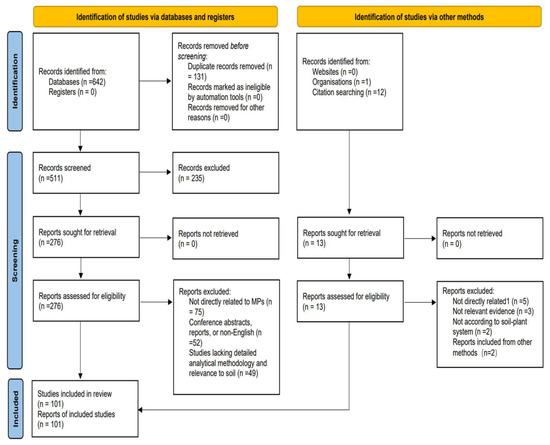
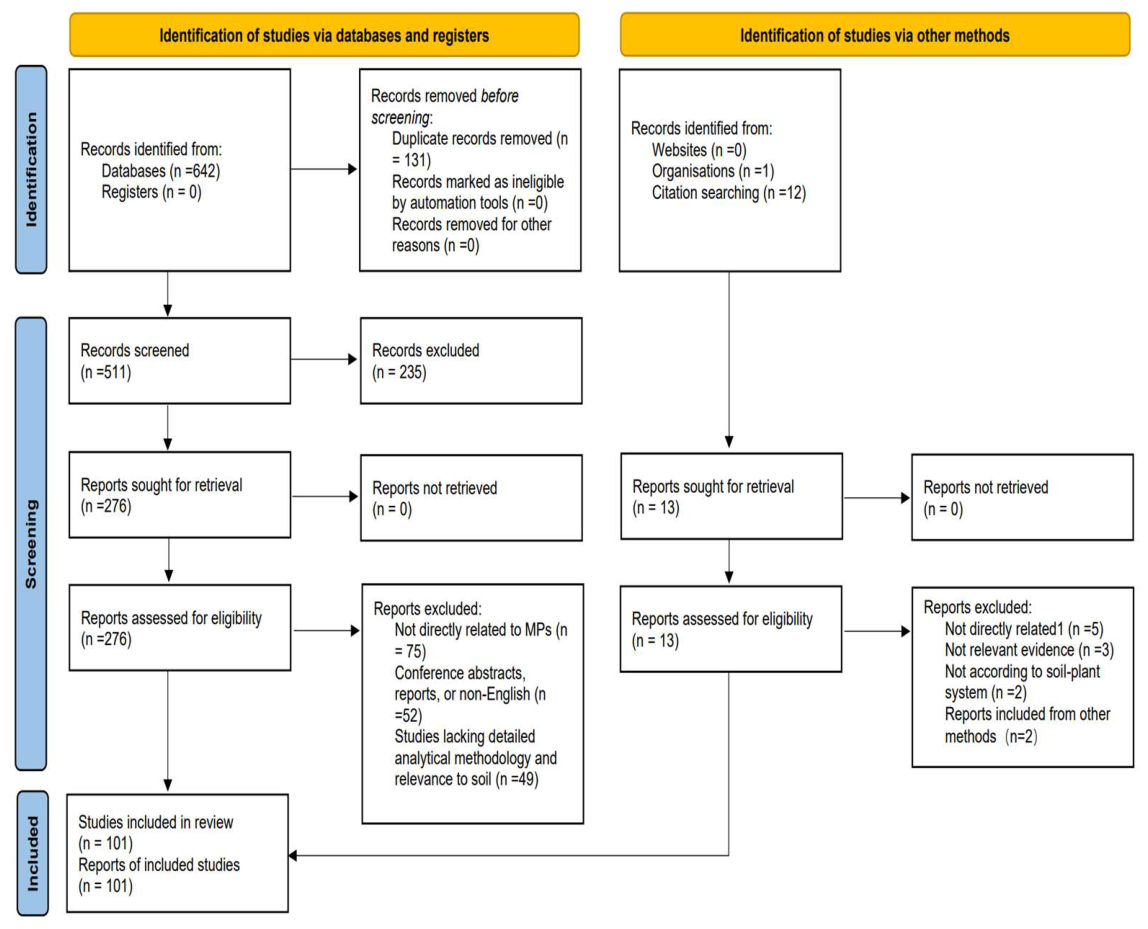
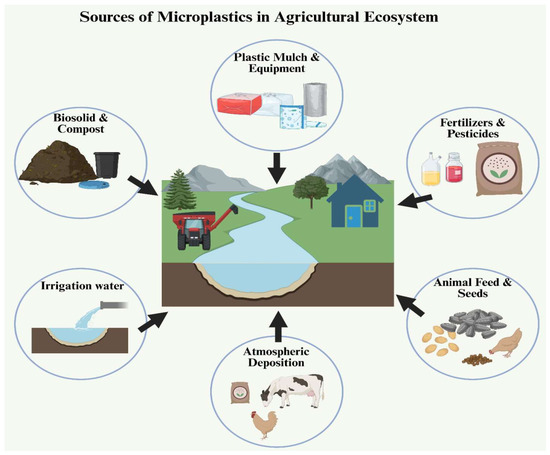
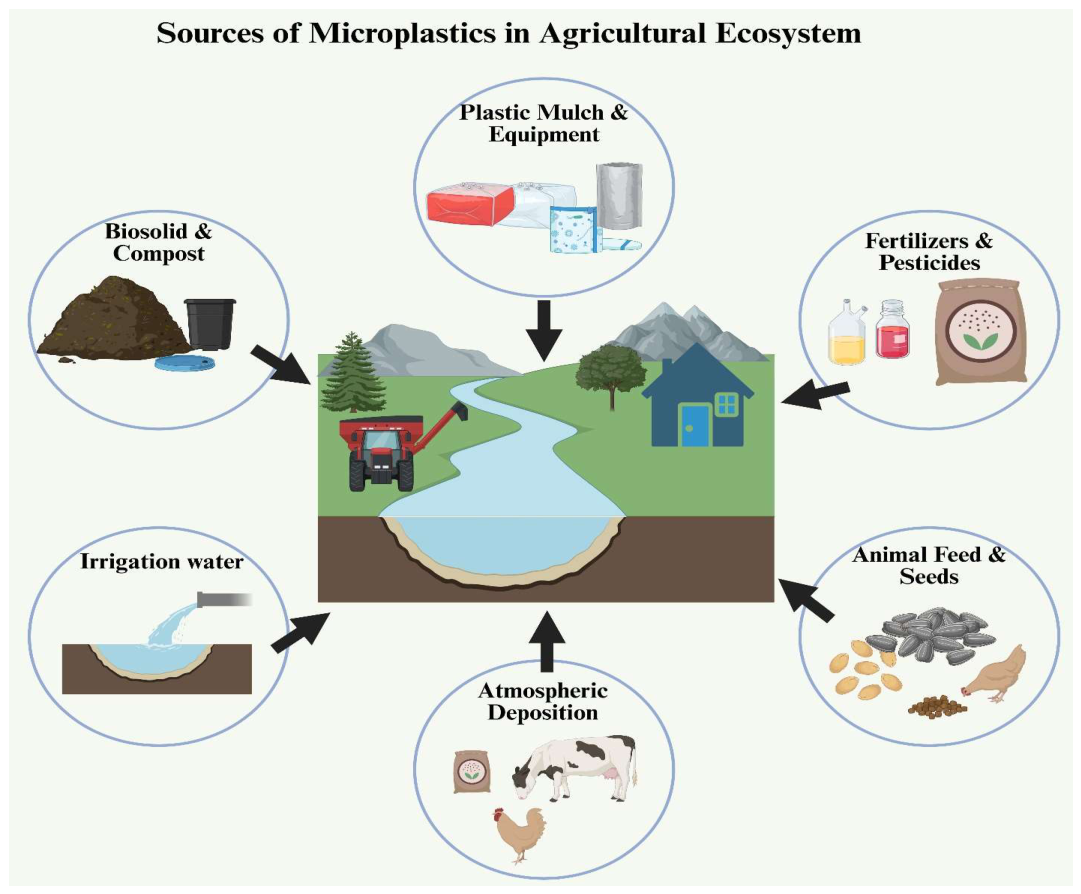
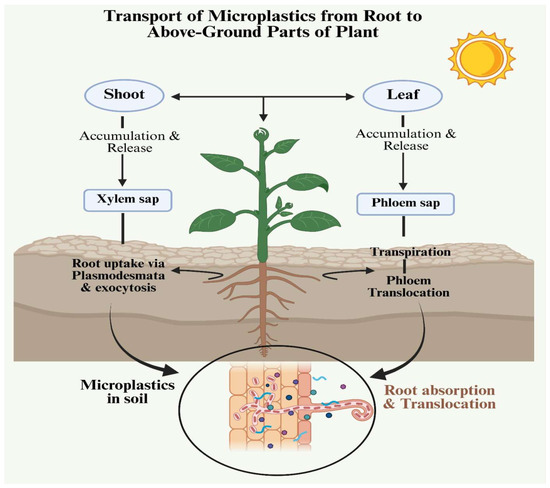
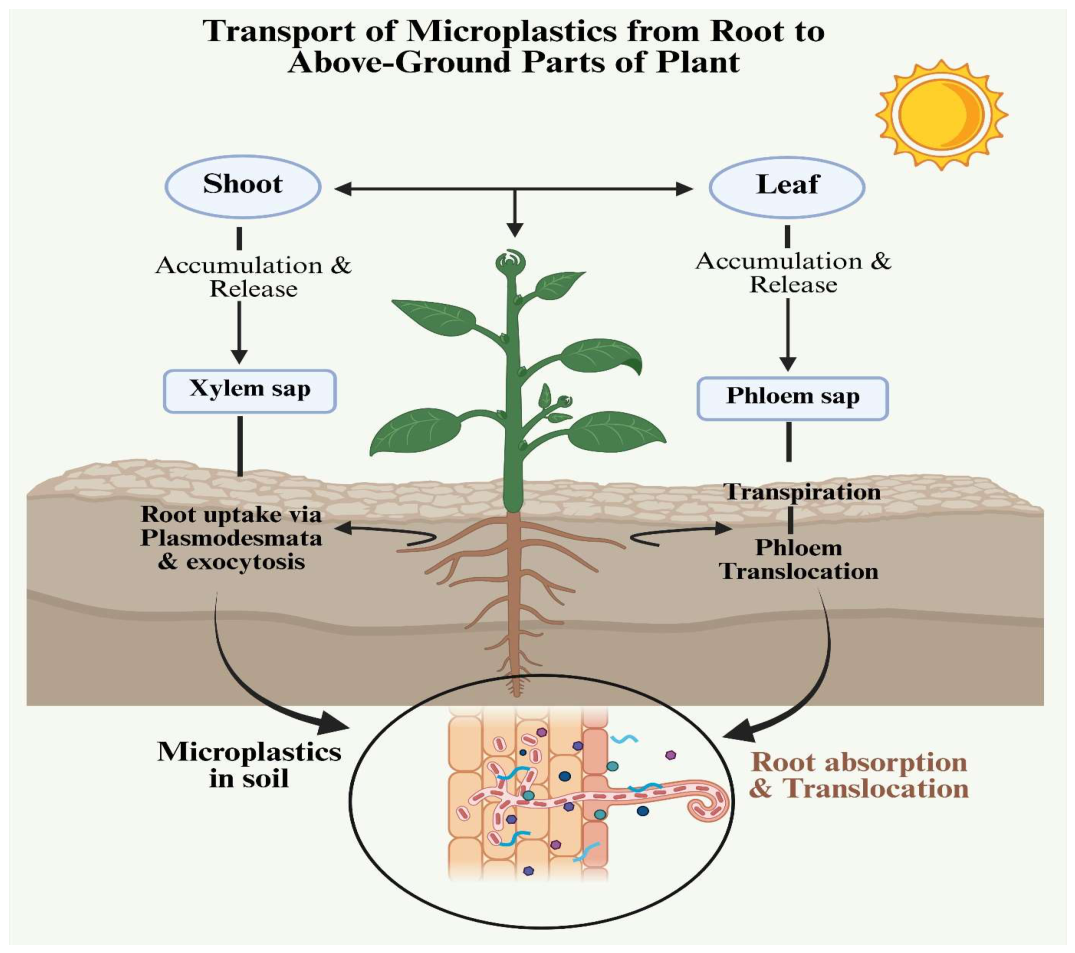
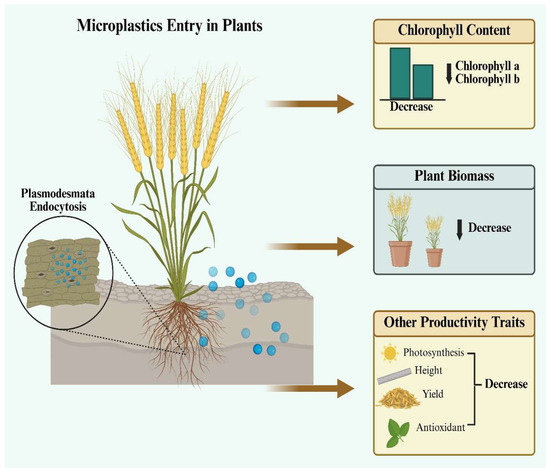
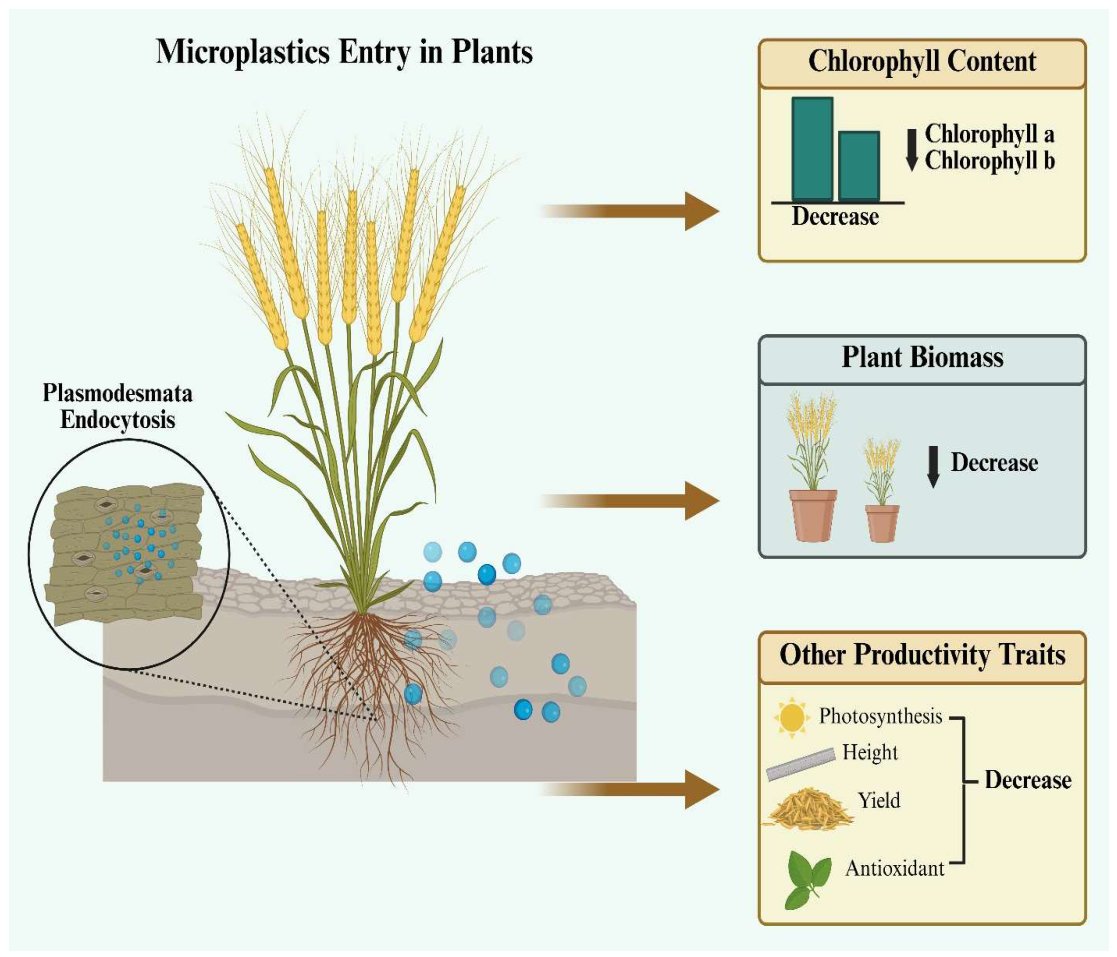
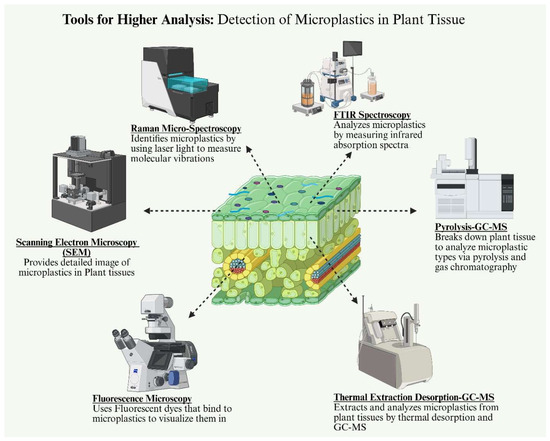
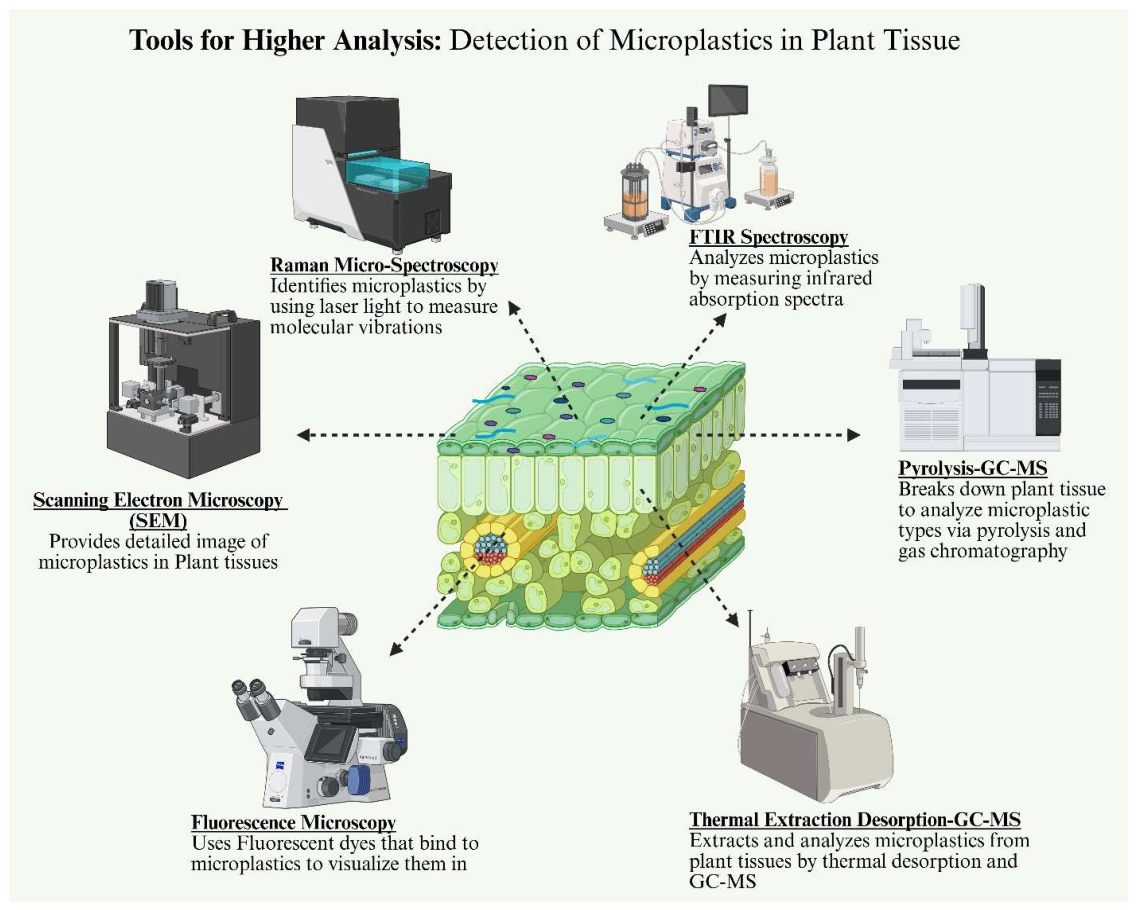
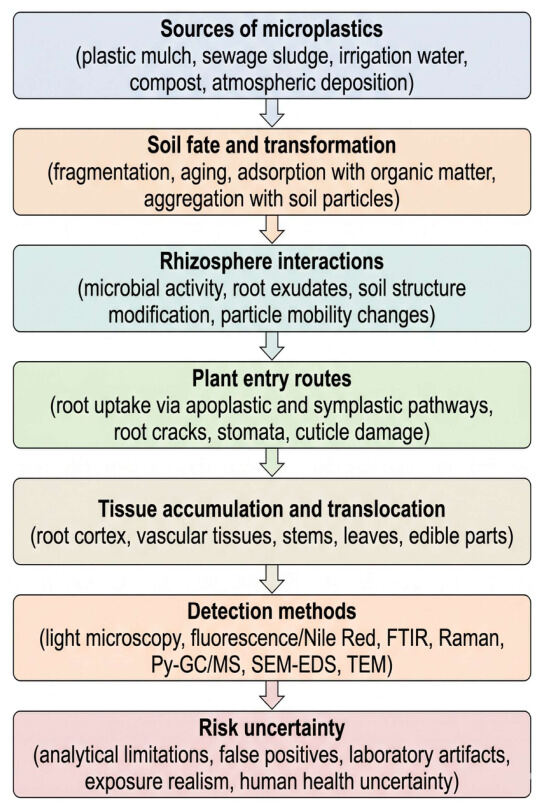
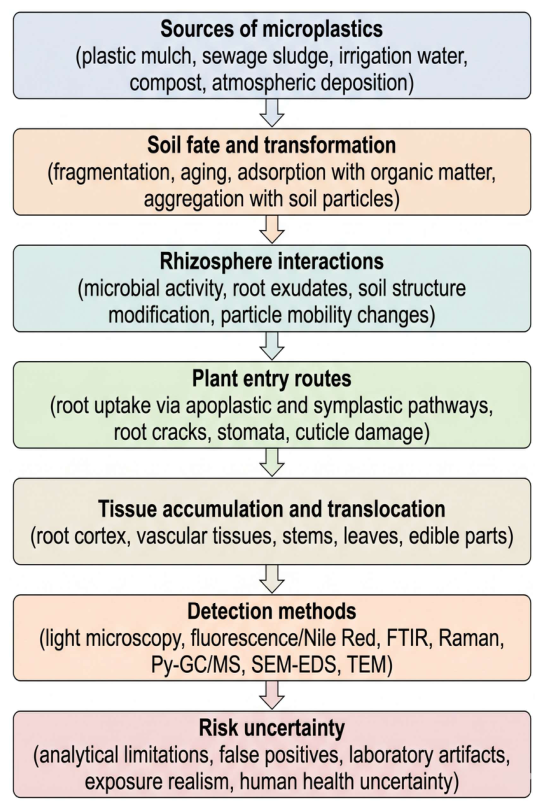

Disclaimer/Publisher’s Note: The statements, opinions and data contained in all publications are solely those of the individual author(s) and contributor(s) and not of MDPI and/or the editor(s). MDPI and/or the editor(s) disclaim responsibility for any injury to people or property resulting from any ideas, methods, instructions or products referred to in the content. |
© 2026 by the authors. Licensee MDPI, Basel, Switzerland. This article is an open access article distributed under the terms and conditions of the Creative Commons Attribution (CC BY) license.