Skip to Content

Biomolecules

Biomolecules is an international, peer-reviewed, open access journal on structures and functions of bioactive and biogenic substances, molecular mechanisms with biological and medical implications as well as biomaterials and their applications, published monthly online by MDPI.

Indexed in PubMed | Quartile Ranking JCR - Q1 (Biochemistry and Molecular Biology)

Get Alerted

Add your email address to receive forthcoming issues of this journal.

All Articles (13,162)

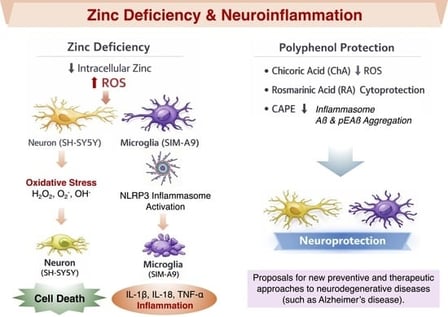
Zinc deficiency is increasingly recognized as a risk factor for neurodegenerative diseases, yet the underlying molecular mechanisms remain incompletely understood. In this study, we investigated the impact of intracellular zinc depletion on oxidative stress and inflammasome activation in microglial (SIM-A9) and neuronal (SH-SY5Y) cell models, and evaluated the protective effects of polyphenolic compounds. Intracellular zinc chelation with the membrane-permeable chelator TPEN markedly increased reactive oxygen species (ROS) production, reduced cell viability, and upregulated the mRNA expression of NLRP3 inflammasome-related genes and pro-inflammatory cytokines. In contrast, extracellular zinc chelation had no effect, highlighting the critical role of intracellular zinc homeostasis in maintaining redox balance. Zinc supplementation significantly attenuated these responses. Among 32 polyphenols screened by DPPH radical scavenging assay, caffeic acid derivatives—chicoric acid (ChA), rosmarinic acid (RA), and caffeic acid phenethyl ester (CAPE)—exhibited the most potent antioxidant activity, surpassing that of edaravone. These compounds suppressed ROS production and differentially protected against zinc deficiency-induced cellular damage. ChA showed the strongest ROS inhibitory activity (IC50: 1.9 µM in SIM-A9), RA provided robust cytoprotection even at low concentrations, and CAPE most effectively suppressed inflammasome-related gene expression and inhibited aggregation of both Aβ1–42 and the highly neurotoxic pyroglutamate-modified variant pEAβ3–42. These findings demonstrate that intracellular zinc deficiency drives ROS-dependent upregulation of NLRP3 inflammasome-related genes, and suggest that caffeic acid derivative polyphenols may serve as complementary agents for mitigating neuroinflammatory and amyloidogenic processes relevant to Alzheimer’s disease.

21 June 2026
DPPH Radical Scavenging Activity of 32 Polyphenolic Compounds. The DPPH radical scavenging activity of 32 polyphenolic compounds (final concentration: 25 µM) was evaluated. The inhibitory effect of each polyphenolic compound was calculated by setting the absorbance at 517 nm in the vehicle control (DMSO) to 100%. Four phenolic compounds (red columns)—caffeic acid (CA), caffeic acid phenethyl ester (CAPE), chicoric acid (ChA), and rosmarinic acid (RA)—exhibited high activity, and these four compounds were selected as the subjects of the experiment. Each plot is presented as the mean ± SD (n = 4).

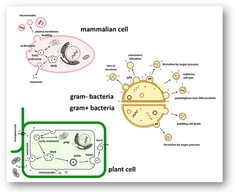
Extracellular vesicles (EVs) are key mediators of intercellular communication across biological kingdoms, with central roles in immune regulation and disease processes. Despite shared structural features, EVs derived from bacteria, plants, and mammalian cells differ substantially in their biogenesis, molecular composition, and immunological functions. EV formation pathways generate vesicles with distinct cargo profiles, including pathogen-associated molecular patterns (PAMPs) in bacterial EVs, regulatory small RNAs in plant-derived vesicles, and cytokines, microRNAs, and antigen-presenting complexes in mammalian EVs. Differences in cargo result in divergent immune outcomes. Bacterial EVs predominantly activate innate immunity via pattern recognition receptors such as Toll-like receptors, whereas plant-derived EVs exhibit low immunogenicity and mediate cross-kingdom RNA interference. In contrast, mammalian EVs primarily regulate immune responses by modulating antigen presentation and cytokine signaling. These findings support a framework in which EV origin determines immunological function and therapeutic applicability. This perspective highlights the importance of selecting appropriate EV sources for vaccine development, regenerative medicine, and targeted delivery strategies, while addressing current challenges related to heterogeneity, standardization, and safety.

20 June 2026

Schematic overview of extracellular vesicle (EV) biogenesis in mammalian, bacterial, and plant cells.

Certain sacoglossan sea slugs, often known as “solar-powered sea slugs”, are a group of marine gastropods that have the unique ability to photosynthesize by stealing functional chloroplasts from algae. The sacoglossan Elysia papillosa can maintain functional chloroplasts for up to two weeks after feeding. The microbiome of these slugs may play a crucial role in their metabolism, immunity, development, but more importantly their photosynthesis. Shotgun metagenomic sequencing was conducted on four samples of E. papillosa in order to characterize their microbiome. Sequences were classified and relative abundance was quantified with Centrifuger and functional data was examined using SqueezeMeta. Bacteria were analyzed by taxonomic groups and hypothesized function to the sea slug was determined with literature analysis. All samples were dominated by phyla Actinomycetota, Bacillota, Patescibacteriota, and Pseudomonadota. The presence of the phyla Bacteroidota and Bacillota was notable in all samples, which contain species known to produce enzymes that break down polysaccharides. It is possible that these bacteria could assist in degradation of the polysaccharide xylan found in the cell walls of Penicillus, the algal food source of E. papillosa. One species that was found in all samples was Cutibacterium acnes which has been shown to be an important component of the gut microbiota in other marine invertebrates and may provide the host with vitamin B12 and other beneficial nutrients. Many of these bacteria may be opportunistic rather than commensal. As a result, more research is required to describe the interactions between the slug and its microbiome, but this preliminary report provides a valuable starting point for identifying the microbiome make-up to further understanding of these relationships.

20 June 2026

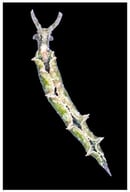
Photograph of Elysia papillosa collected from the algae Penicillus capitatus from Tarpon Springs, FL, USA.

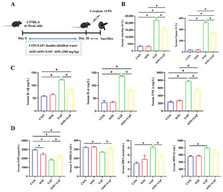
Severe acute pancreatitis (SAP) is a life-threatening inflammatory disorder characterized by high mortality and limited therapeutic options. Alginate oligosaccharide (AOS), a marine-derived bioactive polysaccharide, exhibits prebiotic, anti-inflammatory and antioxidant properties that are effective against various inflammatory diseases. In this study, a mouse model of SAP was established by intraperitoneal injection of cerulein (100 μg/kg) and lipopolysaccharide (5 mg/kg), and the mice were pretreated with AOS (200 mg/kg) by gavage for 4 consecutive weeks to explore the potential protective efficacy and underlying mechanisms. The results shown that AOS attenuated the severity of SAP, as evidenced by reduced serum amylase and lipase levels, as well as alleviated histopathological injury in both pancreatic and ileal tissues. AOS suppressed the overproduction of pro-inflammatory cytokines (IL-1β, IL-6, TNF-α) in serum, pancreas, and ileum at protein or mRNA levels. Moreover, AOS effectively diminished pancreatic and ileal inflammatory infiltration and oxidative stress in SAP mice, accompanied by inhibited the TLR4/MyD88/NF-κB pathway and activated the Nrf2/HO-1 antioxidant axis. Furthermore, AOS restored intestinal barrier integrity, as manifested by upregulated expression of tight junction proteins (claudin-1, occludin, ZO-1), reduced serum diamine oxidase, and decreased bacterial translocation from the gut to the pancreas. It was revealed by 16S rRNA sequencing that AOS ameliorated SAP-induced gut dysbiosis by restoring microbial diversity, normalizing the Firmicutes/Bacteroidetes ratio, enriching beneficial genera (Lactobacillus, Blautia), and enhancing cecal short-chain fatty acid (acetic, propionic, butyric acid) production. Collectively, our findings demonstrate that AOS exerts comprehensive protective effects against SAP through suppression of inflammatory signaling and oxidative stress, as well as restoring gut homeostasis. These results suggest that AOS may serve as a promising prebiotic-based nutritional strategy for the management of SAP.

20 June 2026

AOS supplementation mitigated the severity of SAP. (A) Schematic diagram of mouse groups; (B) serum amylase and lipase activities; (C) serum IL-1β, IL-6, and TNF-α levels; (D) serum GSH, T-SOD, MDA, and MPO levels. Error bars represent mean ± SEM, * p < 0.05, n = 6.

News & Conferences

Volumes

Latest Issues

Open for Submission

Editor's Choice

XFacebookLinkedIn
Biomolecules - ISSN 2218-273X